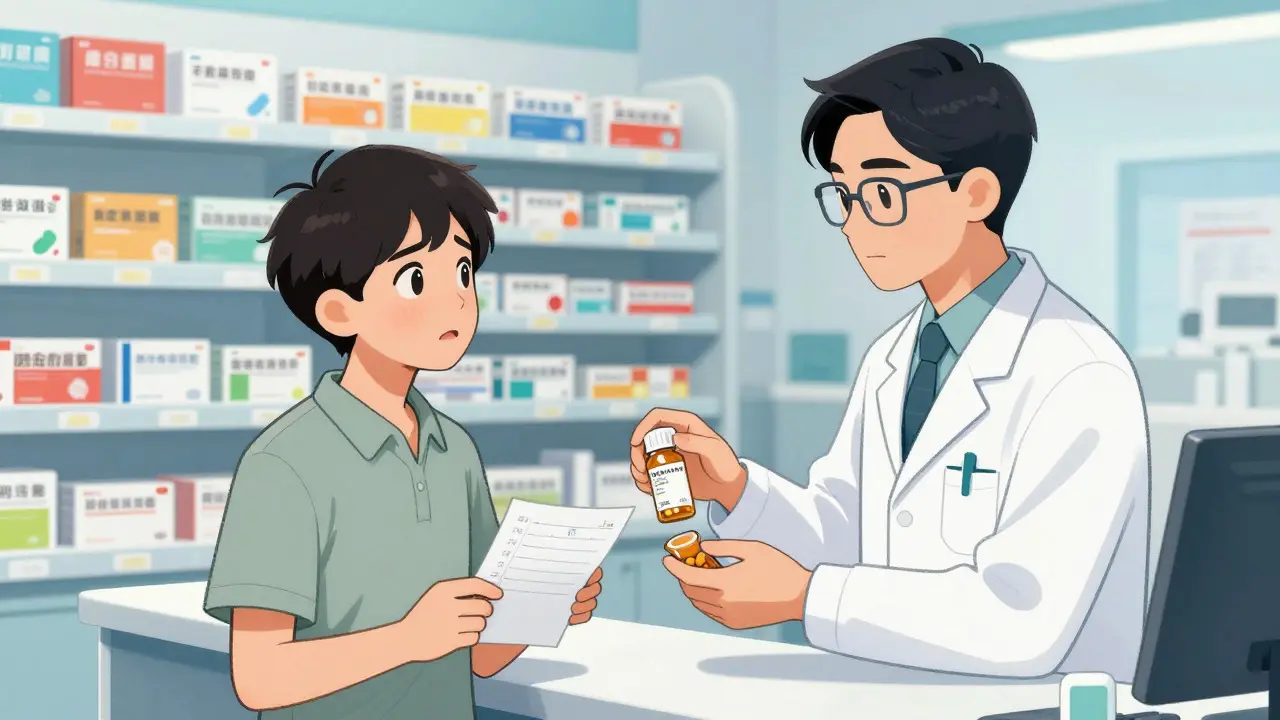
You walk into the pharmacy, hand over your prescription for a heart medication you’ve taken for years, and the pharmacist hands you back a bottle with a different label and a fraction of the price. It’s the same drug, right? That is the promise of generic drugs, which are defined by regulators as pharmaceutical products containing the same active ingredient, dosage form, strength, and route of administration as their brand-name counterparts. But does that promise hold up in real life? For decades, patients and doctors have debated whether these cheaper alternatives truly work the same way or if they carry hidden risks. The short answer from regulatory bodies like the U.S. Food and Drug Administration (FDA) is yes, they are equivalent. However, clinical evidence paints a more nuanced picture, especially when it comes to specific conditions and individual patient biology.
The Science Behind Bioequivalence
To understand why generics are considered safe, you first need to look at how they get approved. Unlike brand-name drugs, which require expensive and lengthy clinical trials to prove safety and efficacy from scratch, generics follow a streamlined path established by the Hatch-Waxman Act of 1984. This law allows manufacturers to submit an Abbreviated New Drug Application (ANDA). Instead of testing on thousands of humans, the manufacturer must prove two things: pharmaceutical equivalence and bioequivalence.
Pharmaceutical equivalence means the generic has the exact same active ingredient, strength, and form as the brand. Bioequivalence is where the science gets technical. The FDA requires that the generic drug delivers the active ingredient into your bloodstream at a similar rate and extent as the brand-name drug. Specifically, the 90% confidence interval for the ratio of geometric means of Cmax (maximum concentration) and AUC (area under the curve) must fall within an 80-125% range compared to the reference product. In plain English, this means the generic can be slightly faster or slower to absorb, but not so much that it changes how the drug works in your body. For most medications, this margin is clinically insignificant.
| Feature | Brand-Name Drug | Generic Drug |
|---|---|---|
| Active Ingredient | Original formulation | Identical to brand |
| Clinical Trials | Required (Phase I-III) | Not required (Bioequivalence study only) |
| Inactive Ingredients | Proprietary mix | May differ (excipients, dyes, fillers) |
| Cost Savings | Benchmark price | 80-85% lower on average |
| Regulatory Body | FDA / EMA | FDA / EMA |
The key difference lies in the inactive ingredients, also known as excipients. These include fillers, binders, and dyes that give the pill its shape and color. While the FDA states these do not affect the drug’s action, some patients report sensitivities to certain fillers, such as lactose or gluten, which might be present in one version but not the other. This variability is often cited as a reason for perceived differences in effectiveness, even though the active molecule remains unchanged.
What Clinical Studies Actually Show
If you dig into the medical literature, you will find a fascinating split in the data. On one side, large-scale observational studies suggest generics are not just equal, but sometimes superior. A landmark 2020 study published in Nature Scientific Reports by Kesselheim et al. analyzed nearly all insured persons in Austria from 2007 to 2012. They looked at 17 different drugs and found that generic medications were associated with significantly fewer deaths in 10 of those drugs. For cardiovascular outcomes, generics showed 40.6 deaths per 1,000 patient-years compared to 45.8 for branded medicines. The researchers concluded that generics were "at least similar, and in some cases superior" to brands, likely because patients adhered better to treatment due to lower costs.
However, other studies raise red flags. A 2013 review in the Journal of Clinical Pharmacy and Therapeutics documented cases where 30% of patients discontinued generic treatment due to clinical inefficacy or side effects after switching from a brand. Specific case reports highlighted therapeutic failure with generic ciprofloxacin compared to the brand Ciproxin. Similarly, a 2017 Canadian study published in Circulation: Cardiovascular Quality and Outcomes found increased adverse events after the introduction of generics for three blood pressure medications: losartan, valsartan, and candesartan. Among 136,177 individuals aged 66 and older, there was an 8% to 14% increase in adverse events in the month following generic availability. These discrepancies suggest that while generics are statistically equivalent for the population, individual responses can vary.
The Narrow Therapeutic Index Exception
Not all drugs are created equal when it comes to substitution. The biggest controversy surrounds what pharmacists call Narrow Therapeutic Index (NTI) drugs. These are medications where a small change in blood concentration can lead to treatment failure or toxicity. Think of levothyroxine for thyroid disorders, warfarin for blood thinning, or certain anti-seizure medications like phenytoin. For these drugs, the 80-125% bioequivalence window might be too wide. A 20% drop in absorption could push a patient out of their therapeutic range.
Patient anecdotes support this concern. On online forums like Reddit’s r/pharmacy community, numerous users report drastic changes in health markers after switching to generic levothyroxine. One user noted their TSH levels jumped from 1.2 to 8.7 within three months despite keeping the same dose. Because of this sensitivity, organizations like the American Thyroid Association recommend consistent use of either the brand or a specific generic manufacturer without frequent switching. The FDA acknowledges these concerns and monitors NTI drugs more closely, but the regulatory standard remains the same unless specific clinical endpoint studies are required.

Real-World Patient Experiences and Data
So, what happens in the real world? Surveys show a divide between professional perception and patient experience. A 2021 survey by the National Community Pharmacists Association found that 67% of pharmacists occasionally encounter patients who perceive reduced effectiveness or increased side effects after a brand-generic switch. This is particularly common with psychiatric medications and seizure disorders. Conversely, Consumer Reports’ 2022 medication survey found that 89% of users reported no issues with generic drugs. Only 11% reported perceived differences, with the highest concerns among users of seizure medications (24%) and thyroid medications (19%).
Data from the FDA’s Adverse Event Reporting System (FAERS) offers a broader view. From 2018 to 2022, there was no significant difference in adverse event reports per million prescriptions between generic and brand-name versions of 15 commonly prescribed medications. The average was 12.7 reports per million for generics versus 13.2 for brands. This suggests that for the vast majority of people, generics are just as safe. The issue may lie in the "nocebo effect," where patients expect a generic to work worse, leading them to perceive side effects that aren’t physiologically present. Psychological factors play a surprisingly large role in drug efficacy, especially for pain management and mental health treatments.
How to Navigate Generic Substitutions Safely
If you are worried about switching, you are not powerless. Here are practical steps to ensure your medication works effectively:
- Check the Orange Book Rating: The FDA maintains an "Orange Book" that lists therapeutic equivalence codes. Look for an "AB" rating, which means the generic is considered therapeutically equivalent to the brand. Avoid "B" rated generics unless advised by a specialist.
- Maintain Consistency: If you find a generic manufacturer that works well for you, ask your pharmacist to stick with that specific supplier. Frequent switching between different generic makers can cause fluctuations in drug levels, especially for NTI drugs.
- Monitor Your Levels: For critical medications like thyroid hormones or blood thinners, request regular blood tests after any switch. This provides objective data rather than relying on how you feel.
- Talk to Your Doctor: If you suspect a generic isn’t working, don’t just stop taking it. Discuss your symptoms with your prescriber. They can check if "Dispense as Written" is medically necessary for your condition.
Remember, the goal of generic drugs is to increase access to healthcare. With generics accounting for approximately 90% of prescriptions dispensed in the U.S. while representing only 25% of spending, they are essential for the economic sustainability of our healthcare system. The savings allow millions of people to afford their medications. By understanding the science and knowing when to advocate for yourself, you can safely benefit from these cost-effective options.
Are generic drugs exactly the same as brand-name drugs?
They contain the same active ingredient, strength, and dosage form, but they may have different inactive ingredients (fillers, dyes) and manufacturing processes. Regulatory agencies require them to be bioequivalent, meaning they deliver the drug into your bloodstream at a similar rate.
Why do some people feel generics don't work as well?
Several factors can contribute: differences in inactive ingredients causing allergies or sensitivities, variations in dissolution rates for sensitive individuals, the "nocebo effect" (expecting worse results), or issues with Narrow Therapeutic Index drugs where small absorption changes matter significantly.
What are Narrow Therapeutic Index (NTI) drugs?
NTI drugs are medications where a small change in blood concentration can lead to toxicity or treatment failure. Examples include warfarin, levothyroxine, and phenytoin. Patients on these drugs should be cautious about switching between brands and generics and should monitor their blood levels closely.
Can my doctor insist on a brand-name drug instead of a generic?
Yes. Doctors can write "Dispense as Written" or "Brand Medically Necessary" on the prescription. This usually requires justification for insurance coverage, but it ensures you receive the original brand-name product if clinically needed.
Is it safe to switch between different generic manufacturers?
For most drugs, yes. However, for stability-critical medications, frequent switching can cause minor fluctuations in drug levels. If you tolerate a specific generic well, ask your pharmacist to try to keep you on the same manufacturer's product.
Alli Crumley
August 1, 2026 AT 14:36Oh, please. The whole concept of bioequivalence is a regulatory fiction designed to protect corporate margins while pretending science is absolute. You take the 80-125% window and call it 'clinically insignificant,' but that is a massive margin for error when you are dealing with homeostatic balance in a complex biological system. It is not just about the active ingredient; it is about the matrix. The excipients are not inert! They affect dissolution rates, gastric emptying, and ultimately the pharmacokinetic profile. To say they are 'the same' is a gross oversimplification that ignores the nuance of individual metabolic variance. We are treating people like robots who process inputs identically, which is patently false. The nocebo effect is real, yes, but so is the physiological reality that different fillers bind differently in the gut. Stop selling us this comforting lie.
Marc H
August 2, 2026 AT 10:54Dramatic much? 😂 Look, I get the passion, Alli, but let's not pretend every generic is poison because the dye is slightly different. I switched from brand-name statins to generics years ago and my cholesterol hasn't budged. It’s funny how we trust the FDA on everything else but suddenly become skeptical detectives when our wallet gets involved. Not that I’m saying you’re wrong, just... chill out a bit. The world isn’t ending because your pill is white instead of blue. 🙄
Chris McQuaid
August 2, 2026 AT 11:27Marc, you’re missing the forest for the trees. It’s not about the color or the shape, it’s about the statistical probability of therapeutic failure in sensitive populations. The article mentions Narrow Therapeutic Index drugs, and that’s where the rubber meets the road. For levothyroxine, a 20% variance isn’t 'chill,' it’s a thyroid storm or severe hypothyroidism. Most people here don’t understand that bioequivalence studies are done on healthy volunteers, not the sick, elderly, or metabolically compromised patients who actually need these drugs. So yeah, for your cholesterol, maybe it doesn’t matter. But for someone on warfarin, it’s a death sentence waiting to happen. Ignorance is bliss, I suppose.
sam howard
August 3, 2026 AT 20:15nah chris you sound like those guys who think water is wet. most generics work fine. if you have an issue switch back. its not rocket science. the fda checks them. stop worrying about the 1% cases and live your life. also the nocebo effect is huge. if you think it sucks it will suck. simple as that.
Samuel Hershberger
August 5, 2026 AT 02:35Sam makes a fair point about the nocebo effect, though Chris raises a valid concern regarding NTI drugs. It really comes down to communication between patient and provider. If you are on a stable regimen with a specific manufacturer, especially for thyroid or seizure meds, ask your pharmacist to keep you on that source. There is no harm in advocating for consistency. The healthcare system is designed to save money, but your health is unique. Don’t be afraid to say, 'This brand works for me, can we stick with it?' Pharmacists are usually happy to accommodate if there is a medical reason. It’s about finding what works for your body, not winning an argument about statistics. 💪
Mathew Stuckey
August 5, 2026 AT 18:17I totally agree with Samuel! Communication is key. 🗣️✨ I had issues with generic antidepressants early on, but once I told my doctor exactly how I felt, we found a brand that worked. Everyone’s body is different, so don’t feel bad if yours reacts differently. It’s okay to prefer the brand if it helps you feel better. Mental health is important too! ❤️
John Divers
August 7, 2026 AT 08:23The philosophical underpinning of this debate is interesting. We value efficiency and accessibility (generics) versus individualized optimization (brands). Perhaps the solution lies not in choosing one over the other, but in recognizing that both have their place. The standardization of care assumes a homogeneity of human biology that does not exist. Yet, the economic necessity of generics is undeniable. We must navigate this tension with pragmatism rather than dogma.
Ambria St louis
August 7, 2026 AT 20:35John, you articulate the dilemma beautifully! However, I would argue that the 'standardization' often overlooks the marginalized voices in clinical trials. When we talk about bioequivalence, we are talking about averages. Averages do not help the outlier. And who are the outliers? Often women, the elderly, and those with comorbidities. We need more inclusive data sets before we can truly claim equivalence across all demographics. The silence of these groups in the 'success' stories of generics is deafening. We must listen louder. 📢
Dennis Leeftink
August 9, 2026 AT 14:47you guys are overthinking it. drug companies want you to pay more. thats why they make generics seem scary. its just marketing. i took generic ibuprofen for years. never died. probably because i am dumb. but hey at least i saved money. dont let the big pharma scare tactics win. buy the cheap stuff. check the price tag not the label.
Traci Bobbitt
August 9, 2026 AT 20:01Dennis, wow. Just wow. Reducing complex pharmacokinetics to 'marketing' is adorable. I mean, sure, if you want to gamble with your health, go ahead. But for those of us who actually read the studies, the data shows that while generics are generally safe, the variability is real. It’s not 'big pharma' scaring people; it’s basic chemistry. Different manufacturers use different processes. Some are better than others. It’s not black and white. But sure, keep telling yourself it’s all a conspiracy. Maybe next you’ll tell me the earth is flat. 🙄