
| Feature | Authorized Generic | Traditional Generic |
|---|---|---|
| Ingredients | Identical to Brand (Active & Inactive) | Same Active; different Inactives |
| Approval Path | Approved under 505(c) | ANDA (Abbreviated New Drug Application) |
| Orange Book | No separate entry (Identical to Brand) | Listed with therapeutic equivalence |
| Typical Cost | 20-80% less than Brand | 80-85% less than Brand |
When to Prioritize Authorized Generics Over Standard Generics
Not every patient needs an authorized generic, but there are a few clinical red flags that should make you reach for the FDA's quarterly list instead of the standard generic bottle. First, look at patients with strict dietary or allergy restrictions. If a patient has celiac disease, they need to avoid gluten-containing fillers. Similarly, patients avoiding animal products might react to gelatin or lactose. Since standard generics can change their inactive ingredients (excipients) from one manufacturer to another, they can be risky. Because authorized generics use the exact same recipe as the brand, they provide a safe harbor for these patients. Second, consider Narrow Therapeutic Index (NTI) drugs. These are medications where a tiny change in the blood concentration can lead to a total failure of therapy or toxicity. Think of Warfarin, Levothyroxine, or Phenytoin. Data shows that switching from brand to a regular generic can cause therapeutic issues in about 3-5% of patients. An authorized generic eliminates this variability because the formulation is identical. Third, be wary of modified-release dosage forms. Some complex release mechanisms don't always translate perfectly between a brand and a regular generic, even if they meet bioequivalence standards. If a patient reports that their "extended release" version isn't lasting as long as it used to, switching to an authorized generic is a more reliable bet. Finally, keep an eye on the "generic failure" patient. About 12% of community pharmacists have reported cases where patients experienced reduced efficacy or new side effects after switching to a standard generic. Instead of pushing the patient back to the expensive brand name, an authorized generic offers the brand's performance at a fraction of the cost.How to Identify and Verify Authorized Generics
Finding these drugs isn't always as simple as looking at the label. Since they aren't listed as separate entries in the Orange Book, you have to be a bit more proactive. Your best tool is the official FDA quarterly updated list. As of late 2023, this list contained 257 active products. While that's only about 5% of all brand-name drugs, it covers the most critical cases. If you're digging into the National Drug Code (NDC) directory, look at the labeler code. A regular generic will have a code for a generic manufacturer. An authorized generic will often show a code linked to the brand manufacturer (like Pfizer or Merck) or a licensed partner like Prasco or Greenstone. One thing to watch out for is timing. About 75% of these drugs hit the market *after* the first traditional generic is already out. This is often a strategic move by brand companies to keep a piece of the market. If you see a new option pop up just as the brand expires, it's worth checking if it's an authorized version.
Navigating the Legal and Insurance Maze
Substitution laws vary, but generally, if the prescriber hasn't written "no substitution," you can interchange a brand with its authorized generic. This is the standard in about 42 of the 50 U.S. states. However, you need to be careful with your documentation. Use the correct modifier codes, like "DA," in your billing system to show a substitution was made. While federal law doesn't always require you to call the doctor for an authorized generic swap, about 18 states still mandate notification for any generic substitution. Always check your local board of pharmacy rules to avoid a compliance headache. The real headache, however, is the Pharmacy Benefit Manager (PBM) logic. This is where things get frustrating for the patient. In about 63% of cases, PBMs categorize authorized generics under the brand-name tier rather than the generic tier. This means your patient might walk in expecting a $10 copay for a generic, but the insurance treats it as a brand and charges them $50. Before you switch a patient, run the claim or check the formulary. If the cost is too high, you'll need to decide if the clinical benefit of the identical formulation outweighs the financial hit.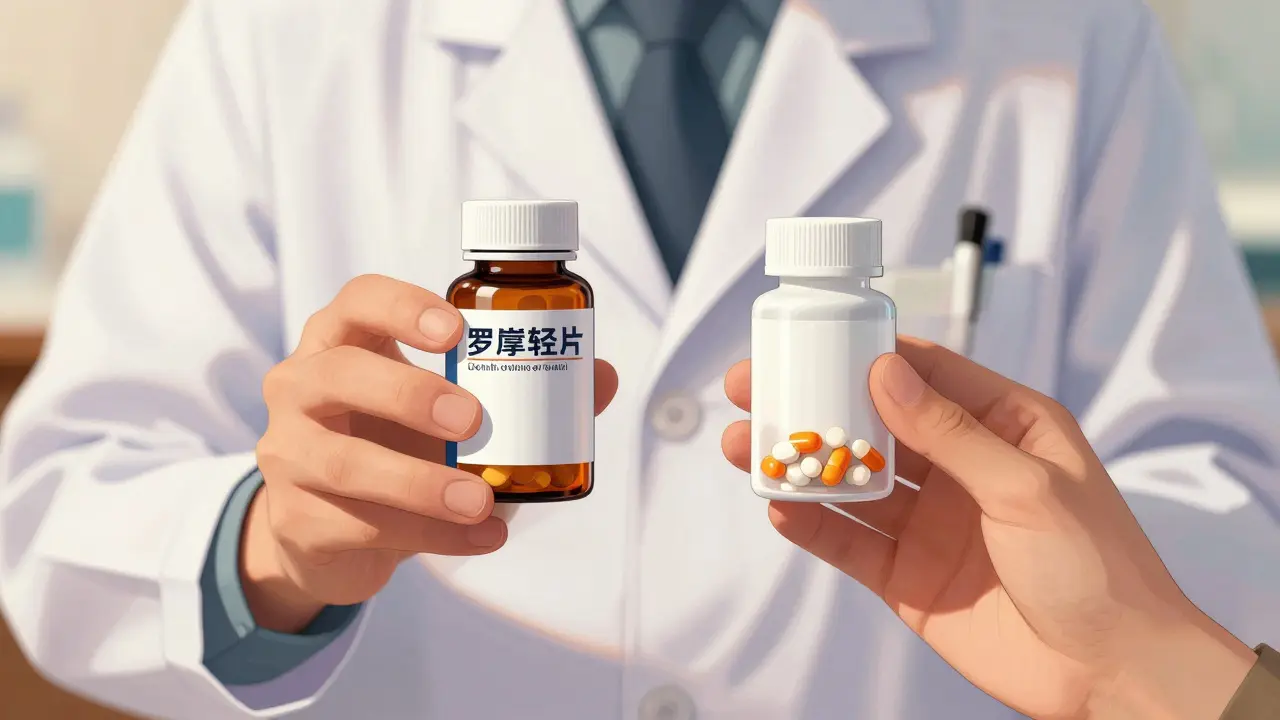
The Art of the Patient Conversation
Patient education is where many substitutions fail. A patient sees a blue pill when they've used a white one for ten years, and they panic. If they think the drug is different, they might stop taking it entirely. In fact, one study found that 27% of patients stopped therapy after an unexpected change in pill appearance, while only 8% did so when the pharmacist explained the change beforehand. When counseling, be direct: "This pill looks different-it's blue instead of white-but it is the exact same medicine as the brand name. It has the same active ingredients and the same fillers, just without the brand label on the bottle." For patients with celiac disease or religious restrictions, be an advocate. Confirm that the authorized generic maintains the same inactive ingredient profile they tolerated with the brand. This level of detail builds trust and ensures safety.Potential Pitfalls and Limitations
It's easy to assume authorized generics are a perfect solution, but they have limitations. First, they are rare. Only about 5% of brand drugs have them. If you can't find one, don't spend three hours hunting for it-it likely doesn't exist. Second, remember that these drugs don't go through the traditional ANDA bioequivalence testing because they *are* the brand drug. While this makes them "perfect" matches, it means there isn't a separate set of bioequivalence data for that specific generic label. Third, be mindful of packaging. Unexpected changes in how a drug is packaged can lead to non-adherence in up to 15% of cases. If the authorized generic comes in a blister pack while the brand came in a bottle, tell the patient. Small changes can lead to big mistakes in a patient's routine.Are authorized generics the same as regular generics?
No. A regular generic is made by a different company to be bioequivalent to the brand. An authorized generic is the actual brand-name drug, manufactured by the brand company (or their licensee), but sold without the brand name. This means it contains the exact same active and inactive ingredients as the brand.
Why would I suggest an authorized generic over a cheaper regular generic?
You should suggest them for patients with Narrow Therapeutic Index (NTI) drugs (like Warfarin) where small variations matter, for patients with allergies to specific fillers used in regular generics, or for patients who have experienced a loss of efficacy after switching to a standard generic.
Do I need to call the doctor before substituting a brand for an authorized generic?
In most states, if there is no "no substitution" order, you can interchange them. However, 18 states require prescriber notification for all generic substitutions. Always check your specific state laws and the prescriber's instructions.
Why is my patient's copay higher for an authorized generic than a regular generic?
This happens because many Pharmacy Benefit Managers (PBMs) categorize authorized generics as brand-name products in their formularies rather than generic ones, which can lead to higher out-of-pocket costs despite the identical formulation.
Where can I find the official list of these drugs?
The FDA publishes and updates a list of authorized generic drugs every quarter on their official website. You can also verify products using the NDC directory by checking the labeler codes.
Doug DeMarco
April 11, 2026 AT 12:20This is such a game changer for patients on NTI drugs! 🚀 I've seen so many people struggle with the generic switch, and having a clear path to an authorized generic can really save their quality of life. Great breakdown! 😊
Ben hogan
April 12, 2026 AT 20:39Imagine thinking a simple list of NDCs is a 'guide'. It's basic pharmacy 101, and yet people act like this is some hidden secret of the trade. Utterly tedious.
Simon Jenkins
April 14, 2026 AT 04:15Oh, the sheer audacity of the PBMs! 😱 To categorize a clinically identical product as 'brand' just to squeeze more money out of a suffering patient is nothing short of a corporate tragedy! It's absolutely scandalous!
Robin Walton
April 16, 2026 AT 01:40I really appreciate the part about the patient's anxiety over the pill color. It's so easy to forget how scary it is when your lifelong med suddenly looks different, and a little empathy during the counseling process goes a long way.
Rakesh Tiwari
April 17, 2026 AT 04:34Of course, let's just trust the 'authorized' version from the same company that priced the original drug at a 1000% markup in the first place. Truly a benevolent gesture from Big Pharma. 🙄
emmanuel okafor
April 17, 2026 AT 16:20it is just a name on a bottle really... we all seek the same healing in the end
Danny Wilks
April 18, 2026 AT 07:14The intersection of pharmaceutical economics and patient safety is a fascinating study in compromise, especially when one considers that the strategic release of an authorized generic is often a calculated move to maintain market dominance against the tide of traditional ANDA competitors, yet it simultaneously provides a necessary safety net for the subset of the population who are physiologically hypersensitive to the excipients found in cheaper alternatives.
Chad Miller
April 19, 2026 AT 10:26pbm's are a joke honestly just stealing from us at this point no way to fight it
Kelly DeVries
April 20, 2026 AT 04:37the pbm part is just so messy lol like why make it harder for the patient to get the right med just for a few bucks
Simon Stockdale
April 21, 2026 AT 17:27I dont even know why we let these overseas companies mess with our drug standards in the first place!! we should just make everything here in the usa so we dont have to deal with these weird generic failures and side effects that just dont make sense and we keep paying these huge copays because some suit in an office decided it was a brand tier drug when it is literally the same thing!!
Camille Sebello
April 23, 2026 AT 14:41Are you currently using the FDA list? Or just the NDC?!!
Suchita Jain
April 23, 2026 AT 21:44It is profoundly disappointing that the practitioners are not more rigorously enforcing the distinction between bioequivalence and identity in the clinical setting.
Thabo Leshoro
April 25, 2026 AT 05:15Narrow Therapeutic Index... high risk of toxicity... we must monitor the TDM closely... too much variability is dangerous!!
Sarina Montano
April 27, 2026 AT 05:02I've found that using a 'bridging' conversation works wonders here. Instead of just saying it's the same, I describe it as the 'platinum version' of the generic-same gold standard ingredients, just a different wrapper. It really helps the more skeptical patients feel like they're getting a premium product without the premium price tag. Also, if anyone is struggling to find the quarterly list, just bookmark the FDA's 'Drugs@FDA' portal, it's way more intuitive than digging through the NDC directory every single time you have a tricky prescription on the counter!
Lynn Bowen
April 27, 2026 AT 19:10This is a useful resource for any community pharmacist dealing with high-sensitivity patients.