What Is Thyroid Eye Disease?
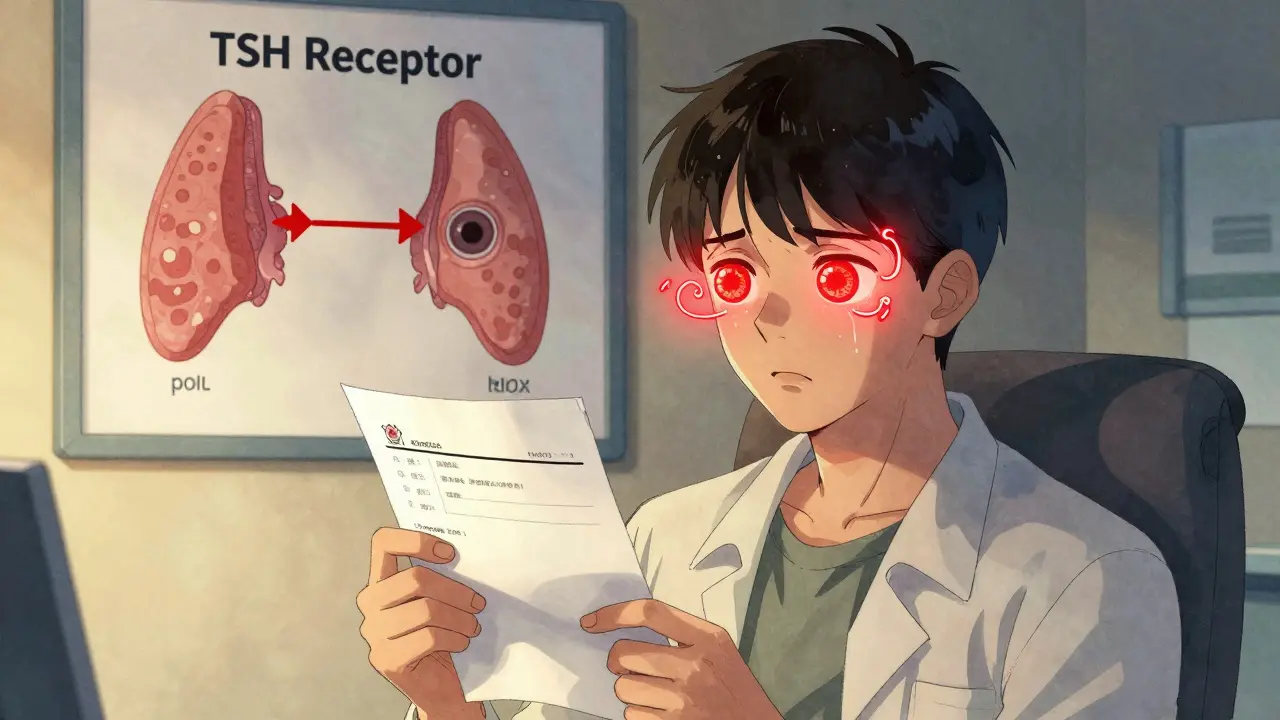
Thyroid Eye Disease (TED), also known as Graves’ orbitopathy, is an autoimmune condition where the body’s immune system attacks the tissues around the eyes. It’s not just about dry eyes or redness-it’s inflammation deep in the eye socket, affecting fat, muscles, and connective tissue. About 90% of people with TED also have Graves’ disease, an autoimmune disorder that overstimulates the thyroid. But TED can happen even when thyroid levels are normal or low. Around one in three people with Graves’ disease will develop eye symptoms, usually within six months of diagnosis.
The root cause? Antibodies that target the TSH receptor. These same receptors exist not just in the thyroid, but also in the eye socket. When the antibodies bind there, they trigger swelling, scarring, and muscle thickening. That’s why eyes bulge, eyelids pull back, and vision gets blurry. It’s not just cosmetic-it’s functional, and sometimes dangerous.
Common Symptoms You Can’t Ignore
Most people with TED notice changes slowly. At first, it might feel like allergies: gritty, watery, or irritated eyes. But if you’re also seeing your eyeballs stick out more than usual, or you can’t fully close your eyelids at night, that’s not allergies. That’s TED.
- Proptosis (bulging eyes): Seen in nearly all moderate to severe cases. One eye often sticks out more than the other.
- Eyelid retraction: Gives a wide-eyed, startled look. You might feel like you’re always staring.
- Dryness or excessive tearing: Up to 80% of patients report this. The eyes can’t blink properly, so they dry out-or overproduce tears trying to compensate.
- Double vision: Happens in about half of moderate to severe cases. The swollen eye muscles don’t move in sync.
- Pain behind the eyes: Especially when looking up, down, or side to side. It’s often worse in the morning.
- Light sensitivity: Bright lights become painful. Sunglasses aren’t just fashion here-they’re medical.
- Difficulty closing eyelids: 45% of patients can’t fully shut their eyes. This leads to corneal exposure, and in 15-20% of cases, ulcers or infections.
Severe cases can compress the optic nerve. Early signs? Faded colors, trouble seeing contrast, or blurred central vision. If you notice this, don’t wait. Vision loss from TED can be permanent.
Diagnosis: It’s Not Just a Routine Eye Exam
Many people get misdiagnosed. Primary care doctors often mistake TED for sinus infections or allergies. A 2023 study found only 32% of initial cases were correctly identified outside specialty clinics.
Proper diagnosis needs more than a quick check. You need:
- Thyroid function tests: TSH, free T4, free T3.
- Anti-TSHR antibody blood test: Levels above 15 IU/mL strongly suggest TED and predict response to Tepezza.
- Orbital imaging: CT or MRI scans show which eye muscles are swollen. The medial rectus is affected in 90% of cases.
- Visual field testing: Checks for nerve damage.
- Optical coherence tomography (OCT): Measures swelling in the optic nerve.
- Clinical Activity Score (CAS): A 7-point checklist of redness, swelling, pain, and movement issues. A score of 3 or higher means active inflammation-time to treat.
Specialists use these tools together. A single test won’t cut it. If your doctor doesn’t order at least two of these, ask why.
Treatment: From Supplements to Surgery
TED has two phases: active (inflammatory) and inactive (stable). Treatment depends entirely on which phase you’re in.
Mild cases: Selenium supplements (100 mcg twice daily) can reduce progression by 35%. It’s cheap, safe, and backed by a major European trial. Do it early.
Moderate to severe active TED: This is where things change. For years, high-dose IV steroids were the go-to. But they come with risks: liver damage in 15% of patients, blood sugar spikes in 25-30%. Now, there’s a better option: Tepezza (teprotumumab).
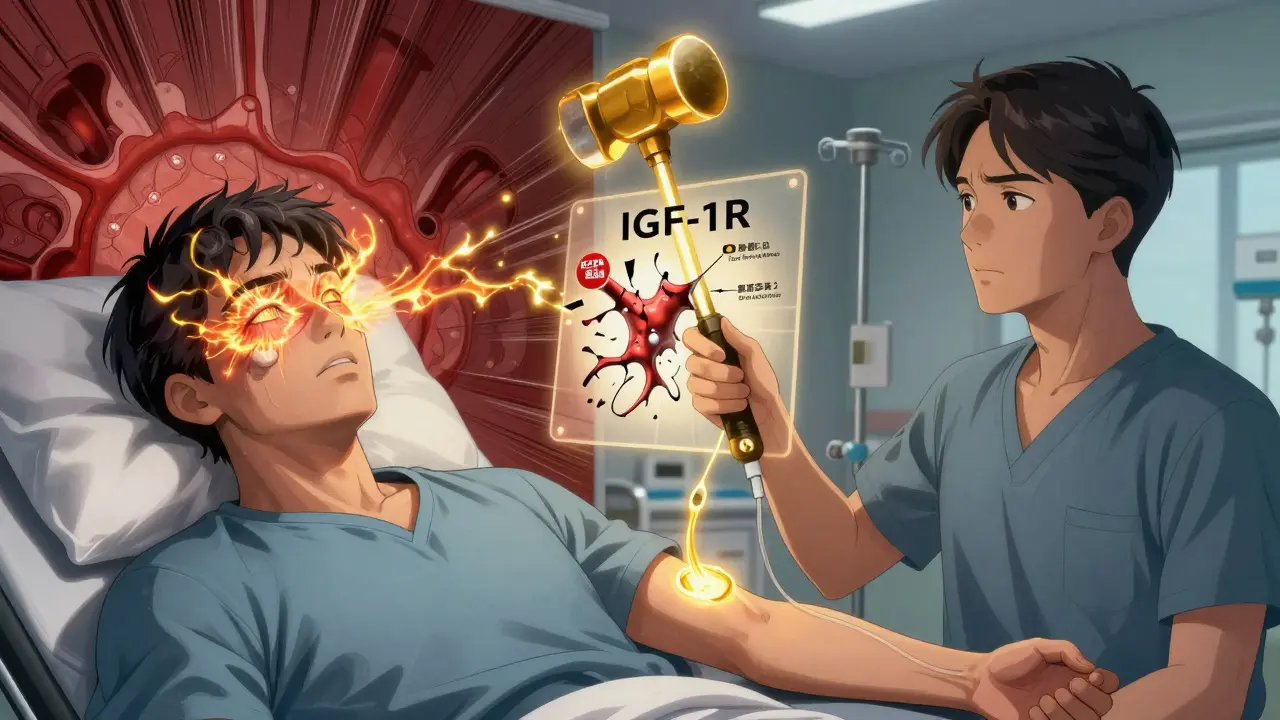
Tepezza is a monoclonal antibody that blocks IGF-1R, a key driver of inflammation in TED. Approved by the FDA in 2020, it’s the first drug designed specifically for this disease. In clinical trials:
- 71% of patients had reduced eye bulging (vs. 20% on placebo).
- 68% saw improvement in double vision (vs. 29% on placebo).
- Most needed 8 infusions, given every 3 weeks.
Each infusion costs about $5,500. A full course runs $44,000. Insurance often denies it at first-be ready to appeal. But for many, it’s life-changing. One patient in a 2022 study regained the ability to drive after 18 months of double vision.
Side effects? Muscle cramps (common), high blood sugar, hearing issues (rare but serious). The FDA now requires monitoring for hearing loss after treatment.
Severe or vision-threatening TED: If the optic nerve is compressed, surgery is urgent. Orbital decompression removes bone from the eye socket to give the nerve space. Endoscopic methods now make up 65% of these surgeries-less scarring, faster recovery.
What Happens After the Inflammation Stops?
Once the active phase ends (usually after 1-3 years), inflammation fades. But damage doesn’t vanish. Bulging eyes, drooping eyelids, and double vision stick around. That’s when corrective surgery helps.
- Strabismus surgery: Adjusts eye muscles to fix double vision. Works in 30-40% of cases.
- Eyelid retraction surgery: Lowers eyelids to a natural position. Success rate: 75-85% if done after 6 months of stability.
- Orbital decompression: Still needed in 5-10% of cases, even after inflammation resolves.
Most people need more than one surgery. One patient might need decompression first, then eyelid repair, then muscle adjustment. Timing matters. Do surgery too early, and swelling returns. Too late, and vision or appearance may not fully recover.
Biggest Risk Factor: Smoking
If you have Graves’ disease or TED, quitting smoking isn’t advice-it’s medical necessity. Smoking increases your risk of developing TED by 7.7 times. If you already have it, smoking doubles your chance of severe disease. It also makes Tepezza less effective and worsens surgical outcomes.
There’s no gray area here. If you smoke, stop. Now. No delay. No ‘later.’ Your eyes depend on it.
The Future of TED Treatment
Tepezza changed everything. But it’s not perfect. It’s expensive. It doesn’t work for everyone. And it doesn’t prevent TED-it treats it after it starts.
Researchers are working on next-gen options:
- Rituximab: A drug used for other autoimmune diseases. Early trials show 55% response in patients who didn’t respond to steroids.
- Teprotumumab-trbw: A biosimilar to Tepezza. Expected in 2025. Could cut costs by 40%.
- Satralizumab: Blocks IL-6, another inflammation trigger. Phase 3 trials show 52% improvement in refractory cases.
- Vaccines: Early lab studies are testing vaccines that stop TSHR antibodies before they attack the eyes. This could one day prevent TED entirely.
And now, Tepezza is approved for teens as young as 12 in Europe. Pediatric use is coming to the U.S. soon.
What Patients Say
Real people with TED report life-altering changes. In a 2023 survey of 1,245 patients:
- 63% said they felt embarrassed by their appearance.
- 52% couldn’t drive at night due to double vision.
- 74% experienced anxiety or depression.
- 45% faced workplace discrimination.
But those who got Tepezza? 82% reported major improvement in bulging. Still, 65% had muscle cramps. 12% had hearing changes. The trade-off is real.
One common complaint? Doctors don’t explain treatment options well. Patients rate understanding their care lowest (3.9/5) compared to compassion (4.6/5). Ask questions. Bring a friend. Demand clarity.
Getting the Right Care
TED needs a team: endocrinologist, ophthalmologist, maybe a surgeon. The best outcomes happen when they work together. Academic centers now offer coordinated TED clinics. They cut diagnosis delays from 6 months to under 2.
If you’re not near a major hospital, find a specialist with TED experience. Look for oculoplastic surgeons-they’re trained in eye socket surgery. Avoid general ophthalmologists unless they’ve treated TED before.
Use tools like the TED Tracker app (downloaded over 8,500 times) to log symptoms and track your Clinical Activity Score. Knowledge gives you power.
And remember: TED doesn’t get better on its own. Early treatment saves vision. Early treatment saves confidence. Early treatment saves your life.
Is thyroid eye disease the same as Graves’ disease?
No. Graves’ disease is an autoimmune disorder that causes the thyroid to overproduce hormones. Thyroid Eye Disease (TED) is a separate autoimmune condition that affects the tissues around the eyes. About 90% of TED cases happen in people with Graves’ disease, but TED can occur even when thyroid levels are normal or low. They’re linked, but not the same.
Can TED cause permanent vision loss?
Yes, but it’s rare and usually preventable. Vision loss happens when swollen eye muscles press on the optic nerve-this is called compressive optic neuropathy. Early signs include faded colors, blurred central vision, or trouble seeing contrast. If caught early, steroid treatment or surgery can reverse it. Delayed treatment leads to permanent damage. About 85% of people with optic nerve compression show color vision loss first.
Does Tepezza cure thyroid eye disease?
No, it doesn’t cure it. Tepezza is a disease-modifying treatment that reduces inflammation and reverses symptoms during the active phase. Most patients see lasting improvement-85% maintain results at 48 weeks. But TED can return if inflammation flares again. It doesn’t stop the autoimmune process entirely, so ongoing monitoring is needed. It’s the most effective treatment we have, but not a cure.
Why do some people need multiple surgeries?
TED affects multiple structures: eye muscles, eyelids, and the eye socket. After inflammation settles, you might still have bulging eyes (needs decompression), double vision (needs muscle surgery), and eyelids that won’t close (needs eyelid repair). These problems don’t always fix themselves. Surgeons often stage procedures-doing one at a time, months apart-to ensure stability and safety. About 20% of patients need two or more surgeries over time.
How soon should I start treatment after symptoms appear?
The best window is within the first 6 to 12 months after symptoms begin. That’s when inflammation is active and most responsive to drugs like Tepezza or steroids. Delaying treatment increases the risk of permanent damage. Studies show patients treated early have 90% better outcomes in vision and appearance. If you notice bulging, double vision, or pain with eye movement, see a specialist immediately-don’t wait for it to get worse.
Is selenium effective for everyone with TED?
Selenium works best for mild, active TED. A major European trial showed it reduces progression to moderate or severe disease by 35%. It’s not strong enough for moderate or severe cases. It’s safe, inexpensive, and recommended as a first step if you’re in the early stage. But if you have significant bulging, double vision, or pain, selenium alone won’t help. You’ll need stronger treatments like steroids or Tepezza.
Can I get Tepezza if I don’t have Graves’ disease?
Yes. While most TED patients have Graves’ disease, about 10% don’t. Tepezza is approved for TED regardless of thyroid status-as long as you have active, moderate to severe eye disease. Your doctor will check your anti-TSHR antibody levels and Clinical Activity Score to confirm eligibility. If your eyes are inflamed and bulging, you may qualify even if your thyroid is normal.
What are the long-term side effects of Tepezza?
The most common side effects are muscle cramps, high blood sugar, and fatigue-all temporary. Hearing loss is rare but serious, affecting about 5.7% of patients in real-world use (compared to 1.1% in trials). This is why the FDA requires monitoring. There’s no evidence of long-term organ damage or increased cancer risk. Most side effects fade after treatment ends. But if you have a history of hearing problems or diabetes, talk to your doctor before starting.
Kelly Beck
January 5, 2026 AT 22:54Isaac Jules
January 7, 2026 AT 19:22Rachel Wermager
January 9, 2026 AT 09:39Melanie Clark
January 9, 2026 AT 09:55Wesley Pereira
January 10, 2026 AT 20:54Indra Triawan
January 11, 2026 AT 00:09Ashley S
January 12, 2026 AT 18:07Jeane Hendrix
January 13, 2026 AT 15:10Dana Termini
January 15, 2026 AT 02:13Saylor Frye
January 16, 2026 AT 10:22Joann Absi
January 18, 2026 AT 06:19Kelly Beck
January 19, 2026 AT 15:59Tom Swinton
January 20, 2026 AT 13:32Rachel Wermager
January 22, 2026 AT 01:21Molly McLane
January 23, 2026 AT 21:23