Clozapine ANC Safety Checker
Check if patient's ANC meets FDA-recommended safety thresholds for clozapine continuation. Input ANC value and patient type to determine if treatment can continue safely.
Enter values to see threshold
Results will appear here
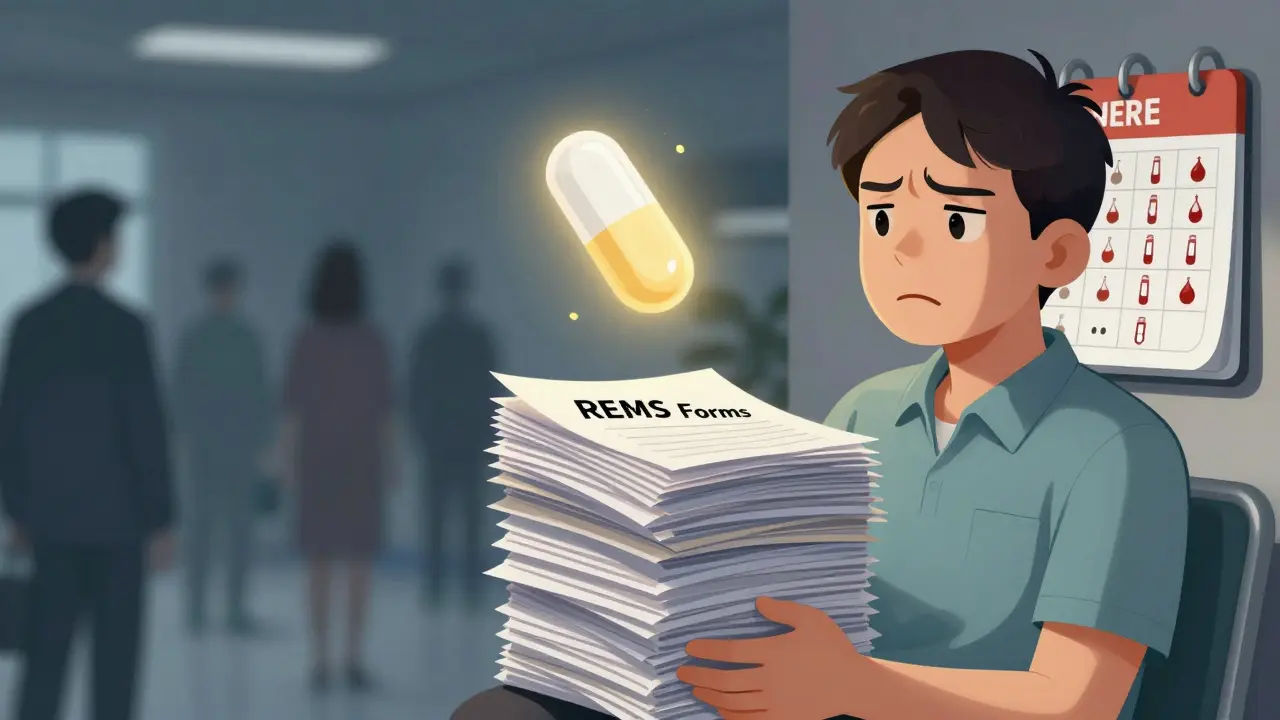
For years, getting clozapine prescribed meant jumping through a maze of paperwork, certifications, and mandatory blood test reports. Patients with treatment-resistant schizophrenia - the very people who needed this life-changing medication the most - often faced delays of weeks or even months just to start treatment. Why? Because of the FDA’s clozapine REMS program, a strict safety system designed to prevent severe neutropenia. But as of February 24, 2025, that system is gone. No more mandatory registration. No more monthly forms. No more pharmacy hold-ups waiting for verification. The FDA officially removed the mandatory Risk Evaluation and Mitigation Strategy (REMS) for clozapine. And while the risk of low white blood cell counts hasn’t disappeared, the way we manage it has changed - for the better.
Why Was Clozapine REMS Ever Required?
Clozapine is powerful. It works when nothing else does. For people with schizophrenia who haven’t responded to at least two other antipsychotics, clozapine can mean the difference between staying hospitalized and living independently. But it carries a real danger: agranulocytosis, a sudden and dangerous drop in neutrophils - the white blood cells that fight infection. In the 1980s, before any monitoring system existed, about 1 in 100 patients developed this condition. Some died. The FDA approved clozapine in 1989, but only under strict conditions. Over time, those conditions became a full-blown regulatory program.By 2015, the Clozapine REMS program was mandatory for everyone: prescribers, pharmacies, and patients. Prescribers had to be certified. Pharmacies had to be certified. Patients had to be enrolled. And every single time a refill was due, the pharmacy had to confirm that the patient’s Absolute Neutrophil Count (ANC) had been tested and met the safety threshold - at least 1,500/μL for most people, or 1,000/μL for those with benign ethnic neutropenia. If the lab result wasn’t submitted through the REMS portal, the pharmacy couldn’t dispense the drug. It wasn’t just inconvenient - it was a barrier.
The ANC Monitoring Schedule (Still Recommended)
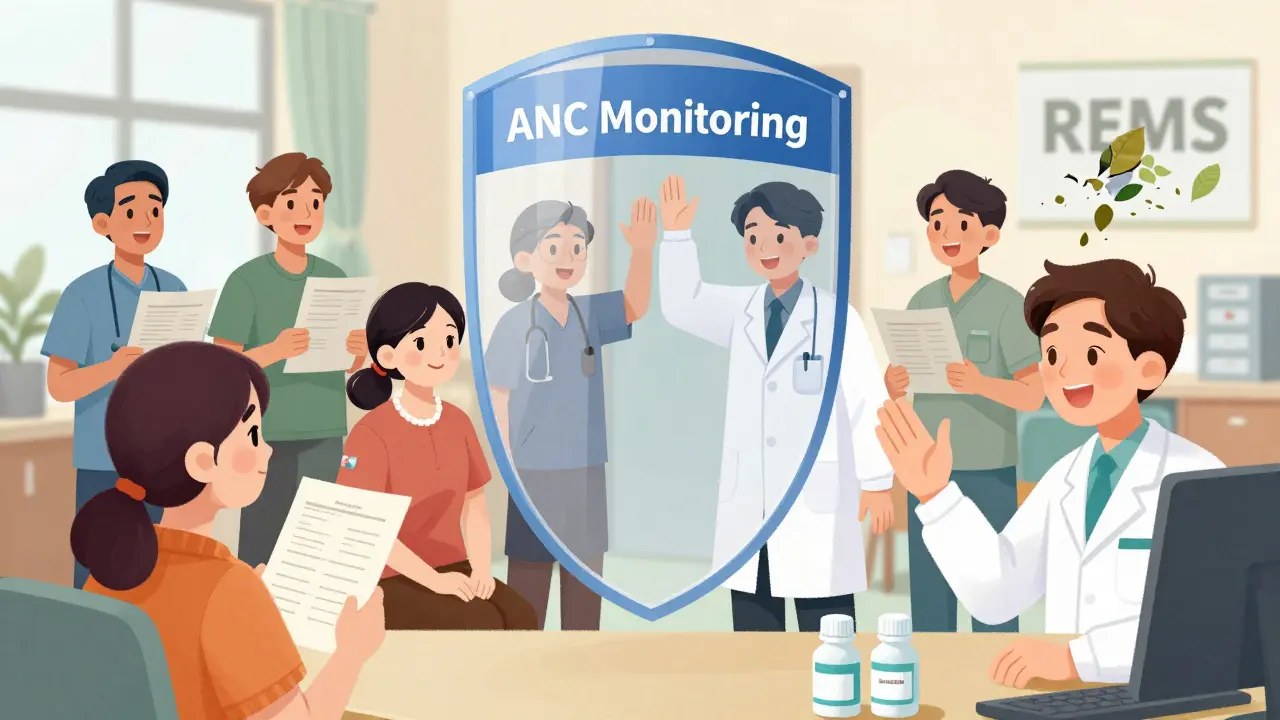
Even though the REMS program is gone, the medical need to monitor ANC hasn’t. The FDA still says: monitor your patient’s blood counts. The schedule hasn’t changed. It’s based on decades of data showing when the risk is highest.- Before starting: Get a baseline ANC test. No clozapine without it.
- Weeks 1-18: Weekly ANC tests. This is when the risk of severe neutropenia is greatest.
- Months 6-12: Every two weeks, if ANC stays above the safe threshold.
- After 12 months: Monthly testing, using shared decision-making with the patient.
These aren’t suggestions. They’re the standard of care. The FDA’s 2024 review found that healthcare providers were already following these guidelines - even under REMS. That’s why the agency concluded the program wasn’t adding safety, just friction.
What Changed on February 24, 2025?
The big shift? Clozapine REMS is no longer mandatory. That means:- Prescribers no longer need to register or re-certify through the Clozapine REMS website.
- Pharmacies don’t have to check the REMS portal before filling a prescription.
- Patient enrollment is optional. No more monthly Patient Status Forms.
- Telecommunication verification is no longer required - pharmacies can now dispense based on a lab report provided by the patient or provider.
The FDA didn’t remove the warning. The Boxed Warning about severe neutropenia is still in every clozapine package insert. The risk is real. But the agency decided the regulatory system wasn’t improving safety - it was just slowing access. A 2023 study in Schizophrenia Bulletin found clinics without dedicated REMS coordinators were nearly four times less likely to start patients on clozapine. That’s not safety - that’s neglect.

Why Now? The Evidence Behind the Decision
The FDA didn’t make this call lightly. They spent over a year reviewing real-world data from the Sentinel System, the Department of Veterans Affairs, and Brigham and Women’s Hospital. They looked at thousands of patient records. What did they find?- Severe neutropenia still happens - but only in about 0.8% of patients, mostly in the first six months.
- Healthcare providers have gotten better at monitoring. Most are already testing ANC on schedule.
- The REMS program didn’t reduce neutropenia rates - it just added administrative work.
- Only 31.7% of eligible patients were getting clozapine before REMS removal. That’s not because doctors didn’t know it worked. It’s because the system made it too hard.
The FDA concluded: Doctors know the risk. They’re already managing it. The program isn’t helping - it’s hurting.
Impact on Patients and Providers
For patients, this change is huge. Before February 2025, about 30% of people trying to start clozapine faced delays due to REMS paperwork. One patient in Ohio waited 11 weeks just to get her first refill because her lab result didn’t upload correctly. Another in rural Kentucky couldn’t find a pharmacy certified to dispense clozapine - there weren’t any in her county. These aren’t rare stories. They were the norm.For prescribers, it’s a relief. Psychiatrists used to spend an average of 3.2 hours a week just handling REMS paperwork. That’s time they could’ve spent with patients. For pharmacies, it’s simpler too. Before, each clozapine prescription added 10-15 minutes of verification steps. Now, it’s like any other prescription - just check the lab report, confirm the ANC is safe, and dispense.
The American Psychiatric Nurses Association called the removal a “success for both providers and patients.” The Medical Letter said it would “minimize the burden on the healthcare system.” Even industry analysts agree. Evaluate Pharma raised its forecast for clozapine sales from $487 million in 2024 to $612 million by 2026 - because more people will finally get access.
What Should You Do Now?
If you’re a prescriber: Keep monitoring ANC exactly as before. Don’t skip tests. Don’t assume the risk is gone. The Boxed Warning is still there for a reason.If you’re a pharmacist: You no longer need REMS certification. But you still need to verify that the patient has had a recent ANC test. Ask for the lab report. If the ANC is below 1,500/μL (or 1,000/μL for benign ethnic neutropenia), don’t dispense. Contact the prescriber. That’s still your responsibility.
If you’re a patient: Don’t stop getting your blood drawn. The REMS program is gone, but your safety isn’t. Show up for your labs. Keep your provider informed. If your ANC drops, don’t wait - call your doctor right away.
What’s Next?
The FDA isn’t walking away from clozapine safety - they’re trusting clinicians to handle it. The American Society of Health-System Pharmacists is rolling out updated guidelines in Q3 2025 to reinforce best practices. Clozapine manufacturers are updating labels to remove REMS references while keeping the Boxed Warning. And the FDA will keep watching - using the Sentinel System to track neutropenia cases in real time.This isn’t the end of safety. It’s the end of bureaucracy. The goal was always to get clozapine to the people who need it - without putting lives at risk. Now, with fewer barriers and the same vigilance, that goal is finally within reach.
Virginia Seitz
December 18, 2025 AT 12:09This is huge! 🎉 No more waiting weeks just to get my meds. I started clozapine last year and the REMS paperwork felt like a full-time job. Now I can actually live my life. Thank you, FDA.
Peter Ronai
December 18, 2025 AT 20:14Oh please. They removed REMS because Big Pharma lobbied them into it. You think they care about patients? They care about profits. No more monitoring? That’s a death sentence waiting to happen. Just wait - the first patient dies from agranulocytosis, and suddenly everyone’s screaming for it to be reinstated.
Michael Whitaker
December 20, 2025 AT 06:50One must acknowledge, with a degree of scholarly gravitas, that the removal of REMS constitutes not an act of liberation, but rather a profound abdication of institutional responsibility. The regulatory architecture, however bureaucratic, served as a necessary bulwark against clinical negligence. To dispense with it is to presume omniscience on the part of the average clinician - a presumption both arrogant and empirically unsound.
Naomi Lopez
December 22, 2025 AT 00:53Finally. I’ve been prescribing clozapine for 12 years and never once had a patient develop agranulocytosis - because we monitored. The REMS system didn’t improve outcomes. It just made everyone miserable. The FDA did the right thing by trusting doctors to do their jobs.
Salome Perez
December 23, 2025 AT 14:56This is one of those rare moments where bureaucracy finally bowed to common sense. I’ve seen patients cry because they couldn’t get their refill due to a lab upload error. One man drove 90 miles to a certified pharmacy - only to be told the portal was down. This isn’t safety. It’s systemic cruelty disguised as protocol. The FDA listened to the people who actually live this. Bravo.
Kent Peterson
December 25, 2025 AT 13:14Jonathan Morris
December 26, 2025 AT 07:12Let me guess - this was pushed by the same people who buried the CDC’s 2017 report on clozapine-related deaths. The FDA didn’t remove REMS because it was ‘ineffective.’ They removed it because they’re hiding data. The Sentinel System? A joke. It’s just a PR tool. The real neutropenia rates are 3x higher than they’re letting on. And they’re letting people die so they can sell more pills.
Linda Caldwell
December 26, 2025 AT 12:20YES! This is the kind of change that saves lives - not by forcing paperwork, but by giving people dignity. If you’re getting your blood drawn every week like you should, you’re safe. Let’s stop treating patients like criminals and start treating them like adults. I’m so proud of our healthcare system right now.
Anna Giakoumakatou
December 27, 2025 AT 06:08Oh, how delightfully naive. We’ve replaced a flawed system with… more trust? In a world where people forget to take their antidepressants? I suppose next they’ll let us self-certify our oxygen levels before flying. The irony is poetic: we’ve removed the safety net so we can admire the view while falling.
Donna Packard
December 29, 2025 AT 06:05Just wanted to say - this means so much to families like mine. My sister waited 10 weeks for her first refill. She almost gave up. Now, she’s back to painting again. Small things, but they matter. Thank you to everyone who fought for this change.
Sam Clark
December 30, 2025 AT 15:23As a clinical pharmacist, I welcome this change. The REMS program was a well-intentioned overcorrection. We were already adhering to the monitoring guidelines - the system simply added friction without improving outcomes. The key now is education: ensuring patients understand that vigilance remains essential. This is not a relaxation of standards - it is a refinement of process.
Jessica Salgado
December 30, 2025 AT 19:24Wait - so if the pharmacy doesn’t check REMS anymore, how do they know the ANC is safe? Do they just take the patient’s word for it? What if someone lies? Or forgets? What’s the backup plan? I’m all for reducing bureaucracy, but I’m also terrified someone’s going to get hurt because someone didn’t bring their lab report.
Steven Lavoie
January 1, 2026 AT 03:25I’ve worked in rural clinics for 15 years. Before REMS, we had patients travel 3 hours for a blood draw - then wait another week because the lab was backed up. REMS made it worse. Now? We can call the lab, get the result, and give the script. No portal. No delays. No tears. This isn’t just policy - it’s humanity.
Jigar shah
January 2, 2026 AT 23:15Interesting. In India, clozapine is available without any mandatory monitoring. We rely on clinical judgment and regular follow-ups. The mortality rate is comparable to the U.S. - even lower in some studies. Maybe the real issue wasn’t the drug. It was the system.