Steroid Hyperglycemia Management Calculator
This calculator helps determine appropriate insulin dosing for corticosteroid-induced hyperglycemia based on your steroid dose, current blood sugar level, and timing. Always consult your healthcare provider before making medication adjustments.
Recommended Insulin Dose
0.2 units/kg
Based on your steroid dose and blood sugar level
Key Timing Instructions
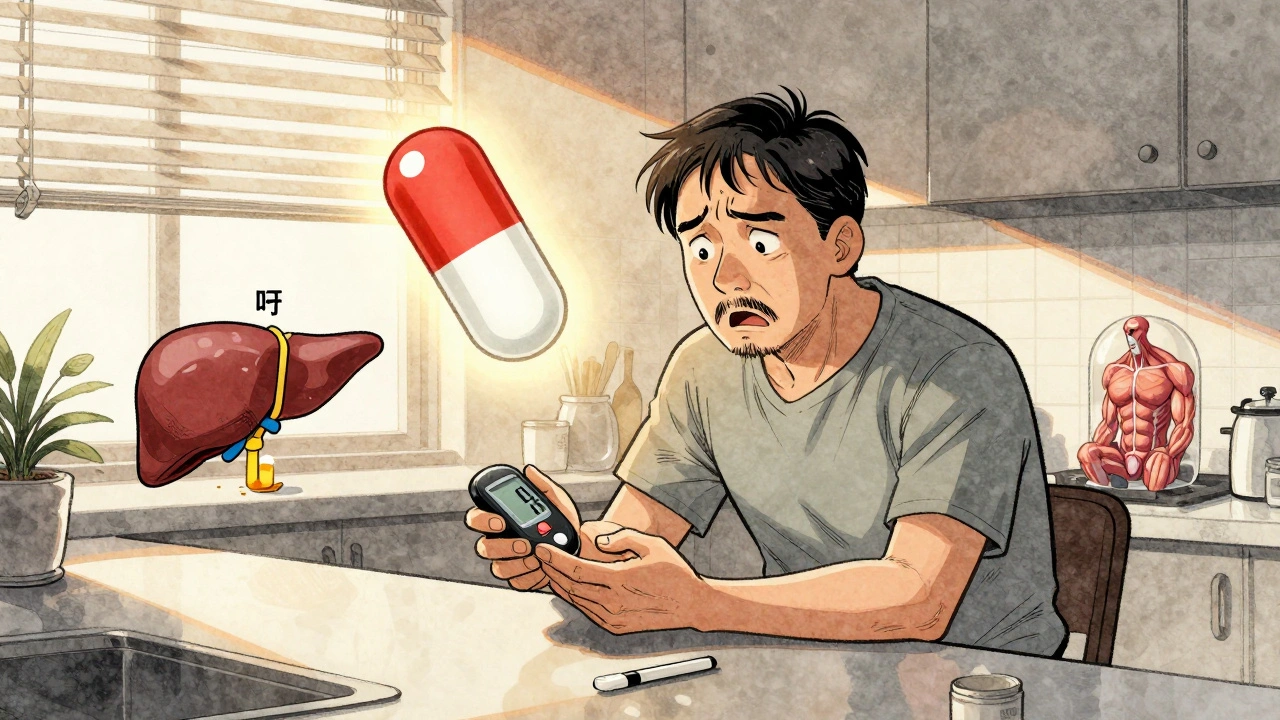
When someone starts taking corticosteroids-whether for asthma, rheumatoid arthritis, or after an organ transplant-they’re often told about side effects like weight gain or trouble sleeping. But one of the most dangerous, and often overlooked, effects is a sudden spike in blood sugar. This isn’t just a minor inconvenience. It’s corticosteroid-induced hyperglycemia, a condition that can turn a person without diabetes into someone with dangerously high glucose levels in just days.
Why Corticosteroids Raise Blood Sugar
Corticosteroids like prednisone, dexamethasone, and hydrocortisone don’t just reduce inflammation. They also mess with how your body uses sugar. These drugs trigger a triple attack on your metabolism: they make your liver pump out more glucose, block your muscles from absorbing it, and silence your pancreas from making enough insulin. In the liver, corticosteroids boost two key enzymes-phosphoenolpyruvate carboxykinase and glucose-6-phosphatase-that crank up glucose production by nearly 38%. At the same time, they interfere with GLUT4 transporters in muscle cells, cutting glucose uptake by over 40%. Meanwhile, insulin-producing beta cells in the pancreas respond by reducing their output by more than 20%, especially when exposed to high doses like 75 mg of prednisolone. The result? Blood sugar climbs fast, often within hours of the first dose. This isn’t the same as type 2 diabetes. In type 2, insulin resistance builds slowly over years. With steroid-induced hyperglycemia, it hits like a wave. And it follows a pattern: blood sugar spikes in the morning-right when the steroid peaks-and drops later in the day. Many doctors miss this, treating it like regular diabetes and giving the same insulin doses all day. That’s a mistake.Who’s at Highest Risk?
Not everyone on steroids develops high blood sugar. But certain people are far more likely to. If you have a BMI over 30, your risk jumps 3.2 times compared to someone with a normal weight. If you already have prediabetes or impaired glucose tolerance, your risk is nearly five times higher. Older adults, people with a family history of diabetes, and those on high-dose or long-term steroids are also at greater risk. The dose matters too. Patients taking more than 20 mg of prednisone (or its equivalent) daily are far more likely to develop hyperglycemia than those on low doses. Even short courses-like a five-day burst for a flare-up-can trigger spikes in vulnerable people. And it’s not just hospital patients. People taking oral steroids at home are just as at risk, especially if they’re not monitored.How to Monitor Blood Sugar Correctly
Waiting for symptoms like excessive thirst or fatigue is too late. By then, blood sugar may already be dangerously high. The standard advice from the NIH and the Endocrine Society is clear: start checking glucose within 24 hours of starting corticosteroid therapy. For high-risk patients, check fasting glucose and post-meal glucose at least twice a day. Don’t just check in the morning. Check after lunch and dinner too. Why? Because steroid-induced hyperglycemia doesn’t follow a steady curve. It’s jagged. Morning levels may hit 200 mg/dL or higher, while evening levels might drop to 120 mg/dL. If you only test fasting glucose, you’ll miss the afternoon spikes-and the nighttime lows that can happen when steroids are tapered. Continuous glucose monitors (CGMs) are becoming essential tools. A 2021 study found that 68% of patients with steroid-induced hyperglycemia had unrecognized high or low glucose events that fingersticks completely missed. CGMs catch nocturnal hypoglycemia during steroid tapering-a dangerous but common issue that’s often blamed on “patient error” when it’s actually a direct effect of the drug wearing off.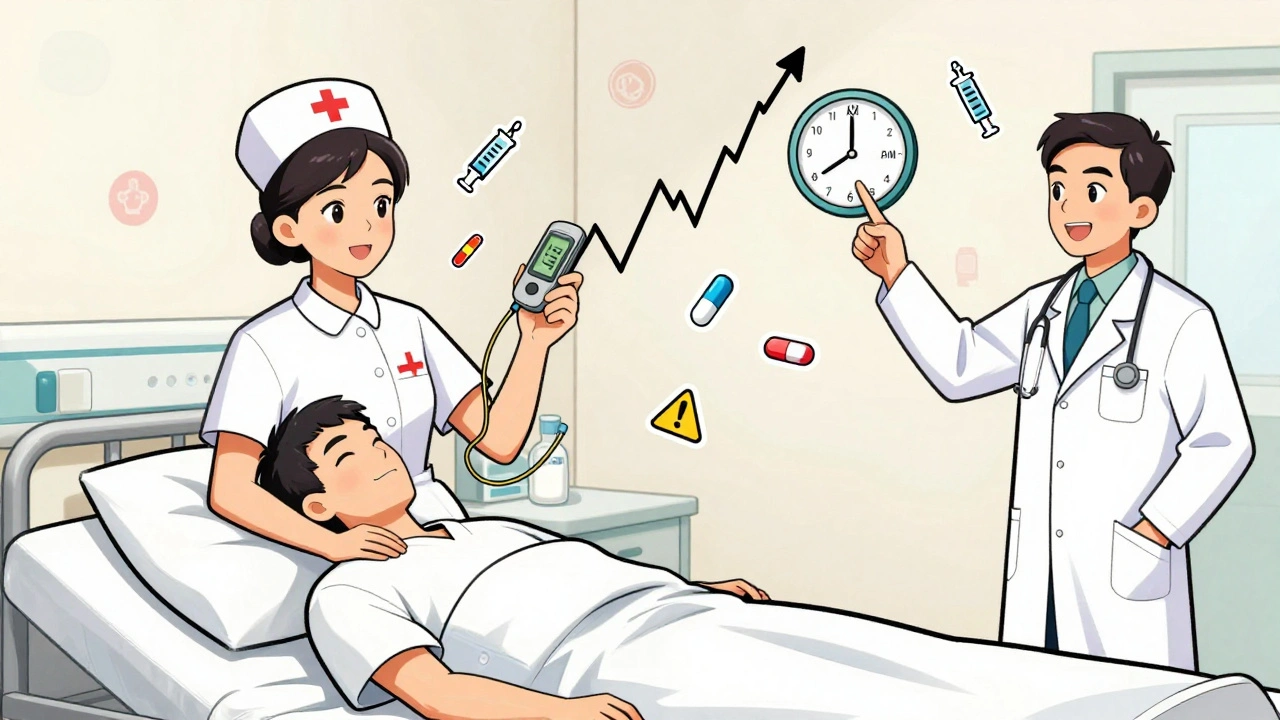
When to Start Insulin
Many providers still use sliding scale insulin for steroid hyperglycemia. That’s outdated. Sliding scale reacts to high numbers after they happen. It doesn’t prevent them. Basal-bolus insulin-combining a long-acting insulin (like glargine or detemir) with rapid-acting insulin before meals-is far more effective. A 2022 JAMA trial showed it improves glucose control by 35% compared to sliding scale. For patients with pre-existing diabetes, expect to increase insulin doses by 20% to 50%. For those without prior diabetes, insulin may be needed if glucose levels stay above 180 mg/dL on two consecutive readings. Don’t wait for 250 or 300. Start early. The goal isn’t perfection-it’s preventing complications like hyperosmolar hyperglycemic state (HHS), which occurs in nearly 5% of severe cases. Timing matters. If the steroid is given once daily in the morning, give the largest insulin dose at breakfast. Reduce afternoon doses. If the steroid is given twice daily, split the insulin accordingly. Many treatment errors happen because insulin is given like it’s for regular diabetes-not for the steroid’s clock.What Happens When Steroids Are Stopped?
Stopping steroids doesn’t mean blood sugar normalizes overnight. Insulin resistance can linger for 16 to 24 hours after the last dose. That’s why monitoring should continue even on non-steroid days. And during tapering, the risk of hypoglycemia spikes. As the steroid effect fades, insulin sensitivity returns-but if insulin doses aren’t lowered, blood sugar can crash. Patients often describe this as a “rollercoaster.” One day they’re fine. The next, they’re dizzy, sweating, confused. That’s not anxiety. It’s low blood sugar. In a 2023 survey of 1,243 patients, nearly 70% reported unexpected hypoglycemia during steroid tapering. Many didn’t know to reduce their insulin. Clinicians didn’t warn them.
Why So Many Hospitals Get It Wrong
Despite clear guidelines, most hospitals don’t have standardized protocols. A 2023 study found that only 58% of non-critical care units had any formal plan for managing steroid-induced hyperglycemia. In those without protocols, patients waited 42% longer to get treatment. That delay increases infection risk, prolongs hospital stays, and raises costs. Even among doctors, knowledge gaps are wide. Only 44% of non-endocrinology physicians correctly identified the morning-dominant glucose pattern. Many assume high blood sugar means the patient “has diabetes,” not that it’s a drug side effect. That leads to misdiagnosis, unnecessary long-term medications, and missed opportunities to reverse the condition. The Mayo Clinic’s Steroid Diabetes Protocol fixed this. They mandated point-of-care glucose testing within four hours of the first steroid dose. If two readings were above 180 mg/dL, insulin was started automatically using a simple algorithm. Within two years, complications dropped by over 50%.The Bigger Picture: Costs, Trends, and Future Solutions
Every year in the U.S., over 2 million hospital admissions involve corticosteroid therapy. Nearly half of those patients develop hyperglycemia. That’s a massive burden on the healthcare system. But good management pays off. Proper care reduces hospital stays by nearly two days per patient-saving over $2,300 per admission. Rheumatology, oncology, and pulmonology are the top three specialties prescribing high-dose steroids. As steroid use grows-especially for autoimmune and inflammatory conditions-so will steroid-induced diabetes. The FDA now requires all systemic corticosteroid labels to include hyperglycemia warnings. That’s progress. The future is moving toward precision medicine. The NIH’s GLUCO-STER trial is testing a machine learning tool that predicts who’ll develop hyperglycemia based on BMI, HbA1c, steroid dose, and even genetic markers like GR-1B polymorphisms. Early results show 84% accuracy. That could mean preemptive insulin for high-risk patients before their sugar even rises. Meanwhile, researchers are developing new drugs-tissue-selective glucocorticoid receptor modulators-that fight inflammation without wrecking metabolism. Three are already in Phase II trials, cutting hyperglycemia risk by over 60% compared to standard steroids. These could be game-changers.What You Can Do Now
If you’re prescribed corticosteroids:- Ask your doctor: “Will this affect my blood sugar?”
- Request glucose monitoring starting the first day.
- Use a CGM if possible-it catches what fingersticks miss.
- Don’t assume your insulin dose stays the same. Adjust it as steroids are tapered.
- Watch for dizziness, sweating, or confusion during tapering-these are signs of low blood sugar.
- Start glucose checks within 24 hours of steroid initiation.
- Use basal-bolus insulin, not sliding scale.
- Adjust insulin timing to match steroid dosing-morning steroids need morning insulin.
- Don’t stop monitoring when steroids are reduced.
- Create a simple protocol in your unit. It saves lives.
Billy Schimmel
December 6, 2025 AT 20:11So basically, we’re giving people a life-saving drug and then pretending their blood sugar spike is their fault? Classic.
Brooke Evers
December 7, 2025 AT 04:40I’ve seen this play out so many times in my job as a diabetic nurse. A patient comes in for a flare-up, gets a 5-day prednisone burst, and by day three they’re confused, shaky, and terrified because no one told them to check their glucose after lunch. The morning numbers look fine, so they think they’re okay-until they pass out at 2 a.m. from a crash. CGMs aren’t luxury gadgets; they’re survival tools for steroid patients. I wish every ER had them on rotation. And yes, insulin should be timed to the steroid, not the clock. Giving the same dose at dinner when the steroid’s already wearing off? That’s how people end up in the ICU with HHS. It’s not complicated. It’s just neglected.
Saketh Sai Rachapudi
December 8, 2025 AT 06:52USA always overcomplicates everything! In India we just give insulin and tell patient to eat less sugar! Why need CGM? Why need algorithm? Steroid bad, sugar up, insulin down! Simple! Why you people make everything so expensive? Why you need 10 pages to say this? Our doctors do it in 5 minutes! You waste money on machines!
joanne humphreys
December 9, 2025 AT 17:41This is one of those topics that gets buried under the noise of more glamorous medical headlines. It’s not sexy to talk about glucose fluctuations in patients on prednisone, but it’s one of the most preventable iatrogenic harms out there. I’ve had patients tell me their endocrinologist didn’t even mention blood sugar until their HbA1c jumped. It’s not negligence-it’s ignorance baked into the system. The fact that only 58% of non-critical units have protocols is shocking. This isn’t about fancy tech; it’s about basic accountability. Someone needs to be responsible for monitoring this. And it shouldn’t fall on the patient to ask.
Nigel ntini
December 11, 2025 AT 13:29Brilliant breakdown. I’ve been pushing for basal-bolus insulin protocols in my ward for over a year now. Sliding scale is a band-aid on a gunshot wound. The timing point is critical-morning steroids need morning insulin, not a one-size-fits-all dose. I once had a patient on a 75mg pulse who was getting insulin at 8 p.m. because the nurse ‘always did it then.’ By midnight, they were in ketoacidosis. We fixed it by aligning insulin with steroid peaks. It’s not rocket science. It’s just not taught enough. Let’s make this a standard in med school rotations.
Ashish Vazirani
December 12, 2025 AT 23:40Mansi Bansal
December 14, 2025 AT 13:52It is with profound regret that I must observe the systemic dereliction of duty exhibited by contemporary medical institutions in the management of corticosteroid-induced hyperglycemia. The failure to implement standardized, evidence-based protocols constitutes a gross violation of the Hippocratic Oath, and the continued reliance upon outdated, reactive methodologies such as sliding-scale insulin reflects a disturbing regression in clinical standards. One is compelled to inquire: if such a preventable condition persists with such frequency, does this not suggest a fundamental epistemological failure within medical education? The absence of mandatory glucose monitoring within 24 hours of steroid initiation is not merely negligent-it is morally indefensible.
pallavi khushwani
December 16, 2025 AT 07:36My mom was on prednisone for her rheumatoid arthritis last year. We didn’t know anything about this. She started feeling weird-super tired, thirsty all the time, then one night she was sweating and shaking like she had a fever. We thought it was the meds messing with her sleep. Turned out her sugar was 320. She ended up in the hospital. They gave her insulin and told us to check her glucose. We didn’t even know how to use the meter. I’m glad someone wrote this. If I’d known this before, I could’ve saved her so much stress. Just… tell people. Just tell them. It’s not that hard.
Dan Cole
December 17, 2025 AT 17:13Let me be the first to say this: if you’re still using sliding scale insulin for steroid-induced hyperglycemia, you’re not a doctor-you’re a glorified calculator operator. This isn’t 1998. We have pharmacokinetics, we have continuous glucose monitoring, we have data showing basal-bolus reduces complications by 35%. Yet here we are, in 2025, watching residents blindly follow protocols written by someone who probably thought ‘glucose’ was a brand of soda. The fact that 56% of hospitals don’t have a protocol? That’s not incompetence. That’s institutional arrogance. And the real tragedy? The patients who die from this aren’t statistics. They’re people who trusted the system. And the system failed them. Again.
Shayne Smith
December 17, 2025 AT 21:11I just got prescribed prednisone for a bad flare. I read this and immediately bought a CGM. My doctor didn’t mention blood sugar at all. I’m 32, not diabetic, but now I’m checking my numbers every few hours. I’ve seen the morning spike-210 after breakfast, 130 by dinner. I’m adjusting my food, not my insulin yet. But I’m watching. This is wild. I didn’t know steroids could do this. I’m glad I found this before I got hurt.
Max Manoles
December 19, 2025 AT 04:11One thing nobody talks about: the emotional toll. You’re already dealing with a chronic illness, then you get steroids, then suddenly you’re told you have ‘high blood sugar’-and now you’re injecting insulin, counting carbs, wearing a monitor, afraid of crashing. You’re not diabetic. But now you’re living like you are. And when the steroids taper? No one tells you the lows are coming. You feel like your body’s betraying you. It’s not just physiological. It’s psychological. And the medical system treats it like a lab value. It’s not. It’s a whole new identity you didn’t ask for.
Katie O'Connell
December 19, 2025 AT 22:38The assertion that continuous glucose monitors are ‘essential tools’ is a manifestly unsubstantiated claim, predicated upon the conflation of technological novelty with clinical necessity. The referenced 2021 study, while methodologically sound, exhibits selection bias toward high-risk cohorts and fails to account for cost-benefit ratios in low-resource settings. Moreover, the suggestion that basal-bolus insulin is universally superior ignores the heterogeneity of patient adherence and cognitive load. To mandate such protocols without robust economic modeling is to prioritize theoretical precision over pragmatic feasibility. One must question whether the push for CGMs is driven by clinical evidence-or by corporate interests in wearable medical devices.
Arjun Deva
December 21, 2025 AT 14:09Okay, but… what if… this is all a lie? What if the ‘hyperglycemia’ isn’t caused by steroids at all? What if it’s the vaccines? Or the water fluoridation? Or the glyphosate in the food? Look at the timeline: as soon as they started pushing CGMs, the insulin sales went up. And who owns the CGM companies? Big Pharma. And who profits when people think they’re ‘diabetic’? The same people who make the steroids. They want you dependent. They want you scared. They want you checking your sugar every hour. This isn’t medicine. It’s a money trap. And they’re using ‘science’ to make you believe it.
Karen Mitchell
December 22, 2025 AT 02:55Let me be clear: this entire post is a distraction. The real issue is that people are taking steroids without consulting their doctors first. If you’re self-medicating with prednisone bought online, of course your blood sugar is going to spike. This isn’t a systemic failure-it’s a failure of personal responsibility. Stop blaming the medical system. Start taking ownership of your health. And for heaven’s sake, stop eating sugar. That’s the real problem.
Kenny Pakade
December 22, 2025 AT 23:12So let me get this straight: Americans are so weak they can’t handle a little sugar spike? We’re giving people life-saving drugs and now we need to baby them with glucose monitors? In my country, we don’t have time for this nonsense. You get steroids? You deal with it. You get dizzy? You drink water. You feel bad? You rest. You don’t need a $1000 gadget to tell you your body’s stressed. You need discipline. This post is a joke. We don’t need more tech. We need more grit.
Dan Cole
December 22, 2025 AT 23:47And yet, the Mayo Clinic protocol worked. 50% fewer complications. That’s not theory. That’s data. So your ‘grit’ argument? It’s just a cover for laziness. You’d rather let people suffer than change a system that’s broken. That’s not strength. That’s cruelty dressed up as patriotism.