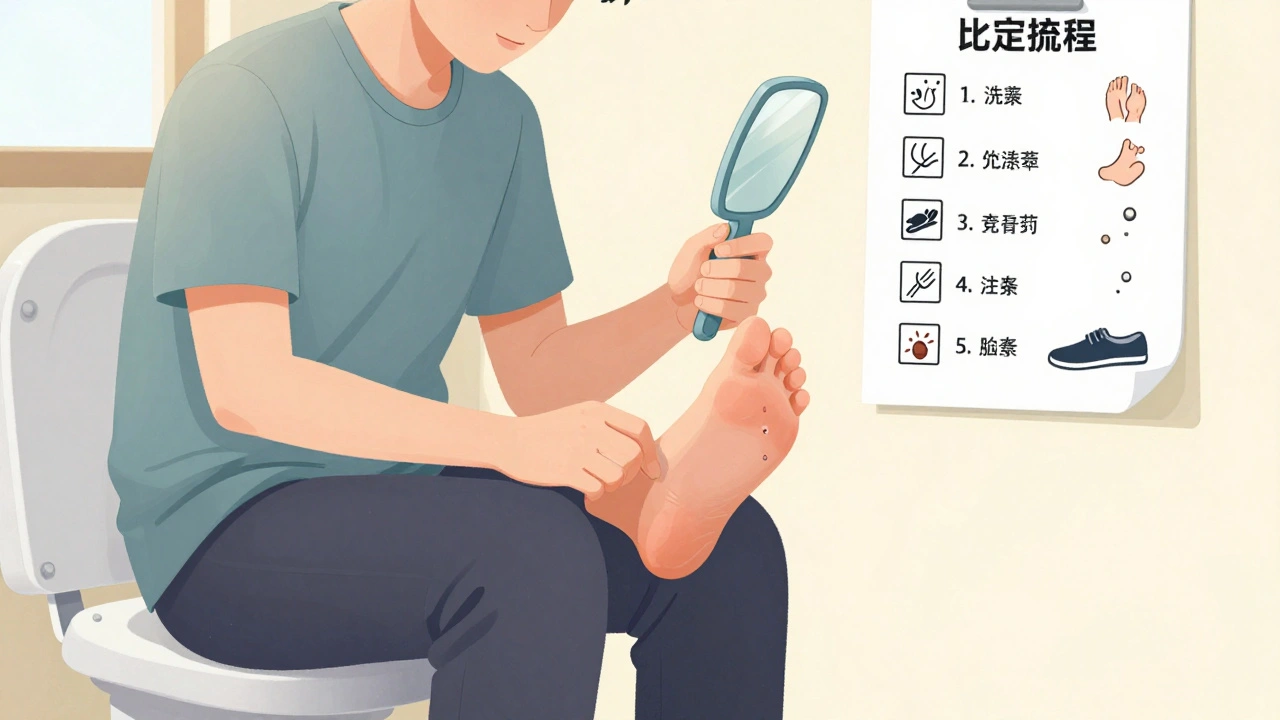
Every year, over 82,000 people in the U.S. lose a foot or leg because of diabetes. Most of these amputations don’t have to happen. They start with a small cut, blister, or sore that goes unnoticed-because the person with diabetes can’t feel it. Diabetic foot ulcers are not rare. About 1 in 4 people with diabetes will develop one in their lifetime. The good news? Almost all of them can be prevented-with daily attention, the right tools, and a simple checklist.
Why Your Feet Are at Risk
Diabetes doesn’t just affect blood sugar. Over time, high glucose damages nerves, especially in the feet. This is called peripheral neuropathy. You lose the ability to feel heat, pain, or pressure. A stone in your shoe, a tight sock seam, or a hot shower can burn your skin without you knowing. At the same time, diabetes narrows blood vessels, slowing healing. A tiny cut that would vanish in days for someone without diabetes can turn into an open wound-and then an infection-in weeks.The International Working Group on the Diabetic Foot (IWGDF) classifies risk into four levels:
- Risk 0: No nerve damage, no past ulcers. Low risk, but still need yearly checks.
- Risk 1: Nerve damage but no foot deformity. Check feet every 6 months.
- Risk 2: Nerve damage with foot deformity (like bunions or hammertoes). Check monthly.
- Risk 3: History of foot ulcer or amputation. Check weekly or even daily. This is your critical zone.
If you’re Risk 2 or 3, you’re not just at risk-you’re in the danger zone. And if you’ve had one ulcer before, your chance of getting another is over 70% within five years.
The Daily Foot Inspection Checklist
This isn’t optional. It’s non-negotiable. Do this every single day, same time, same place. Consistency saves limbs.- Wash your feet in lukewarm water-between 90°F and 95°F. Test the water with your elbow or a thermometer. Never use your feet to test temperature. Hot water burns unnoticed.
- Dry thoroughly, especially between your toes. Moisture breeds fungus and cracks. Use a soft towel. Don’t rub hard.
- Inspect every surface using a mirror or ask someone to help. Look at the soles, heels, between toes, and under toenails. Don’t guess. Look closely. A blister as small as a pea, a cut deeper than a millimeter, or a red spot bigger than a dime matters.
- Look for these warning signs:
- Blisters ≥3mm
- Cuts or scrapes ≥1mm deep
- Redness larger than 1cm
- Swelling that makes your foot feel tighter than usual
- Warmth-use the back of your hand. If one foot feels noticeably warmer than the other, it could mean infection.
- Discoloration-black, blue, or purple spots
- Odor-any unusual smell, even slight, can signal infection
- Moisturize dry skin with unscented lotion. But never put lotion between your toes. That’s where fungus grows.
- Trim nails straight across. Cut them so they’re 1-2mm above the skin fold. Don’t round the corners. Don’t dig under the nail. If you can’t see well or have thick nails, get a podiatrist to do it.
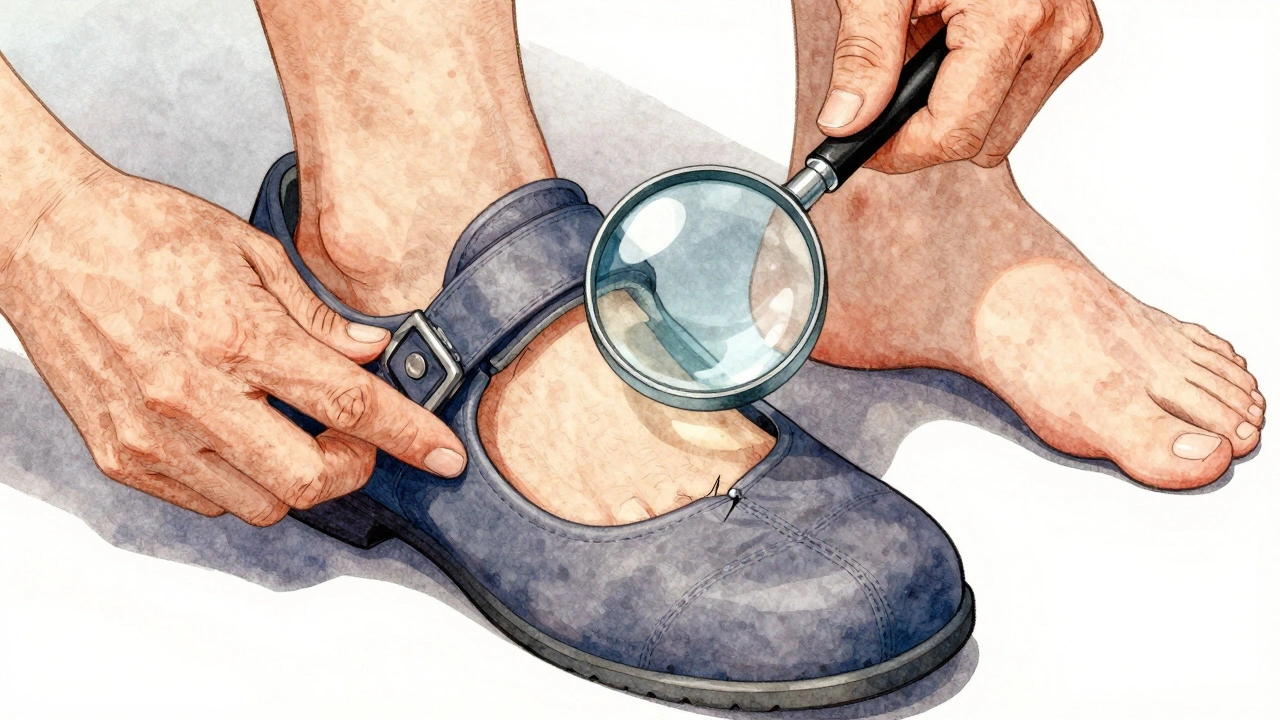
- Check your shoes before putting them on. Shake them out. Look for pebbles, torn linings, or sharp seams. A small wrinkle inside your shoe can cause a pressure sore that turns into an ulcer.
Studies show that 68% of ulcers start from injuries you didn’t notice because inspections were skipped or rushed. Do this checklist in natural light between 10 a.m. and 2 p.m. Body temperature changes during the day can mask early signs of inflammation. Doing it at the same time every day makes it a habit.
Footwear Is Your First Line of Defense
Shoes aren’t just about comfort. They’re medical equipment.87% of forefoot ulcers and 79% of midfoot ulcers in people with neuropathy are caused by shoes that don’t fit right. That’s not a typo. It’s almost all of them.
Here’s what your shoes must have:
- At least 0.5 inches (12.7mm) of space between your longest toe and the end of the shoe
- Width that lets your toes spread naturally-no squeezing
- A rigid heel counter that doesn’t collapse when you press it
- No seams or stitching inside that rub against your skin
Therapeutic shoes aren’t just for people with ulcers. If you have Risk 2 or 3, you need them-even if you think you’re fine. Insurance often covers them. Ask your doctor for a prescription.
Never walk barefoot-not even in your house. The CDC found that walking barefoot indoors for just 5 minutes a day increases ulcer risk by more than 11 times. Socks should be seamless, moisture-wicking, and clean. No elastic tops that cut into your skin.
And no flip-flops or sandals. They don’t protect your feet. A 2022 pressure-mapping study showed sandals increase ulcer risk by 4.3 times. Even in summer heat, wear closed shoes with breathable material.
What Not to Do
There are myths that hurt. Avoid these:- Don’t use corn removers or chemical peels. They burn skin. You won’t feel it. You’ll end up with an ulcer.
- Don’t soak your feet for long. Soaking dries out skin and makes cracks worse. Wash, don’t soak.
- Don’t try to cut calluses yourself. Use a pumice stone gently after washing. Let a podiatrist handle thick calluses.
- Don’t ignore redness or warmth. If you see it, call your doctor the same day. Waiting 2 days can mean the difference between healing and amputation.
- Don’t use heating pads or hot water bottles. You can’t feel how hot they are. Burns happen fast.
And forget the idea that exercise is always safe. The 2023 IWGDF guidelines say foot-ankle exercises can help-but only if you have good sensation and no open wounds. Unsupervised exercise without gait analysis increases ulcer risk by 22%. Talk to your doctor before starting any new routine.
When to See a Professional
You don’t have to wait for an emergency. Build a team:- Annual check-up: Everyone with diabetes needs a full foot exam once a year. This includes a monofilament test (to check sensation) and an ankle-brachial index (ABI) test (to check blood flow).
- Every 3-6 months: If you’re Risk 1 or higher, you need to see a podiatrist this often.
- Immediately: If you see any redness, swelling, warmth, drainage, or a break in the skin-even if it’s tiny-call your doctor. Don’t wait. Don’t try to treat it yourself.
Many people delay because they think it’s “just a small thing.” But the CDC found that 92% of plantar ulcers start under the ball of the foot-the metatarsal heads. That’s where pressure builds. That’s where ulcers hide.
Technology Can Help-But It’s Not a Replacement
New tools like smart socks and temperature-sensing mats can detect heat changes that predict ulcers 4-7 days before they form. These work well in trials. But they cost $150-$300 upfront, plus monthly fees. For many people, especially on Medicaid, they’re out of reach.Smartphone apps that use your camera to scan your feet for early signs of ulcers are emerging. One study showed 89.7% accuracy. But they need fast internet. In rural areas, that’s not always possible.
Technology can help. But nothing replaces your eyes, your hands, and your daily habit of checking your feet.

What’s Working: Integrated Care
The best outcomes come from teams-not solo efforts. The 2023 IWGDF guidelines call this “integrated foot care.” That means your primary care doctor, podiatrist, diabetes educator, and orthotist all talk to each other. Referrals happen within 14 days. No waiting months.Programs that use this model cut ulcers by 36% and amputations by 42% in Medicare patients. But only 39% of U.S. doctors are doing full foot exams regularly. Time, lack of training, and missing tools are the barriers.
If your doctor doesn’t check your feet properly, ask for a referral. You have the right to a full foot exam every year. In 47 states, Medicaid now requires it-but enforcement is weak. Be your own advocate.
Final Thought: It’s About Consistency, Not Perfection
You don’t need to be perfect. You just need to be consistent. Miss one day? Do it the next. Forget to check your shoes? Do it tomorrow. The goal isn’t flawless execution-it’s making foot care part of your routine, like brushing your teeth.Every day you inspect your feet, you’re not just preventing a sore. You’re preventing a hospital visit. You’re preventing a surgery. You’re preventing the loss of a limb.
It’s not about fear. It’s about power. You have control. You can stop this before it starts.
How often should I inspect my feet if I have diabetes?
If you have no nerve damage or history of foot problems, check your feet once a day and get a professional exam once a year. If you have nerve damage (neuropathy), check daily and see a podiatrist every 3 to 6 months. If you’ve had a foot ulcer or amputation before, check your feet daily and see your provider monthly-or more often if advised.
Can I use regular shoes if I have diabetes?
You can, but only if you have no nerve damage, no foot deformities, and no history of ulcers. For anyone with nerve damage, foot deformities, or past ulcers, therapeutic shoes with pressure-reducing features are essential. Regular shoes often cause pressure points that lead to ulcers. If you’re unsure, ask your doctor for a referral to an orthotist.
Is it safe to walk barefoot indoors with diabetes?
No. Walking barefoot-even inside your home-increases your risk of foot ulcers by more than 11 times. You might not feel a sharp object, a hot floor, or a rough seam in the carpet. Always wear socks or closed shoes, even when you’re just moving around the house.
What should I do if I find a small cut or blister on my foot?
Clean it gently with mild soap and water. Pat dry. Cover with a sterile bandage. Do not apply antibiotic ointment unless directed by a doctor. Call your healthcare provider the same day. Even small wounds can become infected quickly in people with diabetes. Do not wait to see if it gets better.
Can I use over-the-counter corn or callus removers?
No. These products contain strong acids that burn skin. If you have nerve damage, you won’t feel the burn until it’s too late. This can lead to deep ulcers. Let a podiatrist trim calluses safely. Never try to cut or shave them yourself.
Why do some people with diabetes get foot ulcers even when they check their feet?
Because checking isn’t enough if you’re not checking properly. Many people miss the soles, between toes, or under nails. Others don’t use a mirror or help from someone else. Also, if you’re wearing ill-fitting shoes, pressure builds up slowly. You might not see a red spot until the damage is deep. Consistency, technique, and proper footwear matter more than frequency alone.
Do I need to see a podiatrist if I don’t have any foot problems?
Yes. Even if your feet feel fine, you should see a podiatrist at least once a year if you have diabetes. They check for nerve damage, poor circulation, and early signs of deformity-things you can’t feel or see. Early detection prevents problems before they become serious.
Next Steps: Make It Stick
Set a daily alarm. Put your mirror by your bathroom sink. Keep your shoes by the door. Tie foot care to something you already do-like brushing your teeth or checking your blood sugar.Keep a simple log: Date, no issues, or issue found. Show it to your doctor. It helps them see patterns.
This isn’t just about your feet. It’s about your independence. Your ability to walk, to travel, to live without pain. One small habit-daily inspection-can keep you mobile for decades.
You’ve got this.
Ashley Farmer
December 8, 2025 AT 10:10Just wanted to say this checklist saved my dad’s foot last year. He’s had Type 2 for 18 years and never checked his soles until I made him start. One tiny blister under his heel went unnoticed for three days-thankfully we caught it before it turned. Now he does it every night after his tea. No amputations here. 🙏
Jennifer Anderson
December 10, 2025 AT 01:23omg i didnt even know you were sposed to shake out your shoes 😭 i just throw my slippers on and walk out. gonna start doing this right now. my feet are gonna thank me lol
Sadie Nastor
December 10, 2025 AT 01:47I’ve been doing the daily check for 2 years now and honestly? It’s weirdly calming. Like a little ritual. I light a candle, sit with my mirror, and just breathe while I look. Feels like self-love instead of a chore. Also, I use a cheap $8 magnifying mirror from Target-works great. 💖
Sangram Lavte
December 10, 2025 AT 21:06Good info, but I’ve seen too many people get overwhelmed by this. You don’t need to be perfect. Just consistent. My uncle skipped a week, got a callus, didn’t tell anyone, and ended up in the hospital. It’s not about fear-it’s about awareness. Simple steps matter more than perfect execution.
Oliver Damon
December 11, 2025 AT 13:37From a biomechanics standpoint, the pressure redistribution achieved by therapeutic footwear is non-negotiable in neuropathic populations. The metatarsal heads are ground zero for offloading failure-this aligns with the 2023 IWGDF biomechanical risk stratification model. The 87% statistic is corroborated by gait analysis studies using Tekscan systems. We’re not talking about comfort; we’re talking about pressure gradient mitigation.
Ernie Blevins
December 11, 2025 AT 14:53So let me get this straight… you’re telling me I can’t walk barefoot in my own house? And I have to buy expensive shoes? And if I miss one day, I’m gonna lose a foot? This is fearmongering. I’ve had diabetes for 15 years and I’m fine. Stop scaring people.
David Brooks
December 11, 2025 AT 17:51THIS. RIGHT. HERE. I cried reading this. My cousin lost both legs. He was 42. He thought he was fine. He didn’t check his feet. He didn’t believe it could happen to him. Don’t be him. Do the damn checklist. Every. Single. Day. Your future self will hug you for it.
Nicholas Heer
December 12, 2025 AT 03:19They’re lying about the shoes. Big Pharma and orthotists want you hooked. You don’t need $500 shoes. Just wear socks and walk on grass. They don’t want you to know the truth-this whole ‘foot ulcer crisis’ is a scam to sell gadgets. The real cause? Sugar taxes and insulin prices. They’re making you paranoid so you buy more stuff.
Kurt Russell
December 13, 2025 AT 02:43Yo. I’m a diabetic and I used to skip checks like it was no big deal. Then I got a blister from a sock seam. Took me 3 weeks to heal. I’m not doing that again. Now I do the checklist like it’s my job. I even made a checklist sticker and put it on my fridge. You got this. One day at a time. You’re not alone.
Kyle Flores
December 14, 2025 AT 06:09My grandma used to say ‘if you can’t feel it, you gotta see it.’ She’s 81, diabetic since 72, never had an ulcer. She checks her feet every night with her reading glasses and a flashlight. She doesn’t have fancy tech. Just eyes, hands, and habit. That’s all you need. Don’t overcomplicate it.
Ashley Farmer
December 16, 2025 AT 01:31Thank you for sharing your grandma’s story. That’s exactly what I tell my patients: it’s not about gadgets, it’s about attention. I’ve seen people with $1,000 smart socks ignore a red spot because they were too busy checking their app. Sometimes the simplest tools are the most powerful.