Managing Diabetes During Pregnancy Isn’t Optional - It’s Essential
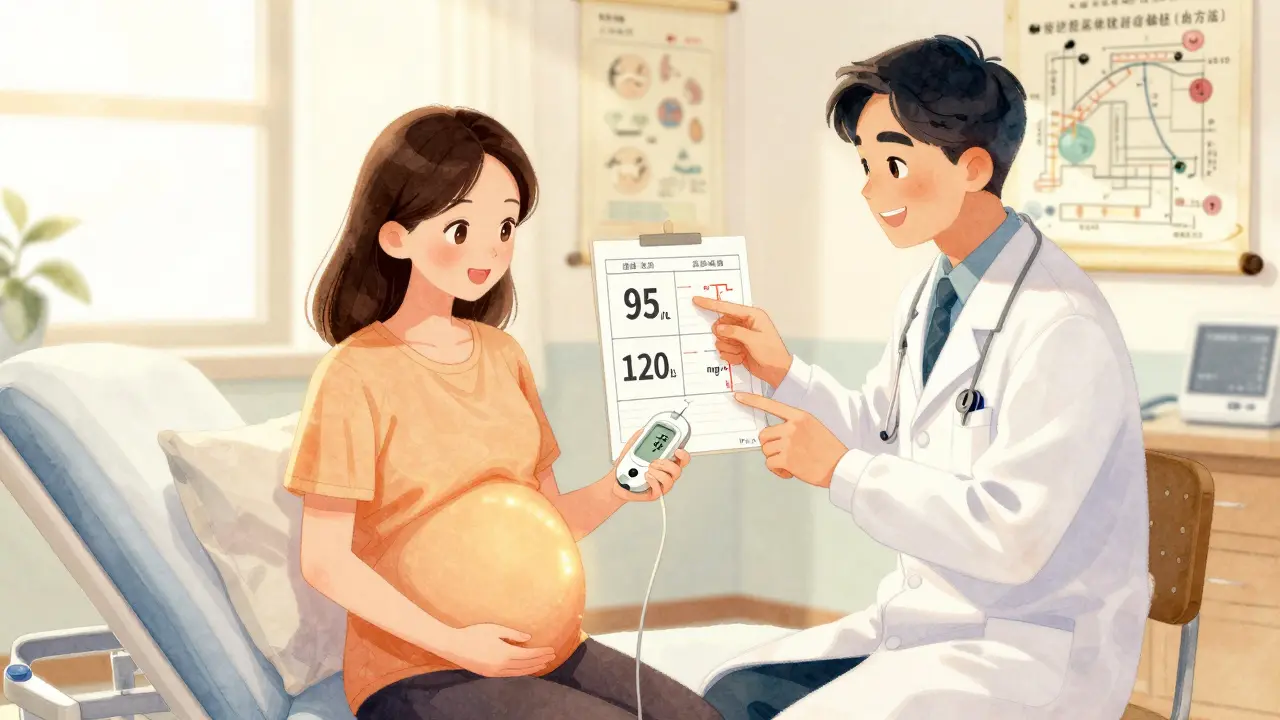
If you’re pregnant and have diabetes - whether it’s type 1, type 2, or gestational - your blood sugar targets aren’t the same as they were before. Your body is changing fast. Your baby’s developing organs are extremely sensitive to glucose levels. Too high, and you risk having a baby too large for gestational age, neonatal hypoglycemia, or even birth defects. Too low, and you risk dangerous maternal hypoglycemia. The goal? Keep fasting glucose under 95 mg/dL, and under 120 mg/dL two hours after meals. These aren’t suggestions. They’re clinical standards from the Endocrine Society’s 2023 guidelines.
Insulin Is Still the Gold Standard - Here’s Why
Insulin doesn’t cross the placenta. That’s the biggest reason it’s the first-line treatment for all types of diabetes during pregnancy. It’s been used for decades. It’s been studied in hundreds of thousands of pregnancies. And it’s safe. No link to birth defects. No long-term fetal risks shown in follow-up studies.
Not all insulins are equal here. Rapid-acting analogs like insulin lispro and insulin aspart are preferred over regular human insulin because they act faster and clear quicker after meals. That means less risk of low blood sugar later in the day. Long-acting options? Insulin detemir and insulin glargine have solid safety data from observational studies involving over 700 pregnant women. Both perform just as well as older NPH insulin, with fewer nighttime lows.
But avoid insulin glulisine and insulin degludec. There’s just not enough data. The Joslin Diabetes Center says outright: don’t use them in pregnancy. If you were on one before getting pregnant, switch before conception.
Insulin pumps (CSII) are increasingly common. Studies show they help lower HbA1c and reduce total insulin needs by delivery. But they don’t magically improve birth outcomes over multiple daily injections. The real advantage? More flexibility. You can adjust basal rates as your insulin resistance climbs in the second and third trimesters - which it does, often doubling or tripling.
Metformin: The Controversial Oral Option
Metformin is the only oral medication with enough data to be considered in some cases. It’s not approved by the FDA for gestational diabetes, but it’s used off-label - and often effectively.
Compared to insulin, metformin reduces the risk of having a large baby (LGA), needing NICU care, and developing preeclampsia. A 2019 NIH meta-analysis showed a 35% lower chance of LGA births with metformin. It’s also easier to take. No needles. Fewer lows. Cheaper.
But here’s the catch: about half of women on metformin end up needing insulin anyway. Glucose control often falls short in the third trimester. And metformin crosses the placenta. The baby’s exposed to levels similar to the mother’s. That raises concerns about long-term metabolic effects - like whether it alters the mTOR pathway, which regulates fetal growth and cell metabolism.
That’s why the Endocrine Society (2023) says: don’t add metformin to insulin for women with preexisting type 2 diabetes. The benefit of fewer large babies doesn’t outweigh the risk of smaller babies (SGA). And Joslin’s 2022 guidelines go further: they say metformin shouldn’t be used beyond the first trimester - period.
So where does that leave you? If you’re diagnosed with gestational diabetes and diet isn’t enough, metformin can be a reasonable first step - especially if you’re terrified of injections. But you need to know: you might still need insulin later. And you need to be monitored closely.

What About Other Oral Drugs? Don’t Risk It
GLP-1 receptor agonists like semaglutide or liraglutide? Stop them before you even try to get pregnant. The Endocrine Society says clearly: discontinue before conception. There’s no safe window. Animal studies show potential harm, and human data is too thin to justify risk.
SGLT2 inhibitors (like dapagliflozin)? DPP-4 inhibitors (like sitagliptin)? Alpha-glucosidase inhibitors (like acarbose)? All lack safety data. None are recommended. The Joslin guidelines call them “unacceptable” in pregnancy.
And while you’re at it - don’t assume that because a drug is safe for non-pregnant adults, it’s safe for you now. Pregnancy changes how your body absorbs, processes, and eliminates drugs. What worked last year might be dangerous this year.
Preconception Planning Is Half the Battle
If you have type 1 or type 2 diabetes and are thinking about getting pregnant, you’re not starting from zero. You’re starting from a critical prep phase.
The OHSU Diabetes and Pregnancy Program recommends an HbA1c under 6.5% before conception. If yours is above 10%, they strongly advise against pregnancy until you get it under control. Why? Because the first eight weeks of pregnancy - when the baby’s heart, brain, and spine are forming - happen before most people even know they’re pregnant. High glucose during that time increases the risk of serious birth defects by up to 10 times.
That’s why long-acting reversible contraception (LARC) is often offered to women with poorly controlled diabetes. It’s not about saying no to motherhood. It’s about giving you time to get your numbers right - so when you do get pregnant, you’re giving your baby the best shot.
Also: start taking low-dose aspirin (81-100 mg daily) at 12 weeks. It’s not just for heart health. For women with preexisting diabetes, it cuts preeclampsia risk by about 25%. That’s backed by ACOG, Joslin, and OHSU.

What Happens During Labor and After Delivery?
During labor, your blood sugar will be checked every hour. You might get IV insulin if it spikes. Your team will watch your baby’s heart rate closely - high glucose can stress the baby. After delivery, insulin needs drop sharply - often to 50% or less of your prepregnancy dose. Don’t be surprised if you need way less.
And here’s good news: if you had gestational diabetes, you can usually stop all medications right after birth. Your body resets. Metformin? Gone. Insulin? Gone. Your doctor will check your blood sugar 6-12 weeks postpartum to make sure it’s back to normal. But you’re not off the hook. Women who’ve had gestational diabetes have a 50% chance of developing type 2 diabetes within 10 years. Keep eating well. Stay active. Get screened yearly.
Continuous Glucose Monitors (CGMs): Helpful, But Not Required
CGMs are great. They show trends, not just snapshots. You’ll see how your glucose responds to meals, stress, or sleep. For women with type 1 diabetes, studies show better outcomes with CGM use - fewer highs, fewer lows, healthier babies.
But for type 2 or gestational diabetes? The evidence isn’t strong enough to say CGM is better than fingerstick testing. The Endocrine Society says there’s “lack of direct evidence” supporting CGM superiority for T2DM in pregnancy. That doesn’t mean don’t use one - if you’ve been on it before and find it helpful, keep it. But don’t feel pressured to buy one just because it’s trendy.
Bottom Line: What You Need to Know
- Insulin is the safest, most reliable option - and it’s still the standard.
- Metformin can be used in gestational diabetes, but you might need insulin later - and it’s not for everyone.
- Stop GLP-1 agonists before conception. Avoid all other oral diabetes drugs.
- Get your HbA1c under 6.5% before getting pregnant. If it’s over 10%, delay pregnancy and get help.
- Start low-dose aspirin at 12 weeks to reduce preeclampsia risk.
- After delivery, most gestational diabetes meds stop. But your risk of type 2 diabetes doesn’t.
Managing diabetes during pregnancy is hard. It’s not just about pills or shots. It’s about planning, patience, and precision. But with the right team - your OB, endocrinologist, and diabetes educator - you can have a healthy pregnancy and a healthy baby. You’re not alone. And you’re not powerless.
Is metformin safe during pregnancy?
Metformin is used off-label for gestational diabetes and has been shown to reduce risks like large babies and preeclampsia compared to insulin. However, about half of women need supplemental insulin because metformin alone isn’t enough later in pregnancy. It crosses the placenta, and long-term effects on the child’s metabolism are still being studied. Major guidelines don’t recommend it for preexisting type 2 diabetes during pregnancy due to risk of small-for-gestational-age infants.
Can I keep using my insulin pump during pregnancy?
Yes. Insulin pumps (CSII) are safe and effective during pregnancy. Many women find them easier to manage as insulin needs change rapidly through the trimesters. Studies show slightly better glucose control and lower insulin doses at delivery compared to multiple daily injections, but birth outcomes are similar. You’ll need to adjust basal rates and bolus doses frequently, and your care team will help you do that.
Why can’t I use Ozempic or Wegovy if I’m pregnant?
GLP-1 receptor agonists like semaglutide (Ozempic, Wegovy) are contraindicated in pregnancy. Animal studies suggest possible harm to fetal development, and there’s no reliable human data to prove safety. The Endocrine Society recommends stopping these medications before conception - not after you find out you’re pregnant. Don’t wait. Talk to your doctor about switching to insulin if you’re planning a pregnancy.
Do I need to check my blood sugar all the time?
Yes. The recommended targets are fasting under 95 mg/dL and 2-hour post-meal under 120 mg/dL. Most women check 4-7 times daily - before meals, 1-2 hours after eating, and at bedtime. If you’re on insulin, missing checks increases risk of highs and lows that can harm your baby. Continuous glucose monitors (CGMs) help but aren’t required. Fingerstick testing works fine if done consistently.
Will I need insulin for the rest of my life after pregnancy?
If you had gestational diabetes, you’ll likely stop insulin or metformin right after delivery. Your blood sugar usually returns to normal. But you’re at high risk - up to 50% - of developing type 2 diabetes within 10 years. You’ll need annual screening. If you had type 1 or type 2 diabetes before pregnancy, you’ll continue insulin or other meds after delivery, but your doses will likely drop sharply in the first few weeks postpartum.
Dan Nichols
January 25, 2026 AT 19:42Renia Pyles
January 27, 2026 AT 14:57Jessica Knuteson
January 29, 2026 AT 13:06Robin Van Emous
January 31, 2026 AT 03:25James Nicoll
February 1, 2026 AT 11:23Uche Okoro
February 3, 2026 AT 04:22shivam utkresth
February 4, 2026 AT 05:45John Wippler
February 5, 2026 AT 18:48