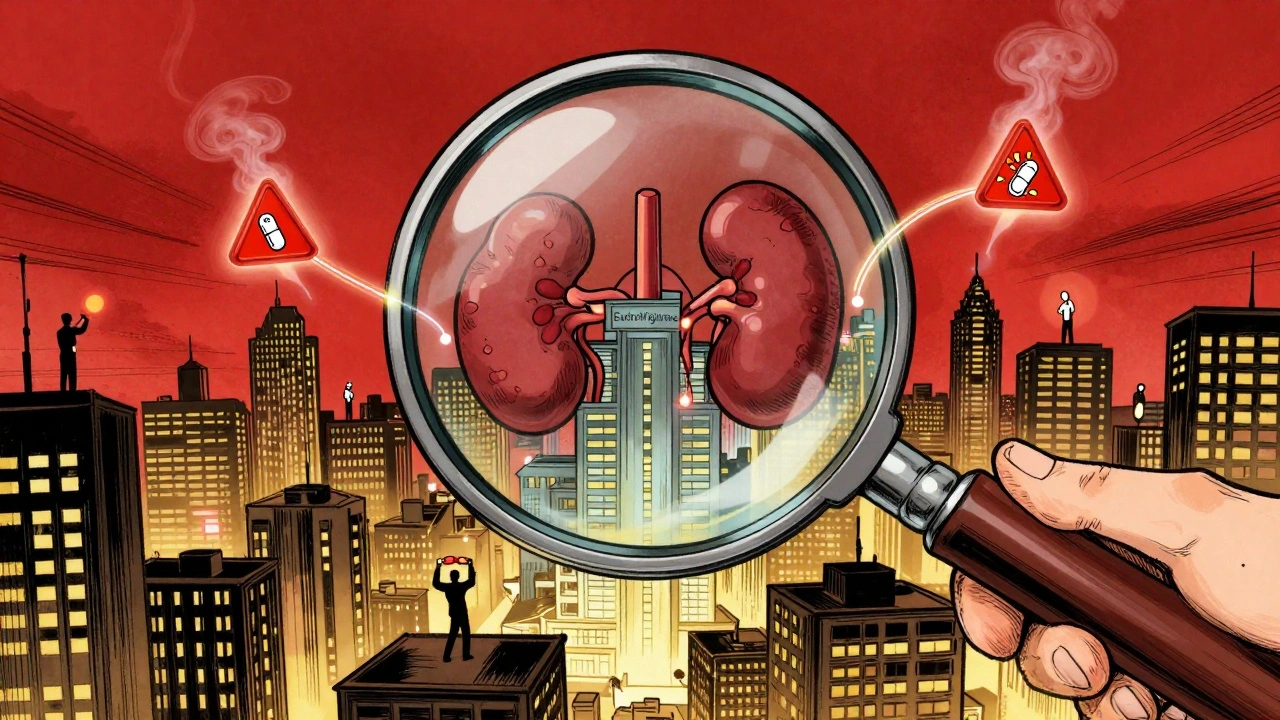
Most people assume that if a drug gets approved, it’s been thoroughly tested for safety. But the truth is, drug safety signals often don’t appear until thousands or even millions of people start using the medicine outside the controlled environment of clinical trials. That’s when the real story begins.
What Exactly Is a Drug Safety Signal?
A drug safety signal isn’t a confirmed danger. It’s a red flag - something unusual that pops up in the data and says, ‘Hey, we might have a problem here.’ The Council for International Organizations of Medical Sciences (CIOMS) defines it as information suggesting a new or previously unknown link between a medicine and an adverse event. It’s not proof. It’s a prompt to investigate. For example, imagine a new diabetes drug is approved after a trial with 3,000 patients. No serious kidney issues were seen. But six months later, doctors in Germany, Canada, and Australia start reporting cases of sudden kidney failure in patients taking the same drug. Not many - maybe 15 total. But it’s happening across different countries, in people with different health histories. That’s a signal. These signals come from real-world use: spontaneous reports from doctors or patients, electronic health records, prescription databases, and even social media. The European Medicines Agency’s EudraVigilance system alone handles over 2.5 million reports every year. The FDA’s FAERS database has more than 30 million. That’s not noise - it’s the early warning system for public health.Why Clinical Trials Miss the Real Risks
Clinical trials are designed to prove a drug works, not to catch every possible side effect. They’re small. They’re short. They’re selective. Most Phase III trials enroll between 1,000 and 5,000 people. They exclude older adults with multiple conditions, pregnant women, people on five or more other medications, and those with severe liver or kidney disease. That’s fine for testing efficacy - but terrible for spotting rare or delayed side effects. Take the case of rosiglitazone, a diabetes drug approved in 1999. Clinical trials didn’t show an increased risk of heart attacks. But after it was used by over 1 million patients, data from spontaneous reports, observational studies, and later, a major meta-analysis, revealed a 43% higher risk. That’s a signal that took five years to emerge - and it led to major restrictions. Even more troubling: some side effects take years to appear. Bisphosphonates, used to treat osteoporosis, were linked to jawbone death - osteonecrosis - only after patients had been taking them for seven years. That’s beyond the scope of any trial. That’s why post-marketing surveillance isn’t optional. It’s essential.How Signals Are Found: Numbers, Patterns, and Human Judgment
There are two main ways signals are detected: statistical and clinical. Statistical methods look at numbers. One common technique is disproportionality analysis. If a drug is taken by 100,000 people and 50 report a rare liver injury, but only 5 out of 10 million people taking other drugs report the same thing, that’s a red flag. Algorithms calculate a Reporting Odds Ratio (ROR). If it’s above 2.0 and there are at least three cases, it gets flagged. But here’s the catch: 60 to 80% of these statistical signals turn out to be false alarms. Why? Because people report serious events 3.2 times more often than mild ones. If a drug is widely prescribed, even a tiny increase in reporting can look like a signal. That’s why the FDA and EMA don’t act on one number alone. That’s where clinical judgment comes in. Experts look at the details: Did the reaction happen after starting the drug? Did it improve when the drug was stopped? Did it come back when the drug was restarted? That’s called dechallenge/rechallenge - and it’s gold-standard evidence. Dr. Robert Temple from the FDA says these details, often missing from automated systems, are what make causality assessments possible.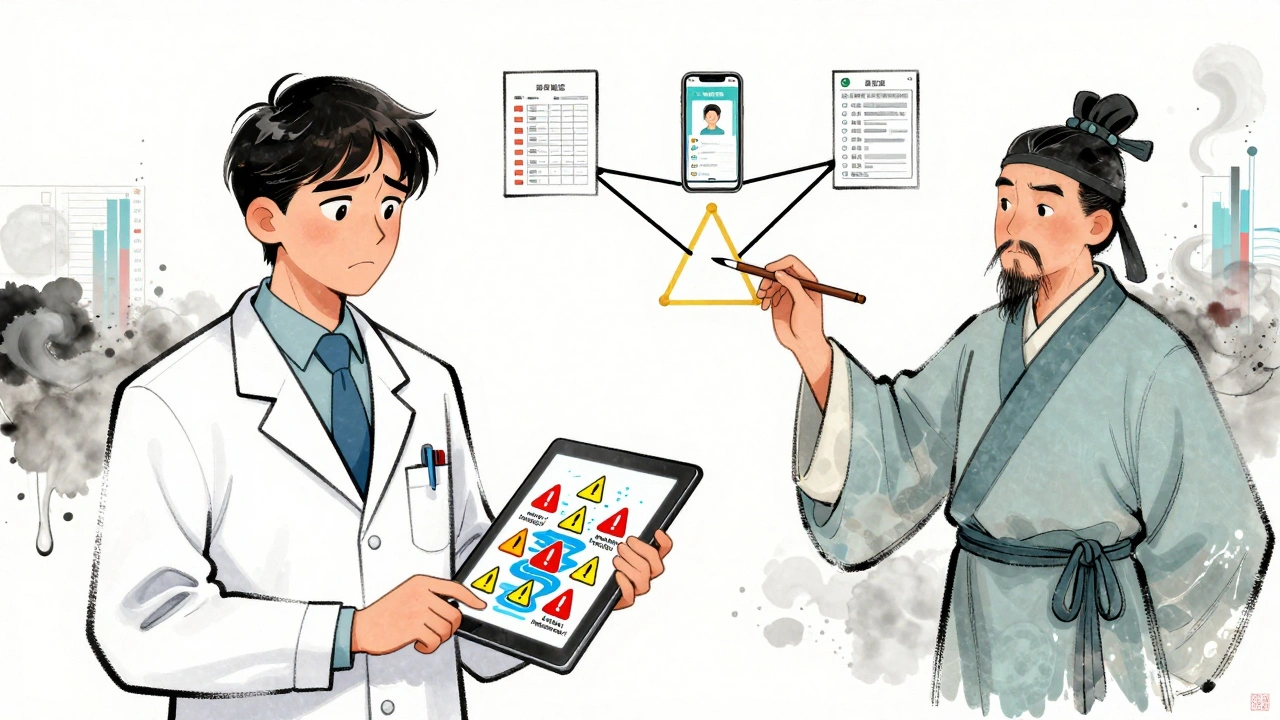
When a Signal Becomes a Rule Change
Not every signal leads to a warning label. But four things make it much more likely:- Multiple sources confirm it. If the same signal shows up in spontaneous reports, electronic health records, and published case studies, the chance of a label update jumps 4.3 times.
- It makes biological sense. If the drug affects the immune system and the event is an autoimmune reaction, that’s plausible. If it’s a random headache? Probably not.
- The event is serious. 87% of signals involving death, hospitalization, or permanent disability led to label changes. Only 32% of mild reactions did.
- The drug is new. Drugs under five years old are 2.3 times more likely to get updated warnings than older ones. New drugs are still being watched closely.
The Real Challenges: Data, Workload, and False Alarms
Pharmacovigilance teams are drowning in data - and most of it’s noise. At the 2022 Drug Information Association meeting, 68% of safety officers said poor-quality spontaneous reports were their biggest headache. Many reports lack basic info: age, dose, timeline, or whether the patient was on other drugs. Without that, you can’t tell if the drug caused the problem - or if it was the flu, the fall, or the heart condition. Then there’s the workload. A single signal can take 3 to 6 months to fully assess. And with over 70% of signals being false positives, teams spend months chasing ghosts. The International Society of Pharmacovigilance found that 73% of professionals are frustrated by the lack of standardized ways to assess causality. There’s no universal checklist. One team might call it ‘probable,’ another ‘unlikely.’ That’s why the best practice now is triangulation: don’t trust one source. Look for the same signal in at least three independent systems - spontaneous reports, electronic health records, and published literature. That’s what saved the system in the case of the 2018 dupilumab signal. It wasn’t just one country. It wasn’t just one type of report. It was consistent across multiple systems.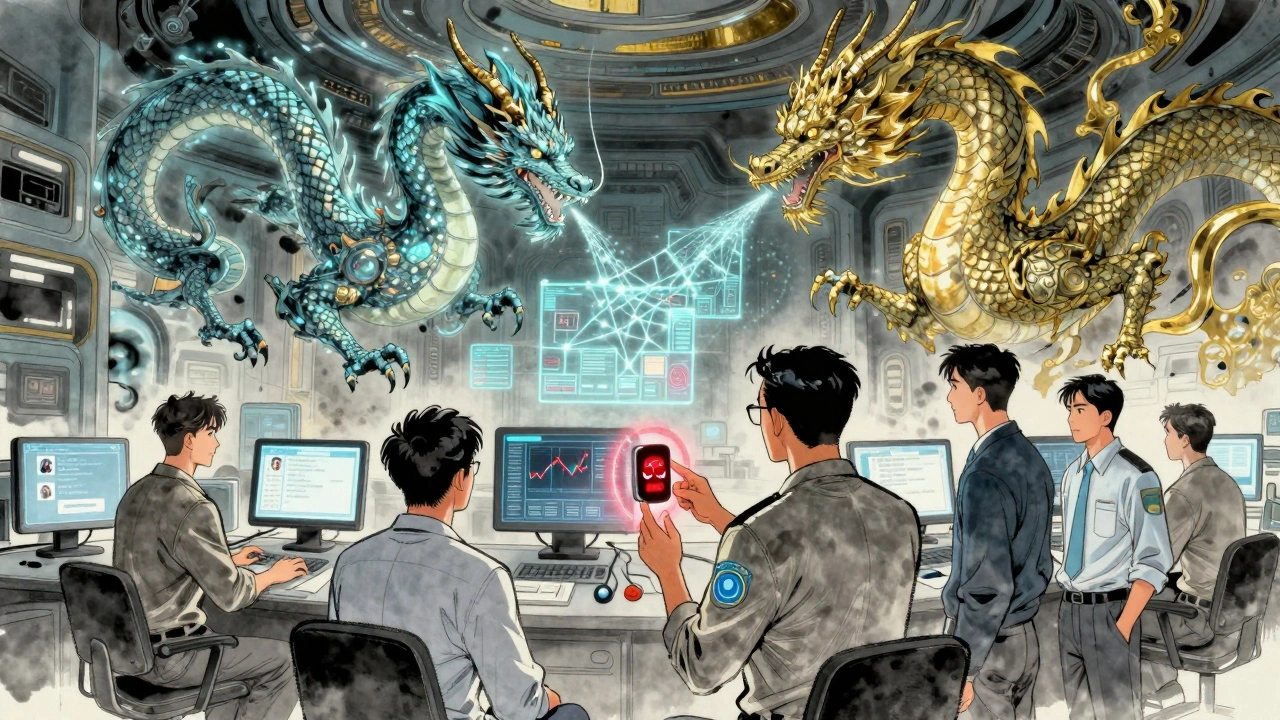
The Future: AI, Real-World Data, and Faster Detection
The game is changing. In 2022, the EMA rolled out AI algorithms in EudraVigilance. Signal detection time dropped from two weeks to 48 hours. Sensitivity stayed at 92%. The FDA’s Sentinel Initiative now pulls data from 300 million patients across 150 health systems. That’s not just reports - that’s real-time clinical data: lab results, prescriptions, hospitalizations. New drugs are getting more complex too. Biologics, gene therapies, and cell therapies don’t behave like traditional pills. They trigger immune responses, off-target effects, and delayed reactions that old detection tools weren’t built for. The ICH is working on new standards for lab data reporting to catch drug-induced liver injury faster. By 2027, experts predict 65% of the most urgent safety signals will come from integrated systems combining spontaneous reports, EHRs, and even patient-reported data from apps and wearables. That’s a huge leap. But it also means we need better ways to filter noise - and better training for the people doing the work.What This Means for Patients and Prescribers
You don’t need to understand algorithms or RORs. But you do need to know this: if a drug you’re taking gets a new warning, it’s not because something went wrong. It’s because the system worked. Doctors rely on updated prescribing information to make safer choices. A patient on multiple medications? A new warning about drug interactions might prevent a hospital stay. An elderly person? A label change about kidney risk could mean switching to a safer alternative. The system isn’t perfect. False alarms waste time. Poor data slows things down. But the goal is clear: catch risks before they hurt more people. And every signal - even the ones that turn out to be nothing - is a step toward that.How the System Keeps Getting Stronger
Regulators are pushing for more. Since 2022, the EU requires every new drug application to include a detailed signal detection plan - not just a promise, but a method, a timeline, and a team. The FDA now mandates quarterly public reporting of potential signals. The WHO’s global network connects 155 countries, processing 350,000 new reports every month. The bottom line? Drug safety isn’t a one-time check at approval. It’s a continuous conversation between patients, doctors, and scientists - using data to learn, adapt, and protect. The signals aren’t failures. They’re the system listening.What’s the difference between a drug safety signal and a confirmed side effect?
A signal is a potential link between a drug and an adverse event that needs further investigation. It’s a red flag, not proof. A confirmed side effect is one that has been validated through multiple sources - like clinical trials, epidemiological studies, or consistent case reports - and is now included in the drug’s official prescribing information.
Why don’t clinical trials catch all side effects?
Clinical trials are too small and too controlled. They usually involve 1,000-5,000 people over months, not years. They exclude older adults, pregnant women, and those on multiple medications. Rare side effects - like those affecting 1 in 10,000 - simply won’t show up. Only real-world use, with millions of patients, reveals these risks.
How do regulators decide if a signal is serious enough to act on?
They look at four things: whether the signal appears in multiple data sources, whether the biological link makes sense, how serious the event is (death, hospitalization), and how new the drug is. Signals linked to serious outcomes in new drugs are prioritized. If three or more independent sources confirm it, action is likely.
Are AI tools making drug safety monitoring better?
Yes. AI can now scan millions of reports in hours, spotting patterns humans might miss. The EMA reduced signal detection time from 14 days to 48 hours using AI. But AI still needs human oversight. It finds candidates - experts decide if they’re real. False positives are still a major issue.
What’s the biggest challenge in detecting drug safety signals today?
The biggest challenge is data quality. Many spontaneous reports lack key details - age, dosage, other medications, timeline. Without that, it’s impossible to judge if the drug caused the reaction. Plus, 60-80% of statistical signals turn out to be false alarms, wasting time and resources.
Gilbert Lacasandile
December 8, 2025 AT 21:48Really appreciate this breakdown. I work in clinical ops and seeing how signals pop up in real life vs. trials is eye-opening. We had a case last year where a blood pressure med looked fine in trials, but after 6 months of wider use, we started seeing weird bradycardia spikes in rural clinics. Turns out it was interacting with a common herbal supplement patients didn’t even think to mention. The system worked.
It’s not perfect, but it’s the best we’ve got.
Guylaine Lapointe
December 9, 2025 AT 00:03Let’s be clear: if you’re still trusting FDA or EMA to catch every dangerous side effect before it kills someone, you’re either naive or complicit. These agencies are underfunded, overworked, and still rely on doctors to voluntarily report adverse events - which most don’t, because paperwork is a nightmare. This isn’t ‘the system working’ - it’s a glorified hotline that only gets called when someone’s already in the ER.
And don’t even get me started on how they ignore patient forums. I’ve seen 30+ Reddit threads warning about a drug before the official signal ever showed up. The real early warning system? Us.
Maria Elisha
December 9, 2025 AT 09:00Yea but like… how many people actually read the updated labels? I got prescribed that new diabetes drug last year and the pamphlet was 12 pages. I just looked for the ‘WARNING’ box and skipped to the next one. If they want people to pay attention, maybe stop writing like a legal contract?
Also why do all the warnings come after you’ve already been taking it for 6 months? That’s not safety. That’s damage control.
Angela R. Cartes
December 10, 2025 AT 05:04AI detecting signals in 48 hours? 😏 That’s cute. Meanwhile my aunt got hospitalized because her cardiologist didn’t even know the drug had a new warning - because the EHR didn’t auto-update the alert. 🤦♀️
Technology doesn’t fix broken systems. It just makes the noise louder. And the worst part? They still don’t tell patients when a signal is *disproven*. We get the panic, but never the apology.
Also, ‘biological plausibility’? Bro, that’s just science-speak for ‘we kinda thought this might happen.’
Anna Roh
December 10, 2025 AT 12:25My mom took bisphosphonates for 8 years. Never had a problem. Then one day, her jaw just… started dying. No pain. No warning. Just a black hole in her mouth. They didn’t know until she went to a specialist who’d seen three other cases. That’s not a signal. That’s a tragedy waiting to be statistically validated.
And now she’s on meds that make her bones brittle. The system didn’t fail. It just moved too slow. And we paid the price.
om guru
December 11, 2025 AT 13:07Pharmacovigilance is a sacred duty of modern medicine. The current framework, while imperfect, represents the collective wisdom of global health institutions. The burden of proof must remain high to prevent panic-driven policy. We must honor the scientific method even when the data is noisy. Patient safety is not a sprint. It is a marathon of vigilance and humility.
May the data guide us.
With respect,
Om Guru
Katherine Chan
December 11, 2025 AT 23:30Love how you framed this - it’s not broken, it’s evolving. 🌱
I used to think drugs were safe once approved. Now I know it’s more like a living contract between science and society. Every signal is a conversation. Every update, a correction. Even the false alarms? They’re proof someone’s paying attention.
And hey - if your doctor changes your med because of a new warning? That’s not a failure. That’s them doing their job better because of you.
Keep speaking up. The system hears you.
Tiffany Sowby
December 13, 2025 AT 13:33Of course the EMA and FDA are slow - they’re run by bureaucrats who got their degrees in the 90s. Meanwhile, in the U.S., we’re getting hit with drugs that were tested on 2,000 people and then sold to 10 million. And you wanna know who pays? Working class people. Minorities. Elderly on Medicare.
It’s not ‘the system working.’ It’s corporate greed with a lab coat. They don’t care if 1 in 10,000 dies. As long as the profit margin stays above 40%, they’ll keep pushing.
Wake up. This isn’t science. It’s capitalism with side effects.
Asset Finance Komrade
December 13, 2025 AT 13:46One must contemplate the epistemological paradox of pharmacovigilance: if safety is defined by the absence of harm, then how can harm be known before it is observed? The signal is not data - it is the echo of a future tragedy, reverberating through the void of statistical noise.
AI may accelerate detection, but it cannot comprehend the weight of a life lost to a missed signal. We are not merely analyzing reports - we are interpreting the silence between heartbeats.
And yet… we still rely on doctors to fill out forms.
🤨
Jennifer Blandford
December 14, 2025 AT 00:31Okay but real talk - I’m a nurse and I’ve seen this play out so many times. A patient comes in with weird symptoms. We check the med list. Ohhhhh… that new drug they started last month. We call the pharmacy. They say ‘yeah, we got the alert yesterday.’
But the patient already had a seizure.
So yeah - the system works… eventually. But ‘eventually’ doesn’t help when someone’s lying in the ER.
Still… I’m glad we’re trying. And I’m glad people like you are writing this stuff. Keep shining a light. 🌟
Also - if you’re on meds and notice something weird? Tell your doctor. Even if it seems small. Even if you’re ‘just being paranoid.’ You’re not. You’re the first line of defense.