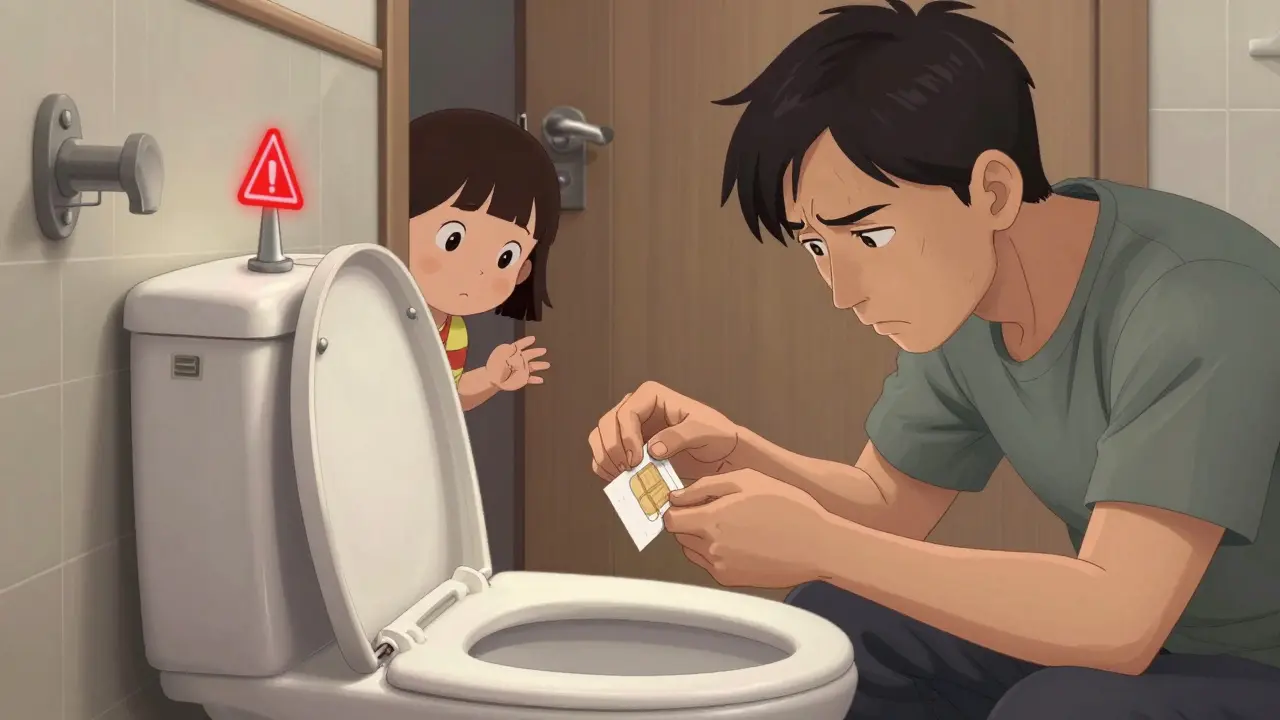
Most people think flushing pills down the toilet is bad for the environment-and they’re right. But there’s a small, specific list of medications the FDA actually recommends flushing. Not because it’s convenient, but because not flushing them could be deadly.
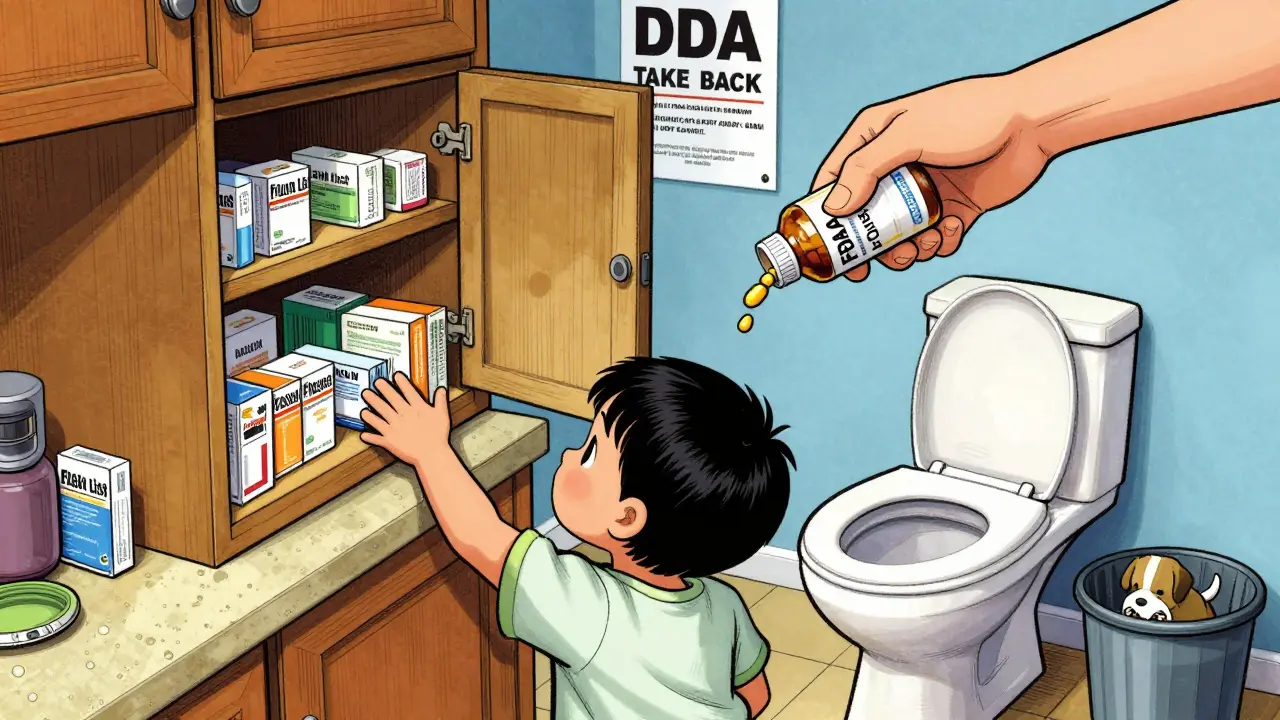
Every year, children and pets accidentally get into prescription drugs left in bathroom cabinets or trash cans. In some cases, one dose is enough to kill. The FDA’s Flush List exists to prevent exactly that. It’s not a suggestion. It’s a safety rule for a handful of the most dangerous drugs out there.
What’s on the FDA Flush List?
The FDA doesn’t keep this list long. As of April 2024, it includes only 15 active ingredients, each linked to high-risk medications that can cause fatal overdose in seconds if misused. These aren’t your everyday painkillers or antidepressants. They’re powerful, fast-acting, and extremely potent-even in tiny amounts.
Here’s what’s on the list:
- Buprenorphine (found in Suboxone, Zubsolv, Belbuca, Butrans)
- Fentanyl (Abstral, Actiq, Duragesic patches, Fentora, Onsolis)
- Hydromorphone (Exalgo extended-release tablets)
- Meperidine (Demerol)
- Methadone (Dolophine, Methadose)
- Morphine (Arymo ER, Avinza, Embeda, Kadian, Morphabond ER, MS Contin, Oramorph SR)
- Oxymorphone (Opana, Opana ER)
- Tapentadol (Nucynta, Nucynta ER)
- Sodium oxybate (Xyrem, Xywav)
- Diazepam rectal gel (Diastat, Diastat Acudial)
- Methylphenidate transdermal system (Daytrana patch)
Notice something? Almost all of these are opioids or sedatives. That’s not an accident. These drugs slow breathing. In children, even a small amount can stop it completely. A single fentanyl patch-left in the trash or on the floor-can kill a toddler. That’s why the FDA says: if you can’t safely drop it off, flush it.
Why Flush at All? Isn’t That Bad for the Environment?
Yes, flushing drugs can pollute water. The EPA says it plainly: don’t flush unless you have to. But the FDA and EPA agree on one thing: human safety comes first.
Here’s the trade-off: flushing a few pills might add trace amounts of medicine to waterways. But leaving them in the house? That risks death. In 2023 alone, the FDA recorded 217 cases of accidental fentanyl exposure in children. Nine of them died. Most of those cases involved patches found on floors, playgrounds, or in trash bins.
Dr. Scott Gottlieb, former FDA commissioner, put it bluntly: “The flush list is intentionally short. It only includes medicines that are most dangerous in the wrong hands.”
The EPA doesn’t want you flushing everything. In fact, they ban healthcare facilities from flushing drugs entirely. But for homes with young kids, pets, or vulnerable adults? The risk of accidental overdose outweighs environmental concerns-for these specific drugs.
When Should You Actually Flush?
You should only flush if all three of these are true:
- Your medication is on the FDA Flush List.
- You don’t have access to a drug take-back program.
- You can’t safely store the medication until you do.
First, check if your drug is on the list. Look at the packaging or visit the FDA’s official website. Don’t guess. Some medications have similar names but aren’t on the list.
Second, try a take-back program. The DEA runs National Take Back Days twice a year-in April and October. But you don’t have to wait. Over 12,000 permanent drop-off sites exist across the U.S., including at pharmacies like CVS, Walgreens, and local police stations. Use the DEA’s online locator to find the nearest one.
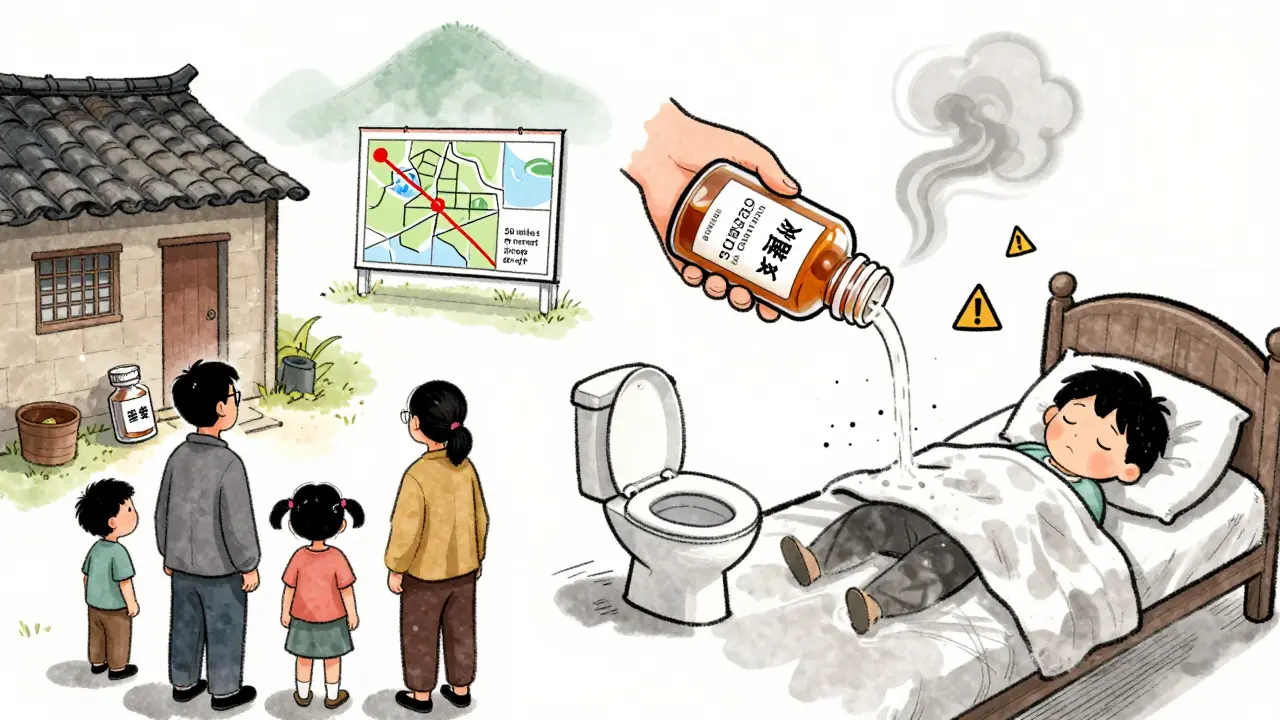
If you live in a rural area, you might be 50 miles from the nearest drop-off. That’s not rare. In some counties, there’s only one site for every 50,000 people. If you can’t get there, and you’re worried someone might find the pills, flushing is the safest option.
How to Flush Properly
Flushing isn’t just turning the handle. There’s a correct way to do it-especially for patches.
For pills: Remove them from the bottle. Don’t crush them. Just drop them straight into the toilet and flush. Keep the empty bottle for later.
For patches (like fentanyl or Daytrana): Fold the patch in half, sticky side to sticky side. This prevents accidental contact. Then flush. Never throw a patch in the trash without folding it. One used patch can still contain enough medicine to kill a child.
For liquids or gels: Pour them down the toilet. Don’t pour them into sinks or drains connected to septic systems. Flush twice to be sure.
After flushing, remove your name and prescription info from the empty bottle before throwing it in the trash. That’s not just good practice-it’s privacy protection.
What NOT to Flush
Almost everything else stays out of the toilet.
Antibiotics? No. Blood pressure pills? No. Zoloft? No. Even if it’s expired. Even if you think it’s harmless. The FDA Flush List is tiny for a reason. If it’s not on the list, don’t flush.
Instead, use one of these methods:
- Take it to a drop-off site (most pharmacies have bins).
- Mix it with something unappetizing-used coffee grounds, cat litter, dirt-then seal it in a plastic bag before tossing it in the trash. This makes it less appealing to kids or pets, and harder to misuse.
- Ask your pharmacist if they offer a mail-back program.
Some states have laws that ban flushing entirely-even for FDA-listed drugs. Always check local rules. But if you’re in a home with children or pets, and you can’t access a take-back site, the FDA’s guidance overrides local bans for these specific medications.
Why This List Changes
The FDA doesn’t keep the Flush List static. In 2021, they removed 11 drugs from it because newer versions had abuse-deterrent features-like pills that turn into a gel when crushed, making them harder to misuse.
In January 2024, the FDA announced it’s reviewing whether to add new transdermal patches to the list after 17 cases of accidental buprenorphine exposure in children last year. They’re also looking at whether some current entries, like methadone, might be removed if newer formulations prove safer.
This isn’t bureaucracy. It’s science. The FDA reviews each drug based on real-world data: how many overdoses occurred? How many children were exposed? Can the drug be made safer? The list gets tighter as medicine improves.
Real Stories Behind the Numbers
A Reddit user in r/pharmacy shared finding a used fentanyl patch stuck to a playground slide. “I picked it up with gloves. My hands were shaking,” they wrote. “That patch still had enough drug to kill a kid.”
Another parent in Ohio flushed their father’s morphine pills after he passed away. “We didn’t know about take-backs. We just knew we couldn’t risk my 3-year-old finding them.”
These aren’t edge cases. In 2023, 42% of Americans admitted to flushing medications that weren’t on the FDA list. That’s not just risky-it’s dangerous. The FDA’s list exists because too many people think flushing is always okay. It’s not. It’s a last resort-for a very specific reason.
What’s Next?
The Bipartisan Infrastructure Law in 2021 allocated $15 million to expand take-back programs. Since then, registered collection sites have jumped 37%. But progress is slow. Rural areas still lack access. Many pharmacies don’t even advertise their drop-off bins.
The FDA is working on standardizing disposal instructions on all prescription labels by 2025. Right now, some bottles say “flush if no take-back,” others say “throw in trash.” That confusion kills.
Until then, remember: if you have one of these 15 drugs and you can’t get it to a drop-off, flushing is the safest thing you can do. Not because it’s easy. But because it might save a life.
Mike Hammer
February 14, 2026 AT 22:26Also, folding patches sticky-side sticky-side? Genius. I'm stealing that trick.
Daniel Dover
February 16, 2026 AT 09:15Joe Grushkin
February 16, 2026 AT 17:08Mandeep Singh
February 17, 2026 AT 16:36Also, why is it always the poor and rural folks who have to flush? The rich have 24/7 pharmacy drop-offs. The rest of us? We're told to flush. Classic.
Esha Pathak
February 18, 2026 AT 23:35🫶
Betty Kirby
February 19, 2026 AT 13:18Erica Banatao Darilag
February 20, 2026 AT 04:58Chiruvella Pardha Krishna
February 21, 2026 AT 07:10Virginia Kimball
February 21, 2026 AT 13:27