Drug Safety Detection Simulator
Select a patient scenario below to see how different surveillance systems would detect (or miss) potential safety issues.
Detection Analysis
The drug causes a severe allergic reaction in approximately 1 out of every 10,000 patients.
Why?
With a population of tens of millions, Sentinel can statistically identify patterns affecting 1 in 10,000 people quickly. Clinical trials (typically ~3,000 people) are too small to catch this rarity, and FAERS relies on voluntary reports which often fail for unexpected events.
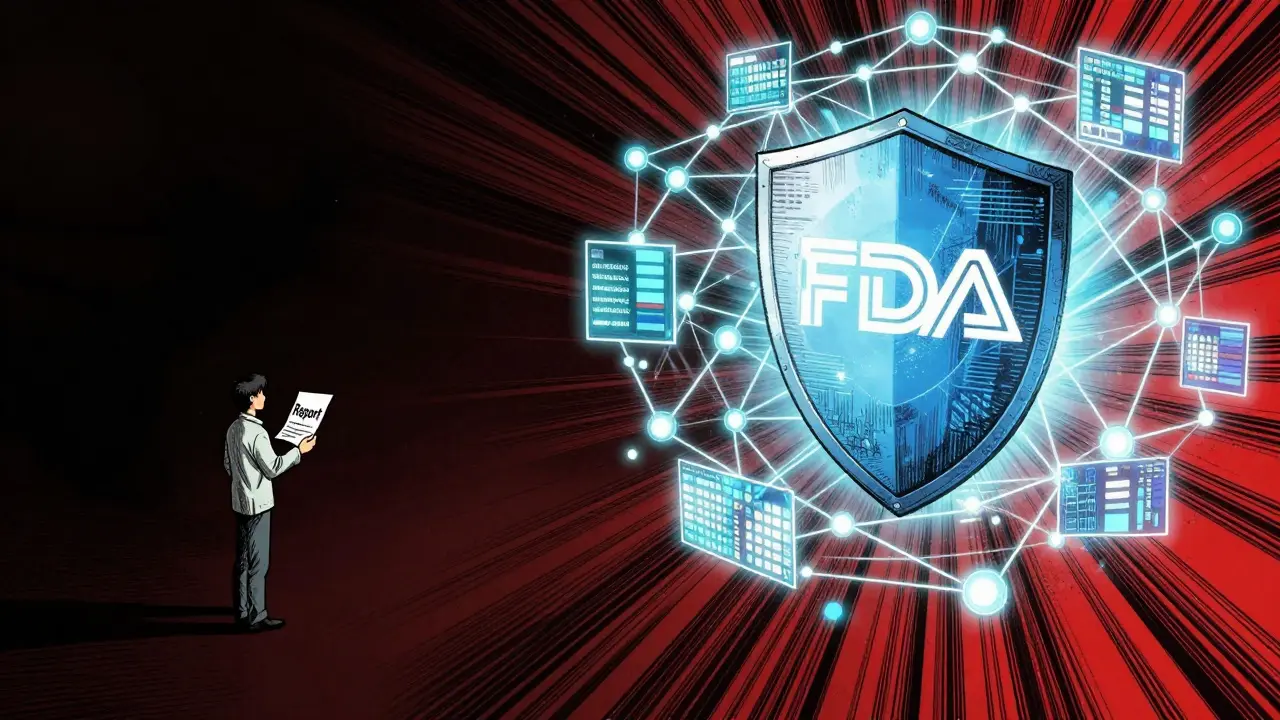
Imagine a medicine that looks safe in clinical trials but causes heart problems once millions of people start taking it. In the past, finding out about these hidden risks took years, or sometimes decades. Today, the U.S. Food and Drug Administration (FDA) has a much faster way to catch these issues. It is called the FDA Sentinel Initiative, which is a national electronic safety monitoring system that uses big data to actively monitor the safety of FDA-regulated medical products including drugs, vaccines, biologics, and medical devices.
This system changes how we keep track of drug safety after products hit the market. Instead of waiting for patients or doctors to report side effects, Sentinel digs into massive amounts of healthcare data automatically. If you are curious about how technology protects public health, understanding this initiative gives you a clear picture of modern regulatory science.
Why the FDA Needed a New System
To understand why Sentinel exists, you have to look at what came before it. For a long time, the FDA relied mostly on a passive reporting system known as the FDA Adverse Event Reporting System (FAERS). This system works by collecting voluntary reports from doctors, patients, and manufacturers when they suspect a drug caused harm.
The problem with voluntary reporting is simple: most people do not report side effects. You might take a new medication, feel a bit dizzy, and just stop taking it without telling anyone. Because of this underreporting, FAERS often misses common side effects. It also lacks "denominator data," which means it does not know how many people are actually using the drug. Without knowing the total number of users, it is hard to calculate the true risk.
In 2007, Congress passed the FDA Amendments Act (FDAAA), which legally required the agency to create a better system. The law demanded a way to link and analyze safety data from multiple sources actively. This mandate led directly to the launch of the Sentinel Initiative in May 2008. The goal was to move from a passive approach, where the FDA waits for information, to an active approach, where the FDA goes looking for signals of trouble.
How the Distributed Network Works
The technical design of Sentinel is unique because it does not store all the patient data in one central place. Instead, it operates as a distributed data network. This means the actual patient records stay with the organizations that collect them, such as insurance companies and large hospital systems. These organizations are known as Data Partners.
Here is how the process flows:
- Signal Detection: The FDA identifies a potential safety issue. This could come from a spike in FAERS reports, a new clinical study, or feedback from international regulators.
- Query Creation: Analysts at the Sentinel Operations Center (SOC) write a specific analytical query. Think of this as a complex search question designed to find patterns in the data.
- Distributed Execution: The FDA sends this query securely to all participating Data Partners. Each partner runs the exact same program on their own local servers.
- Aggregation: The partners send back only the summarized results, not individual patient names or records. The FDA then combines these results to see the bigger picture.
This model solves two major problems. First, it respects patient privacy because sensitive data never leaves the secure environment of the healthcare provider. Second, it allows the FDA to access a massive amount of data covering tens of millions of patients instantly. As of recent updates, Sentinel is described as the largest multisite distributed database in the world dedicated to medical product safety.
From Claims Data to Electronic Health Records
When Sentinel first started, it relied heavily on health insurance claims data. Claims data tells you what treatments were billed-for example, a doctor billed for a prescription for blood pressure medication. This is useful, but it is limited. It does not tell you why the patient was prescribed the drug, what other conditions they have, or detailed lab results.
Over time, the system evolved. The FDA began transitioning from the initial Mini-Sentinel Pilot (which ran from 2009 to 2015) to the full Sentinel System in 2016. A key part of this evolution was incorporating Electronic Health Records (EHRs). EHRs contain rich clinical details, including doctor’s notes, test results, and diagnoses.
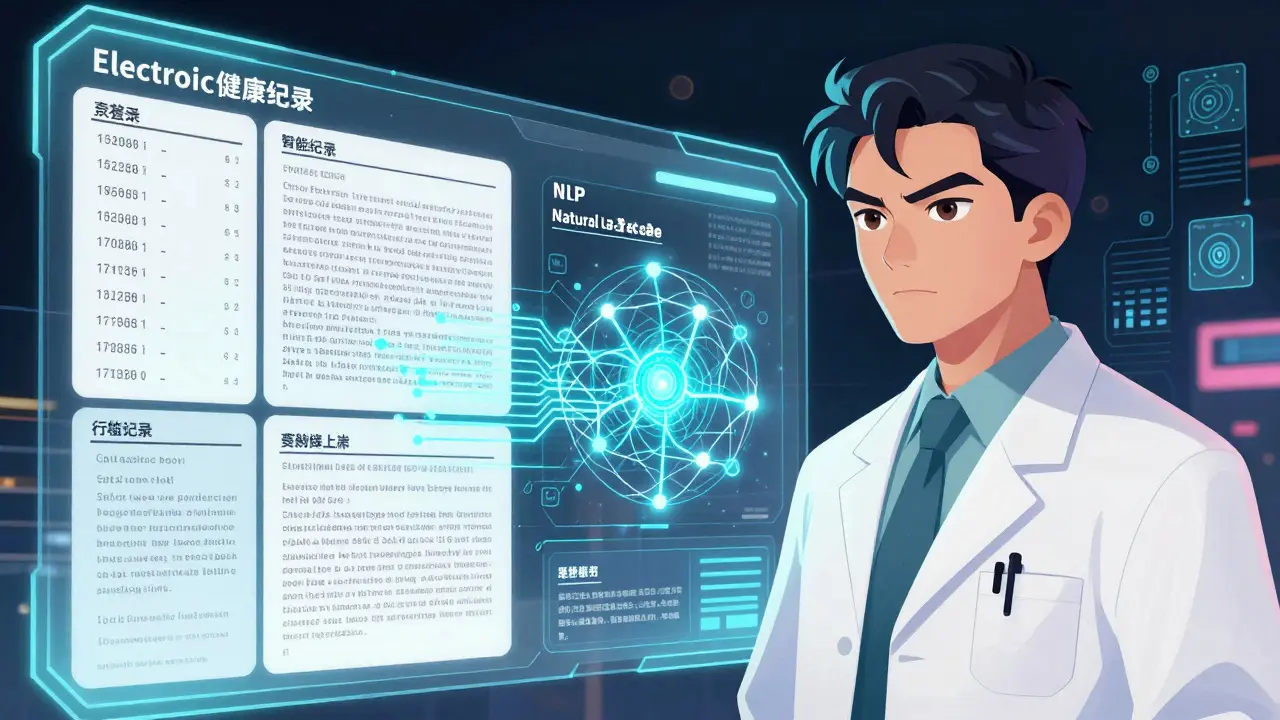
However, working with EHRs is harder than working with claims data. Clinical notes are often unstructured text, meaning a doctor might type "patient seems tired" instead of selecting a standardized code. To handle this, the Sentinel Innovation Center focuses on advanced data science techniques. They use natural language processing (NLP) and machine learning to extract meaningful safety signals from messy, handwritten-style digital notes. This shift allows for more precise detection of side effects that might be missed in billing codes alone.

Sentinel vs. Traditional Surveillance
It helps to compare Sentinel to other methods to see its value clearly. Below is a breakdown of how different surveillance approaches stack up against each other.
| Feature | FAERS (Passive) | Clinical Trials | FDA Sentinel (Active) |
|---|---|---|---|
| Data Source | Voluntary reports | Controlled study participants | Real-world patient records |
| Population Size | Unknown denominator | Small, selected groups | Tens of millions |
| Speed | Slow analysis | Years to complete | Near real-time |
| Rare Side Effects | Poor detection | Limited power | Better detection due to scale |
| Data Privacy | Anonymous reports | Strict consent protocols | Distributed, no central PII |
The table shows why Sentinel fills a critical gap. Clinical trials are rigorous but involve small groups of healthy volunteers over short periods. They often miss side effects that appear in older adults or people with multiple chronic conditions. FAERS captures rare events but suffers from huge gaps in reporting. Sentinel bridges this divide by analyzing real-world usage across diverse populations quickly.
The Role of the Three Centers
In September 2019, the FDA restructured Sentinel to make it more efficient and innovative. They split the initiative into three distinct coordinating centers, each with a specific job.
- Sentinel Operations Center (SOC): This team handles the day-to-day work. They manage the queries, work with data partners, and produce the safety analyses that inform regulatory decisions.
- Innovation Center (IC): This group focuses on the future. They develop new statistical methods, improve data infrastructure, and experiment with artificial intelligence to make the system smarter. Their priorities include causal inference and feature engineering.
- Community Building and Outreach Center: This center ensures that stakeholders-such as academic researchers, industry experts, and other government agencies-can use Sentinel tools effectively. They promote transparency and collaboration.
This structure allows the FDA to maintain reliable operations while simultaneously pushing the boundaries of what big data can do for public health. For instance, the Innovation Center has launched demonstration projects to emulate clinical trials using real-world data, checking if Sentinel results match traditional trial findings.
Impact on Regulatory Decisions
Sentinel is not just a research project; it directly influences how medicines are regulated. Since its full launch in 2016, the system has completed hundreds of safety analyses. Many of these studies have led to concrete actions, such as updating drug labels with new warnings, restricting use in certain populations, or even withdrawing unsafe products from the market.
Dr. Robert Ball, former Director of the Office of Surveillance and Epidemiology at the FDA, described Sentinel as a working example of a "learning health system." This concept means the healthcare system continuously learns from patient data to improve care. By integrating Sentinel, the FDA ensures that safety monitoring keeps pace with the rapid adoption of new treatments and technologies.
The system also supports specialized monitoring, such as the Postmarket Rapid Immunization Safety Monitoring (PRISM) system for vaccines. This adaptability shows that Sentinel is not a one-size-fits-all tool but a flexible platform capable of addressing specific public health needs.
Challenges and Future Directions
Despite its successes, Sentinel faces challenges. One major issue is data harmonization. Different hospitals and insurers record data in different ways. Ensuring that a "heart attack" is coded consistently across all data partners requires constant effort and sophisticated algorithms.
Another challenge is the complexity of unstructured data. While AI helps extract information from clinical notes, it is not perfect. Researchers must validate these automated findings carefully to avoid false alarms. Additionally, while Sentinel covers millions of patients, extremely rare side effects may still slip through unless the sample size is expanded further.
Looking ahead, the focus is on deeper integration of EHRs and stronger international collaborations. The goal is to create a global learning health system where safety data can be shared across borders, enhancing protection for patients worldwide. With significant funding and ongoing technological upgrades, Sentinel remains at the forefront of using big data to keep medications safe.
What is the main difference between FAERS and Sentinel?
FAERS relies on voluntary reports from individuals, which leads to underreporting and unknown population sizes. Sentinel actively analyzes comprehensive healthcare data from millions of patients, providing a complete view of drug exposure and outcomes.
Does Sentinel store personal patient data?
No. Sentinel uses a distributed network model. Patient data stays with the healthcare organizations (Data Partners). Only aggregated, non-identifiable results are sent to the FDA for analysis.
When did the FDA Sentinel Initiative start?
The initiative was officially launched in May 2008 following the FDA Amendments Act of 2007. The full Sentinel System replaced the Mini-Sentinel Pilot in February 2016.
How does Sentinel help with vaccine safety?
Sentinel includes specialized components like PRISM (Postmarket Rapid Immunization Safety Monitoring), which allows for rapid assessment of vaccine safety signals in near real-time across large populations.
Can patients access Sentinel data directly?
No, Sentinel is a regulatory tool used by the FDA and authorized partners. However, the FDA publishes summaries of safety findings and label changes resulting from Sentinel analyses on their public website.