When a brand-name drug loses its patent, the race to be the first generic version on the market isn’t just about speed-it’s about locking in market share for years. The first company to file a generic application and win FDA approval doesn’t just get a head start. It gets a nearly unshakable lead. This isn’t speculation. It’s the law, the market, and decades of real-world data showing that the first generic manufacturer captures up to 90% of the market during its 180-day exclusivity window-and often keeps 30-40% long after competitors arrive.
Why Being First Matters More Than You Think
The foundation of this advantage comes from the Hatch-Waxman Act of 1984. This U.S. law didn’t just open the door for generics-it built a runway for the first one to take off. Under the Act, the first company to successfully challenge a brand drug’s patent gets 180 days of exclusive marketing rights. No other generic can enter during that time. That’s not a bonus. It’s a monopoly. But here’s what most people miss: the real power doesn’t end when those 180 days are up. By then, pharmacists have stocked the first generic. Doctors have written prescriptions for it. Patients have filled their refills with it. Switching to a different version-even if it’s identical-isn’t simple. Pharmacies don’t want to juggle multiple versions of the same drug. It adds cost, confusion, and risk. So they stick with the one they already have. That’s called inventory inertia, and it’s a silent but powerful force. Data from DrugPatentWatch (2023) shows that first-movers often hold 70-80% of the generic market during exclusivity. Even after a second generic enters, they still hold 50-60%. After five or more competitors join, they still keep 30-40%. Meanwhile, the second entrant might grab 10-15%. The rest get crumbs.How the Market Locks In the Winner
Think of the healthcare system like a train that’s already moving. Once it picks up speed, it’s hard to change direction. The first generic becomes the default. Here’s how:- Pharmacies stock one version per drug to reduce costs and errors. Once they choose the first generic, they rarely switch unless forced.
- Prescribers follow habit. If a doctor’s EHR system auto-fills the first generic, they rarely change it. Even if they know another is cheaper, they don’t bother.
- Patients don’t ask for alternatives. If their prescription comes in a pill they’ve taken for months, they assume it’s the same. They don’t know-and don’t care-about the manufacturer.
What Makes the Advantage Stronger-or Weaker
Not all first-mover advantages are created equal. Some are massive. Others fade fast. The difference comes down to three things: timing, competition, and scale. Lead time matters more than you think. If the second generic arrives within a year, the first mover’s advantage shrinks. But if it takes two or three years? The first company keeps 80% of its initial market share. That’s because prescribers and pharmacies have had time to lock in. Market size changes everything. In high-volume, low-complexity drugs like metformin or lisinopril, dozens of generics flood in quickly. The first mover still wins, but only by a small margin-maybe 6-8 percentage points. But in complex drugs like injectables, inhalers, or specialty biologics? Fewer companies can make them. The first mover often captures 15-20 percentage points more than fair share. That’s because the technical barriers keep competitors out longer. Company size counts. Big generic manufacturers-like Teva, Mylan, or Sandoz-have an edge. They have regulatory teams that know how to navigate FDA requirements. They have supply chains that secure active pharmaceutical ingredients (API) at 12-15% lower cost than smaller players. They have the capital to absorb legal battles. McKinsey’s 2023 analysis found that large companies gain over 10 market-share points more than smaller ones. Small firms? They often lose money on the first launch, even if they win the race.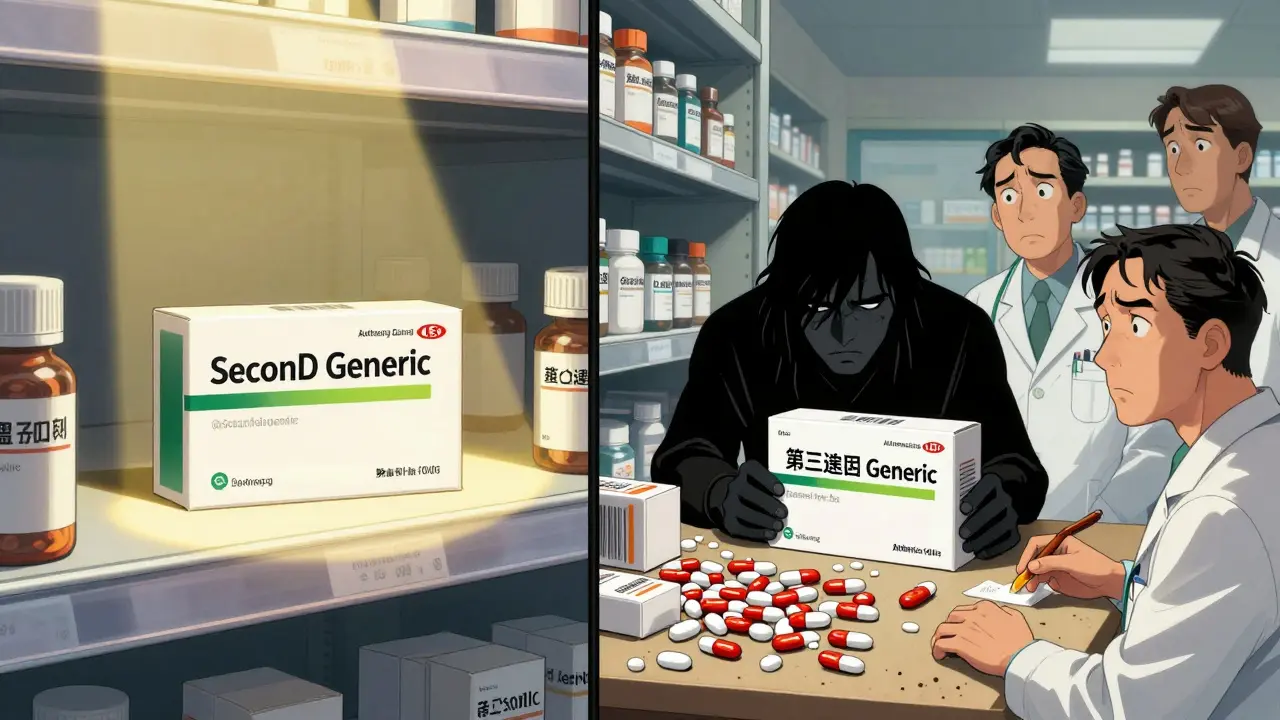
The Hidden Threat: Authorized Generics
The biggest risk to the first generic? The brand company itself. Some brand manufacturers don’t wait for the exclusivity period to end. They launch their own version-a so-called Authorized Generic-during the 180-day window. This is legal. And it’s devastating. Instead of facing one competitor, the first generic now faces two: the brand and the authorized version. The brand doesn’t need to cut prices much. It just lets the authorized generic undercut the first mover. The FTC found this drives retail prices down 4-8% and wholesale prices down 7-14%. The first generic loses revenue fast. Leading generic companies now build contingency plans. They secure multiple API suppliers. They negotiate long-term contracts. They monitor patent litigation like a war room. Because if the brand launches an authorized generic, the first mover’s golden opportunity can vanish in weeks.Where the Advantage Is Strongest Today
The first-mover advantage isn’t fading-it’s shifting. In 2026, the biggest opportunities are in complex generics:- Injectables (like insulin or epinephrine auto-injectors): Only a handful of companies can meet sterile manufacturing standards.
- Inhalers (for asthma and COPD): Complex aerosol delivery systems require specialized equipment and testing.
- Topical creams with unique formulations: Small differences in texture or absorption can trigger FDA rejections.
Why Domestic Manufacturers Have an Edge
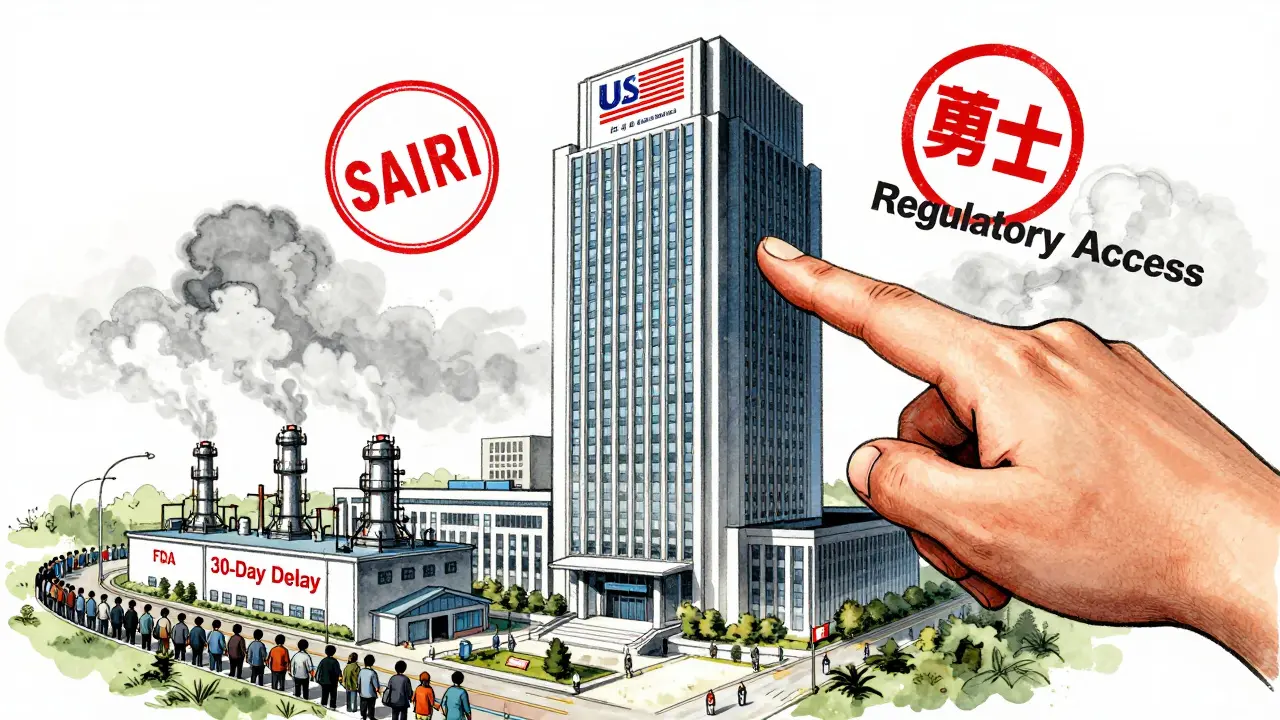
A 2023 NIH study found that generic manufacturers based in the U.S. capture 22% more market share than overseas ones-even when the drug is identical. Why?- They have faster access to FDA inspectors.
- They can respond quicker to FDA requests for additional data.
- They’re more likely to have existing relationships with U.S. pharmacies and distributors.
What’s Changing in 2026
The FDA’s GDUFA III program is pushing for faster generic reviews. That sounds good-but it’s not helping everyone equally. Smaller companies struggle with the increased paperwork and compliance demands. Big players? They’ve already built teams to handle it. At the same time, the FTC is cracking down on “pay-for-delay” deals-where brand companies pay generics to delay entry. In 2023, these deals dropped by 40% compared to 2020. That’s pushing more first generics to market sooner. The result? More races, more winners, but also more pressure to act fast. The future isn’t about being the only one. It’s about being the first-and staying ahead by building systems that make switching too costly for everyone else.Final Reality Check
Being first doesn’t guarantee success. But being second? It almost guarantees obscurity. The data is clear: the first generic manufacturer doesn’t just get a head start. It gets a permanent advantage built into how the healthcare system works. Pharmacy stocking. Prescriber habits. Patient loyalty. These aren’t marketing tricks. They’re structural forces. The companies winning today aren’t just good at making pills. They’re good at playing a game of timing, regulation, and human behavior. They know that in generics, the race isn’t to the fastest. It’s to the one who gets there first-and stays there because no one else can.What is the Hatch-Waxman Act and how does it help first generic manufacturers?
The Hatch-Waxman Act of 1984 created the legal framework for generic drugs in the U.S. It lets generic companies challenge brand drug patents and, if successful, grants them 180 days of exclusive marketing rights. This exclusivity prevents other generics from entering the market during that time, giving the first mover a monopoly window to capture market share before competition arrives.
Why does the first generic keep market share after its 180-day exclusivity ends?
Because of inertia in the healthcare system. Pharmacies stock only one version per drug to reduce costs and errors. Doctors prescribe what’s already in the system. Patients don’t switch unless there’s a reason-like a price drop or side effect. By the time a second generic arrives, the first one is already the default. Switching requires effort, and most stakeholders won’t bother.
What’s an Authorized Generic, and why is it dangerous for first-movers?
An Authorized Generic is a version of the brand drug sold as a generic by the original manufacturer-often during the first generic’s 180-day exclusivity. It’s legal and cuts into the first mover’s revenue by lowering prices by 4-8% at retail and 7-14% at wholesale. Instead of a two-player race, the first generic now competes with both the brand and its own version, eroding profits fast.
Do small generic companies have a chance at first-mover advantage?
It’s possible, but difficult. Small companies often lack the regulatory expertise, API supply chains, and legal resources to win. McKinsey’s data shows large manufacturers gain over 10 market-share points more than smaller ones. Small firms can win in niche markets or complex drugs where big players move slowly-but they’re at a structural disadvantage in most cases.
Are first-mover advantages fading as more generics enter the market?
In simple oral drugs, yes-the advantage is shrinking due to price competition. But in complex generics like injectables, inhalers, and specialty creams, the advantage is growing. Fewer companies can make these, so the first mover faces less competition and holds market share longer. The advantage isn’t disappearing-it’s moving to harder-to-copy products.
How does being a U.S.-based manufacturer help in securing first-mover advantage?
U.S.-based manufacturers respond faster to FDA requests, have easier access to inspectors, and maintain stronger relationships with U.S. pharmacies and distributors. A 30-day delay in responding to an FDA question can cost the first-mover spot. Domestic companies avoid those delays, giving them a critical edge in timing.
Jeane Hendrix
January 5, 2026 AT 21:12Wow, this is wild how much inertia drives the system. I always thought generics were just cheaper versions, but the fact that pharmacies stick with one brand because it’s easier? That’s insane. It’s like the healthcare version of sticking with your first smartphone because switching feels like a chore. No one’s malicious, but the system just… locks in.
And the authorized generic thing? That’s such a sneaky move by Big Pharma. Feels like they’re playing chess while the first generic is still learning how the pieces move.
Rachel Wermager
January 5, 2026 AT 22:19Let me just clarify the Hatch-Waxman Act because everyone’s misrepresenting it. It’s not a ‘monopoly’-it’s a statutory incentive to incentivize patent challenges. The 180-day exclusivity is a quid pro quo: you risk litigation costs and legal exposure, and in return, you get a window to recoup. It’s economic policy, not a cartel. Also, ‘inventory inertia’? That’s just path dependency in supply chain logistics-standard in every industry from automotive to pharmaceuticals. Stop romanticizing it as some systemic conspiracy.
Tom Swinton
January 7, 2026 AT 02:53Okay, I just read this entire thing twice because it’s so important-and I’m not even in pharma. But seriously, this isn’t just about drugs. This is about how ANY system-healthcare, tech, education-gets stuck in its first choice. Once the first generic is in the EHR, once the pharmacist’s trained on it, once the patient’s used it for six months? You’re not competing on price or quality anymore. You’re competing against human habit. And humans? We hate change unless it’s forced. So the real winner isn’t the company that makes the pill fastest-it’s the one that understands psychology better than regulation.
And the U.S.-based advantage? Totally real. I know a guy who works at a small generic firm. They got an FDA request on a Tuesday. Took them 12 days to respond because they had to ship samples across the country. Meanwhile, Teva? They had a rep in the building by Thursday. That’s not luck. That’s infrastructure. And it’s why we’re losing innovation to overseas players who don’t have to fight this inertia.
Leonard Shit
January 7, 2026 AT 12:54so like… the first generic wins because everyone’s just too lazy to switch? lol. makes sense. pharmacy techs don’t wanna retrain, docs don’t wanna click an extra button, patients don’t wanna read the tiny label. it’s not a strategy, it’s just… american efficiency. we optimized for convenience, not competition. also, authorized generics are basically the brand company saying ‘we’ll let you have 180 days of hope, then we’ll crush you with our name and distribution.’ ouch.
also lol at small companies trying to compete. they’re bringing a knife to a gunfight made of regulatory forms and api contracts.
Gabrielle Panchev
January 7, 2026 AT 18:29Wait-hold on. You’re saying that the first generic gets 90% of the market… but then you admit that the drugs are identical? So we’re paying more for the same pill just because someone filed paperwork first? And you call this ‘market efficiency’? This isn’t capitalism-it’s feudalism with FDA stamps. And now you’re telling me that U.S.-based manufacturers have an advantage because they’re closer to inspectors? So we’re rewarding geography over merit? What if the best generic is made in India? Do we just ignore it because it took 30 extra days to respond to an email? This system is rigged. And no one’s talking about it because everyone’s too busy getting their prescription filled without asking questions.
Katelyn Slack
January 9, 2026 AT 14:41i just wanted to say thank you for writing this. it’s so clear and i’ve been trying to explain this to my mom for years. she keeps asking why her blood pressure med costs $4 one month and $12 the next. now i can send her this. also, the part about authorized generics? that’s wild. i had no idea the brand company could just… do that. scary stuff.
Melanie Clark
January 10, 2026 AT 23:53THEY’RE ALL IN ON THIS SCHEME THE FDA IS A CROOKED ALLY BIG PHARMA OWNS EVERYONE THE FIRST GENERIC IS A SCAPEGOAT THEY LET THEM WIN SO THEY CAN LAUNCH THE AUTHORIZED VERSION AND THE PATIENTS NEVER KNOW THEY’RE BEING ROBBED THE HATCH WAXMAN ACT WAS DESIGNED TO TRAP SMALL COMPANIES AND THE U S GOVERNMENT IS IN ON IT I SAW A DOCUMENT ON THE WEB THAT SHOWED A MEETING IN 2018 WHERE THEY DISCUSSED HOW TO EXTEND THE INERTIA TO 3 YEARS AND NO ONE TALKS ABOUT THIS WHY IS NO ONE TALKING ABOUT THIS
Harshit Kansal
January 11, 2026 AT 00:40bro this is wild but also makes total sense. in india we just buy the cheapest generic no matter who made it but here it’s like a cult. first one in = king. even if it’s the same pill. also big pharma doing authorized generics? that’s like if McDonald’s made their own version of Burger King’s burger and sold it cheaper. genius. and kinda evil. also u.s. manufacturers win because they’re closer to the fda? that’s not fair but also not surprising. i’d cry if i was a small company trying to compete.