
When you pick up a prescription, you might not realize that the difference between a brand-name pill and its generic version isn’t just the price tag-it’s often the result of a state policy designed to save money. In 46 out of 50 U.S. states, there are formal rules pushing doctors, pharmacists, and patients toward generic drugs. These aren’t random suggestions. They’re structured financial and regulatory nudges-called generic prescribing incentives-that quietly shape what medication ends up in your medicine cabinet.
How States Push for Generic Drugs
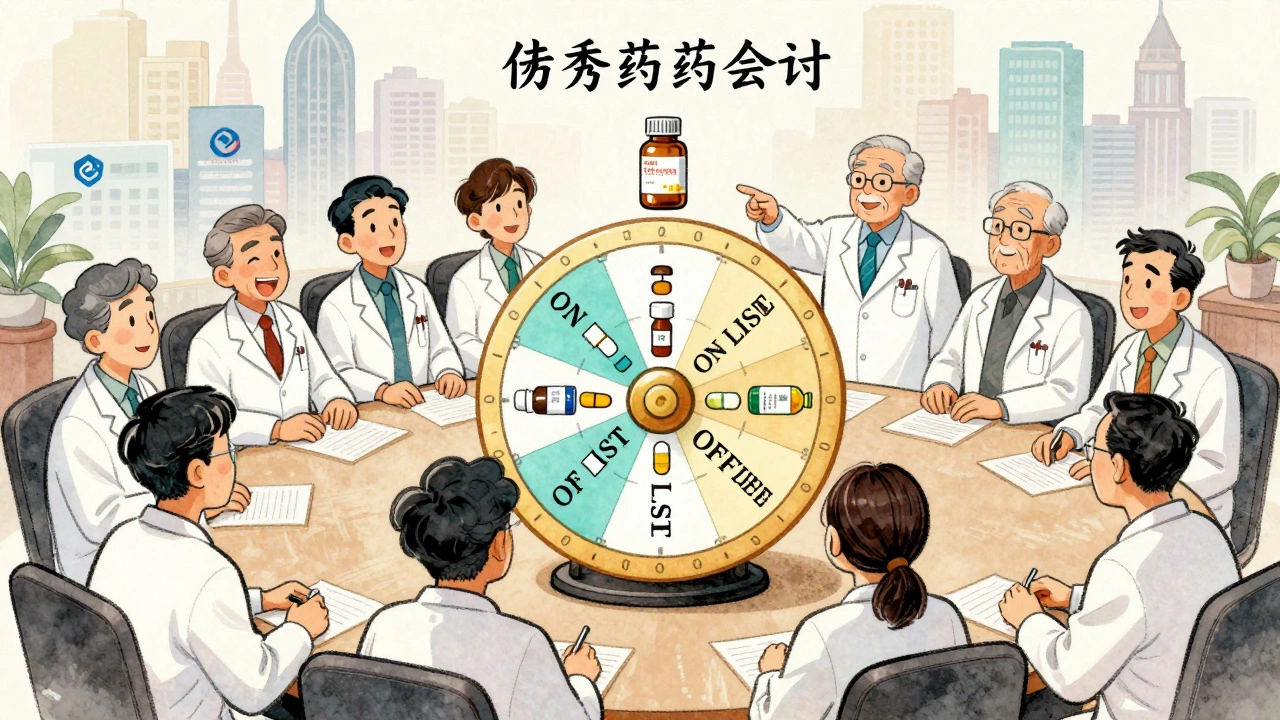
States don’t force anyone to use generics. Instead, they make it easier and cheaper to choose them. The most common tool is the Preferred Drug List (PDL). Think of it like a grocery store’s ‘sale aisle.’ If a drug is on the list, your copay is lower. If it’s not, you pay more-or you need special approval just to get it. As of 2019, 46 states used PDLs for their Medicaid programs. In 29 of those, a committee of doctors and pharmacists decides which drugs make the list. That means the choice isn’t made by bureaucrats alone-it’s based on clinical evidence and cost.These lists aren’t static. Twenty states review them every year. Ten do it quarterly. That’s because drug prices and availability change fast. A drug might be cheap today but get a price hike next month. A new generic might hit the market and knock the old one off the list. States have to keep up.
Pharmacists Can Substitute-If the Law Lets Them
Here’s where it gets personal. When your doctor writes a prescription for a brand-name drug, your pharmacist might swap it for a generic without asking you. That’s called presumed consent. In 11 states, pharmacists must ask you first-explicit consent. The difference matters.A 2018 NIH study found that presumed consent laws increased generic dispensing by 3.2 percentage points. That might sound small, but multiply that across millions of prescriptions, and it adds up to billions in savings. In fact, researchers estimated that if all 39 explicit consent states switched to presumed consent, they’d save $51 billion a year. That’s more than the annual budget of many U.S. states.
Why does this work? Because pharmacists are incentivized too. They make a little more profit dispensing generics. But if you’re not given the option to say no, you’re more likely to just take the cheaper version. It’s not about tricking people-it’s about removing friction.
Money Talks: Copay Differentials
The biggest driver of generic use isn’t what the doctor says or what the pharmacist recommends-it’s what you pay at the counter. States with big gaps between brand and generic copays see the highest switch rates. For example, if a brand-name drug costs $30 and the generic is $5, most people will choose the $5 option. But if both cost $15, they’ll stick with the brand they know.Back in the late 1990s, pharmacy dispensing fees for generics and brands were nearly identical-just 8 cents apart. But copay differentials kept growing. That’s no accident. States and insurers deliberately widened the gap to push behavior change. By 2022, 15 states and Puerto Rico had laws specifically requiring these copay differences. The goal? Make the cheaper option the easy option.
Some employers even use this. About 29% of employers required generic use through their pharmacy benefit managers by 1998. But here’s the twist: even as more prescriptions were filled with generics, the total spending on drugs kept rising. Why? Because brand-name drugs got more expensive. A single new drug can cost $100,000 a year. One of those can wipe out the savings from millions of cheap generics.
What About the 340B Program?
The 340B Drug Pricing Program lets hospitals and clinics that serve low-income patients buy drugs at steep discounts-often 20% to 50% off. It’s been around since 1992 and helps safety-net providers stretch their budgets. But here’s the catch: when these clinics dispense drugs to Medicaid patients, states have to reimburse them based on the 340B price. That’s not always easy.In 2016, the federal government told states: “You must set your reimbursement rates for 340B drugs by April 1, 2017. And you can’t pay more than the 340B ceiling price.” That created headaches. Some states didn’t have the systems to track these prices. Others struggled to update their payment formulas. But the rule forced them to adapt. Now, many states use actual acquisition cost (AAC) models to pay pharmacies fairly without overpaying.
Why Some Incentives Don’t Work
Not every policy moves the needle. Some states tried mandatory substitution laws-requiring pharmacists to swap generics no matter what. But studies found those didn’t increase generic use. Why? Because pharmacists were already doing it anyway. They made more money on generics. The law didn’t change behavior-it just added paperwork.Another misstep? Incentives aimed at pharmacists alone. Some states raised dispensing fees for generics or penalized pharmacists for choosing brands. But research from the Department of Health and Human Services found these didn’t work well. Patients don’t care what the pharmacist earns. They care what they pay. So states shifted focus-from provider incentives to patient incentives.
The Hidden Risk: Generic Drugs Disappearing
There’s a dark side to all these savings. Generic drug makers aren’t profit machines. They run on thin margins. And Medicaid’s rebate system can backfire.Under the Medicaid Drug Rebate Program, manufacturers must pay back a percentage of the drug’s price. For generics, it’s at least 13%. But here’s the problem: if the cost of raw materials goes up, or if there’s a shortage, or if the market gets crowded, the rebate can still be calculated based on old prices. That means a generic drug might become unprofitable-even if the manufacturer didn’t raise the price.
Avalere Health found five scenarios where this happens. In those cases, companies stop making the drug. They pull it from Medicaid. And suddenly, the cheap option isn’t available anymore. Patients get stuck with expensive brands. The state’s savings vanish. The market gets less competitive. It’s a paradox: the more you try to save money, the fewer cheap options you have.
What’s Next? The Drug List
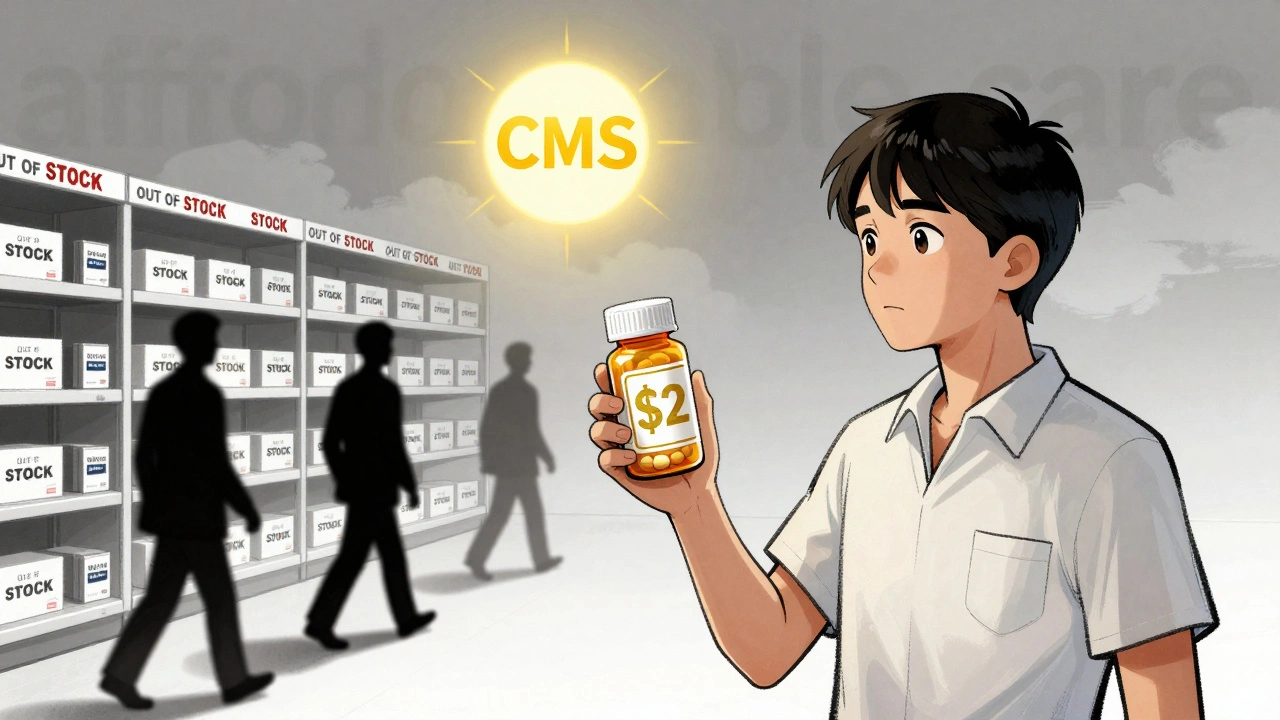
The federal government is watching. The Centers for Medicare & Medicaid Services (CMS) is testing a new idea: the $2 Drug List. It’s simple-any generic drug that costs $2 or less gets a flat copay of $2. No matter what your plan is, no matter what state you’re in. You pay $2. That’s it.This model is still voluntary and only for Medicare Part D right now. But if it works, states will likely copy it. Why? Because it’s easy to understand. No confusing lists. No prior authorizations. Just a clear price. Patients know what to expect. Pharmacies don’t have to guess. And costs stay low.
It’s the next logical step: stop overcomplicating it. Let people choose the cheapest option without jumping through hoops.
It’s Not Just About Money
Generic drugs aren’t just cheaper. They’re just as safe and effective. The FDA requires them to meet the same standards as brand-name drugs. But people still worry. They think “generic” means “lower quality.” That’s why the best incentives don’t just save money-they educate.The real win isn’t just a lower copay. It’s a patient who understands that a $5 generic is just as good as a $150 brand. When that happens, the policy works-not because of a rule, but because of trust.
Are generic drugs as safe as brand-name drugs?
Yes. The FDA requires generic drugs to have the same active ingredients, strength, dosage form, and route of administration as the brand-name version. They must also meet the same strict manufacturing standards. The only differences are in inactive ingredients (like fillers or dyes) and packaging. These don’t affect how the drug works in your body.
Why do some states require patient consent before substituting generics?
States with explicit consent laws often do so out of concern for patient autonomy or to avoid confusion-especially with complex medications like those for epilepsy or mental health. But research shows these laws reduce generic use. Patients may not understand the difference, so they say no just to be safe. Presumed consent removes that barrier without taking away choice.
Do generic prescribing incentives hurt pharmaceutical innovation?
There’s no clear evidence they do. Brand-name drug companies still make profits from new, patented drugs. Generic incentives target drugs that have already lost patent protection. The goal isn’t to block innovation-it’s to reduce spending on older, off-patent medications. In fact, savings from generics can free up money for new treatments.
Why do some generic drugs disappear from shelves?
Sometimes, it’s because the price is too low to cover costs. Medicaid’s rebate system can make a generic unprofitable even if the manufacturer didn’t raise the price. If the cost of ingredients goes up, or if there’s a shortage, the rebate might still be based on an outdated price. That pushes companies to stop making the drug-especially if they’re already operating on thin margins.
Can I ask my pharmacist to give me the brand-name drug even if a generic is available?
Yes, you can. In every state, you have the right to request the brand-name drug. But you’ll likely pay more. Your copay will be higher, and your insurance may not cover the full cost. Some states require you to sign a form acknowledging the extra cost. It’s your choice-but it’s important to understand the financial impact.
What You Can Do
If you’re on Medicaid or have insurance with a pharmacy benefit manager, check your plan’s formulary. See which drugs are preferred. Ask your pharmacist: “Is there a generic version of this?” If there is, and it’s cheaper, you’re saving money. If you’re worried about switching, talk to your doctor. Most of the time, the generic works just as well.States aren’t trying to control your choices. They’re trying to make smart choices easier. And when you understand how these systems work, you can use them to your advantage.
Aileen Ferris
December 10, 2025 AT 06:27Neelam Kumari
December 11, 2025 AT 19:15Doris Lee
December 13, 2025 AT 09:33David Palmer
December 13, 2025 AT 13:20Michelle Edwards
December 14, 2025 AT 18:46Michaux Hyatt
December 15, 2025 AT 03:57Nikki Smellie
December 17, 2025 AT 01:25Kaitlynn nail
December 17, 2025 AT 13:29Sarah Clifford
December 19, 2025 AT 05:34Stephanie Maillet
December 19, 2025 AT 11:38Queenie Chan
December 20, 2025 AT 16:38Frank Nouwens
December 21, 2025 AT 18:06Rebecca Dong
December 22, 2025 AT 17:47