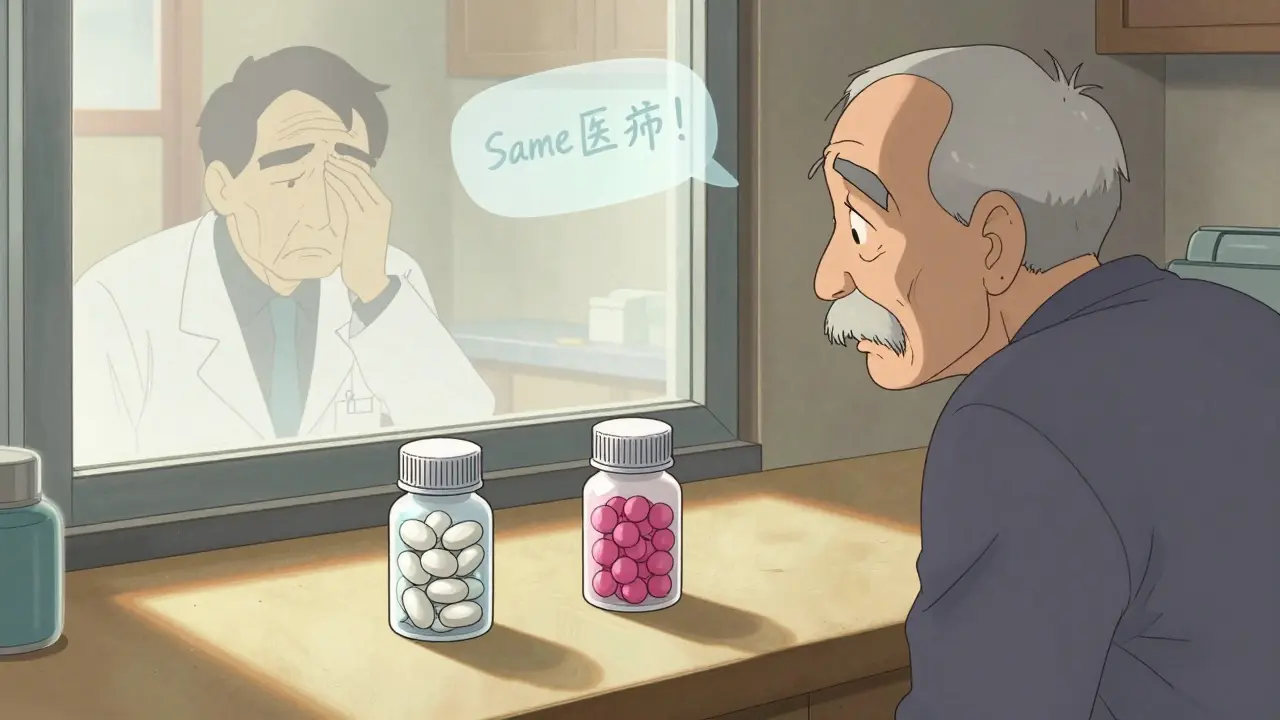
Imagine taking your daily pill, and one day it looks completely different-same bottle, same name, but now it’s pink and round instead of white and oval. You stop taking it. Not because you’re noncompliant, but because you’re confused. You think it’s a different drug. This happens more often than you’d believe. And it’s not just about looks. It’s about health literacy-how well people understand the medicines they’re supposed to take.
Why Generic Medications Confuse Patients
Generic drugs are not cheaper because they’re weaker. They’re cheaper because they don’t need expensive marketing or patents. They contain the exact same active ingredient as brand-name drugs. But here’s the problem: they don’t look the same. Patients often don’t know that. A 2016 study found that 42% of people didn’t realize generics work the same way as brand-name pills. When a patient gets a new batch of metformin that’s a different color or shape, they might think it’s a mistake-or worse, a fake. One diabetic patient in a PatientsLikeMe forum said she skipped her pills for three days after her generic changed appearance. She ended up in the ER with dangerously high blood sugar. Older adults are especially at risk. A JAMA Internal Medicine study showed that when seniors received a visually different version of their cardiovascular medication, their rate of skipping doses jumped by 23%. Many just throw the new pills away. This isn’t laziness. It’s a failure of communication.The Gap Between What Patients Know and What They Need to Know
The U.S. Department of Health and Human Services defines health literacy as the ability to find, understand, and use health information to make good decisions. That sounds simple. But when it comes to generics, the system doesn’t make it easy. Patients need to understand six key things about every medication: the name (brand vs. generic), why they’re taking it, how to take it, how to store it, possible side effects, and when to call their doctor. But most patient leaflets are written at a college reading level. A 2022 FDA review found only 37% of generic drug leaflets use plain language. And it’s not just the paper. Pharmacists report that 68% of patients worry generics won’t work as well-even though they’re required by law to be just as effective. That fear is strongest among people with lower education levels. Medicare data shows that 63% of beneficiaries with less than a high school diploma feel confused when their generic switches.How the System Makes It Worse
Brand-name drugs are designed to be memorable. Think of the blue diamond-shaped pill for Viagra. Everyone knows it. Generics? They’re made by different companies. One manufacturer makes a white oval. Another makes a yellow triangle. The same medicine. Different looks. No consistency. This isn’t an accident. It’s how the market works. But it creates chaos for patients. The Institute for Safe Medication Practices recorded over 1,200 medication errors between 2015 and 2020 just from mixing up different versions of the same generic drug. That’s 17% of all generic-related errors. Even doctors struggle. A 2022 American Medical Association report found that 56% of physicians hear patients say things like, “I didn’t take this because it looked wrong.” No one’s blaming the patient. They’re just asking for help.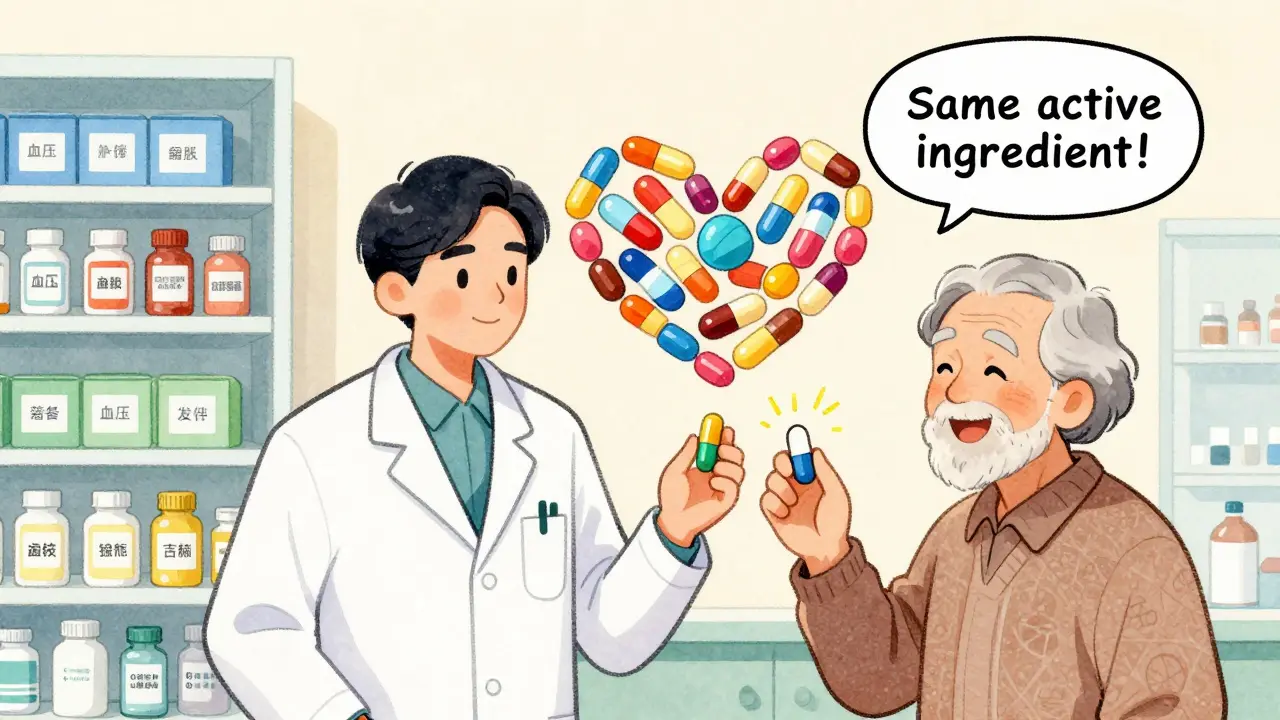
What’s Being Done to Fix This
Some solutions are already working. The “Ask Me 3” program trains doctors and nurses to ask patients three simple questions: What’s my main problem? What do I need to do? Why is it important? When this was used in 1,200 clinics, medication errors linked to generic confusion dropped by 31%. Another tool is the “Brown Bag Review.” Patients bring all their pills-bottles, boxes, whatever-to their appointment. The provider sorts them out. It sounds basic, but in a Johns Hopkins study, this cut medication mistakes by 44%. Digital tools are helping too. The Medisafe app lets users scan their pills and get photos, names, and instructions. In a clinical trial, it improved understanding of generics by 37%. The CDC’s Universal Precautions for Health Literacy approach is now used in 92% of Federally Qualified Health Centers. It includes clear scripts for explaining generics: “This is the same medicine, just made by a different company. It works the same way.” That simple message reduced patient confusion by 52%.Global Changes Are Coming
Europe is leading the way. The European Medicines Agency now requires generic drugs to have standardized packaging across member states. In pilot programs in Germany and France, this cut medication errors by 19%. The WHO is pushing for the same globally. The FDA is moving too. Their 2023 draft guidance suggests color-coding generics by therapeutic class-like using blue for blood pressure meds, green for diabetes. Australia already does this. Their error rate dropped by 33%. The Biden administration’s 2023 National Action Plan includes a goal to reduce generic-related confusion by 25% by 2027. That’s the first time a U.S. health plan has set a measurable target for this problem.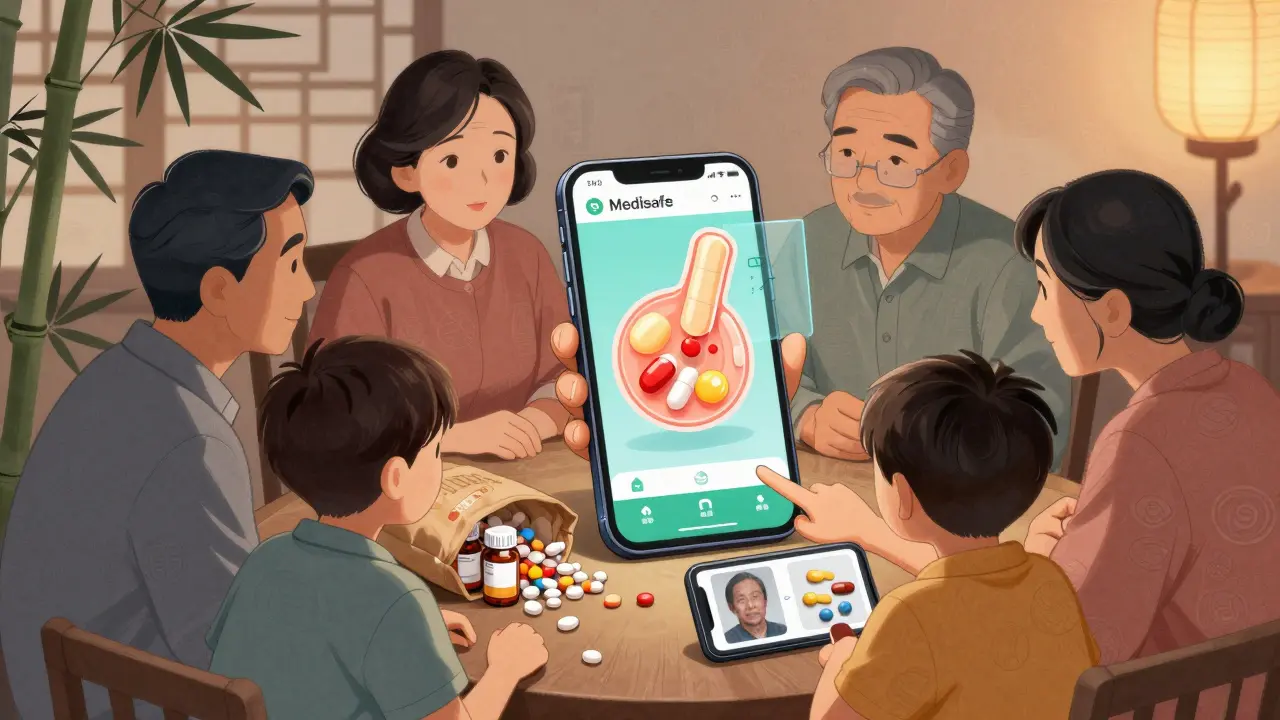
What You Can Do Right Now
You don’t need a policy change to protect yourself or a loved one. Start with these steps:- Always ask your pharmacist: “Is this the same medicine I was taking before?”
- Keep a list of your meds-name, color, shape, dose-and update it every time something changes.
- Take a photo of your pill before you start a new bottle. If it looks different, compare the photo.
- Use a pill organizer with labels. Don’t rely on memory.
- If you’re unsure, don’t guess. Call your doctor or pharmacist. No question is too small.
The Bigger Picture
This isn’t just about pills. It’s about dignity. It’s about trust. When people can’t understand their own medicine, they feel powerless. They stop taking it. They get sicker. They go to the hospital. And the system blames them. The truth is, the system failed them-not the patient. The solution isn’t more brochures or fancy apps. It’s consistency. It’s clarity. It’s treating patients like people who deserve to know what they’re taking-and why. The data shows we can fix this. We’ve already seen it work in clinics, in pharmacies, in countries that chose to standardize. Now it’s about scaling what works. And making sure no one has to skip their medicine because it changed color.Are generic medications really as effective as brand-name ones?
Yes. By law, generic drugs must contain the same active ingredient, in the same strength, and work the same way as the brand-name version. The FDA requires them to be bioequivalent-meaning they’re absorbed into the body at the same rate and to the same extent. The only differences are in inactive ingredients (like fillers or dyes), shape, color, or packaging-none of which affect how well the drug works.
Why do generic pills look different every time I refill my prescription?
Generic drugs are made by different manufacturers, and each one can choose its own pill design. There’s no national standard for color or shape, so one company might make a white oval tablet, while another makes a pink round one. Both are the same medicine, but they look different. This can confuse patients, especially those taking multiple medications or with low health literacy.
What should I do if my generic medication looks different?
Don’t stop taking it. Don’t guess. Call your pharmacist and ask: ‘Is this the same medicine I was taking before?’ They can confirm the active ingredient and dosage match. You can also check the label for the generic name (like ‘metformin’) and compare it to your old bottle. Taking a photo of your pill when you first get it helps you spot changes later.
Can low health literacy lead to dangerous mistakes with generics?
Yes. Research shows people with low health literacy are 2.5 times more likely to take the wrong dose or skip medication when generics change appearance. One study found 52% of older adults taking heart meds would discard pills they didn’t recognize. This leads to hospital visits, worsening conditions, and even death. The problem isn’t the patient-it’s the lack of clear, consistent communication.
Are there tools or apps that help people understand their generic meds?
Yes. Apps like Medisafe let you scan your pill and see a photo, name, dosage, and instructions. In clinical trials, users improved their understanding of generics by 37%. Other tools include pill organizers with labels, printed medication lists, and photo libraries kept on a phone. Hospitals using the ‘Brown Bag Review’ method-where patients bring all their pills to appointments-cut medication errors by 44%.
What’s being done to make generic medications easier to understand?
The FDA is working on color-coding generics by drug type (like blue for blood pressure meds). The WHO and European Medicines Agency are pushing for standardized packaging across countries. Programs like ‘Ask Me 3’ train healthcare providers to explain generics clearly. In the U.S., 92% of Federally Qualified Health Centers now use plain-language scripts to explain substitutions. These efforts have already reduced confusion by over 50% in some settings.
Jasmine Bryant
January 23, 2026 AT 06:08My grandma took her blood pressure med for 10 years, then one day the pill turned from blue to yellow and she tossed the whole bottle. She thought it was fake. Took her three days to call the pharmacy. She’s fine now, but I swear, if there was a photo on the bottle or a QR code to scan, she’d never have panicked. This isn’t rocket science.
Brenda King
January 24, 2026 AT 00:51I work in a clinic and we started doing the Brown Bag Review last year. Changed everything. People bring in 12 different bottles, half of them expired, and suddenly it’s clear why they’re confused. We don’t judge. We just sort. It’s like a pill archaeology dig. And yes, we take photos. Always. No one should have to guess what’s in their hand.
Rob Sims
January 24, 2026 AT 17:49Oh please. People just don’t want to take responsibility. If you can’t read a label, maybe you shouldn’t be managing your own meds. This isn’t a crisis-it’s a personal failure. The system isn’t broken, you’re just lazy.
Tatiana Bandurina
January 25, 2026 AT 02:08Actually, Rob, your attitude is why this problem persists. You’re blaming patients for a systemic failure. The FDA allows 37 different manufacturers to make metformin with no visual standard. That’s not patient laziness. That’s corporate negligence wrapped in red tape. And you’re defending it.
shivani acharya
January 25, 2026 AT 09:09And let’s not forget who profits from this chaos-Big Pharma. Brand names charge $500 for a pill. Generics cost $3. But they make them look totally different so you panic, go back to the brand, and pay the markup. It’s a scam. They want you confused. They want you afraid. They want you paying more. And now they’re selling apps to fix what they broke. Classic.
Sarvesh CK
January 26, 2026 AT 05:02There’s a deeper philosophical layer here. Medication isn’t just chemistry-it’s identity. When a pill changes shape, it disrupts the ritual. The patient’s daily routine, their trust in the body’s rhythm, their sense of control-all of it is tied to that visual cue. To dismiss this as mere ‘confusion’ is to ignore the human dimension of healing. We treat symptoms, not stories.
Neil Ellis
January 27, 2026 AT 05:21I’m from rural Georgia. My cousin, 72, takes six pills a day. One day, her diabetes med changed from a white oval to a green triangle. She thought it was poison. She called me crying. We sat on her porch, took pictures, compared labels, and she finally believed it was the same. That moment? That’s what this is about. Not data. Not stats. A woman who thought she was being poisoned by her own medicine.
Philip House
January 29, 2026 AT 04:52Europe’s doing it right. We’re stuck in this capitalist mess where every generic manufacturer is a separate brand. Why not just make them all look the same? It’s not hard. The FDA could mandate it tomorrow. But no-because profit > safety. We’re not a health system. We’re a market. And patients are the product.
Chiraghuddin Qureshi
January 29, 2026 AT 07:20Love the Medisafe app! I scanned my dad’s pills last week and it showed him exactly what each one was, even the generic ones. He cried. Said he felt like he finally understood his own body. 🙏❤️
Daphne Mallari - Tolentino
January 29, 2026 AT 16:33It is profoundly regressive to suggest that pharmaceutical aesthetics should be standardized. The market, through competition and differentiation, provides the optimal allocation of resources. To impose uniformity is to stifle innovation and dilute the very notion of consumer choice. One does not equate clarity with conformity.
Lauren Wall
January 30, 2026 AT 05:44Just stop taking meds if you’re scared. Problem solved.
arun mehta
January 31, 2026 AT 11:26As someone who grew up in Delhi with no access to consistent meds, I can tell you-this isn’t just an American problem. In India, generics are the only option. But the color changes? The shape? The lack of any labeling in local languages? It’s terrifying. I once saw a woman refuse insulin because it was red instead of clear. She thought it was dye. We need global standards. Not just in the US. Everywhere.
Kenji Gaerlan
January 31, 2026 AT 17:55bro why do u even care? just take the pill. its the same chem. stop overthinkin. also i think the pink one tasted better lmao
Keith Helm
February 2, 2026 AT 17:27The data is unequivocal. Standardized visual identifiers reduce medication errors by up to 33%. The cost of implementation is negligible compared to the cost of ER visits. The ethical imperative is non-negotiable. I urge the FDA to act immediately.
Oren Prettyman
February 2, 2026 AT 20:49While the empirical evidence presented in this piece is superficially compelling, one must interrogate the underlying epistemological assumptions. Are we pathologizing patient anxiety, or are we acknowledging the structural violence of pharmaceutical capitalism? The color of a pill is a symptom, not the disease. The real issue is the commodification of health, where human beings are reduced to data points in a cost-benefit analysis. Until we dismantle the profit motive in medicine, no app, no color code, no ‘Ask Me 3’ will suffice.