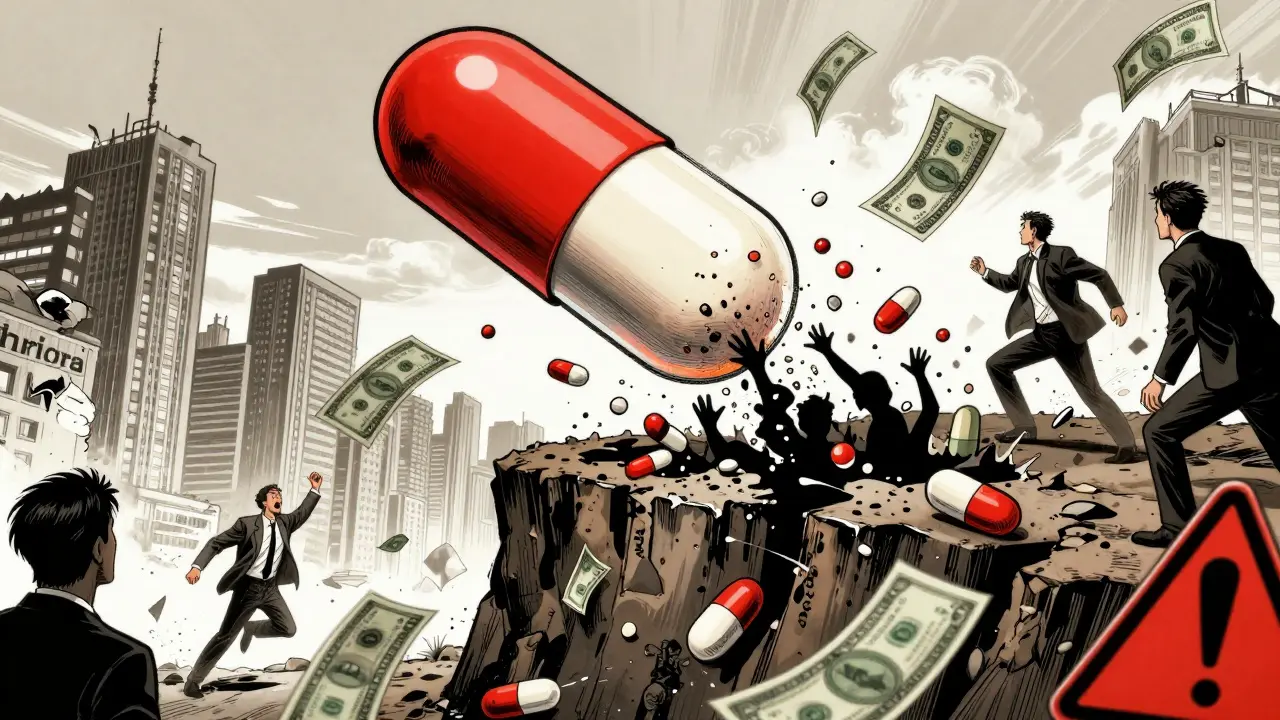
When a brand-name drug loses its patent, everything changes. The price drops by 80% overnight. Sales plunge. Investors panic. And suddenly, the company that spent billions developing that drug is fighting for survival-not because the medicine stopped working, but because generic drugs flooded the market. This isn’t hypothetical. It’s happening right now with drugs like Humira, Lipitor, and Enbrel. And it’s rewriting the rules of how pharmaceutical companies make money.
The Patent Cliff: When Revenue Vanishes Overnight
Brand manufacturers rely on patents to protect their profits. For 20 years, they have exclusive rights to sell a drug at whatever price the market will bear. That’s how they recoup the $2.6 billion average cost of bringing a new drug to market, according to Tufts Center for the Study of Drug Development. But once the patent expires, the clock starts ticking on their revenue. Within the first year after generic entry, brand sales typically drop 80-90%. In 2023, when Humira lost patent protection, AbbVie saw its quarterly revenue from the drug fall from $5 billion to under $1 billion in just months. That’s not a slow decline-it’s a cliff. And it’s not rare. Nearly 100 major drugs are set to lose patent protection by 2028, putting $400 billion in brand revenue at risk.How Generics Work: Cheap, Effective, and Ruthlessly Competitive
Generic drugs aren’t copies. They’re legally required to be identical in active ingredient, dosage, strength, route of administration, and performance to the brand version. The FDA approves them after proving bioequivalence-meaning they work the same way in the body. But here’s the key difference: generics don’t spend money on advertising, clinical trials, or R&D. They just make the same pill for a fraction of the cost. The result? Generics cost 80-85% less than brand-name drugs. In 2024, generics made up 90% of all prescriptions filled in the U.S., but only 20% of total drug spending. That’s a $330 billion annual savings for the healthcare system, according to the Schaeffer Center at USC. The Congressional Budget Office estimated that generics saved Americans $253 billion in 2014 alone. That’s money taken directly out of pharmaceutical company profits. But the real pressure comes from competition. When one generic enters, prices drop. When three or more enter, prices crash again. The FDA found that after three years with three generic competitors, prices fall by about 20% more. With five or more manufacturers, prices can drop below 10% of the original brand price. That’s not a market-it’s a race to the bottom.Brand Manufacturers Fight Back
No brand company wants to watch its biggest moneymaker turn into a commodity. So they’ve built a whole playbook to delay the inevitable. One tactic is “pay for delay.” Brand companies pay generic makers to hold off on launching their version. These deals, banned in the EU and under scrutiny in the U.S., cost patients an extra $3 billion a year in out-of-pocket costs, according to the Blue Cross Blue Shield Association. The Congressional Budget Office estimates that ending these deals could save $45 billion over 10 years. Another is “product hopping.” Instead of letting a drug go generic, brand companies tweak it slightly-a new pill shape, a new delivery system, a slightly different dosage-and get a new patent. This happened with OxyContin, which shifted from an immediate-release to an extended-release version just before generics were set to launch. The FDA calls this a strategy that “may extend patent protection beyond its intended term.” Then there’s “patent thickets.” Companies file dozens of secondary patents on minor aspects-like the color of the pill or the packaging-to block generics from entering. The CBO estimates that cracking down on these practices could save $1.8 billion over a decade.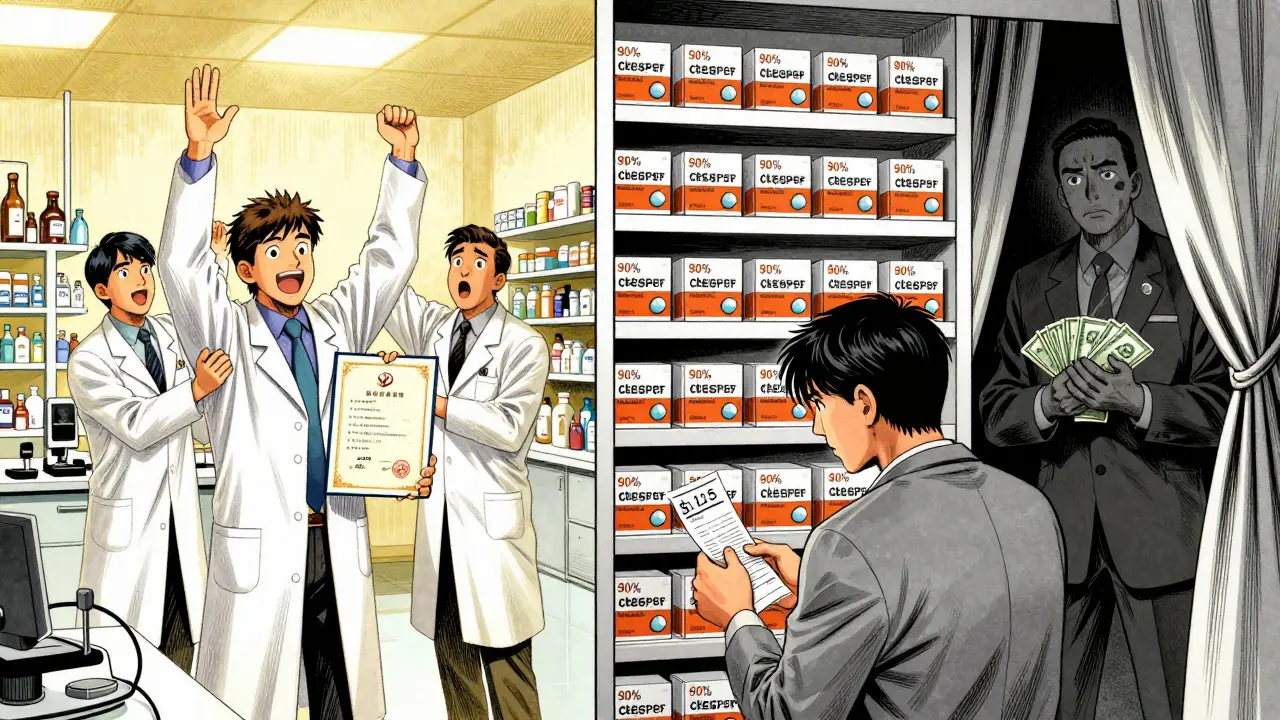
The Hidden Cost of Savings: Who Really Benefits?
It sounds simple: generics = lower prices. But the reality is messier. Pharmacy benefit managers (PBMs)-the middlemen between insurers, pharmacies, and drug makers-often control pricing in ways that hurt patients. PBMs negotiate rebates with brand manufacturers, then set reimbursement rates for pharmacies. But they don’t always pass those savings on. A 2022 Schaeffer Center analysis found patients pay 13-20% more than necessary for generics because of opaque PBM pricing. Pharmacists on Reddit forums report losing money on generic prescriptions because PBM reimbursements are lower than the cost to buy the drug from wholesalers. Even when generics are cheap, patients still pay high copays. Why? Because many insurance plans use a fixed copay structure. A $10 generic and a $500 brand drug might both cost $25 out of pocket. That means patients don’t benefit from the lower price. The savings go to the insurer, not the person filling the prescription.How Brand Companies Are Adapting
Some brands are fighting. Others are adapting. Novartis spun off its generics division, Sandoz, as a separate company in 2022. That allowed Novartis to focus on high-margin innovation while letting Sandoz compete in the low-margin generic market. Pfizer, after losing patents on Lipitor and other blockbusters, shifted its R&D focus to oncology and rare diseases-areas with less generic competition. Some companies now make “authorized generics”-versions of their own brand drug sold under a generic label. This lets them capture some of the generic market instead of losing it entirely. Teva, once the world’s largest generic maker, now owns both brand and generic portfolios, giving it leverage across both sides of the market. The trend is clear: the future belongs to companies that can balance innovation with cost efficiency. Those that rely solely on blockbuster drugs are becoming relics.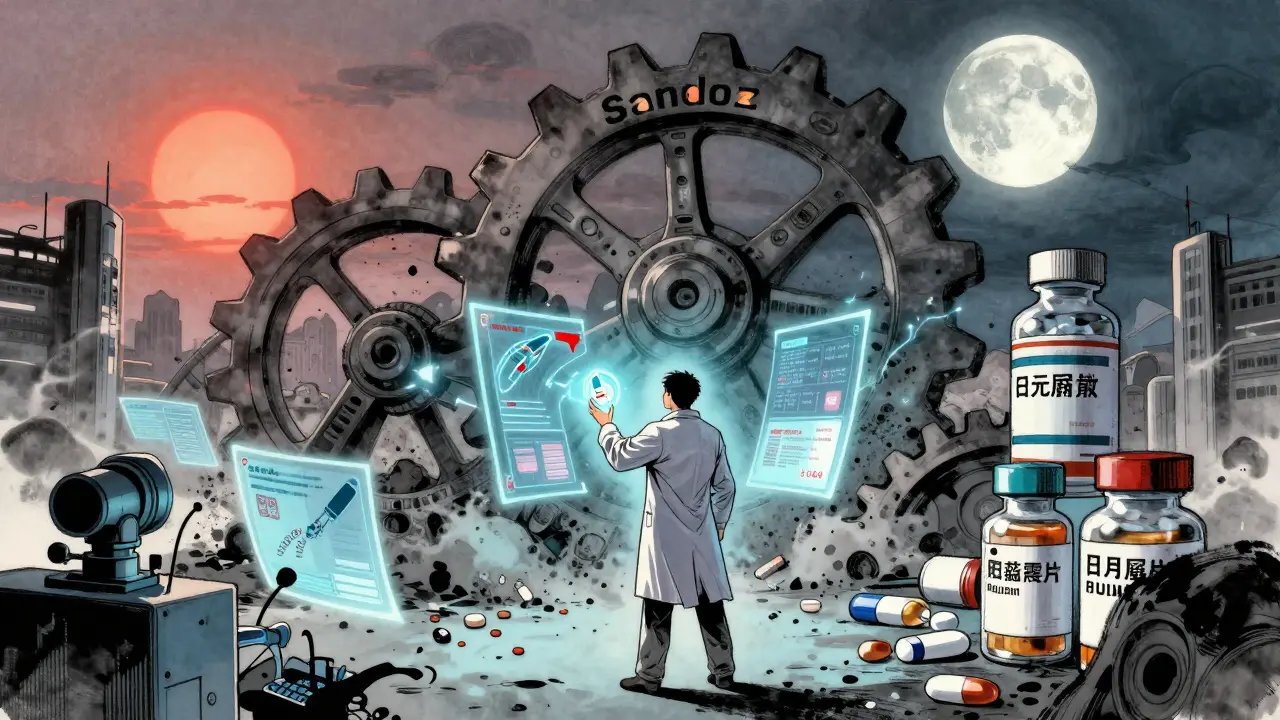
Kuldipsinh Rathod
December 26, 2025 AT 04:19Wow, this is wild. In India, we see generics everywhere-cheap, effective, and life-saving. My grandma takes her blood pressure meds for less than $2 a month. No one here thinks twice about it. Meanwhile, folks in the US are losing their minds over $500 pills. The system’s broken, not the medicine.
SHAKTI BHARDWAJ
December 26, 2025 AT 12:20OMG THIS IS A CONSPIRACY??!! PBMs are ROBBING US??!! And the FDA?? They’re just SLEEPING!! I swear if I had a gun I’d storm Congress and scream until they fix this!! Why do we pay $25 for a $0.10 pill??!! I’m CRYING right now!!
Matthew Ingersoll
December 26, 2025 AT 15:49The irony is that the very system designed to ensure drug safety has become a barrier to affordability. Regulatory capture, bureaucratic inertia, and profit-driven intermediaries have created a paradox: more access to generics leads to fewer manufacturers willing to produce them. The math doesn’t work unless someone absorbs the cost-and that someone is rarely the patient.
carissa projo
December 28, 2025 AT 13:28It’s heartbreaking to see how deeply the system fails people who need medicine most. Generics were supposed to be the great equalizer-democratizing health, lifting burdens, giving dignity back to those who can’t afford to be sick. But when copays stay high and PBMs pocket the difference, it’s not justice-it’s performance art. We’re not just talking about pills. We’re talking about people choosing between insulin and rent. That’s not capitalism. That’s cruelty dressed up as policy.
Let’s not just fix the system. Let’s rebuild it with compassion as the foundation.
david jackson
December 29, 2025 AT 15:17Let’s be real here-this isn’t just about generics versus brands. It’s about the entire pharmaceutical-industrial complex being a grotesque, overgrown monster that feeds on human desperation. Billion-dollar R&D budgets? Sure. But how much of that is actual innovation versus just tweaking pill colors to extend patents? And don’t get me started on how brand companies pay generic makers to stay off the market-like they’re paying off the mafia to not burn down the store. The fact that this is legal in the U.S. and not in the EU says everything you need to know about where our moral compass is pointing.
And now we’ve got shortages because no one wants to make a dime-a-pill when the paperwork costs more than the profit? That’s not capitalism. That’s a dystopian farce written by a committee of accountants who’ve never held a dying person’s hand.
Jody Kennedy
December 31, 2025 AT 14:31Stop blaming the manufacturers. The real villains are the middlemen. PBMs are the ghost in the machine. They’re the reason your $3 generic costs you $20. They’re the reason pharmacies lose money. They’re the reason your insurance doesn’t care. They’re the reason nothing changes.
christian ebongue
January 2, 2026 AT 05:12Generics didn’t break the system. They just held up a mirror. And now everyone’s screaming at their reflection.
Sarah Holmes
January 3, 2026 AT 01:39How dare you reduce this to a simple matter of cost? The innovation behind these drugs-decades of research, clinical trials, human suffering, and scientific brilliance-is being erased by a market that values price over progress. You speak of savings, but you ignore the fact that without the profit motive, there would be no breakthroughs in cancer, Alzheimer’s, or rare diseases. Generics are a necessary evil, but they are not a moral victory. They are the consequence of a system that has forgotten that medicine is not a commodity-it is a covenant between science and humanity. And now, we are trading that covenant for pennies.
When you celebrate the $0.10 pill, you are celebrating the death of ambition. You are applauding mediocrity. You are rewarding those who copy, not create. And when the last innovator walks away because the returns are gone, who will save the next generation? The same people who make $0.10 pills? They can’t even keep their own supply chains stable.
Do not mistake affordability for justice. Do not confuse access with integrity. This is not progress. It is collapse dressed in the clothes of compassion.