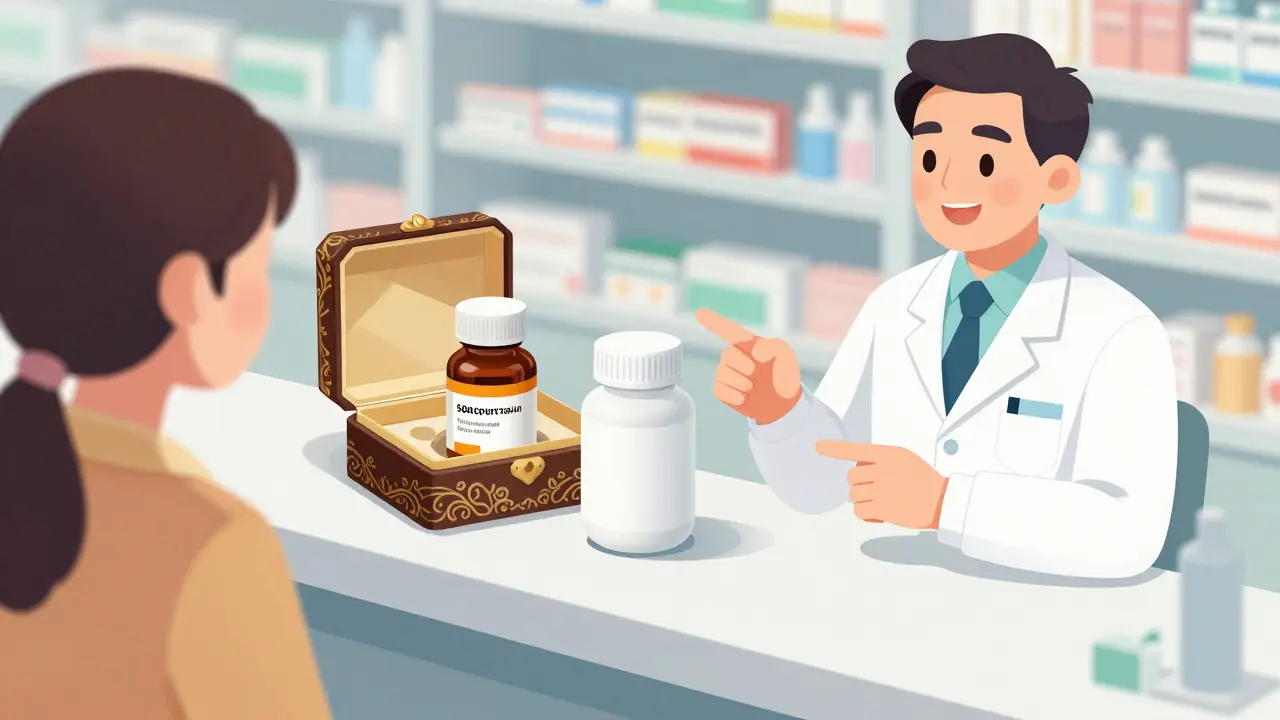
Imagine walking into a pharmacy and seeing two bottles of the same medicine. One has a fancy label and a price tag of $450, while the other is plain, simple, and costs just $9. Most people would jump at the cheaper option, but a lingering question always pops up: "Is the cheap one actually as good as the expensive one?" The short answer is yes. For the vast majority of patients, switching to generic medications is the single most effective way to slash out-of-pocket healthcare spending without sacrificing your health.
Quick Wins for Your Wallet
- Immediate Savings: Generic copays average around $6.16, whereas brand-name drugs often soar to over $56.
- High Volume, Low Cost: Generics make up 90% of all prescriptions dispensed in the U.S. but only a tiny fraction of total spending.
- Systemic Impact: Over the last decade, these medications have saved the healthcare system nearly $2.9 trillion.
What exactly is a generic drug?
To put it simply, a generic drug is a medication created to be identical to an already approved brand-name drug in every way that matters. When a company first develops a new medicine, they get a patent that gives them a monopoly for several years. This allows them to charge high prices to recover their research and development costs. Once that patent expires, other companies can step in and produce the same drug.
But they can't just guess the formula. The FDA is the federal agency responsible for protecting public health by ensuring the safety, efficacy, and security of human and veterinary drugs. They require generics to prove bioequivalence. This means the generic version must deliver the same amount of active ingredient into your bloodstream at the same rate as the brand name. Specifically, they must fall within a strict 80-125% equivalence range in pharmacokinetic parameters. Whether it's the pill's strength, purity, or potency, the standards are exactly the same.
Why the price gap is so massive
You might wonder why a generic can be 80% cheaper if the ingredients are the same. The secret is in the overhead. Brand-name companies spend billions on clinical trials, patent filings, and massive marketing campaigns to convince doctors to prescribe their specific brand. Generic manufacturers don't have those costs. They don't need to prove the drug works from scratch because the original brand already did that work; they only need to prove their version is the same as the original.
This competition creates a race to the bottom in terms of pricing, which is great for us. In fact, when the first few generic competitors enter a market, prices typically plumment by 80% to 85% within the first year. For common needs, like allergy relief, some generics are up to 83% cheaper than the brand-name equivalent.
| Feature | Brand-Name Drugs | Generic Medications |
|---|---|---|
| Average Copay | $56.12 | $6.16 |
| % of Prescriptions | ~10% | ~90% |
| Price to Consumer | High (Patent Protected) | Low (Competitive Market) |
| Active Ingredient | Original Formula | Identical Bioequivalent |
Beyond basic generics: Biosimilars and Therapeutic Substitutes
Not every drug is a simple chemical pill. Some are complex proteins grown in living cells. For these, we don't use the word "generic"; we use Biosimilars. These are highly similar versions of expensive biologic medicines used to treat conditions like rheumatoid arthritis or cancer. While they aren't exact copies due to the complexity of biological molecules, they provide the same clinical result. As of 2023, there are 41 FDA-approved biosimilars, and while they've been slower to adopt than pills, they are already generating billions in savings.
Then there is a more advanced strategy called therapeutic substitution. This is where a doctor replaces a high-cost generic with a different drug entirely that does the same job but costs way less. A study in Colorado found that this can lead to an 88.3% savings. For example, if two different medications both lower blood pressure equally well, but one is priced significantly lower, switching to that alternative is a smart financial move.
Are there any risks or downsides?
For 98% of people, the answer is no. Most generics are rated "AB" in the FDA Orange Book, meaning they are therapeutically equivalent. However, there is a small group of medications known as narrow therapeutic index (NTI) drugs. These are medicines where a tiny difference in the dose can lead to a big difference in how the drug works or cause dangerous side effects.
Drugs like levothyroxine (for thyroid issues) often fall into this category. Some patients report feeling a difference when switching between brands or generics for these specific meds. If you're taking an NTI drug, it's worth having a detailed conversation with your pharmacist about whether a generic is right for you.
How to practically lower your pharmacy bill
Saving money doesn't always happen automatically. Sometimes you have to be your own advocate at the doctor's office or the pharmacy counter. Here is a simple path to ensure you're getting the best deal:
- Ask your doctor: When a prescription is written, ask, "Is there a generic version of this that you trust?" Many physicians are happy to switch if they know you're concerned about cost.
- Check the "Orange Book": If you're unsure, the FDA's Orange Book is the gold standard for checking if a generic is truly equivalent to the brand.
- Compare pharmacies: Believe it or not, generic prices can vary between pharmacy chains. Some people switch pharmacies entirely just to save another few dollars on a monthly script.
- Look for therapeutic alternatives: If the generic is still too expensive, ask your provider if there is a different drug in the same class that is more affordable.

The bigger picture of drug pricing
While generics are a lifesaver, they aren't a cure for everything. In the U.S., drug prices are often 2.78 times higher than in other developed nations. Some companies use "patent thickets"-filing dozens of minor patents to block generics from entering the market for years. This is why legislation like the Inflation Reduction Act is so important; by capping out-of-pocket costs for Medicare beneficiaries, it forces the system to move toward more affordable options.
Do generic drugs take longer to work than brand names?
No. Because the FDA requires bioequivalence, the active ingredient in a generic drug is absorbed at the same rate and reaches the same peak concentration in your blood as the brand-name version. You should feel the effects in the same amount of time.
Why does my generic look different from the brand name?
Generic manufacturers are not allowed to copy the exact look, shape, or color of the brand-name pill to avoid trademark infringement. They may use different inactive ingredients (like dyes or fillers), but the active medicine remains identical.
Can I trust a generic if it's significantly cheaper?
Yes. The low price is not a sign of low quality. It's a result of not having to pay for the original research, development, and marketing. The FDA ensures that every approved generic meets the same quality and potency standards as the original.
What happens if I have a bad reaction to a generic?
While rare, some people react to the inactive ingredients (fillers or binders) used in a specific generic version. If you notice a change in how you feel, contact your doctor. They can help you switch to a different manufacturer or go back to the brand name if necessary.
Are biosimilars the same as generics?
Not exactly. Generics are exact chemical copies of simple drugs. Biosimilars are highly similar versions of complex biological drugs. Because biological drugs are grown in living cells, they can't be "identical," but biosimilars are proven to have no clinically meaningful differences in safety or effectiveness.
Next Steps for Patients
If you're currently paying high copays, start by reviewing your current medications. Use a tool like the AAM's online formulary or simply ask your pharmacist for a price comparison. For those on Medicare, keep an eye on the new out-of-pocket caps, as these changes may make it easier to afford the transition to generic or biosimilar options. If you are managing a chronic condition with a narrow therapeutic index drug, schedule a check-in with your doctor to ensure your current generic is the best fit for your specific biology.
Anastasios Kyriacou
April 23, 2026 AT 00:14my doc tried to push the brand name stuff last week total rip off lol
Mayur Pankhi Saikia
April 24, 2026 AT 21:42The obsession with FDA standards is quite quaint...!!! In reality, the bioequivalence range is a mere approximation that fails to account for the subtle nuancees of individual metabolic pathways!!!! One must wonder why the masses blindly trust these corporate benchmarks????
Amy Fredericks
April 26, 2026 AT 02:24It's so great to see a guide that helps people save money while staying healthy. There are so many wonderful resources out there, and I really think we can all work together to make healthcare more accessible for everyone!
Mike Arrant
April 26, 2026 AT 07:26You guys are just letting the system bleed you dry. If you aren't calling your insurance company every single month to fight for a lower tier drug, you're basically just handing them your wallet. Get a grip on your finances before you end up broke and sick.
Saptatshi Biswas
April 27, 2026 AT 15:28The arrogance of this American-centric guide is staggering! You speak of the FDA as if it is the only authority on earth, while completely ignoring that the pharmaceutical infrastructure in India is far more efficient and robust in producing high-quality generics for the entire globe! The sheer lack of global perspective here is an absolute disgrace to medical journalism!
Dave Edwards
April 28, 2026 AT 06:28Wait, so we're just supposed to ignore the fact that big pharma is literally gaming the system with these "patent thickets"? It's absolutely disgusting! How can anyone sleep knowing that corporate greed is actively preventing the poor from getting affordable meds? I am beyond appalled! :-(
Mel Glick
April 29, 2026 AT 11:43This is exactly why we need to push for a completely unified global pricing standard! The US system is a disaster and it's honestly embarrassing that people even have to write guides on how to avoid being ripped off by their own pharmacies! We need a total overhaul now!
Sue Stoller
April 30, 2026 AT 06:28I love how positive this is! 🌟 It really empowers patients to take control of their health and their budget. Just a little bit of advocacy can make such a huge difference in someone's life! Keep sharing this helpful info! ✨😊
Nicole Antunes
May 2, 2026 AT 03:52It is quite comforting to know that there are systemic safeguards in place to ensure medication quality (^_^) The information regarding Narrow Therapeutic Index drugs is particularly useful for those of us managing chronic conditions.
vimal purwal
May 3, 2026 AT 07:57I must insist that while the provided information is technically accurate and highly beneficial for the average consumer, one should always ensure that they are consulting with a licensed medical professional before making any sudden changes to their medication regimen, as the biochemical interactions can be incredibly complex and vary significantly from one individual to another, regardless of the generic or brand-name status of the drug in question.
Emma Cozad
May 4, 2026 AT 21:33Typical US govt fail. They let these companies loot us for decdes and now they act like a few generic pills are a big deal. The whole pharma industry in this country is a joke and its basicly a legalized scam run by lobbyists who dont care if you live or die as long as the stock price goes up.