Running out of medicine on a trip isn’t just inconvenient-it can be dangerous. Whether you’re carrying insulin, an EpiPen, heart medication, or even daily vitamins, heat, cold, light, and moisture can wreck their effectiveness. You might not realize it until it’s too late. A study in the Journal of Pharmaceutical Sciences found that just 30 minutes outside the right temperature range can cut a medication’s potency by up to 25%. And it’s not just biologics-common drugs like aspirin break down into vinegar and salicylic acid when exposed to heat and humidity, which can irritate your stomach. The World Health Organization estimates that $200 billion in medications are wasted globally every year because of improper storage. You don’t want to be part of that statistic.
Know Your Medication’s Temperature Needs
Not all meds are created equal. About 78% of prescription and over-the-counter drugs are fine at room temperature: between 68°F and 77°F (20°C to 25°C). Short trips to 59°F-86°F (15°C-30°C) won’t hurt most pills and capsules. Acetaminophen, for example, keeps 95% of its strength even after 72 hours at 95°F (35°C). But that’s the exception, not the rule. The real problem lies with refrigerated medications. Around 12% of prescriptions-like insulin, EpiPens, certain biologics, and some antibiotics-need to stay between 36°F and 46°F (2°C to 8°C). Left in a hot car at 102°F (39°C) for 90 minutes, an EpiPen can lose up to 40% of its potency, as one traveler confirmed with a CVS test after returning home. Insulin? It loses 1.2% potency per hour at 77°F. After 12 hours, that’s over 14% gone. For someone with type 1 diabetes, that’s not a small drop-it’s a life-risking gap. Then there are the freezer-stable drugs, like some rare biologics, which must stay between -4°F and 5°F (-20°C to -15°C). And don’t forget light-sensitive meds. Epinephrine, for instance, degrades by 18% after just 15 minutes in direct sunlight. If you’re keeping it in a clear ziplock in your beach bag, you’re already in trouble.Use the Right Cooling Tools
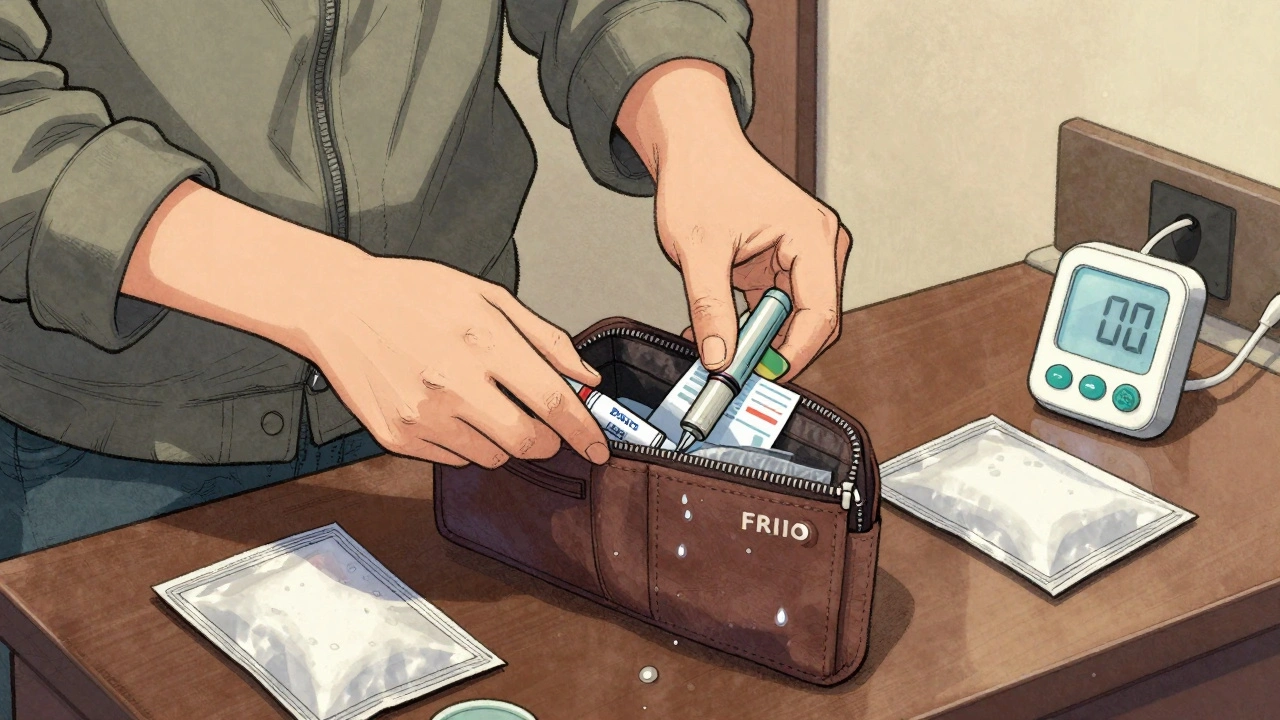
A regular insulated lunch bag won’t cut it. Standard insulated bags keep meds cool for maybe 12-24 hours. Medical-grade coolers, like those from Bocapharmacy Group, last 48-72 hours under extreme heat. But the real game-changer for travelers? Gel packs. Unlike ice packs, which can freeze your meds and damage them, gel packs maintain the sweet spot: 36°F-46°F without going below freezing. The TSA’s 2022 assessment showed gel packs are 37% more consistent than ice in air travel conditions. Frio wallets-those reusable, water-activated cooling pouches-are popular among insulin users. One traveler on Reddit kept their insulin stable for 48 hours in 95°F heat in Southeast Asia using a Frio wallet. No ice. No freezer. Just water and time. For longer trips or if you’re flying internationally, consider a portable cooler with a built-in temperature monitor. Devices like TempTraq sensors, validated in a 2022 Journal of Travel Medicine study, track every temperature spike and drop. They’re small enough to stick next to your meds and connect to your phone. If the temp goes out of range, you get an alert. No guessing. No panic.Pack Smart-And Always Keep It With You
Never check your meds. Ever. Checked luggage can sit in uncontrolled cargo holds for hours, exposed to freezing temperatures on the tarmac or scorching heat in the belly of the plane. The FDA, WHO, and TSA all agree: keep all medications in your carry-on. Keep them in their original bottles with prescription labels. Why? Because customs agents in countries like Thailand, Japan, and Australia have confiscated meds that weren’t in original packaging-even if they were perfectly legal. One traveler lost their entire supply of ADHD medication in Bangkok because it was in a pill organizer. The label was gone. No proof. No mercy. Use small, sealable containers if you need to repackage for daily doses, but always keep the original bottle with you. Write down the generic and brand names, dosage, and your doctor’s contact info on a small card. If you’re questioned, you can show proof.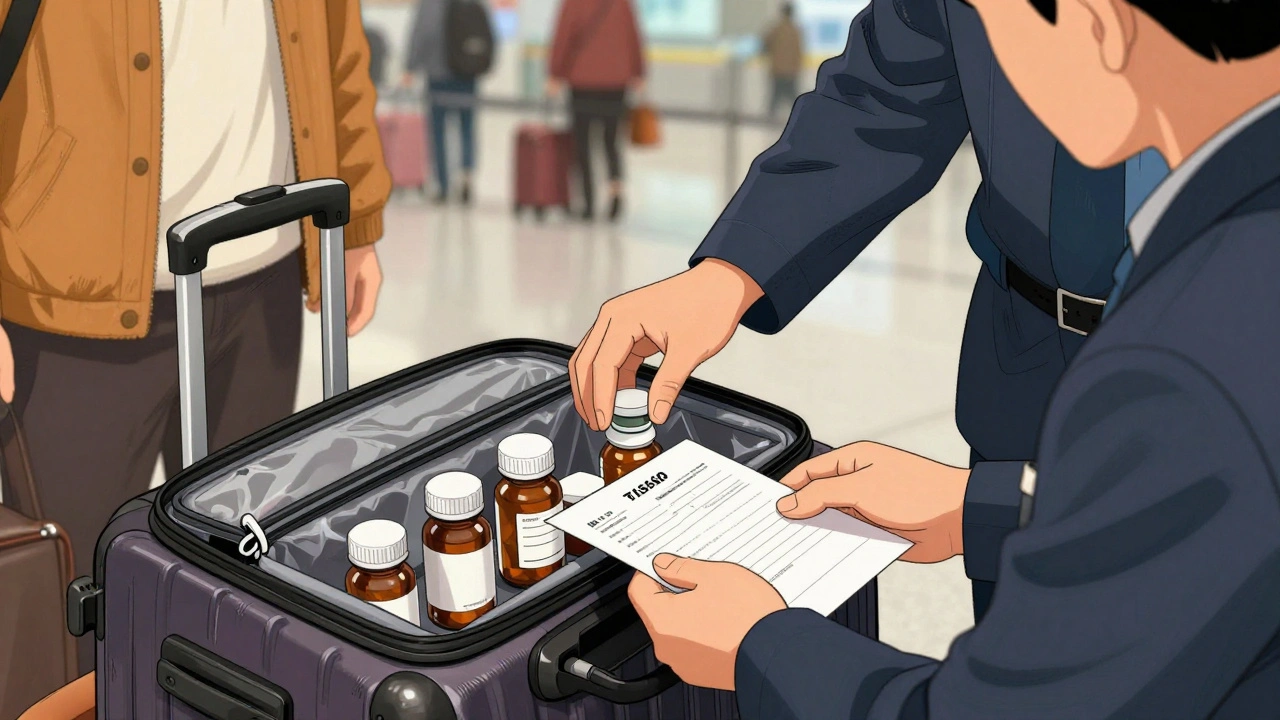
Protect From Light and Moisture
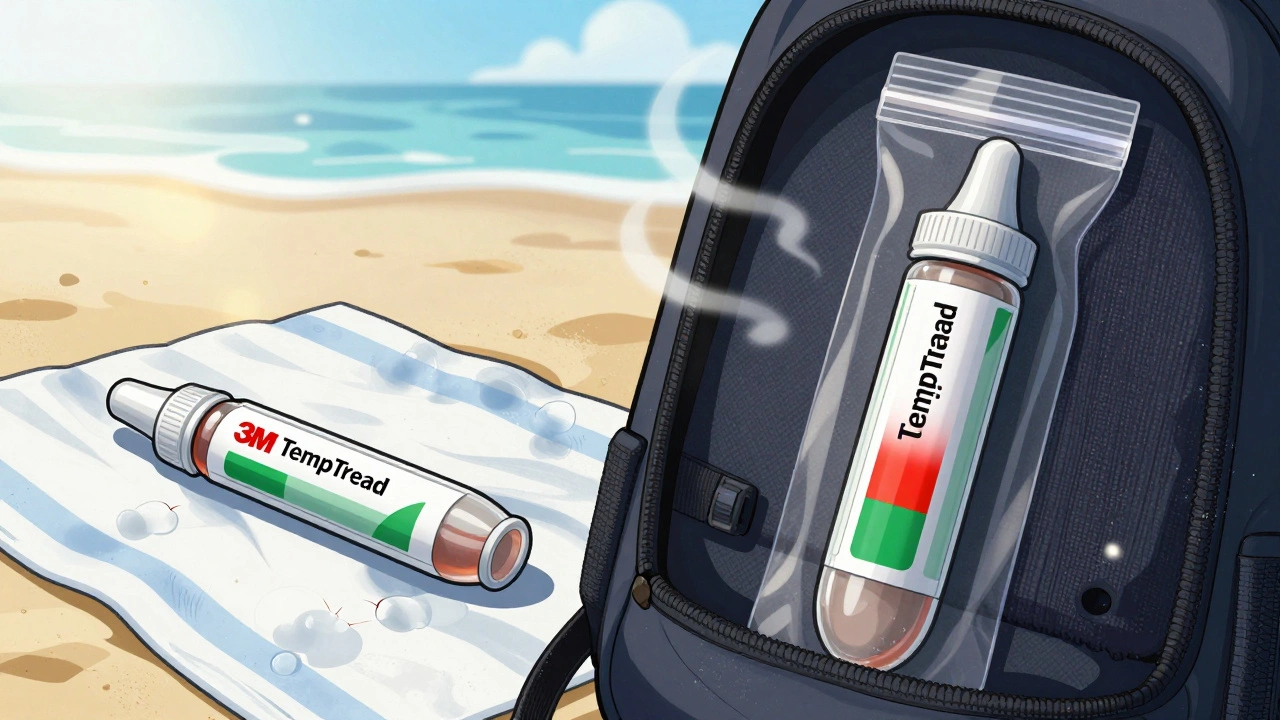
Bathrooms are the worst place to store meds-even at home. Humidity from showers and steam breaks down tablets and capsules. One study of 347 travelers found that 22% of medication failures came from leaving pills in the bathroom. Keep your meds in a dry, cool place: your hotel room drawer, a suitcase with a desiccant pack, or a ziplock with silica gel. For light-sensitive drugs, use an opaque container. If your EpiPen or epinephrine auto-injector came in a clear case, slip it into a small pill case or even a dark sock. Don’t rely on the box-it’s not enough. A 2022 Wilderness Medical Society report showed that direct sun exposure for just 15 minutes can reduce epinephrine concentration by 18%. That’s not theoretical. That’s life-or-death.Plan Ahead-Start 2-3 Weeks Before You Go
Don’t wait until the night before your flight. Start planning 14-21 days ahead. Talk to your pharmacist. Ask:- How long can this medication stay out of the fridge?
- Is there a travel-friendly version? Some insulin now comes in heat-stable pens that last 28 days at room temperature.
- Do I need a letter from my doctor for customs?
What About Air Travel?
The TSA requires you to declare medications at security. Bring printed instructions about storage requirements. Some airlines now ask for documentation if you’re carrying refrigerated meds. IATA’s new rules, effective January 1, 2024, mean you might be asked for proof your meds are stored safely. Arrive early: 2 hours before domestic flights, 3 hours before international. Security lines move slower with medical items. Have your meds easily accessible. Don’t pack them at the bottom of your bag. Use a clear plastic pouch labeled “Medications” so you don’t have to dig.What If Something Goes Wrong?
You forgot your cooler. Your gel pack melted. Your insulin got too hot. What now? First, don’t panic. Not all meds lose potency instantly. But don’t use them if you suspect damage. For insulin, if it looks cloudy, clumpy, or has particles, toss it. For EpiPens, if the liquid inside is discolored or has floating bits, it’s no longer safe. If you’re abroad and need a replacement, go to a local pharmacy with your original prescription and doctor’s contact info. Many countries have emergency supply programs. You can also contact your embassy. Some pharmaceutical companies, like Eli Lilly and Novo Nordisk, offer emergency medication assistance for travelers.Emerging Tech Is Making This Easier
The FDA approved the first temperature-indicating labels in May 2023. 3M’s TempTrend labels change color if your meds get too hot or cold. No sensors. No apps. Just a visual warning. They’re already being used by some pharmacies for insulin and biologics. New containers like the PharmaPort 360°, launched in September 2023, keep meds stable for 120 hours-five days. That’s a 67% improvement over older models. By 2026, experts predict 85% of temperature-sensitive medications will come in travel-stable versions. You won’t need a cooler at all. But until then? Don’t gamble. Your health isn’t worth the risk.Can I put my insulin in checked luggage?
No. Checked luggage can be exposed to extreme temperatures-below freezing in cargo holds or over 120°F on hot tarmacs. Insulin can freeze and become unusable, or it can overheat and lose potency. Always carry insulin in your carry-on. The TSA and FDA both require this.
How long can insulin stay out of the fridge?
Most insulin pens can stay at room temperature (up to 86°F or 30°C) for 14-28 days, depending on the brand. For example, Humalog and Lantus last 28 days at room temp. Check the package insert or ask your pharmacist. But if the temperature exceeds 86°F, potency drops quickly-even within hours. Use a cooler if you’re in a hot climate.
Do I need a doctor’s note to fly with medication?
Not always, but it’s smart. Some countries require documentation for controlled substances or injectables. Even if not required, having a note with your name, medication, dosage, and doctor’s contact info helps avoid delays or confiscation at customs. It’s especially helpful for EpiPens, insulin, and psychiatric meds.
Can I use ice packs to keep meds cold on a plane?
Ice packs are allowed, but they must be completely frozen when you go through security. If they’re melting, TSA may confiscate them. Gel packs are better-they stay cool without freezing your meds and are less likely to leak. They’re also more reliable for maintaining the 36°F-46°F range.
What if my medication expires while I’m traveling?
Don’t use expired meds unless it’s an emergency and you have no other option. Expired insulin or EpiPens may not work when you need them most. If you’re abroad, contact your embassy or visit a local pharmacy with your prescription. Many countries have emergency supply programs. Some drug manufacturers offer replacement programs for travelers.
Is it safe to store meds in a hotel room safe?
Only if the safe is climate-controlled. Most hotel safes are not. They can get hot or humid, especially in tropical climates. Better to keep meds in your suitcase with a desiccant pack, away from the bathroom and direct sunlight. If you’re worried about theft, use a small lockable pill case and keep it in your carry-on when you’re out.
Francine Phillips
December 2, 2025 AT 00:13Yeah I just throw my pills in my suitcase and hope for the best.
Makenzie Keely
December 3, 2025 AT 00:48This is spot-on. I once left my insulin in a checked bag during a layover in Dubai-30 minutes in a cargo hold at 110°F-and when I got to my hotel, it looked like swamp water. Never again. I now use a Frio wallet with a TempTraq sensor, and I sleep with it under my pillow. No drama. No panic. Just peace of mind. Also, always keep the original bottle-even if it’s bulky. Customs doesn’t care if you’re ‘organized’; they care if the label matches the pill. And yes, silica gel packs are magic. I toss three in every carry-on. They don’t cost much, but they’ve saved my meds more than once.
Katherine Gianelli
December 4, 2025 AT 08:58Y’all are overcomplicating this so much-like, chill. I’ve been traveling with insulin for 12 years across 37 countries, and I just use a small insulated pouch with a gel pack, keep it in my coat pocket, and I’m golden. No sensors, no apps, no fancy gadgets. The body’s a pretty good thermostat. Also, if you’re worried about light, just wrap it in a t-shirt. I’ve never lost potency. Don’t let marketing scare you into buying $100 coolers when a $12 ziplock and a little common sense will do. And yes, never check your meds. That’s just basic. But also… breathe. You’re not going to die because your EpiPen got warm for an hour.
Joykrishna Banerjee
December 4, 2025 AT 19:50Frankly, the entire premise of this article is a capitalist scam. The WHO’s $200B waste figure is cherry-picked from unverified supply-chain losses-not actual patient negligence. And let’s be real: 95% of travelers don’t need TempTraq sensors or PharmaPort 360° devices. You’re being sold fear. Insulin has been transported by hand across deserts and jungles for decades without ‘medical-grade’ gear. The real issue is pharmaceutical monopolies pushing expensive ‘travel solutions’ to pad margins. Also, why are you all so obsessed with TSA? They’re not your mom. Just declare your meds and move on. Stop over-engineering your medicine.
Myson Jones
December 6, 2025 AT 06:39I appreciate the thoroughness of this guide. It’s clear that a lot of research went into it. That said, I think we should also acknowledge that not everyone has access to these high-end cooling devices or the financial means to replace expired meds abroad. Maybe the next step is advocating for more affordable, globally accessible solutions-like subsidized temperature-stable packaging for essential medications, especially in low-resource settings. We can be responsible travelers without needing a $200 cooler.
Albert Essel
December 6, 2025 AT 16:47Just to clarify one point: the 25% potency loss after 30 minutes mentioned in the Journal of Pharmaceutical Sciences was under extreme lab conditions-85°C, not typical ambient heat. Real-world degradation is far slower. That said, the advice to keep meds in carry-on is 100% correct. I once had a friend’s asthma inhaler fail mid-flight because it was stored in checked luggage during a winter layover in Chicago. The propellant froze. He had to be hospitalized. Don’t risk it. And yes, original packaging matters. I had my ADHD meds confiscated in Singapore because they were in a generic pill box. Took 3 hours to get them back. Never again.
Rashi Taliyan
December 7, 2025 AT 06:20Oh my god I JUST had this happen in Bali last month!! I put my EpiPen in my purse, forgot it was in there, and left it on the beach for two hours in direct sun-then used it for a bee sting and felt NOTHING. I thought I was dying. Turned out the liquid was cloudy. I cried for an hour. Then I walked into a pharmacy and begged for a replacement. They gave me one for free because I had the original bottle. So… keep the bottle. Keep it cool. Keep it safe. And don’t be like me. Please.
Kara Bysterbusch
December 9, 2025 AT 02:11This is one of the most meticulously researched pieces I’ve read on travel medicine. I especially appreciate the inclusion of the WHO’s 2023 Model List-many people don’t realize that essential medicines have standardized global guidelines. I’ve started carrying a laminated card with my meds’ generic names, storage requirements, and my doctor’s contact info. It’s saved me twice in India and once in Japan. Also, for light-sensitive meds: I use a small, black velvet pouch I bought from a medical supply store. It’s not glamorous, but it blocks 100% of UV. And yes-silica gel packs are non-negotiable. I keep them in every toiletry bag, even for short trips. Small things. Big impact.
Rashmin Patel
December 10, 2025 AT 22:34Okay but can we talk about how ridiculous it is that we’re still having this conversation in 2024? 😤 I mean, we have smart fridges that text us when we’re out of milk, but we’re still using gel packs and Frio wallets like it’s 2012? I just ordered a smart pill case that monitors temp, humidity, and even alerts me if I miss a dose-it syncs with my Apple Watch and has a built-in backup battery for 72 hours. It cost $89, but I’ve already used it in Thailand, Nepal, and Mexico. Also, I use emojis in my travel journal now: 🌡️❌ = bad temp, 🌞❌ = light exposure, 💊✅ = all good. It’s cute, it’s functional, and it makes me feel like a genius. We’re not just travelers-we’re bio-hackers now. Let’s level up. 🚀
Cindy Lopez
December 12, 2025 AT 18:59Actually, the part about aspirin turning into vinegar is misleading. Acetylsalicylic acid hydrolyzes into salicylic acid and acetic acid over months or years under high humidity-not in a few hours on a trip. The stomach irritation is real, but it’s not because your pill turned into a salad dressing after a 10-hour flight. This article overstates risks for dramatic effect. Still, the carry-on advice is solid.