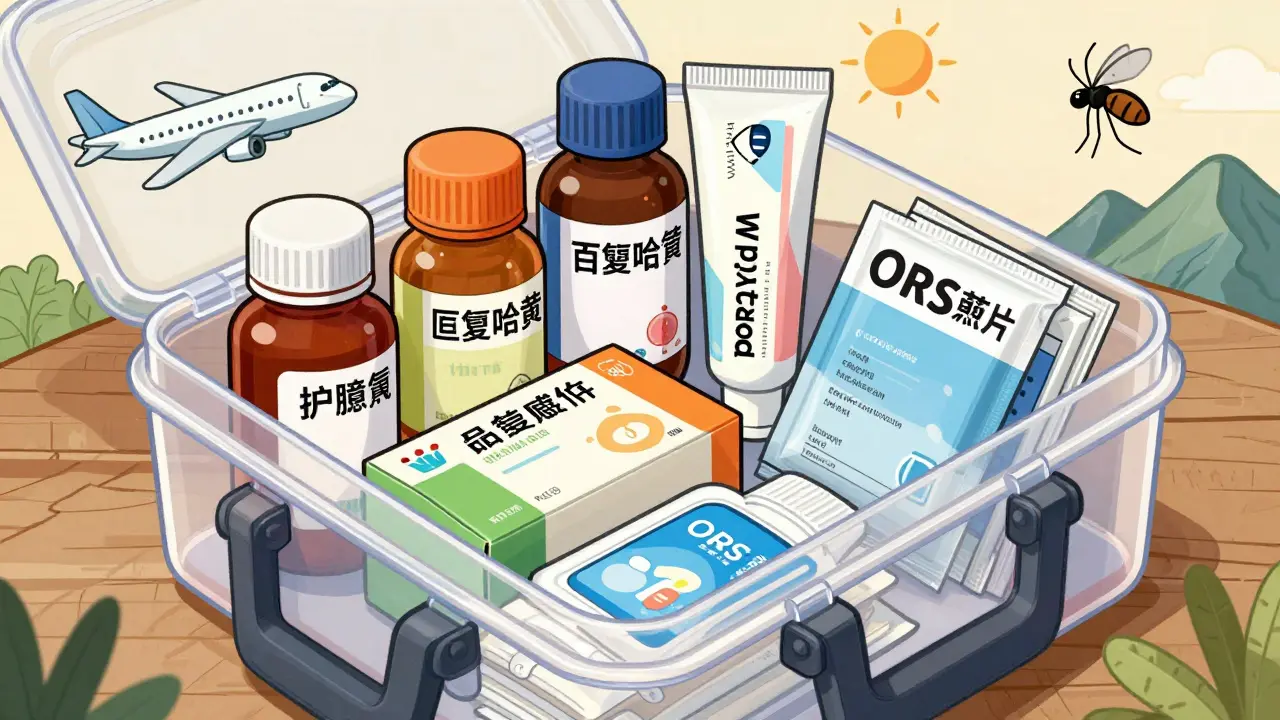
When you’re on the road, even the smallest health issue can turn into a big problem. A stomachache in a remote village, a rash from insect bites in the tropics, or a headache that won’t go away - these aren’t just inconveniences. They can derail your trip, drain your budget, or worse. That’s why a well-packed travel medication kit isn’t optional. It’s your safety net. And it’s not about carrying everything you own. It’s about carrying the right things - tailored to your trip, your body, and your destination.
Start With the Essentials: Pain, Fever, and Allergies
These are the three most common travel complaints, and they’re easy to handle if you’re prepared. Pack at least 10 tablets of ibuprofen (200-400 mg each) or acetaminophen (500 mg each). Ibuprofen works for pain, fever, and inflammation - perfect for a headache after a long flight or sore muscles from hiking. Acetaminophen is gentler on the stomach if you’re already feeling queasy. Don’t forget to pack both if you’re unsure which works better for you.
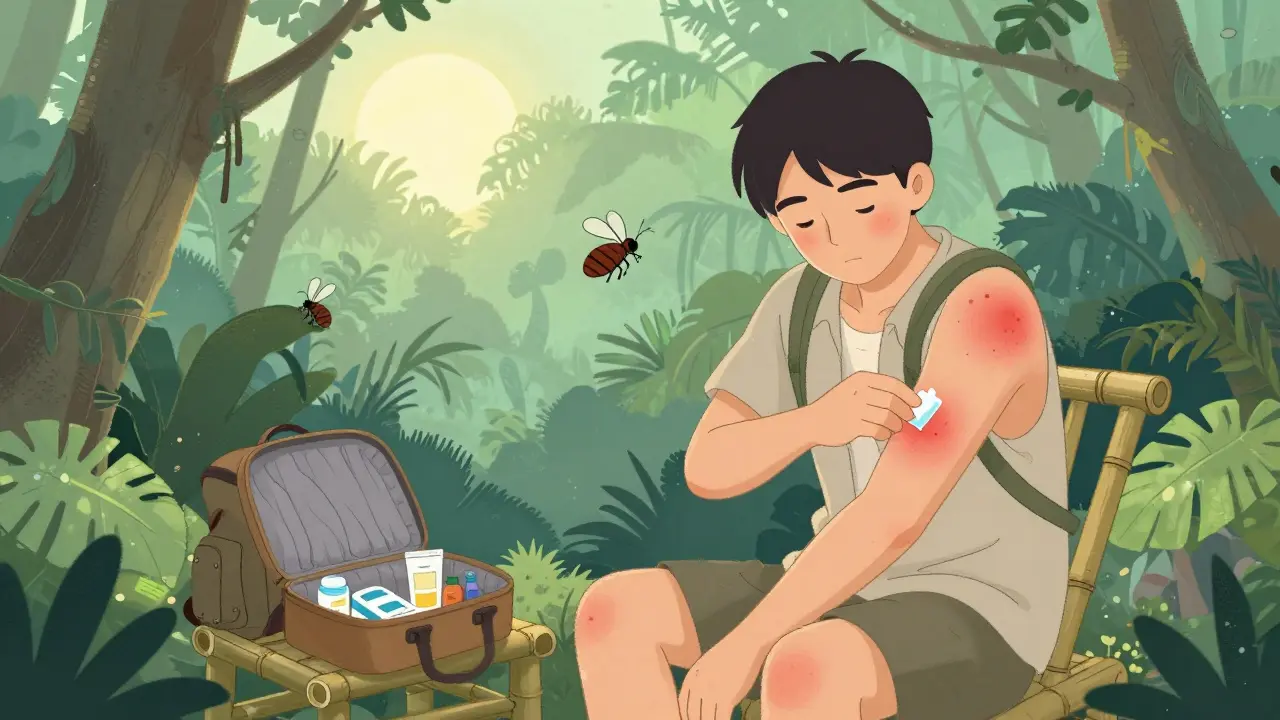
For allergies and bug bites, bring non-drowsy antihistamines like loratadine (10 mg) or cetirizine (10 mg). Seven tablets should cover most trips. Pair them with a small tube of 1% hydrocortisone cream (15g). It’s magic for itching, swelling, and redness. Apply it within 10 minutes of a bite to keep it from getting worse. If you’re heading somewhere with lots of mosquitoes, bees, or spiders, this combo alone can save your vacation.
Handle Digestive Trouble Before It Handles You
Traveler’s diarrhea is the #1 medical issue on trips abroad. It strikes fast, often from water, undercooked food, or even just a change in bacteria. Don’t wait until you’re stuck in a bathroom to act. Pack loperamide (Imodium, 2 mg tablets) - six tablets should be enough. It slows things down so you can get to a safe place. But don’t stop there. Diarrhea doesn’t just make you sick - it dehydrates you. That’s why you need oral rehydration salts (ORS). Five individual packets are ideal. Just mix one with clean water, sip slowly, and your body will recover faster than with any other remedy.
If you’re traveling to a region with poor sanitation (think Southeast Asia, parts of Africa, or rural Latin America), consider carrying an antibiotic. Ciprofloxacin (500 mg) or azithromycin (500 mg) can be life-changing if your diarrhea lasts more than 48 hours or includes fever or blood. But here’s the catch: you need a prescription. Talk to your doctor before you leave. Don’t just grab it from a pharmacy at home. Your doctor will know if it’s safe for you and how to use it properly.
Wound Care: Keep It Clean, Keep It Covered
A cut from a hotel shower, a blister from new shoes, or a scrape from a fall - these happen. And if they get infected, you’re in trouble. Your kit needs four basics: adhesive bandages (a mix of small, medium, and large), four gauze pads (4x4 inches), medical tape, and an antiseptic cleaner. Chlorhexidine or povidone-iodine (1 oz bottle) kills germs better than alcohol. Clean the wound, pat dry, apply antibacterial ointment (bacitracin or neomycin, 0.5 oz tube), then cover it. Change the dressing daily. If it gets red, swollen, or oozes, stop using it and get help.
If you’re hiking, camping, or walking a lot, add blister pads. They’re not just for athletes. Anyone can get them. Brands like Compeed work better than regular bandages because they cushion and seal. Keep two or three in your kit. Also, don’t pack scissors or tweezers in your carry-on. TSA won’t let you. Put them in your checked luggage - along with safety pins if you need them.
Special Conditions: Diabetics, Infants, and Altitude
If you have a chronic condition, your kit needs more than just pills. Diabetics must carry insulin, syringes, and a doctor’s letter explaining why you need them. The letter should list your name, diagnosis, and the names and doses of your meds. Carry it with you at all times. Some countries - especially Japan and the UAE - have strict rules. Without this letter, your insulin could be confiscated.
Traveling with a child under 2? Adult meds don’t work for them. Talk to your pediatrician before you go. They’ll tell you what infant-safe doses of acetaminophen or antihistamines to bring. Don’t guess. Also, pack a digital thermometer, a nasal aspirator, and pediatric electrolyte solution. Babies get dehydrated fast.
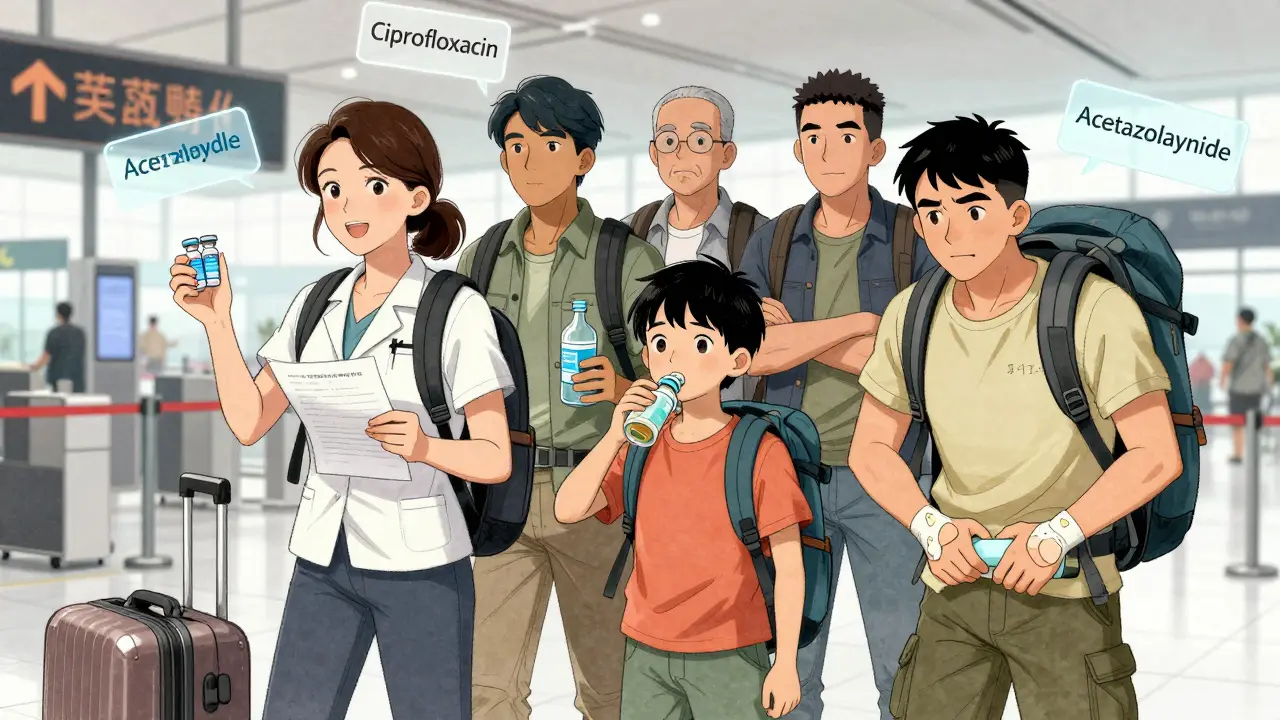
Going to high altitudes? Above 8,000 feet? Acetazolamide (125-250 mg) can prevent altitude sickness. Start taking it 24 hours before you climb. But again - this is prescription-only. Don’t self-prescribe. Talk to your doctor if you’re planning a trek in the Andes, Himalayas, or even a high-altitude city like Cusco or La Paz.
Destination-Specific Add-Ons
Not every trip is the same. Your kit should reflect where you’re going.
- Tropical or humid areas? Add DEET-based insect repellent (20-30% concentration). Apply it before sunset. Also pack sunscreen (SPF 30+) - sunburns are common and slow recovery.
- Remote areas or camping? Include blister pads, antiseptic wipes, and a small roll of waterproof tape. You won’t always have clean water.
- Hot climates or long flights? Bring extra ORS packets. Dehydration hits fast. Sip water slowly, but also sip rehydration solution. It’s more effective than plain water.
- International travel? Pack water purification tablets. Even bottled water isn’t always safe. Chlorine dioxide tablets are reliable and easy to use.
How to Pack It Right
Don’t just toss everything into a ziplock. Use a small, clear plastic box with a tight lid. It’s waterproof, crush-proof, and lets you see what’s inside. Keep meds in their original bottles if you can. If you need to repack, write the name, dose, and expiration date on the container with a permanent marker.
Store it where the temperature stays cool. Don’t leave it in a hot car or in direct sunlight. Insulin, antihistamines, and some antibiotics break down above 86°F (30°C). If you’re flying, keep your most important meds - like insulin, epinephrine, or heart meds - in your carry-on. Put duplicates in checked luggage. Split your supply. If one bag gets lost, you still have backups.
Bring a printed list of your medications: generic names, doses, and why you take them. Trade names change from country to country. Your doctor’s letter should say the same thing. Also, carry a contact card: emergency numbers for family, your doctor, your hotel, and the nearest U.S. embassy or consulate. If you’re not American, list your country’s embassy.
What to Leave Behind
Don’t overpack. You don’t need your entire medicine cabinet. Skip antibiotics unless you’re going somewhere high-risk. Don’t bring cough syrups with codeine - many countries ban them. Avoid laxatives unless you’re prone to constipation. And never pack someone else’s meds. Even if they’re similar, dosages and reactions vary.
Check your destination’s rules. Japan bans pseudoephedrine (in many cold medicines). Australia restricts strong painkillers. The UAE doesn’t allow certain antidepressants. Before you go, check with the embassy or consulate of your destination. A quick email can save you from being turned away at customs.
And finally - don’t forget your vaccines. A travel medication kit helps you manage problems, but vaccines prevent them. Make sure you’re up to date on routine shots, and get travel-specific ones like typhoid, hepatitis A, or yellow fever if needed. Your doctor should handle this at least 4-6 weeks before departure.
Can I bring prescription meds on a plane?
Yes, but keep them in their original containers with your name on the label. Carry a copy of your prescription and a doctor’s letter explaining why you need them. Put them in your carry-on. Never pack them in checked luggage unless you have backups. Some countries have strict rules - check with the embassy before you go.
How many extra pills should I pack?
Pack at least two extra days’ worth of every prescription. Delays happen - flight cancellations, lost luggage, border closures. Split your supply between your carry-on and checked bag. That way, if one gets lost, you still have enough to last.
Are over-the-counter meds from home safe abroad?
Not always. Some countries ban common U.S. or European meds. Pseudoephedrine (in cold remedies), codeine (in cough syrups), and even certain antihistamines are restricted in places like Japan, the UAE, and Singapore. Always check the destination’s rules before packing. When in doubt, leave it behind or get a local substitute after arrival.
Do I need a doctor’s note for my travel meds?
For prescription drugs - yes. Especially if you’re carrying needles, insulin, controlled substances, or large quantities. The note should include your name, diagnosis, medication names (generic), dosage, and that they’re for personal use. For OTC meds like ibuprofen or antihistamines, it’s not required - but having a list helps if you need to explain what you’re carrying.
What if I run out of meds while traveling?
If you run out, go to a local pharmacy with your prescription list and doctor’s letter. Many countries sell generic versions of common meds. Ask for the generic name - not the brand. For example, ask for "ibuprofen" instead of "Advil." If you’re unsure, visit a clinic. Don’t take someone else’s pills or guess at doses.
Elaine Parra
March 24, 2026 AT 00:25Let’s be real - this whole guide is just American privilege wrapped in medical jargon. You think everyone has access to ibuprofen or ORS packets? Try getting decent meds in rural India or Nigeria. Your ‘essential’ kit is useless if you’re stranded without a pharmacy within 50 miles. Stop acting like your CVS is the global standard.
And don’t even get me started on ‘check with the embassy.’ Most embassies are understaffed and clueless. I got arrested in Thailand for carrying Advil because it had pseudoephedrine. No one warned me. No one cares until you’re in jail.
This isn’t travel advice. It’s a luxury brochure for people who’ve never left their zip code.
Rama Rish
March 24, 2026 AT 14:25ORS is life saver. Saw a kid in Jaipur with diahrrea, mom was giving him sugary tea. I gave him one ORS pack from my bag. He stood up in 20 min. No drama. No hospital. Just science.
Also - skip the hydrocortisone cream. In India, aloe vera gel from the local market works better. Cheaper. Natural. No chemicals.
Kevin Siewe
March 26, 2026 AT 02:21Great breakdown. I’ve been using this exact kit for 8 years across 37 countries. One tweak: always carry 2 extra doses of everything - not just 2 days. Delays can last a week. I once got stuck in a Bolivian village for 9 days after a bus strike. My insulin and antihistamines were still good because I packed extra.
Also - label everything in both English and the local language. It saves so much confusion at borders.
Chris Farley
March 28, 2026 AT 00:51Wow. So we’re just supposed to trust ‘doctors’ who prescribe ciprofloxacin like it’s a Starbucks coupon? Did you know the WHO flagged cipro as a top contributor to antimicrobial resistance? You’re not ‘preparing’ - you’re fueling a global health crisis.
And why are we normalizing antibiotic use for ‘traveler’s diarrhea’? That’s your body telling you to slow down. Eat clean. Drink boiled water. Stop treating your gut like a tourist attraction.
This guide is dangerous. It’s not about safety - it’s about convenience disguised as preparedness.
Sean Bechtelheimer
March 29, 2026 AT 11:39EVERYTHING IN THIS GUIDE IS A GOVERNMENT LIE. 😵💫
Did you know the FDA and WHO are in cahoots with Big Pharma to push ORS packets so they can sell you more expensive meds later? The real cure for traveler’s diarrhea is fasting and prayer. I’ve done 14 trips without a single pill. Just lemon water and faith.
Also - your ‘chlorhexidine’? It’s laced with nano-robots that track your location. I saw it on a documentary. The government wants to know where you go when you’re sick. 🤫
Bring sea salt. That’s the real antiseptic. And pray before you sleep. Always.
Seth Eugenne
March 31, 2026 AT 09:45Thank you for this. Seriously. I’ve been traveling solo for 5 years and this is the most thoughtful, practical guide I’ve seen.
I especially appreciate the warning about scissors in carry-ons - I lost a whole first-aid kit once because I didn’t know. Now I keep a small nail clipper and a roll of duct tape. Works for everything.
Also - I always carry a tiny bottle of peppermint oil. It’s magic for nausea, headaches, and bug bites. Natural, compact, and TSA-friendly. 🌿
Alex Arcilla
April 2, 2026 AT 09:37LOL at the ‘use chlorhexidine’ part. Bro, in Bali, the local pharmacy just handed me a bottle of ‘medicinal coconut oil’ for wounds. It worked better than the fancy antiseptic I paid $12 for in Portland.
Travel isn’t about bringing your American pharmacy. It’s about learning how the world heals itself. I’ve had cuts treated with turmeric paste, fever cooled with wet cloths, and diarrhea cured with fermented rice water.
Maybe the real ‘essential’ is curiosity - not a ziplock bag.
Jefferson Moratin
April 3, 2026 AT 12:41The underlying assumption of this guide - that health is a problem to be solved through individual preparation - reveals a deeper epistemological flaw. Health is not merely a biological condition but a socio-political one. The very notion of a ‘travel medication kit’ presupposes a Cartesian separation between the self and its environment.
What if, instead of packing pills, we cultivated relational resilience - trust in local healers, openness to indigenous pharmacopeias, and humility before ecological difference?
The kit is a symptom of modernity’s delusion: that control can be contained in a plastic box.
Caroline Dennis
April 3, 2026 AT 18:37Valid framework. But let’s optimize for pharmacokinetics. Ibuprofen’s half-life is 2–4 hours. For long-haul flights (>12 hrs), stagger dosing with acetaminophen to maintain analgesic coverage. ORS osmolarity should be 245 mOsm/L - not all packets are equal. Check WHO guidelines.
Also - insulin storage: if ambient temp exceeds 30°C, use a cold pack. Not a fridge. A reusable phase-change material pack. I use the MedKool 2.0. Works for 72 hrs.
Pro tip: Use a QR code on your list linking to a digital med log. Pharmacies abroad can scan it. Saves translation errors.
Zola Parker
April 4, 2026 AT 19:28So you’re telling me I need to take AZITHROMYCIN just because I’m going to Peru? What if I don’t have diarrhea? What if I just want to eat street tacos? 😒
And why is everyone so obsessed with ‘prescriptions’? I’ve been to 20 countries and never once showed a doctor’s note. I carry ibuprofen. I carry Benadryl. That’s it. If I get sick, I’ll figure it out. Life isn’t a spreadsheet.
Also - ‘water purification tablets’? That’s just fancy bleach. I drink from rivers. I’m fine. 🙃
florence matthews
April 6, 2026 AT 11:03I love how this guide balances science and cultural awareness. 🌍❤️
My favorite moment? The bit about leaving someone else’s meds behind. I once accidentally packed my sister’s antidepressant and nearly got detained in Japan. Scared me straight.
Now I always ask locals: ‘What do you use for headaches?’ Turns out, in Morocco, they use mint tea and a foot massage. In Vietnam, it’s a cold spoon on the forehead. We don’t need to fix everything with pills.
Travel medicine isn’t about control. It’s about respect.