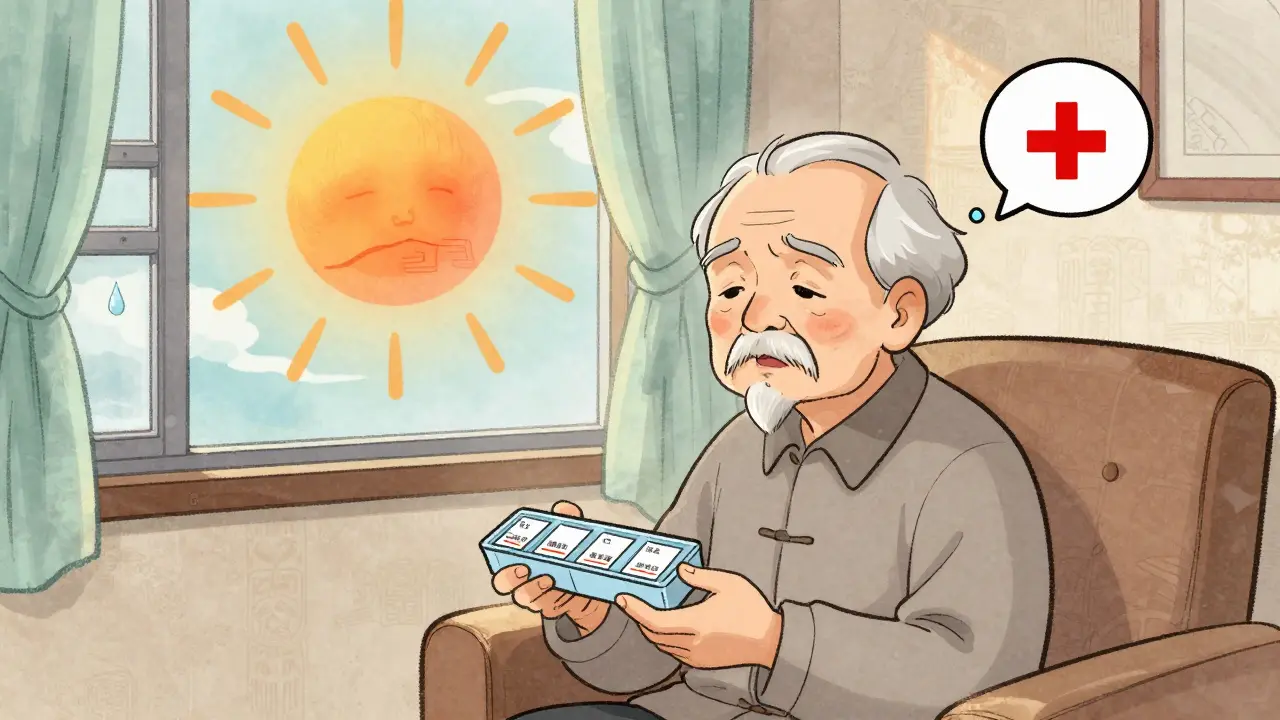
Why Heat Is Dangerous for Seniors on Medications
When the temperature rises, most people think about drinking more water or turning on the fan. But for seniors taking certain medications, heat isn’t just uncomfortable-it’s life-threatening. As temperatures climb, the body’s ability to cool itself slows down. For older adults, that slowdown is already happening because of age. Add in common medications, and the risk of heat exhaustion or heat stroke jumps dramatically.
More than 600 Americans die each year from extreme heat, and nearly half are over 65. The problem isn’t just the heat. It’s what’s in their medicine cabinet. Diuretics, blood pressure pills, antipsychotics, and even over-the-counter sleep aids can block the body’s natural cooling systems. Some stop you from sweating. Others make you feel less thirsty. A few mess with your electrolytes. When these drugs meet a heat wave, the results can be deadly.
Medications That Turn Up the Heat Risk
Not all medications are equal when it comes to heat. Some are quietly dangerous in high temperatures. Here are the top offenders:
- Diuretics like hydrochlorothiazide and furosemide make you pee more to lower blood pressure-but they also drain your body’s fluids. A 2022 study found these drugs reduce thirst by 30-40%. That means seniors on diuretics often don’t drink enough, even when they’re losing water through sweat.
- ACE inhibitors and ARBs (such as benazepril or losartan) are common blood pressure meds. They also reduce thirst by about 25%, according to CDC data. On hot days, this can lead to dangerous dehydration without the usual warning signs.
- Antipsychotics like quetiapine and clozapine, often prescribed for dementia, interfere with the brain’s thermostat. Research from Mayo Clinic shows they can raise core body temperature by 1.5-2.0°F, making heat stroke more likely.
- Anticholinergics like diphenhydramine (Benadryl) and Tylenol PM block sweat production by 35-50%. No sweat means no cooling. Even mild activity can cause overheating.
- Some antibiotics and antifungals increase sun sensitivity by 4-6 times. A short walk outside can cause a severe sunburn, which further stresses the body’s ability to regulate heat.
Here’s the worst part: many seniors take three or more of these at once. Nearly 87% of adults over 65 use two or more prescription drugs. When diuretics and ACE inhibitors are combined, the risk multiplies. Blood volume drops, sodium levels crash, and fainting becomes common-leading to falls and injuries on top of heat danger.
What to Do Before Summer Starts
Waiting until it’s hot to check your meds is too late. The best time to act is in spring, before the heat hits. Start with a full medication review with your doctor or pharmacist. Ask these questions:
- Which of my medications affect my body’s ability to stay cool or hold onto fluids?
- Should I adjust my dose on hot days?
- Do I need to change how often I take any of these?
- Are there safer alternatives for my condition?
Dr. Scott Hall, a pharmacist at Mayo Clinic, says most seniors don’t realize their meds are a heat risk. A 2022 Johns Hopkins study found that seniors who had a structured medication review before summer saw a 37% drop in heat-related ER visits. That’s not a small number-it’s life-changing.
Don’t assume your doctor knows everything. Bring a list of every pill, vitamin, and OTC drug you take-including what you take and when. Many seniors forget about sleep aids, allergy pills, or muscle relaxants. These can be just as risky as prescription drugs.

Hydration Rules for Seniors on Medications
Drink water. Everyone says it. But for seniors on heat-sensitive meds, it’s not that simple.
For most people, drinking 8-10 glasses of water a day is fine. But if you’re on a fluid restriction because of heart failure, you can’t just drink more. That’s why you need to talk to your doctor. About 43% of heart failure patients on fluid limits end up with dangerous electrolyte imbalances during heat waves.
Here’s what works:
- Drink water regularly-even if you’re not thirsty. Don’t wait until you feel dry-mouthed.
- If you’re on a diuretic, choose electrolyte drinks with 120-150 mg of sodium per 8 ounces. Plain water won’t replace what you’re losing.
- Avoid alcohol and caffeine. Both increase urine output by 40-60%, making dehydration worse.
- Check your urine color. Light yellow means you’re hydrated. Dark yellow or amber means you need fluids now.
Don’t rely on thirst. It’s broken in older adults on these meds. Set alarms to drink every hour during hot weather. Keep a water bottle by your bed, your chair, and your car.
Staying Cool When It’s Hot Outside
Staying cool isn’t just about AC. It’s about smart habits.
- Keep your home below 78°F (25.6°C). If you don’t have AC, go to a library, mall, or community center. Many cities open cooling centers during heat warnings.
- Wear loose, light-colored cotton clothes. Synthetic fabrics trap heat. Cotton helps sweat evaporate and can lower your perceived temperature by 5-7°F.
- Use sunscreen with SPF 15 or higher. Reapply every two hours-or after sweating. Some meds make your skin burn in half the time it normally would.
- Avoid going out between 10 a.m. and 4 p.m., when temperatures peak. Plan errands for early morning or evening.
- Use fans with ice or cool water in front of them. They won’t lower the air temperature, but they help sweat evaporate faster.
Assisted living facilities that use these strategies saw a 29% drop in heat-related incidents in 2022. Simple changes work.
Spotting the Warning Signs Early
Heat exhaustion doesn’t always look like the movies. Seniors often don’t sweat, feel dizzy, or complain of headache. Instead, they might seem confused, quiet, or unusually tired.
Early signs include:
- Feeling weak or dizzy
- Headache or nausea
- Muscle cramps
- Dark urine or not peeing much
- Confusion, disorientation, or memory lapses
- Skin that feels hot and dry-or oddly damp
Heat stroke is an emergency. Look for:
- Body temperature above 103°F
- Red, hot, dry skin (no sweating)
- Rapid, strong pulse
- Loss of consciousness
Without treatment, 65% of heat exhaustion cases turn into heat stroke within 2-4 hours. If you see any of these signs, act fast.
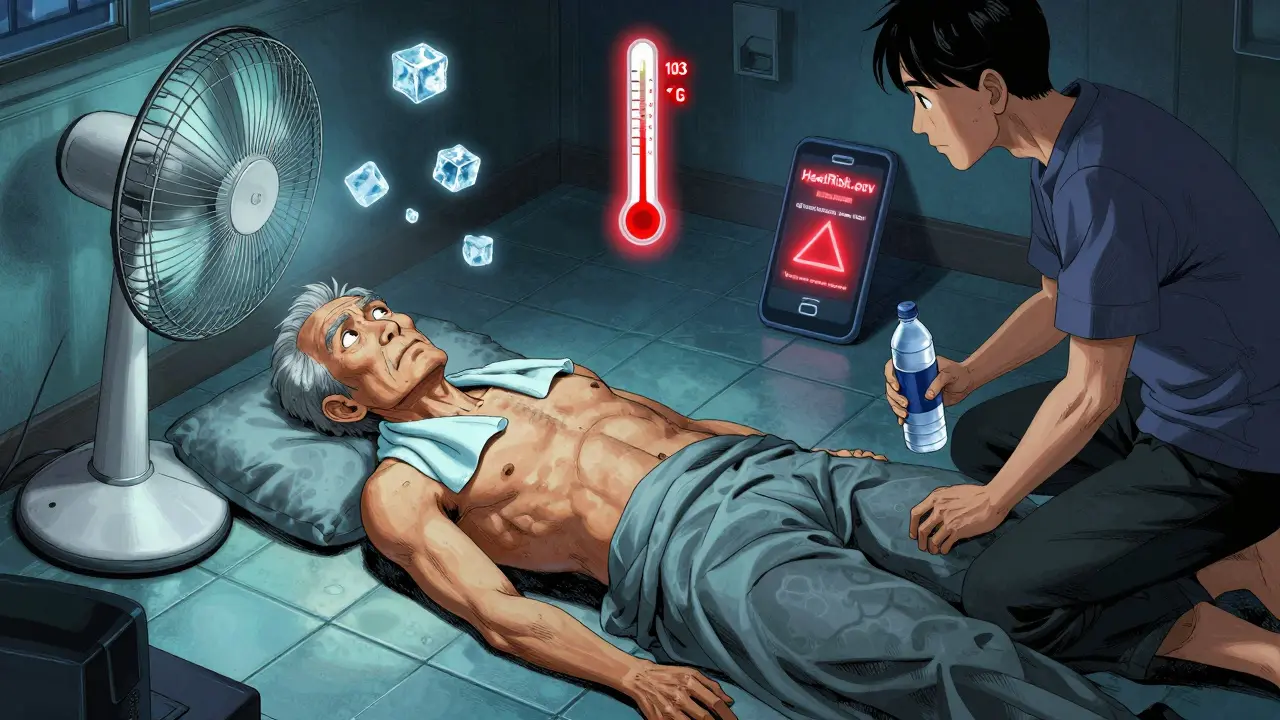
What to Do If Heat Stress Starts
Don’t wait for an ambulance. Start cooling right away:
- Move to a cool, shaded, or air-conditioned place immediately.
- Have the person lie down and elevate their legs slightly.
- Give them cool water-unless they’re vomiting or confused.
- Apply cool, wet cloths to the neck, armpits, and groin. Use a fan if available.
- Give them a cool shower or sponge bath if possible.
- If symptoms don’t improve in 30 minutes-or if they’re confused, vomiting, or unconscious-call 911.
Never assume they’ll “just rest it off.” Heat stroke can cause brain damage, organ failure, or death within hours.
Tools and Resources to Help
There are new tools designed specifically for seniors on medications.
The CDC’s Heat and Medication Risk Assessment Tool (HM-RAT), launched in June 2023, lets you input your medications and get a personalized risk score based on your local weather. It’s free and available online.
HeatRisk.gov, a joint project of the National Institute on Aging and the EPA, sends alerts to seniors when heat and medication risks combine in their area. Over 1.2 million seniors used it in 2023.
Some senior living communities run the I’M OK program, where staff check in daily with temperature checks and hydration logs. One community saw a 33% drop in hospitalizations after adopting it.
Researchers are testing a new “heat resilience” supplement with electrolytes and cooling agents. Early results show 28% better temperature control in seniors on multiple meds. It’s not on the market yet-but watch for updates from the NIA.
Final Thoughts: Prevention Saves Lives
Heat-related deaths in seniors aren’t accidents. They’re preventable. The problem isn’t just the weather. It’s the gap between what we know and what we do. Many families don’t realize their loved one’s meds are making them vulnerable. Doctors don’t always bring it up. Seniors themselves often don’t connect their fatigue or dizziness to their pills.
Start with one step: review the medications. Then, make a plan for hydration and cooling. Talk to your doctor before summer. Set reminders to drink water. Know the warning signs. Help your loved ones stay cool.
By 2050, extreme heat days will be 50% more common. The number of seniors on multiple medications will keep rising. If we don’t act now, these deaths will become routine. They don’t have to be.
Which medications are most dangerous in hot weather for seniors?
Diuretics (like hydrochlorothiazide), ACE inhibitors (like benazepril), antipsychotics (like quetiapine), and anticholinergics (like diphenhydramine) are the most dangerous. They reduce thirst, block sweating, raise body temperature, or cause dehydration. Combining two or more of these increases risk significantly.
Should seniors stop taking their meds during a heat wave?
Never stop or change medication without talking to a doctor. Some seniors may need a temporary dose adjustment, especially for diuretics or blood pressure drugs. But stopping cold can cause dangerous side effects like high blood pressure or fluid buildup. Always consult your healthcare provider before making changes.
Can seniors drink electrolyte drinks if they have kidney problems?
It depends. Some seniors with kidney disease need to limit sodium and potassium. Electrolyte drinks can be risky if they contain too much of these minerals. Always check with your doctor or pharmacist before using them. There are low-sodium options available, and your provider can recommend safe brands.
How can I tell if my elderly parent is overheating?
Look for subtle changes: confusion, drowsiness, quietness, or not responding normally. They may not complain of thirst or headache. Other signs include flushed skin, rapid breathing, dizziness, or not urinating for hours. If they seem "off," treat it as a medical emergency until proven otherwise.
Is air conditioning necessary for seniors on heat-sensitive meds?
Yes, if possible. Air conditioning is the most effective way to prevent heat stress. If you don’t have it at home, plan daily visits to air-conditioned places like libraries, malls, or community centers. Fans alone aren’t enough when temperatures exceed 90°F, especially for those on risky medications.
Are there any new treatments or supplements to help seniors handle heat better?
Yes. Researchers are testing a new "heat resilience" supplement designed for seniors on multiple medications. Early trials show it improves the body’s ability to regulate temperature by 28%. It’s not yet available to the public, but the National Institute on Aging is working on making it accessible. In the meantime, staying hydrated, avoiding heat, and reviewing meds are the best defenses.
Mike Rose
January 31, 2026 AT 10:14Diksha Srivastava
February 2, 2026 AT 08:25Sarah Blevins
February 4, 2026 AT 08:18KATHRYN JOHNSON
February 5, 2026 AT 15:03Gaurav Meena
February 6, 2026 AT 15:01Jodi Olson
February 7, 2026 AT 21:31Carolyn Whitehead
February 8, 2026 AT 13:24Katie and Nathan Milburn
February 9, 2026 AT 06:26Beth Beltway
February 10, 2026 AT 20:21Marc Bains
February 12, 2026 AT 11:14Natasha Plebani
February 13, 2026 AT 10:17