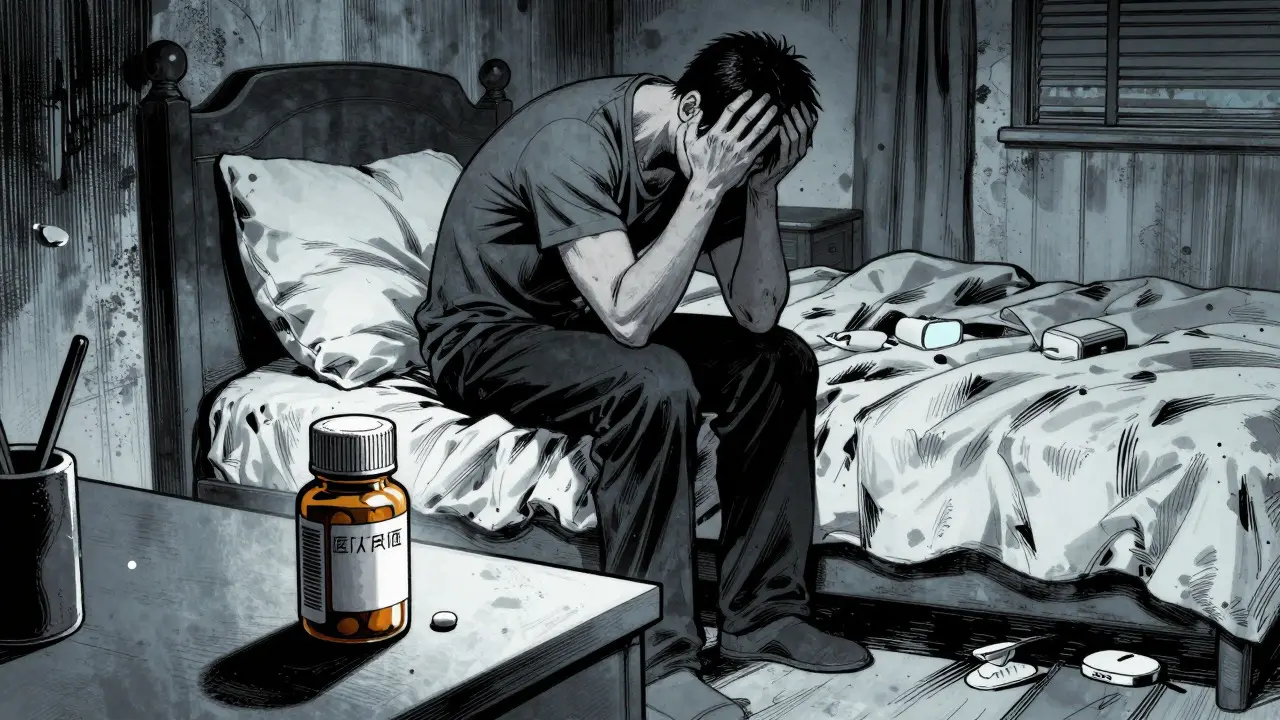
Imagine you have a prescription that could save your life. You know you need to take it. But every morning, the pill bottle sits on the counter, untouched. It isn’t because you are lazy or stubborn. It is because the weight of depression has made the simple act of taking a pill feel like climbing a mountain. This is not just a feeling; it is a documented medical reality. Depression significantly impairs medication adherence, creating a dangerous cycle where untreated mental health issues lead to worsening physical conditions.
If you are a patient, a caregiver, or a healthcare provider, recognizing the subtle and overt signs of this disconnect is critical. When depression strikes, it doesn't just affect mood; it dismantles the cognitive and emotional machinery required for consistent self-care. Understanding how this happens allows us to intervene before a missed dose becomes a hospital visit.
The Cognitive Barrier: Why Depression Makes Adherence Hard
We often think of non-adherence as a choice. We assume patients simply forget or decide they don't want to take their medicine. However, research shows that depression creates specific cognitive barriers that make adherence nearly impossible without support. Dr. Elena Pizzolorusso, lead author of a major NIH systematic review, explains that depression causes impaired concentration, memory difficulties, and decision-making challenges. These aren't minor annoyances; they directly interfere with complex medication regimens.
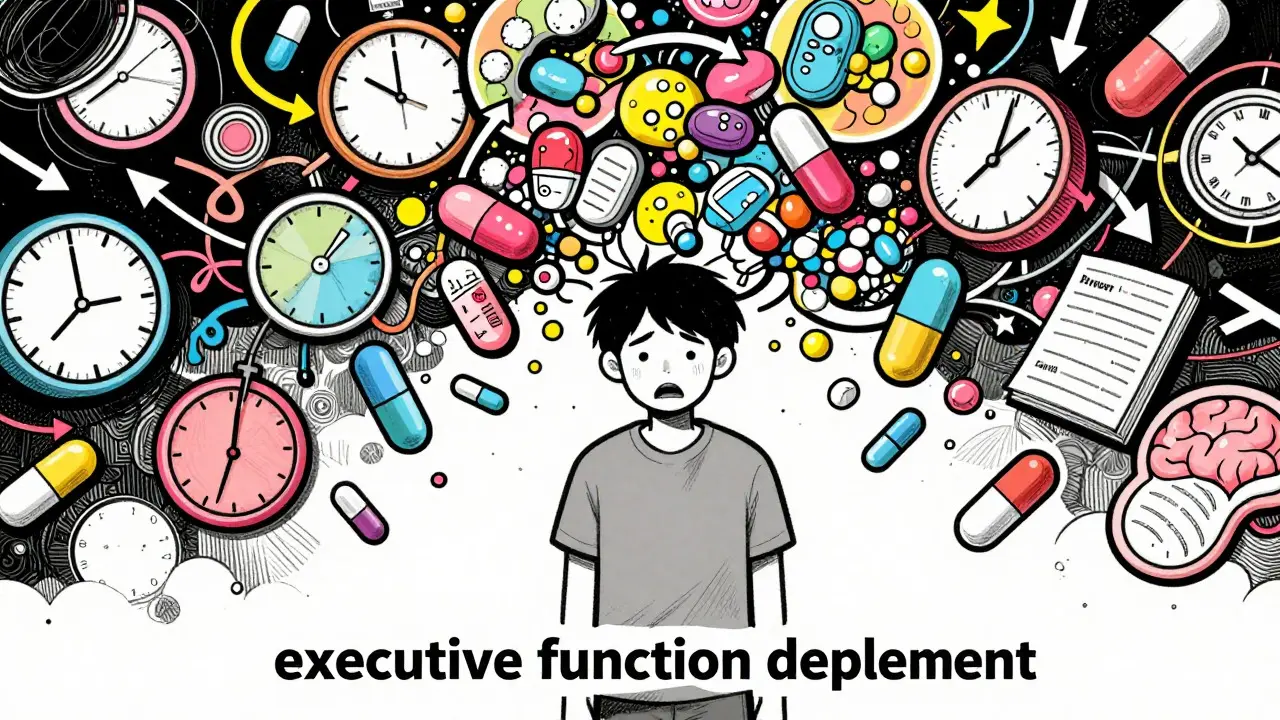
Consider the daily routine of a patient with heart failure. They might need to take ACE inhibitors, beta-blockers, and mineralocorticoid receptor antagonists at specific times. For a person without depression, this is a manageable habit. For someone in a depressive episode, the executive function required to plan, remember, and execute these steps is depleted. The brain is too busy managing internal distress to manage external tasks. This is why we see such stark statistics: depressed patients with heart failure are 2.3 times more likely to report poor medication adherence compared to non-depressed patients. This finding holds true even when adjusting for age, gender, education, and other factors.
Furthermore, the energy depletion characteristic of depression undermines motivation. Professor John Geddes, Chair of Mood Disorders at the University of Oxford, notes that hopelessness directly erodes the drive needed for consistent self-care. If a patient believes their condition is hopeless, why bother taking the pill? This isn't irrationality; it's a symptom of the disease itself.
Physical Symptoms vs. Side Effects: A Dangerous Confusion
One of the most tricky aspects of recognizing adherence issues in depression is the overlap between side effects and depressive symptoms. Many medications used to treat physical conditions can cause fatigue, drowsiness, or weight changes. Similarly, antidepressants like SSRIs (citalopram, escitalopram, sertraline) have side effects including dry mouth, sweating, decreased libido, and agitation.
When a patient is already depressed, their sensitivity to these side effects is amplified. Dr. Maria De las Cuevas found that non-adherent patients scored significantly higher regarding the number and severity of adverse drug reactions. In practical terms, this means a patient might stop taking their heart medication because it makes them tired, interpreting that fatigue as proof that their life is getting worse, rather than a temporary side effect. Studies in Turkey showed that 83% of patients taking certain SSRIs reported non-adherence, largely driven by these uncomfortable physical sensations.
This creates a feedback loop. The patient stops the medication due to side effects. Their physical health declines. Their depression worsens due to poor health. The cycle continues until a crisis occurs. Recognizing this pattern requires looking beyond the pill bottle and asking about the patient's subjective experience of their body and their treatment.
Key Metrics and Assessment Tools
To move from guesswork to evidence-based recognition, clinicians rely on validated tools. The gold standard for measuring adherence is the Morisky Medication Adherence Scale (MMAS-8). This eight-item questionnaire helps categorize patients into three groups:
- Non-adherent: Score less than 6. In one Cambridge study, 39.8% of patients with major depressive disorder fell into this category.
- Moderately adherent: Score less than 8. This was the largest group, comprising 54.2% of participants.
- Highly adherent: Score of 8. Only 6% of patients achieved this level.
For depression itself, the Patient Health Questionnaire-9 (PHQ-9) is the standard screening tool. A score of 10 or higher indicates moderate depression, which correlates strongly with adherence problems. Research by Dr. Charles DiMaggio at Columbia University demonstrated that combining PHQ-9 scores with MMAS-8 assessments increases the predictive accuracy for adherence problems by 37% compared to using either measure alone.
| Tool Name | Primary Focus | Key Thresholds/Metrics | Clinical Utility |
|---|---|---|---|
| MMAS-8 | Medication Adherence | <6 (Non-adherent), <8 (Moderate), 8 (High) | Identifies behavioral gaps in taking meds |
| PHQ-9 | Depression Severity | ≥10 (Moderate Depression) | Screens for mental health impact on care |
| MARS | Adherence Reporting | Self-reported lapses | Provides patient perspective on forgetting |
| DAI-10 | Drug Attitudes | Positive/Negative attitude scores | Assesses beliefs about medication efficacy |
Using these tools together provides a complete picture. A patient might score high on the PHQ-9 but claim they take all their pills. Cross-referencing with the MMAS-8 might reveal significant lapses, prompting a deeper conversation about barriers.
Early Warning Signs in Specific Conditions
Depression impacts adherence differently depending on the underlying medical condition. In heart failure, the stakes are incredibly high. Data from Rasmussen et al. (2022) shows that higher depression levels predict non-adherence to specific cardiac drugs. For every unit increase in depression severity, the odds of missing doses of ACE inhibitors, beta-blockers, and mineralocorticoid receptor antagonists rise measurably. The American Heart Association now recommends screening all heart failure patients with the PHQ-2 at each visit, followed by the full PHQ-9 if positive.
In psychiatric care, the challenge is different. Patients with Major Depressive Disorder often struggle with the very medications meant to help them. The STAR*D trial analysis revealed a crucial early warning sign: patients who missed more than 20% of their doses in the first two weeks were 4.7 times more likely to experience total treatment failure. This establishes a critical window for intervention. If a patient is struggling in the first fortnight, immediate support-such as simplifying the regimen or addressing side effects-is essential.
Caregivers should look for these specific red flags:
- Pill Count Discrepancies: More pills remaining in the bottle than expected based on days elapsed.
- Changed Routine: A patient who previously organized their pills weekly now takes them haphazardly or not at all.
- Complaints of Side Effects: Increased focus on negative physical sensations, even mild ones.
- Social Withdrawal: Isolation often accompanies both worsening depression and neglect of self-care routines.
- Forgetfulness Beyond Norms: Missing appointments or losing track of time alongside missed doses.

Strategies for Improving Recognition and Adherence
Recognizing the problem is only half the battle. Once identified, what can be done? Evidence suggests that collaborative care models work best. The MAPDep study demonstrated that involving both patients and physicians in active adherence monitoring increased therapeutic adherence by 28.5% over 12 months. This isn't about policing the patient; it's about partnering with them.
Dr. George Alexopoulos advocates for "side effect mapping." During initial treatment, patients chart both their depression symptoms and any medication side effects daily. This visual data helps identify patterns. For example, if a patient notices they always miss their evening dose because they feel nauseous after dinner, the doctor can adjust the timing or prescribe an anti-nausea medication. This turns an abstract struggle into a solvable logistical problem.
Digital tools are also emerging as powerful aids. Recent studies note promising results with smartphone apps that track both mood symptoms and medication intake. Some apps show 82% sensitivity in predicting adherence lapses up to 72 hours in advance. By correlating low mood scores with upcoming doses, these tools can send targeted reminders or encouragement exactly when the patient is most vulnerable to skipping a dose.
Finally, simplification is key. If a patient is depressed, a complex regimen is a barrier. Where medically possible, clinicians should aim for once-daily dosing or combination pills. Reducing the number of decisions a patient has to make reduces the cognitive load and improves adherence rates.
Conclusion: A Holistic Approach
Depression is not just a mental state; it is a physiological disruptor that affects every aspect of health management. Recognizing its impact on medication adherence requires moving beyond judgment and embracing data-driven empathy. By using tools like the MMAS-8 and PHQ-9, watching for early warning signs in the first two weeks of treatment, and implementing supportive strategies like side-effect mapping, we can break the cycle of non-adherence. The goal is not just to get the patient to swallow a pill, but to restore their sense of agency and hope in their own recovery.
How does depression specifically affect the ability to take medication?
Depression impairs cognitive functions such as concentration, memory, and decision-making. It also depletes the energy and motivation required for consistent self-care routines. Additionally, depression amplifies the perception of medication side effects, making patients more likely to discontinue treatment despite clinical benefits.
What is the Morisky Medication Adherence Scale (MMAS-8)?
The MMAS-8 is an eight-item questionnaire used to assess medication adherence. Scores below 6 indicate non-adherence, scores below 8 indicate moderate adherence, and a score of 8 indicates high adherence. It is considered the gold standard for identifying adherence gaps in clinical settings.
Why are heart failure patients with depression at higher risk?
Heart failure requires strict adherence to multiple medications like ACE inhibitors and beta-blockers. Depressed patients are 2.3 times more likely to report poor adherence. The cognitive burden of managing a complex regimen is significantly harder for those suffering from depression-related brain fog and lack of motivation.
What is "side effect mapping" and how does it help?
Side effect mapping involves patients charting their depression symptoms and medication side effects daily. This helps identify specific patterns, such as nausea causing missed evening doses. It allows clinicians to address root causes of non-adherence, such as adjusting medication timing or managing side effects, rather than just urging compliance.
How can digital tools improve medication adherence in depressed patients?
Smartphone apps can track both mood and medication intake. Some studies show these tools can predict adherence lapses up to 72 hours in advance with 82% sensitivity. By providing timely reminders and correlating mood dips with dosage times, they offer real-time support during moments of highest vulnerability.