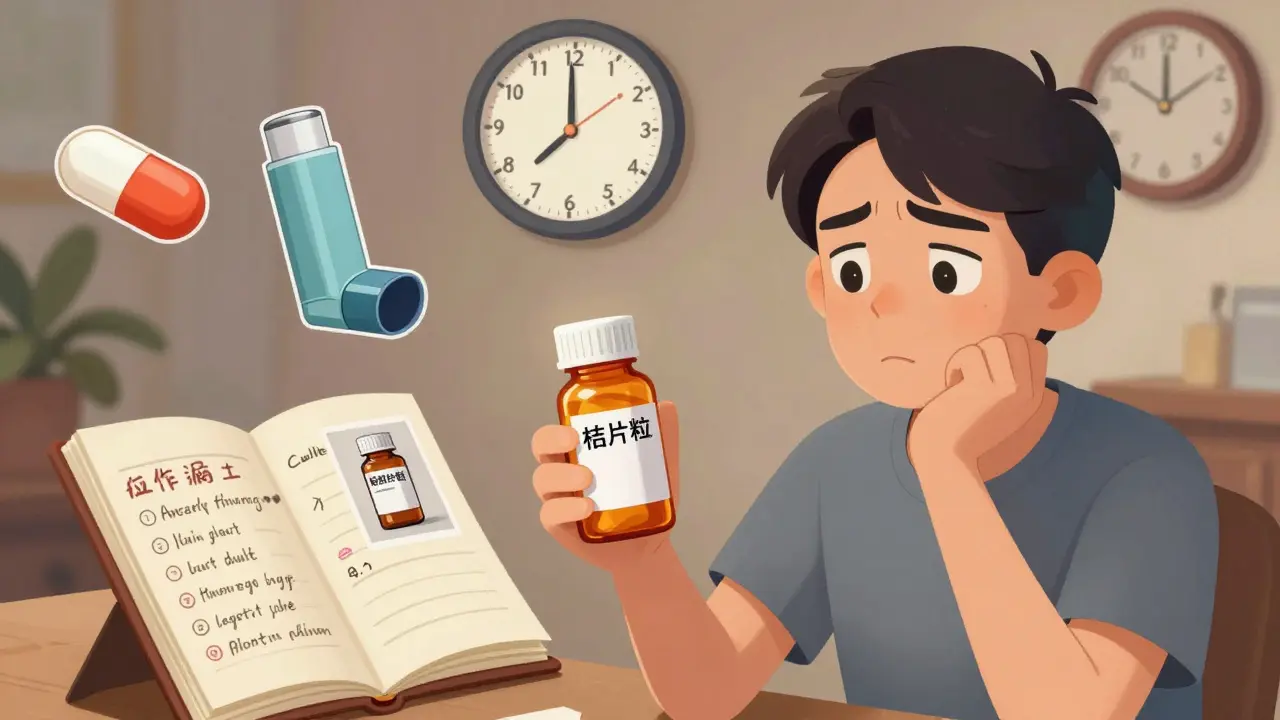
It happens more often than you think. You take your medicine, and something feels off. Maybe the pill looks different. Maybe you were given the wrong dose. Or maybe you started feeling dizzy, nauseous, or rashy after a new prescription. You’re not imagining it. And you’re not overreacting. Medication errors are one of the most common types of medical mistakes - affecting over 5 million people in the U.S. every year. But here’s the hard truth: most of them go unreported. Not because people don’t care, but because they don’t know how.
Recognize the Error - Don’t Second-Guess Yourself
The first step is simple: trust your gut. If something doesn’t feel right, it probably isn’t. Medication errors come in many forms:- Wrong drug - you were given metformin instead of lisinopril
- Wrong dose - your prescription says 10mg, but the pill is 25mg
- Wrong route - a pill you were told to swallow is now labeled for injection
- Wrong patient - your child got someone else’s asthma inhaler
- Wrong timing - you were told to take it every 12 hours, but it’s labeled for every 8
- Drug interaction - you’re on blood thinners, and they gave you ibuprofen without checking
Start With Your Provider - But Be Prepared for Resistance
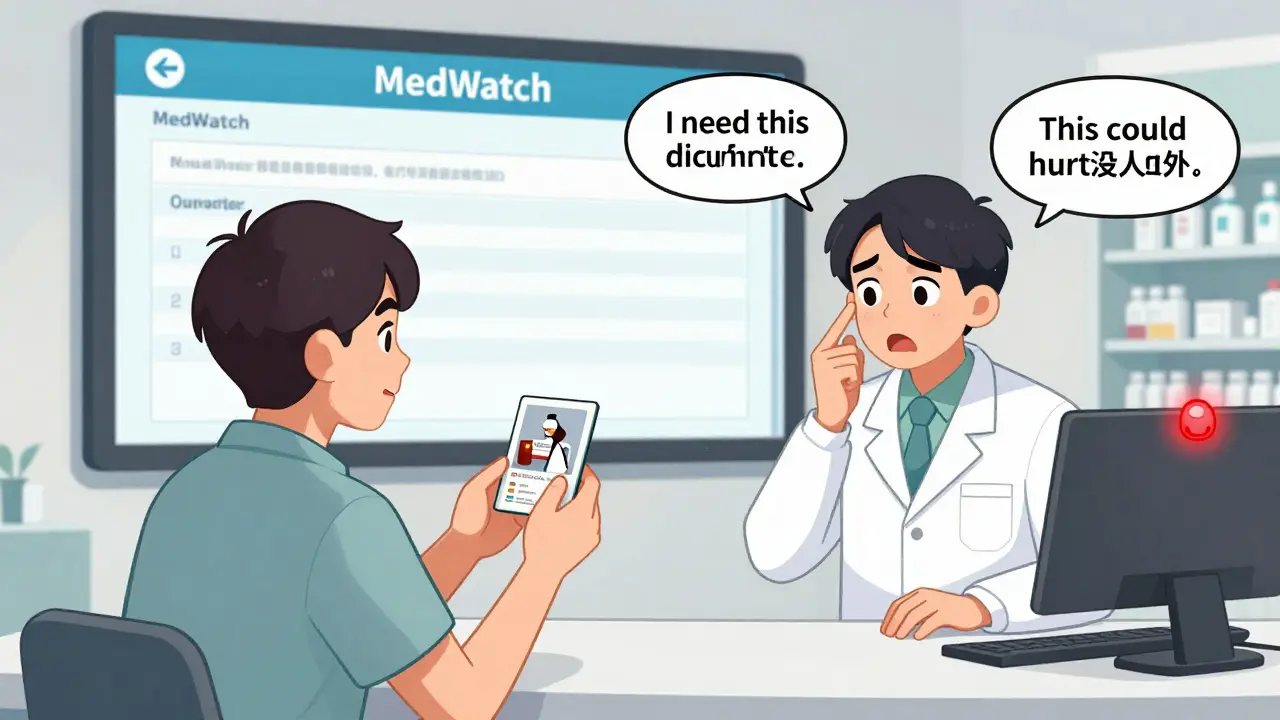
Your first move should be to contact the person who prescribed or dispensed the medication. Call your doctor’s office, pharmacy, or clinic. Don’t wait. Don’t assume they’ll notice it on their own. Say clearly: “I believe there was a medication error, and I need help addressing it.” Here’s what you might hear: “That’s unlikely,” or “Are you sure you took it right?” Don’t get discouraged. A 2022 study in BMJ Quality & Safety found that 64% of patient reports were dismissed without medical records being reviewed. That’s not your fault. It’s a system flaw. Your job is to insist on documentation. Ask for:- A copy of the original prescription
- The pharmacy dispensing record
- Any notes from the nurse or pharmacist involved
Know Where to Report - Beyond Your Provider
Your provider should fix the mistake. But to prevent it from happening to someone else, you need to report it externally. There are three main channels:- Internal reporting - Your hospital or clinic likely has an incident reporting system. Ask for the patient safety officer or quality improvement department. This is the fastest way to get your case reviewed internally - and 92% of large hospitals use these systems.
- MedWatch (FDA) - This is the federal system for reporting adverse events and medication errors. You don’t need to be a professional to file. The FDA received over 140,000 reports in 2022, but only 14% came from patients like you. The new online portal takes under 10 minutes. Go to fda.gov/medwatch. You’ll need: the medication name, dosage, your symptoms, date of error, and provider info.
- ISMP (Institute for Safe Medication Practices) - This nonprofit runs a confidential reporting system used by healthcare workers and patients. They analyze trends and issue public safety alerts. They processed over 12,500 reports in 2022 and helped fix 217 systemic issues since 1991. Visit ismp.org/report.
What to Include in Your Report - Don’t Leave Anything Out
A good report answers these questions:- What happened? Be specific: “I was given 500mg of amoxicillin instead of 250mg.”
- When? Date and time of the error, and when symptoms started.
- Who was involved? Name of prescriber, pharmacy, nurse, or pharmacist (if known).
- What did you experience? Symptoms: dizziness, vomiting, swelling, rash, confusion, etc.
- What did you do? Did you stop the medicine? Did you go to urgent care?
- What do you want? Do you want an apology? A correction in your record? A policy change?
Follow Up - Because Silence Isn’t Safety
Many patients think reporting is a one-time task. It’s not. A 2022 Patient Safety Network survey found that 82% of patients felt their concerns were ignored at first. Only 36% received a formal written acknowledgment. After you file a report, wait 5-7 business days. Then call the organization back. Ask: “Has my report been reviewed? What actions are being taken?” If you reported to MedWatch and hear nothing, that’s normal - they don’t always respond to individuals. But if you reported to your provider and get no reply, escalate. Ask for the chief medical officer or patient advocate. If you’re still ignored, file a complaint with your state’s medical board or health department. In Scotland, you can contact Healthcare Improvement Scotland. In England, use NHS England’s complaints process.Don’t Blame Yourself - Blame the System
Too many people feel guilty after a medication error. “I should’ve double-checked.” “I didn’t ask enough questions.” But here’s what the experts say: Most errors aren’t caused by patients. They’re caused by broken systems. Dr. Robert Wachter from UCSF says: “The most effective systems separate blame from learning.” That means: if a pharmacist misreads a script because the labels look too similar, the fix isn’t to fire the pharmacist - it’s to redesign the labels. If a nurse gives the wrong dose because the electronic system doesn’t flag it, the fix isn’t to punish the nurse - it’s to fix the software. You’re not the problem. The system is. Reporting isn’t about pointing fingers. It’s about fixing what’s broken.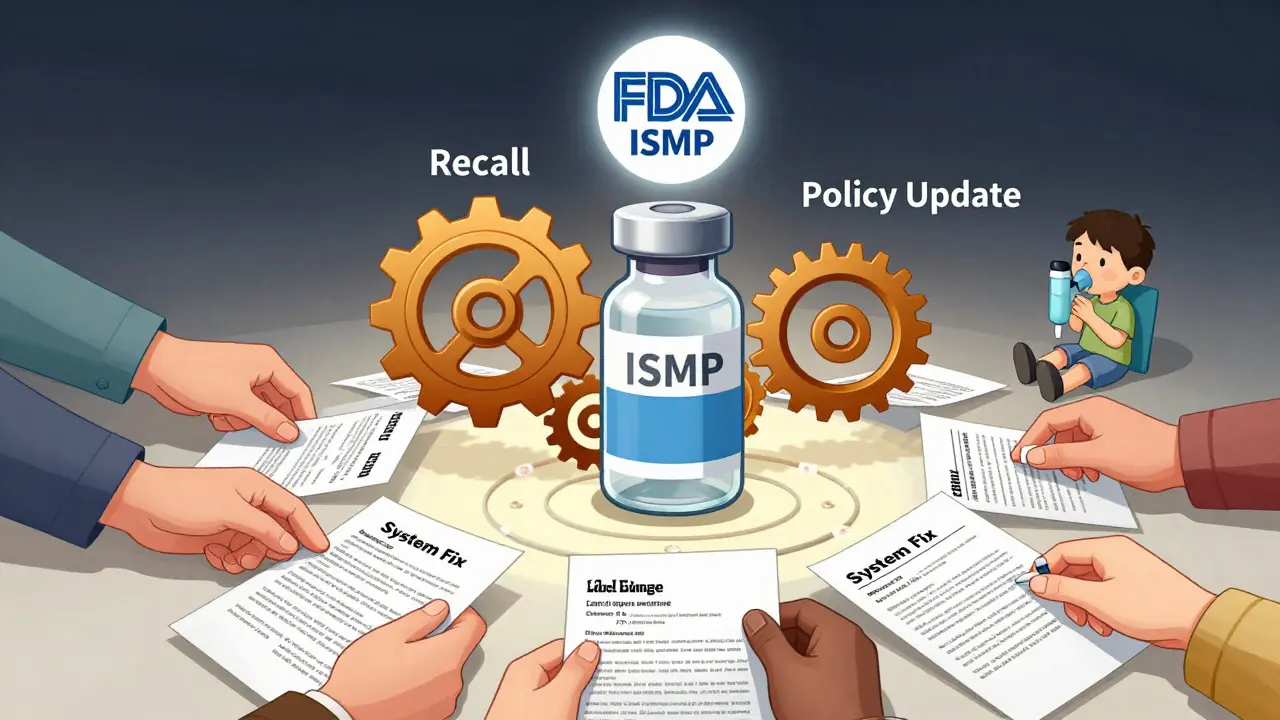
Special Cases: School Medication Errors and Children
If your child had a medication error at school - like getting the wrong asthma inhaler or an overdose of seizure medication - act immediately. In 48 U.S. states, schools are required to report these incidents within 24 hours. But only 32% of districts follow up with prevention plans. Here’s what to do:- Request a written incident report from the school nurse and principal.
- Ask for the names of everyone involved and the school’s medication policy.
- File a copy with your pediatrician and with ISMP or MedWatch.
- Request a meeting with the school district’s health services director to review their training and protocols.
What Happens After You Report?
You might never hear back. That’s frustrating. But your report still matters. Here’s what happens behind the scenes:- Recalls - If the same error happens to 3 or more people, the FDA may pull the batch.
- Label changes - A misprinted label? The manufacturer must update it.
- Policy updates - Hospitals and pharmacies change their checklists and training.
- Legal protection - In 38 states, saying “I’m sorry” can’t be used against you in court. You’re protected when you speak up.
Next Steps - What to Do Right Now
If you’ve experienced a medication error, here’s your action plan:- Take a photo of the medication and label.
- Write down what happened, when, and how you felt.
- Call your provider and ask for your records.
- File a report with MedWatch (fda.gov/medwatch) - it takes less than 10 minutes.
- Send a copy to ISMP (ismp.org/report).
- Follow up in a week. Don’t let silence win.
What if my doctor says the error didn’t happen?
You still have the right to report it. Doctors can be wrong, or they may be afraid of liability. Gather your evidence - photos, labels, symptom logs - and file with MedWatch or ISMP anyway. These organizations investigate independently. You don’t need your provider’s approval to report.
Can I report a medication error even if no harm was done?
Yes. In fact, you should. These are called “near misses” - errors that were caught before causing harm. They’re the most valuable reports because they show where systems are failing before someone gets hurt. ISMP and the FDA track near misses to prevent future disasters.
Will reporting get me in trouble?
No. Reporting a medication error as a patient is not only legal - it’s protected. Healthcare providers are trained to respond to patient concerns. If you’re worried about retaliation, report anonymously to MedWatch or ISMP. You don’t need to give your name. Your safety comes first.
How long does it take for a report to lead to change?
It varies. A mislabeled bottle might be recalled in days. A hospital changing its double-check procedure might take months. But every report adds to a national database that drives policy. The FDA’s new reporting portal, launched in 2023, cut processing time by over 60%. Change is faster now than ever.
Should I tell my pharmacist or doctor first, or go straight to the FDA?
Start with your provider - they can fix the error for you right away. But don’t stop there. External reporting to MedWatch or ISMP ensures the problem is seen by regulators who can fix it for everyone. Think of it this way: your provider fixes your problem. The FDA fixes the system so it doesn’t happen to your neighbor.
James Dwyer
January 29, 2026 AT 08:48Just filed my first MedWatch report after my pharmacist gave me the wrong blood pressure med. Took me 8 minutes. No drama, no yelling-just the facts, photos, and dates. If you’ve ever been screwed by a pill, do this. It matters.
jonathan soba
January 29, 2026 AT 19:57Interesting how the article assumes all providers are negligent or indifferent. In reality, most errors occur due to systemic overload-pharmacists handling 120 prescriptions an hour, EHRs with 17 overlapping alerts, nurses skipping double-checks because they’re understaffed. Reporting is good, but without addressing workforce burnout, you’re just slapping a bandage on a hemorrhage.
Kathy Scaman
January 31, 2026 AT 12:34I’m a nurse. I’ve seen this play out a hundred times. Patients who speak up? They’re the ones who save lives. Not just their own. The guy who called out the wrong insulin label? He didn’t know it was the same batch that nearly killed three people in Ohio last year. Your voice is the alarm bell the system ignores until it’s too late.
Anna Lou Chen
February 1, 2026 AT 23:21Let’s deconstruct the epistemological framework of patient-reported adverse events through the lens of Foucauldian biopower. The pharmaceutical-industrial complex weaponizes the myth of individual accountability to absolve structural violence. Your ‘medication error’ is not an anomaly-it’s a symptom of late-stage neoliberal healthcare commodification. Reporting to MedWatch is performative resistance, yes, but it’s also co-opted by the very apparatus it seeks to dismantle. The real revolution? Abolish the FDA. Rebuild the system from the ground up with communal pharmacovigilance.
Lance Long
February 3, 2026 AT 07:32Hey, I know how scary this feels. I was there. Took me six months to finally report my wrong-dose incident. But here’s the thing-you don’t have to be loud. You don’t have to be angry. Just be consistent. Take the photo. Write it down. Send it. And then do it again next time you see something off. That’s how change happens. Not in headlines. In quiet, stubborn persistence.
Timothy Davis
February 5, 2026 AT 02:24Article says ‘most errors aren’t caused by patients.’ True. But 73% of patients can’t correctly identify their own meds. I’ve seen people bring in OTC cough syrup as ‘prescribed anticoagulants.’ This whole guide reads like a PSA for people who don’t read labels. Maybe start with ‘How to Read a Prescription Bottle’ before telling people to file federal reports.
fiona vaz
February 5, 2026 AT 12:28One thing the article doesn’t mention: call your pharmacy’s clinical pharmacist. They’re often the most knowledgeable person in the building, and they can flag errors before they happen. I’ve had them catch my doctor’s typos on the phone before I even picked up the script. They’re not always available, but they’re there-and they want to help.
Sue Latham
February 5, 2026 AT 14:58Ugh, I just had to tell my doctor I got the wrong thyroid med again. She said ‘maybe you’re just stressed.’ Like, no, Karen, I’ve been on this exact pill for 5 years and the color changed from white to green AND the numbers are different. I took a pic. Filed with MedWatch. Done. You don’t need their approval to be right.
Linda O'neil
February 6, 2026 AT 07:59You’re not alone. I reported a near-miss last year-gave my kid the wrong asthma dose because the label was smudged. I thought I was overreacting. Then I got a letter from ISMP saying my report helped update labeling standards for 3 major brands. That’s the power of showing up. Keep going. You’re doing the work the system won’t do for itself.
Bryan Fracchia
February 7, 2026 AT 11:07It’s funny how we blame the system, but then we still expect it to fix itself without us. The truth? The system doesn’t care until it has to. Every report you file is a brick in the wall. Not a monument. Not a protest. Just a brick. Keep laying them. One by one. Eventually, the wall becomes a dam. And then the water changes course.
Lexi Karuzis
February 8, 2026 AT 02:37Wait-so you’re telling me the FDA doesn’t track every single pill? And that pharmacies aren’t required to scan every prescription? And that there’s NO national database linking prescriptions to patient records? This is all just… chaos? Who’s in charge here? Are we living in a dystopia? Someone’s making money off this. Someone’s covering it up. I’m calling my senator. And my priest. And my astrologer. This is a cult.
Colin Pierce
February 8, 2026 AT 03:29I work at a community pharmacy. We get 2-3 near-misses a week. Most are caught before they leave the counter. But the ones that slip through? They’re usually from high-volume prescribers with messy handwriting or bad EHR templates. If you’re unsure, ask. Always. We’d rather you ask 10 times than have you leave with the wrong pill. Seriously. We’re on your side.
Mark Alan
February 9, 2026 AT 20:49THEY WANT YOU TO THINK YOU’RE ALONE. THEY WANT YOU TO DOUBT YOURSELF. I WAS GIVEN A PILL THAT WASN’T EVEN IN THE SAME CLASS AS MY PRESCRIPTION. I WENT TO THE PHARMACY. THEY LAUGHED. I FILED WITH THE FDA. TWO WEEKS LATER, THE WHOLE BATCH WAS RECALLED. I DIDN’T EVEN KNOW I WAS A HERO UNTIL THE NEWS REPORTED IT. 🇺🇸🔥
Amber Daugs
February 11, 2026 AT 07:38Why are we even doing this? Why are patients the ones responsible for catching mistakes made by professionals? I mean, if I took my car to the mechanic and they put diesel in my gas tank, would they say ‘just file a report’? No. They’d apologize and fix it. Why is healthcare any different? Someone needs to hold these people accountable. Not just report. Punish.
Ambrose Curtis
February 11, 2026 AT 20:25man i just wanna say-i used to think i was being paranoid until i got the wrong dose of warfarin. i took a pic, called my doc, and they said ‘probably just anxiety.’ so i filed with ismp. they called me back. 3 days later, the pharmacy changed their whole labeling system. i didn’t do anything fancy. just kept my sh*t together. you can too. don’t let them make you feel crazy. you’re not.