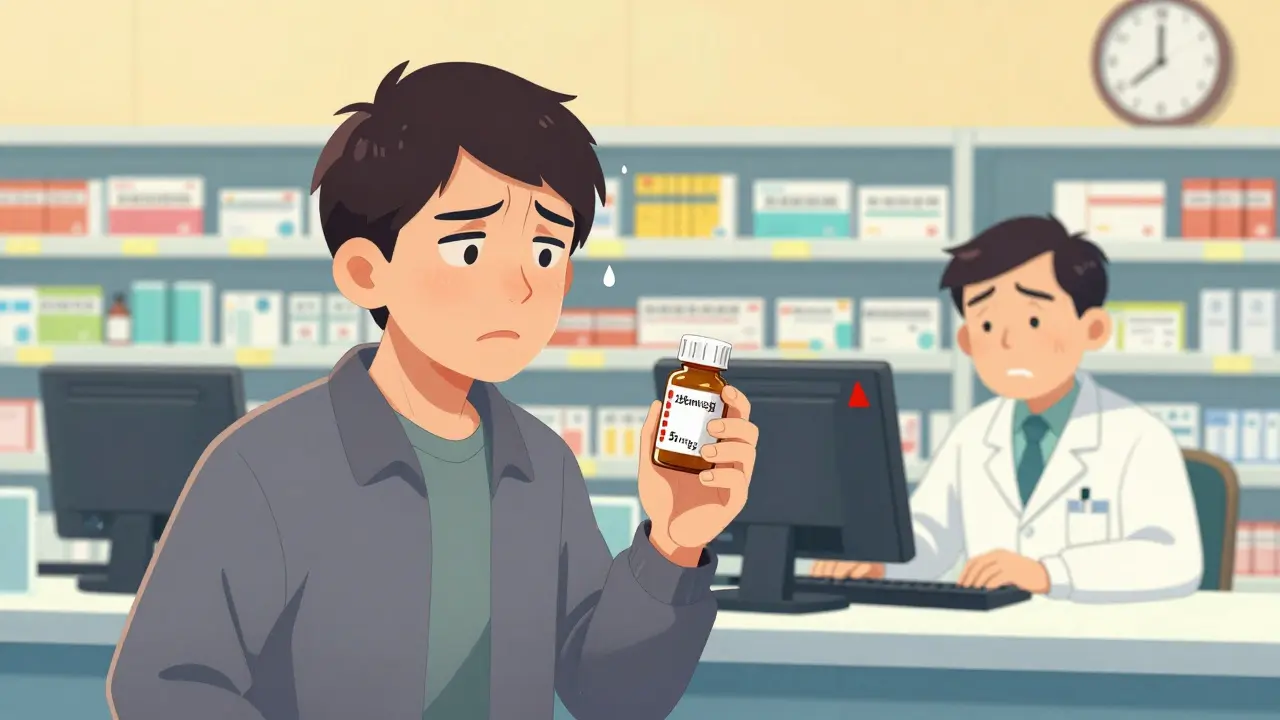
Getting the wrong medicine or the wrong dose from your pharmacy isn’t just a mistake-it’s a safety risk. Maybe you picked up a pill that looks different than usual. Or the label says 10mg when your doctor prescribed 5mg. Or the pharmacist didn’t warn you about a dangerous interaction with your other meds. You’re not alone. Thousands of people face these errors every year, and most never report them-not because they don’t care, but because they don’t know how.
What Counts as a Pharmacy Error?
A pharmacy error isn’t just about getting the wrong drug. It includes:- Wrong medication (e.g., you got metformin instead of metoprolol)
- Wrong dose (e.g., 10mg instead of 5mg)
- Wrong patient (your prescription given to someone else)
- Wrong instructions (e.g., "take with food" missing)
- Wrong form (e.g., extended-release tablets crushed or substituted)
- Lack of counseling (no warning about side effects or interactions)
- Expired or contaminated medication
Even if you didn’t take the medicine, reporting it matters. These are called near-misses. They’re the quiet warnings before something worse happens. The Institute for Safe Medication Practices (ISMP) says near-misses are the best way to fix systems before someone gets hurt.
Why Reporting Matters
Most people think, "It’s just one mistake. It won’t happen again." But that’s how errors become patterns. In 2021, the California Board of Pharmacy received 1,842 complaints. Of those, 217 led to disciplinary actions against pharmacists or pharmacies. That’s not punishment for punishment’s sake-it’s fixing broken processes.One woman in Ohio reported that her pharmacy kept giving her insulin at 10 times the correct dose. She didn’t know why her blood sugar kept crashing. After she reported it to ISMP, they found the same error had happened to three other patients in the same month. The pharmacy changed its double-check system. That’s how reporting saves lives.
Without reports, regulators can’t see the real problems. The FDA estimates that 90% of medication errors are never reported. That means they’re flying blind.
How to Report a Pharmacy Error in the UK
If you’re in England, Scotland, Wales, or Northern Ireland, start with the NHS complaints procedure.- Go back to the pharmacy where it happened. Ask to speak to the pharmacist in charge. Tell them exactly what went wrong-date, time, medication, what you expected, what you got.
- Ask for a copy of your prescription and the dispensed medication label. Keep them.
- If they don’t resolve it, file a formal complaint with the NHS trust or the pharmacy’s parent organization. You can do this online, by phone, or in writing.
- By law, they must acknowledge your complaint within 3 working days and give you a full response within 25 working days.
- If you’re still unsatisfied, you can escalate to the Parliamentary and Health Service Ombudsman.
You have up to 12 months to report. Don’t wait. The sooner you report, the faster they can fix it.
How to Report a Pharmacy Error in the US
If you’re in the United States, you have three main options. Each serves a different purpose.1. Report to Your State Board of Pharmacy
This is the most direct way to get action against a specific pharmacy. Every state has one. California, for example, requires you to submit:- A completed online form or PDF complaint form (available in English and Spanish)
- Photocopies of the original and dispensed prescriptions
- The original medication container, if possible
- Authorization to release your medical records (if needed)
The board must acknowledge your report within 14 days. They’ll investigate. If they find negligence, they can fine the pharmacy, suspend the pharmacist’s license, or require retraining. In 2021, they opened 1,842 cases-and 217 resulted in discipline.
2. Report to the FDA’s MedWatch Program
MedWatch is for serious adverse events or errors that could harm others. You can report online at the FDA’s portal, by phone at 1-800-FDA-1088, or by filling out Form 3500.What they care about:
- What happened
- Who was affected (you don’t need to give your full name)
- What medication and dose was involved
- Any injuries or symptoms
They don’t investigate individual cases. Instead, they look for patterns. If 10 people report the same error from the same pharmacy, the FDA can issue a warning or pull a batch. In 2022, they processed over 1.3 million reports. But here’s the catch: 71% of people who reported through MedWatch never got a follow-up.
3. Report to ISMP’s MERP Program
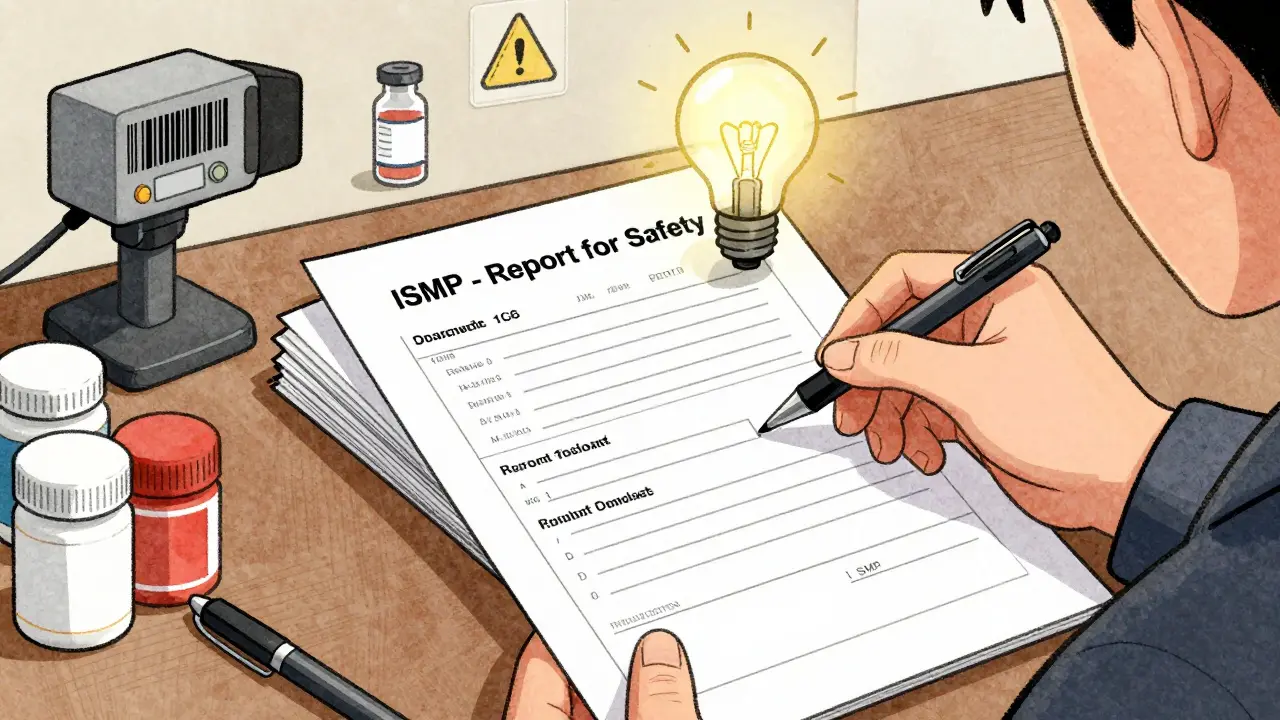
This is the gold standard for real change. ISMP (Institute for Safe Medication Practices) doesn’t just collect reports-they call people back. They ask: What was the pharmacy’s workload that day? Was the label unclear? Was there a computer glitch? They use a 9-point scale to rate severity and publish anonymized findings to help pharmacies improve.You can report by phone at 1-800-233-7767 or online. Their 2023 report showed that 85% of their reports led to system changes at the pharmacy level. One report from a Walmart customer led to a nationwide update in insulin labeling protocols.
Best part? ISMP keeps your identity confidential. No one at the pharmacy will know you reported them.
What Happens After You Report
You might expect a call, an apology, or even compensation. But here’s what usually happens:- NHS (UK): You’ll get a letter explaining what went wrong and how they’re fixing it. Sometimes they offer a goodwill payment.
- State Board (US): They may contact you for more info. If the case is serious, the pharmacist might be reprimanded. You won’t get a public update, but you can request the outcome.
- ISMP: You might get a call within 2 weeks. They’ll ask for details. You’ll never hear from the pharmacy-but you might see a change in how they label meds or train staff.
- FDA: You probably won’t hear anything. But your report could be part of a larger pattern that leads to a national alert.
Don’t expect immediate justice. Expect improvement. The goal isn’t to punish one person-it’s to stop the same mistake from happening to someone else.
What You Should Do Right Now
If you’ve experienced a pharmacy error, here’s your action plan:- Save everything: prescription copy, label, medication container, notes on symptoms.
- Write down exactly what happened: date, time, who you talked to, what was said.
- Decide where to report:
- UK? Use NHS complaints.
- US? Report to your state board and ISMP.
- Severe reaction? Also report to FDA MedWatch.
- Don’t wait. Reports filed within 30 days are 40% more likely to trigger an investigation.
- Be persistent. If you don’t hear back in 3 weeks, call again.
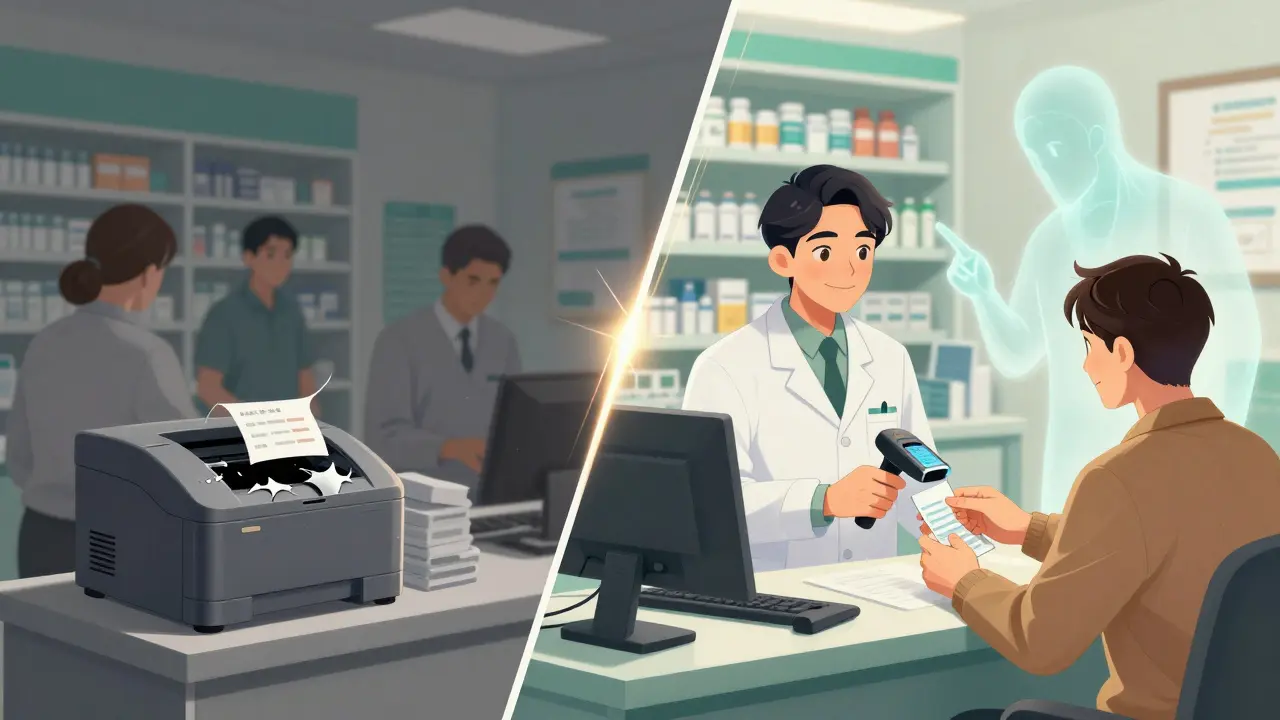
One woman in Michigan reported a wrong dosage of blood thinner. She got no response from the pharmacy. She reported to ISMP. Three months later, the pharmacy installed barcode scanning for high-risk meds. That same system later caught a similar error-and saved a man’s life.
Common Mistakes People Make
- Waiting too long. Most systems have a 12-month limit. Don’t wait for "the right time."
- Not documenting. Without a copy of the label or prescription, your report loses power.
- Thinking it’s "not a big deal." A 10mg error in blood pressure meds can cause a stroke.
- Blaming the pharmacist. Most errors come from system failures-poor lighting, rushed shifts, bad software-not laziness.
- Not following up. If you don’t call back, your report gets buried.
What’s Changing in 2025
The system is slowly getting better. In 2023, the FDA launched a pilot mobile app for MedWatch. By 2024, it’s expected to be fully live. California now lets you track your complaint online in real time. ISMP’s new consumer portal makes reporting easier than ever.And in 2023, Congress introduced the Patient Safety Improvement Act. If it passes, it will create a national database for medication errors with standardized reporting rules. That means fewer duplicate reports. More accurate data. Faster fixes.
For now, you’re the most important part of the system. Not the regulators. Not the software. Not the pharmacy chain. You.
Frequently Asked Questions
Can I report a pharmacy error anonymously?
Yes, you can. ISMP’s reporting system is fully confidential. You don’t need to give your name. The FDA MedWatch form allows anonymous submissions. State boards may ask for contact info to follow up, but your identity is protected by law. You can request that your name not be shared with the pharmacy.
Will reporting get me in trouble with my pharmacy?
No. Under federal law, pharmacies can’t retaliate against patients who report errors. If they do-like refusing to fill your prescriptions-you can file a separate complaint with the state board or the Office for Civil Rights (OCR) under HIPAA. Retaliation is illegal.
How long does it take to get a response after reporting?
It varies. NHS in the UK must respond within 25 working days. State boards like California’s take 89 days on average. ISMP calls reporters within 2 weeks. The FDA rarely responds directly. If you haven’t heard back after 30 days, call the agency again. Persistence matters.
Do I need a lawyer to report a pharmacy error?
No. You don’t need a lawyer to file a complaint. The reporting systems are designed for patients to use directly. If you suffered serious harm and want compensation, then consulting a lawyer makes sense. But for reporting the error itself, the process is free and straightforward.
What if I don’t remember the exact date of the error?
Give your best estimate. Say "around mid-October," "two weeks after my doctor’s visit," or "when I got my flu shot." Include any details you remember: the weather, what you were wearing, who was at the pharmacy. Even approximate dates help investigators find your record. Don’t let uncertainty stop you from reporting.
Can I report an error that happened at a mail-order pharmacy?
Yes. Mail-order pharmacies are regulated just like local ones. Report to your state board of pharmacy where the pharmacy is licensed. You can also report to ISMP and the FDA. Keep the packaging, label, and any communication from the pharmacy. These are your evidence.
Why don’t more people report pharmacy errors?
A 2023 survey found that 41% didn’t know how, 29% thought it wouldn’t make a difference, and 18% feared retaliation. But those who report say the biggest reward is knowing they helped prevent harm to others. One woman told ISMP: "I didn’t want anyone else to feel as scared as I did." That’s why reporting matters.
What to Do If Nothing Changes
If you’ve reported and nothing happened, don’t give up. Try another channel. Report to ISMP if you only used the NHS. Report to your state board if you only called the FDA. Each system sees different parts of the problem.And if you’re still not satisfied? Talk to your doctor. Ask them to write a letter to the pharmacy or the regulator. Sometimes a professional voice gets more attention.
Medication errors are preventable. But they only get fixed when someone speaks up. You don’t need to be an expert. You just need to be honest. And you need to report.
Tony Du bled
December 22, 2025 AT 22:28Been there. Got the wrong blood pressure med. Didn’t take it. Just walked back in, handed it to the pharmacist, and said, "This ain’t right." They apologized, fixed it, and gave me a free bag of gummies. Weird, but nice.
Still, I didn’t report it. Thought it was a one-off. Turns out it wasn’t.
Sam Black
December 24, 2025 AT 04:30I used to work in a pharmacy in Melbourne. Saw the same error-wrong insulin dose-happen twice in one week. Not because someone was sloppy. Because the system had two different label templates that looked identical under fluorescent lights. We fixed it by switching to color-coded caps. No one ever thanked us. But no one got hospitalized either.
Reporting isn’t about blame. It’s about making the invisible cracks visible.
And yeah, I’m the guy who still checks your meds when you pick them up. You’re welcome.
Jamison Kissh
December 26, 2025 AT 02:53There’s a philosophical layer here that rarely gets discussed. We treat medication errors as individual failures-but they’re systemic betrayals of trust. The pharmacy is supposed to be a sanctuary of precision, yet we’ve outsourced that precision to overworked humans, outdated software, and profit-driven efficiency.
When you report, you’re not just fixing a label-you’re demanding that society honor the sanctity of the body’s chemistry. That’s radical.
And yet, the most radical thing? People still don’t report. Because they’ve been conditioned to believe their voice won’t matter. But it does. Even if you never hear back.
That’s the quiet heroism of patient advocacy.
Johnnie R. Bailey
December 26, 2025 AT 07:14Let me clarify something: ISMP isn’t just a reporting portal-it’s a feedback loop engineered for change. Unlike the FDA, which aggregates data for national alerts, ISMP calls you back. They ask about workflow, lighting, shift changes, even whether the pharmacist was interrupted by a ringing phone.
One report I filed about a mislabeled antibiotic led to a redesign of their barcode scanner algorithm. That’s not luck. That’s intentional system design.
And yes, they keep you anonymous. No one at the pharmacy knows it was you. That’s the point. You’re not ratting someone out. You’re helping them do better.
Do it. Even if you think it’s small. It’s not.
Julie Chavassieux
December 26, 2025 AT 16:17They’re all just trying to kill you. I know it. You know it. The pharmacy chain? They don’t care. They’re owned by some hedge fund that thinks a pharmacist should fill 120 scripts an hour. The labels? Printed by a robot that doesn’t know what ‘mg’ means. The ‘double-check’? A guy who’s on his third espresso and just broke up with his girlfriend.
Report? Sure. But don’t expect justice. Expect another error next week.
And if you think the FDA will help? LOL. They’re still using fax machines.
Stay alive. That’s the only win.
Ajay Brahmandam
December 26, 2025 AT 22:35From India-yes, we have this problem too. My aunt got the wrong diabetes pill. She didn’t report because she thought the pharmacist knew better. She ended up in the hospital.
Now I always check the bottle. I take a picture. I compare it to the doctor’s note. I ask, "Is this the same as last time?"
People think I’m paranoid. I say: better paranoid than dead.
And yes, I reported. Took 3 months. No reply. But I still did it. For the next person.
Kathryn Weymouth
December 27, 2025 AT 08:29One detail missing from the article: if you’re reporting to a state board in the U.S., you’re legally entitled to a copy of their investigation summary upon request. Most people don’t know this. You don’t need a lawyer. Just write a polite letter or email asking for the disposition of your case. They’re required to provide it.
And if they say they can’t, ask for the specific statute that exempts them. Most won’t know. And that’s when the wheels start turning.
Knowledge is power. Use it.
Herman Rousseau
December 28, 2025 AT 09:24I’ve reported three errors. Two got zero response. One? The pharmacy sent me a handwritten note from the owner saying, "We’re sorry. We’ve retrained the team. You saved a life."
That one meant more than any lawsuit.
Don’t give up. Even if it feels like shouting into a void-you’re lighting a candle in a dark room. Someone else will see it.
And if you’re scared? Do it anonymously. ISMP’s system is beautiful. Just report. Then breathe.
You’re not alone.
Vikrant Sura
December 28, 2025 AT 20:09This whole thing is a scam. Pharmacies are fined $500 for a mistake. They make $5000 profit on that script. The system is rigged. You report? They just fire the tech. Hire a new one. Same error next week.
Why bother? The real problem? Corporate greed. Not you. Not the pharmacist. The shareholders.
Save your time. Buy your meds online from Canada.
Tarun Sharma
December 30, 2025 AT 17:15Reporting pharmacy errors is a civic duty. It is neither an act of hostility nor a personal grievance. It is the exercise of responsible patient agency within a regulated healthcare framework.
The legal obligations of pharmacists are codified in state statutes and professional codes of conduct. Failure to adhere constitutes a breach of fiduciary responsibility.
Therefore, formal reporting is not optional. It is ethically mandatory.
Proceed accordingly.
Art Van Gelder
December 31, 2025 AT 02:44Let me tell you about the time I got a prescription for Zoloft… but the label said Zyprexa. I didn’t know the difference. Took it. Woke up at 3 a.m. thinking my cat was a government drone. I called the ER. They laughed. Said I was lucky it wasn’t insulin.
Then I reported it. The pharmacy called me three days later. Asked if I wanted a gift card. I said no. I said: "Fix your system. Or someone’s kid will die."
They didn’t. So I reported to ISMP. Got a call back. They asked if the pharmacist was wearing a hat that day. I said yes. He was. He always wore a baseball cap. And the label was printed on the same machine that printed coupons for cat food.
They changed the printer. And the cap policy.
That’s the real story. Not the forms. Not the laws. The cap.
Jim Brown
December 31, 2025 AT 22:08The moral architecture of this system is profoundly humanistic. The act of reporting-however seemingly insignificant-constitutes a voluntary affirmation of intersubjective responsibility. We are not merely patients. We are co-architects of medical safety.
When we decline to report, we abdicate our role in the phenomenological contract between healer and healed.
The pharmacy is not a transactional node. It is a hermeneutic space-a site of meaning-making, where trust is not assumed, but cultivated through vigilance.
Therefore, to remain silent is not neutrality. It is complicity.
Report. Not for reward. Not for retribution. But because the integrity of care demands it.
Sai Keerthan Reddy Proddatoori
January 1, 2026 AT 04:28USA is falling apart. Pharmacies are run by illegals who don’t even speak English. I saw a guy get Klonopin instead of insulin. He was Mexican. They didn’t even check his name. That’s why we need borders. That’s why we need audits. That’s why we need to stop letting foreigners handle our medicine.
Report? Sure. But don’t expect the system to fix itself. The system is broken. And it’s not your fault. It’s theirs.
jenny guachamboza
January 2, 2026 AT 04:28PSA: The FDA is controlled by Big Pharma. They don’t want you to report. They want you to die quietly. That’s why MedWatch takes 6 months to respond. That’s why they never call back. That’s why your report disappears into the void. The whole thing is a cover-up. The pills? They’re laced with microchips. The labels? They’re coded with 5G signals. The pharmacist? Probably a robot. I saw one wink at me.
Don’t report. Burn your meds. Move to Alaska. Live off berries. Trust no one.
Also, I’m not crazy. I’ve got receipts.
📸📸📸