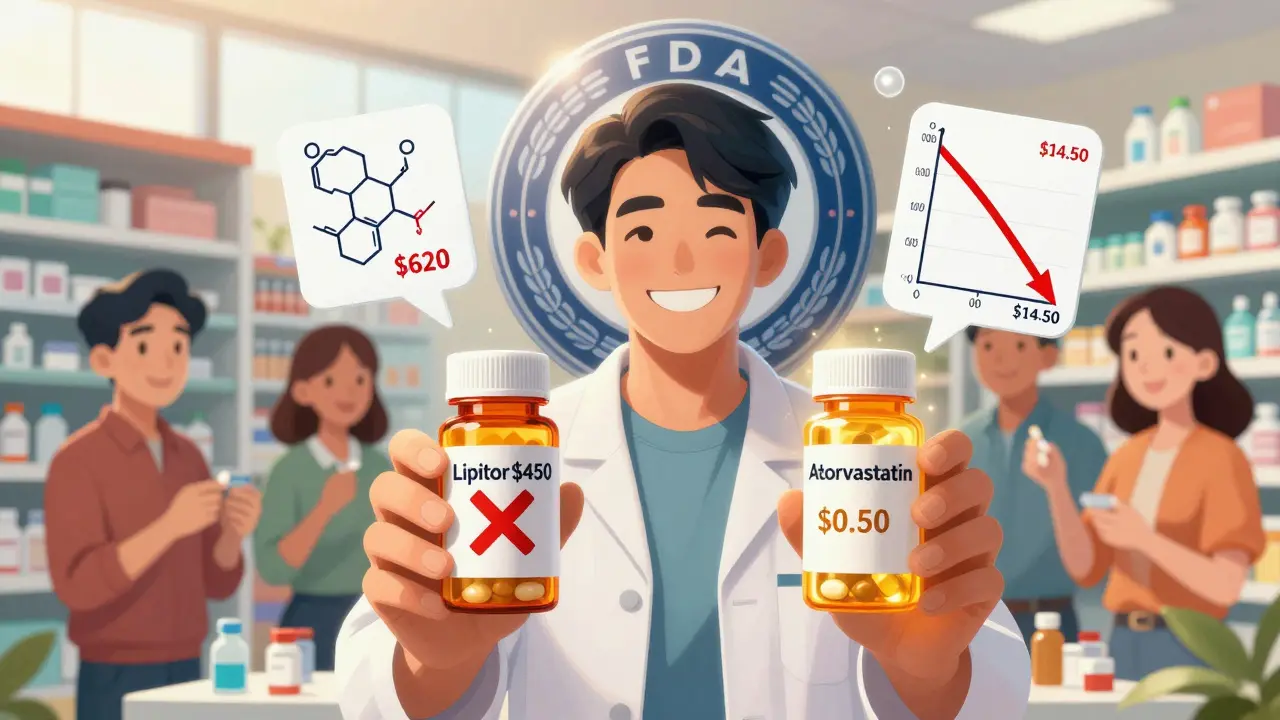
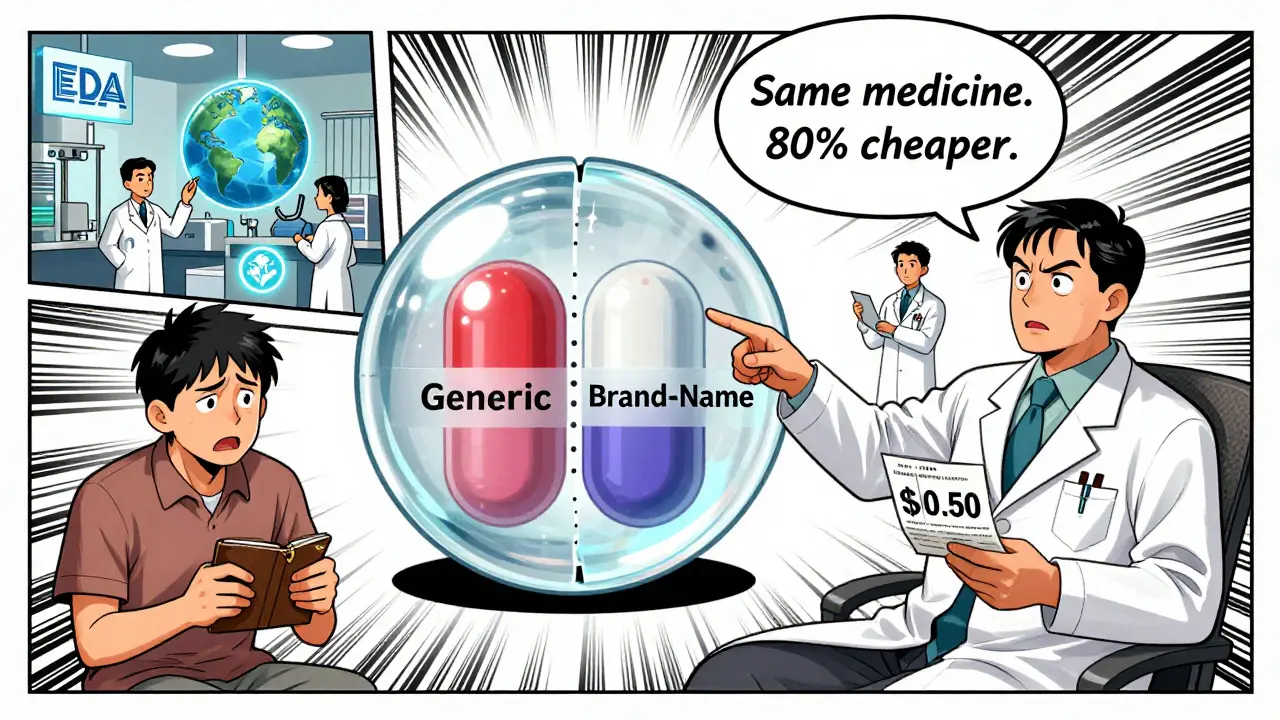
Switching to generic medications can cut your prescription costs by over 80%-but is it safe? Many people worry that cheaper drugs mean lower quality. The truth is simpler: when approved by the FDA, generics are not just similar to brand-name drugs-they’re identical in how they work in your body. The only differences? The color, shape, or filler ingredients that don’t affect your health. And yet, confusion still lingers. Let’s cut through the noise and show you exactly how to save money without putting your safety at risk.
What Makes a Generic Drug Really the Same?
A generic drug must contain the exact same active ingredient, strength, dosage form, and route of administration as the brand-name version. That means if you take a generic version of lisinopril, it’s the same chemical compound as Zestril. The FDA doesn’t allow any shortcuts here. Every generic must prove it delivers the same amount of medicine into your bloodstream at the same speed as the original. This is called bioequivalence. The standard? The generic’s absorption must fall within 80% to 125% of the brand-name drug’s levels. For drugs with a narrow therapeutic index-like warfarin or levothyroxine-that range tightens to 90% to 111%.
Manufacturing standards are just as strict. The same facilities that make brand-name pills often make generics too. The FDA inspects over 1,800 plants every year-both in the U.S. and abroad-and holds them to the same Current Good Manufacturing Practices (cGMP). There’s no separate “cheap” standard. If a plant fails inspection, it’s shut down-no matter if it’s making Lipitor or its generic version.
How Much Money Can You Actually Save?
The numbers speak for themselves. A 30-day supply of brand-name atorvastatin (Lipitor) costs around $450. The generic? As low as $0.50 at major pharmacies. Clopidogrel (Plavix) runs $380 a month; the generic is $1.20. That’s not a small discount-it’s life-changing for people on fixed incomes or without good insurance.
In 2023, generics saved U.S. patients $370 billion. That’s not a guess. It’s from the Association for Accessible Medicines, which tracks prescription spending nationwide. The average generic prescription costs $14.50. The average brand-name? $620. And 90% of all prescriptions filled in the U.S. are generics. Why? Because they work-and they’re affordable.
When Generics Aren’t Just Safe-They’re Better
Here’s something most people don’t know: in some cases, generics are linked to better outcomes. A 2020 study in Nature Communications looked at 17 cardiovascular drugs and found that generic versions were associated with fewer deaths in 10 of them and fewer major heart events in 11. Why? Researchers believe it’s because lower costs mean people stick with their meds. When you can afford your pill, you take it. When you can’t, you skip doses. And skipping doses is far riskier than switching to a generic.
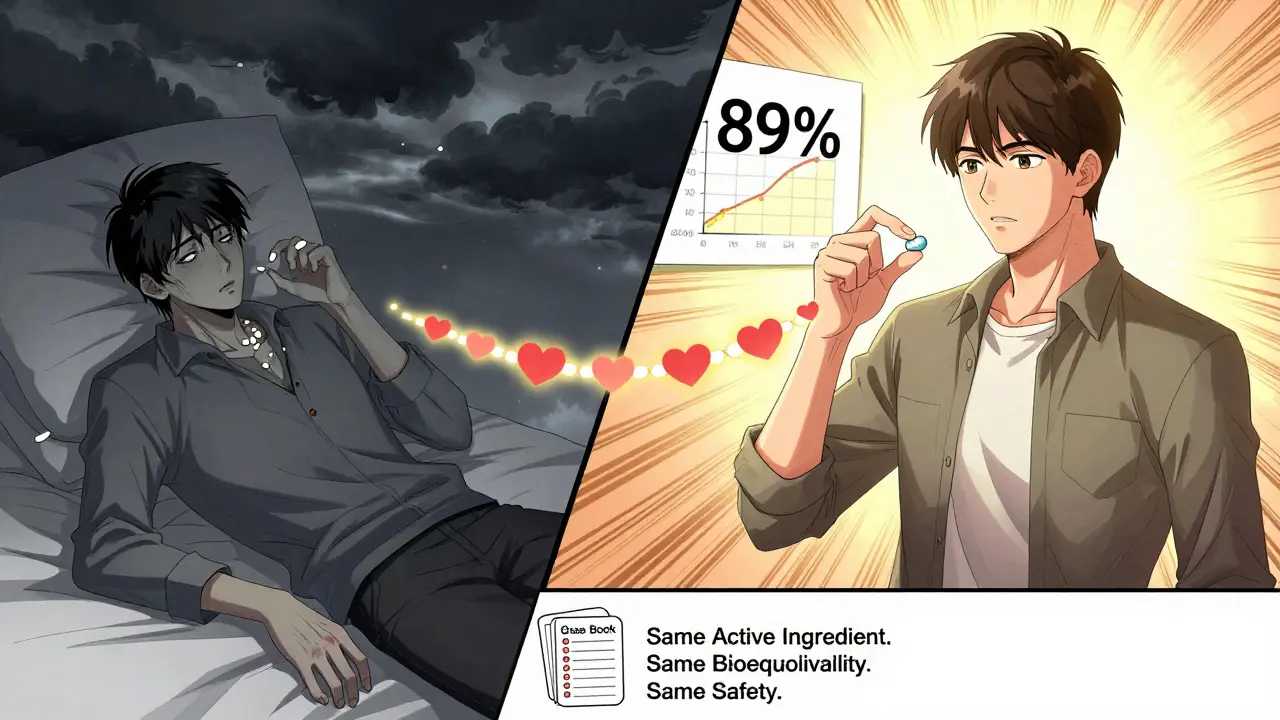
GoodRx data from January 2024 shows that 89% of people who switched to generics kept taking their medication. Only 67% of those who stayed on brand-name drugs did. Cost isn’t just a number-it’s a barrier to health. Generics remove that barrier.
Where Should You Be Careful?
Most generics are safe. But there are exceptions. For drugs with a narrow therapeutic index-where even a small change in blood levels can cause harm-consistency matters more. These include:
- Warfarin (blood thinner)
- Levothyroxine (thyroid hormone)
- Phenytoin (seizure medication)
- Sirolimus (transplant drug)
For these, the FDA requires tighter bioequivalence limits. But even then, the biggest risk isn’t the generic itself-it’s switching back and forth between different manufacturers. A 2021 study in Pharmacoepidemiology and Drug Safety found that 65% of adverse event reports tied to generics came from unexpected changes in pill appearance or manufacturer-not because the drug was unsafe.
One example: patients on levothyroxine reported inconsistent symptom control with generics. A Drugs.com review of 1,842 users found 23% said their symptoms worsened after switching-compared to only 8% for the brand-name Synthroid. Why? The active ingredient is the same, but small differences in inactive ingredients might affect absorption in sensitive individuals.
How to Switch Safely (Step by Step)
Here’s how to make the switch without surprises:
- Ask your pharmacist: “Is this generic from an FDA-inspected facility?” You can check this yourself using the FDA’s Drugs@FDA database. If it’s approved, it’s safe.
- Check if multiple generics exist: If there are five different generic versions of your drug, that means competition is high-and prices will stay low. It’s a good sign.
- Don’t switch manufacturers often: Especially for narrow therapeutic index drugs. Stick with one generic brand once you find one that works. If your pill looks different next time, ask why.
- Monitor how you feel: Keep track of symptoms. If you notice changes-dizziness, fatigue, irregular heartbeat-contact your doctor. Don’t assume it’s the drug. It might be stress, diet, or something else.
- Use the Orange Book: The FDA’s Orange Book lists approved generics and their manufacturers. If your pill changes color or shape, look it up. You’ll know if it’s the same product or a new maker.
What Doctors and Pharmacists Say
Dr. Niteesh Choudhry, director of the Center for Population Health at Brigham and Women’s Hospital, says: “There is really no hard proof that generic medications are any less effective or safe than the originals.” The FDA’s Generic Drugs Director, Sally Seifert, confirms this: “Generic drugs have the same risks and benefits as their brand-name versions.”
But they also agree: consistency matters. The American Heart Association advises that generics are fine for most heart conditions-but recommends avoiding multiple switches for drugs like warfarin. A 2022 study in JAMA Internal Medicine found that a single switch to a different generic version of warfarin increased the risk of unstable INR levels by 18%. That’s not because generics are bad. It’s because your body adapts to one formulation.
What About Biosimilars?
Biosimilars are the next frontier. These are generic versions of complex biologic drugs-like Humira or Enbrel-that treat cancer, arthritis, and autoimmune diseases. Unlike traditional generics, biosimilars aren’t exact copies because they’re made from living cells. But they’re still rigorously tested. As of March 2024, 32 biosimilars have been approved by the FDA. They’re not cheaper yet-but they will be. The Generic Pharmaceutical Association projects they’ll save $300 billion by 2030.
Final Rule: Generics Are Safe. Consistency Is Key.
There’s no magic trick to saving money on prescriptions. It’s simple: choose generics. They’re not second-rate. They’re not experimental. They’re the same medicine, tested the same way, made to the same standard. The FDA approves over 12,000 generic applications every year. That’s not luck. That’s science.
Don’t let fear stop you. If you’re on a chronic medication, ask your pharmacist if a generic is available. Ask your doctor if switching is safe for you. If you’re on warfarin, levothyroxine, or phenytoin, ask to stick with one manufacturer. Keep your pill the same. Track how you feel. And if you save $500 or more a year-like 72% of patients do-you’ll wonder why you waited.
Are generic drugs as effective as brand-name drugs?
Yes, for the vast majority of medications, generics are just as effective. The FDA requires them to deliver the same amount of active ingredient into your bloodstream at the same rate as the brand-name version. Studies show no difference in outcomes for drugs like blood pressure medications, antibiotics, and antidepressants. Even in heart disease, generics have been linked to fewer deaths in multiple large studies.
Can generic drugs cause more side effects?
Side effects from generics are rare and usually tied to inactive ingredients-like dyes or fillers-that differ from the brand-name version. For most people, this causes no issue. But in sensitive individuals, especially with thyroid or seizure medications, switching manufacturers can trigger minor reactions. If you notice new symptoms after switching, talk to your doctor. It’s not the active drug-it’s the formulation.
Why do some generics look different?
Generics can’t look exactly like the brand-name drug because of trademark laws. So manufacturers change the color, shape, or imprint. That doesn’t affect how the drug works. But if your pill suddenly looks completely different, check with your pharmacist. It might mean a new manufacturer-something to watch for with narrow therapeutic index drugs.
Is it safe to switch between different generic brands?
For most drugs, yes. But for medications like warfarin, levothyroxine, or phenytoin, it’s better to stick with one manufacturer. Small differences in how the drug is absorbed can build up over time. If you’re stable on one generic, don’t switch unless your doctor says so. Consistency reduces risk.
Do pharmacies push generics to make more money?
Pharmacies do make more profit on generics-it’s true. But that’s not why they’re recommended. Generics are cheaper because they don’t require expensive marketing or patent protection. Pharmacists recommend them because they’re safe, effective, and help patients afford their meds. If a generic isn’t right for you, your pharmacist will know and can flag it.
What if my insurance won’t cover the generic?
If your insurance denies coverage for a generic, ask for a prior authorization or appeal. Many insurers require you to try the generic first. If they still refuse, ask your doctor to write a letter explaining why the brand is medically necessary. In most cases, the generic will be covered. If not, you can still pay cash-the price is often lower than your co-pay for the brand.
Sam Dickison
February 9, 2026 AT 08:18Genetics aren't magic, but the FDA's bioequivalence standards? That's the real deal. I've been on generic lisinopril for 5 years. Same BP, same energy, $1.20 vs $400. No drama. The only time I had issues was when my pharmacy switched manufacturers without telling me. Pill looked different. Felt weird. Turned out it was a new filler. Called my doc, switched back. Done. Simple.
Camille Hall
February 9, 2026 AT 22:36I used to be scared of generics too-until my mom, on a fixed income, started taking them for her thyroid. She was terrified of switching. But after the first month? Her TSH stabilized. She said she felt better because she wasn’t skipping doses to save cash. That’s the real win. Not the price tag. The consistency. The access. Generics don’t just save money-they save lives.
Chelsea Deflyss
February 10, 2026 AT 15:08Wait, so you’re telling me Big Pharma just let generics exist because they’re ‘just as good’? Lol. That’s not how capitalism works. There’s gotta be a catch. Maybe the inactive ingredients are laced with something? Or the labs are overseas and the FDA just… looks the other way? I’ve seen too many stories. I stick with brand. I’d rather pay more than risk my kidneys.
Ryan Vargas
February 10, 2026 AT 18:44Let’s be real. The FDA doesn’t ‘approve’ generics in any meaningful sense. They rely on industry self-reporting. The bioequivalence window? 80%-125%? That’s not ‘identical’-that’s ‘close enough for government work.’ And let’s not forget: most generic manufacturing happens in India and China, where regulatory oversight is… flexible. The FDA inspects ‘over 1800 plants’? Sure. But how many are inspected more than once? And what about the ones that fail? They just get a warning. Then they ship again. This isn’t science-it’s a regulatory shell game.
Tasha Lake
February 11, 2026 AT 14:31As a pharmacist, I can confirm: generics are the backbone of modern Rx access. We stock 12 different versions of metformin alone. The key? Consistency. If a patient does well on one generic, we lock them into it. No switching. Ever. Especially for narrow TI drugs. The science is solid. The data? Overwhelming. The fear? Mostly marketing-driven. I’ve had patients cry because they couldn’t afford the brand. Then they switched. And they thanked me. No joke.
Alex Ogle
February 12, 2026 AT 00:53I used to think generics were just ‘cheap knockoffs’-until I got laid off and had to switch to generic warfarin. I was terrified. I tracked my INR religiously. For six months. Every week. The numbers? Within 0.2 of my brand-name readings. No spikes. No crashes. I saved $500/month. My wife said I should’ve done it years ago. I didn’t know. Nobody told me. And now? I’m the one telling everyone else. Because the truth? It’s not scary. It’s just… boring. Which is exactly how medicine should be.
Ritteka Goyal
February 12, 2026 AT 05:56India makes 20% of the world's generics-and we do it better than anyone. Our labs are ISO-certified. Our chemists are PhDs. The US fears generics because they don’t understand quality control. We’ve been making life-saving meds for decades. You think your Lipitor was made in Ohio? Nah. It was made in Vadodara. And it’s better. I switched my dad to Indian-made generic atorvastatin. He saved $400/month. His cholesterol dropped. His mood improved. America needs to stop being scared of smart, affordable medicine.
Tori Thenazi
February 12, 2026 AT 07:50Okay, but what about the 2021 study that showed 65% of adverse events came from manufacturer switches? And the Drugs.com data where 23% of levothyroxine users had worse symptoms? And the fact that the FDA allows generics to vary by up to 125%? That’s not ‘identical’-that’s a gamble. And what if your body adapts to one version, then you get a new one? You’re basically a lab rat. And who profits? The pharmacy. The insurer. NOT YOU. I’m sticking with brand. I’d rather die rich than live poor.
Jacob den Hollander
February 12, 2026 AT 11:48So I switched my 82-year-old dad to generic levothyroxine last year… and he started having palpitations. We thought it was heart-related. Turns out, the new generic had a different filler-calcium phosphate instead of lactose. He’s lactose intolerant. The active ingredient? Same. But the delivery? Totally different. We switched back to Synthroid. He’s fine now. Point is: generics aren’t dangerous. But they’re not all the same. And if you’re sensitive? You need to know your manufacturer. And stick. And ask. And track. And don’t assume. Because your thyroid doesn’t care about your budget.
Monica Warnick
February 12, 2026 AT 20:15Generics are fine… I guess. But what about the ones that look like candy? I saw a pill that was neon green and shaped like a star. How do you know it’s not just sugar with a fake label? I don’t trust the system. I don’t trust the FDA. I don’t trust the pharmacy. I don’t trust the ‘science.’ I just want to live. And if that means paying more? Fine. I’d rather be alive and broke than dead and ‘savings.’
Ashlyn Ellison
February 13, 2026 AT 01:34Switched to generic omeprazole. Saved $300/month. No side effects. No issues. Done.
Jonah Mann
February 14, 2026 AT 15:13Big Pharma doesn’t want you to know this, but generics are often made in the SAME FACILITIES as brand-name drugs. Yeah. You read that right. Same machines. Same chemists. Same quality control. The only difference? No ad budget. No fancy packaging. No ‘brand prestige.’ So if you’re scared of generics? You’re scared of… a label. The pill? It’s the same. I’ve worked in pharma logistics. I know. And I take generics. Every. Single. One.
Sam Dickison
February 15, 2026 AT 02:20^^^ THIS. I didn’t know that. My pharmacy switched my generic without telling me, and I freaked out. Then I looked up the manufacturer code on Drugs@FDA. Same plant as the brand. Same lot number prefix. Just a different label. I felt dumb. And relieved. Why did no one tell me this?
THANGAVEL PARASAKTHI
February 16, 2026 AT 15:40In India, we call generics ‘life-savers.’ My sister has epilepsy. She was on brand-name phenytoin-cost $600/month. We switched to Indian generic. Cost $12. She’s had zero seizures for 2 years. No side effects. No hospital visits. The FDA doesn’t get it. It’s not about ‘trust.’ It’s about access. People die because they can’t afford meds. Not because generics are bad. Because the system is broken. Generics fix that.