
Missing a dose or taking the same pill twice isn't just a minor slip-up-it can lead to dangerous hospitalizations or chronic health crises. For anyone managing multiple prescriptions, the mental load of remembering which pill to take and when is exhausting. This is where overdose prevention tools like blister packs and pill organizers come into play. They shift the burden of memory from your brain to a physical system, drastically reducing the chance of a mistake.
If you're caring for an elderly parent or managing a complex regimen yourself, you've probably wondered if a plastic box is enough or if you need something more professional. While both tools aim to keep you on track, they work very differently. One requires you to do the heavy lifting once a week, while the other offloads the work to a pharmacist. Understanding the trade-offs is the key to staying safe.
The Quick Guide to Medication Tools
Before picking a system, it helps to see how they stack up. Most people choose based on how many medications they take and how often their prescriptions change.
| Feature | Blister Packs (Pharmacy-Prepared) | Pill Organizers (Self-Filled) |
|---|---|---|
| Setup Effort | Low (Pharmacist does it) | High (User fills weekly) |
| Error Risk | Very Low (Professionally sorted) | Moderate (Risk during filling) |
| Flexibility | Low (Requires repackaging for changes) | High (Easy to swap pills) |
| Cost | Higher (Service fee per month) | Low (One-time purchase) |
| Adherence Boost | Significant (Up to 28% improvement) | Moderate (Varies by user) |
Using Blister Packs for Maximum Safety
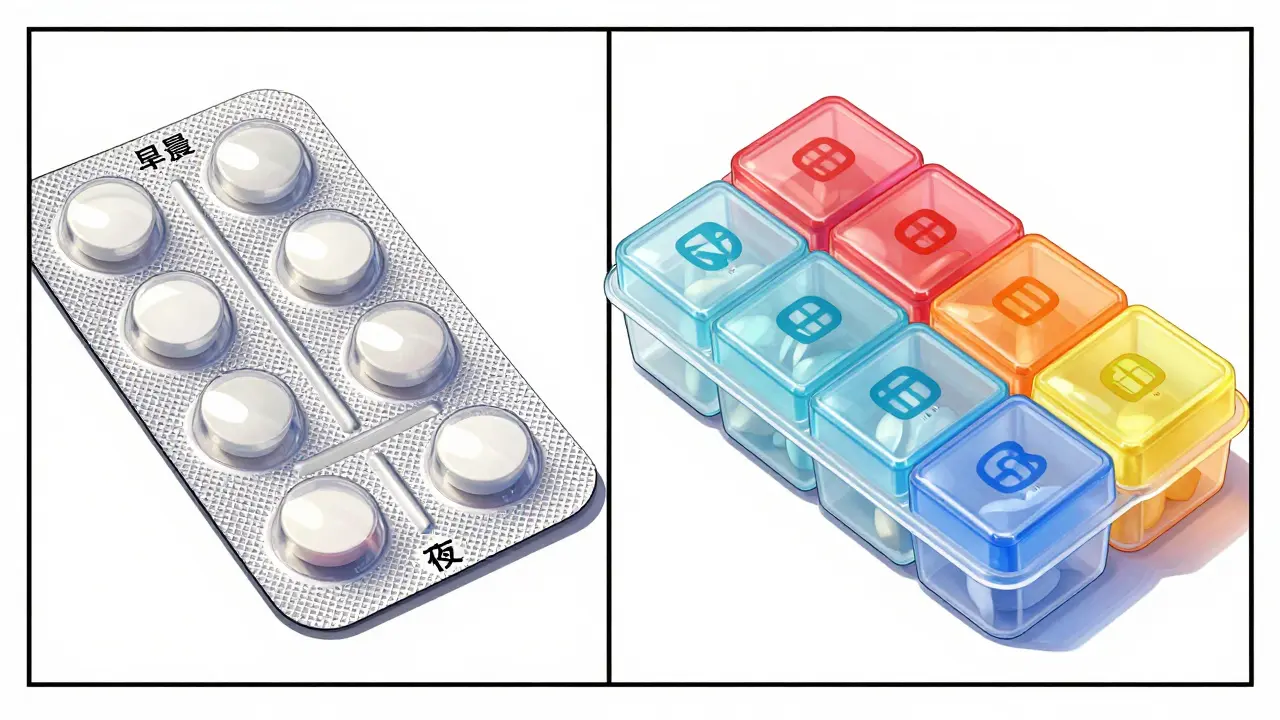
A Blister Pack is a pre-sorted medication packaging system where doses are sealed in individual cavities, labeled by day and time . Unlike a bottle of pills, you don't have to guess if you took your Tuesday morning dose-you just look for the empty bubble. This visual confirmation is a game-changer for people with mild cognitive impairment or those taking four or more medications daily.
To get started with this system, you'll need to coordinate with a specialized pharmacy. They review your regimen and package your meds into strips. For example, if you take a blood pressure pill in the morning and a cholesterol pill at night, the pharmacist places both in the "Monday Morning" and "Monday Night" slots respectively. This removes the "manual counting" phase, which is where most home-based mistakes happen.
The real strength of this system is its accuracy. Data shows that unit-dose blister cards can reduce administration errors by as much as 67% compared to traditional vials. For caregivers, it turns a stressful guessing game into a simple check: "Is the bubble empty?" If yes, the dose was taken. If no, it's time for the pill.
Mastering Pill Organizers for Flexibility
If your medications change frequently or you only take a few pills, a Pill Organizer is often the more practical choice. These are containers with multiple compartments, typically divided by the days of the week and times of day. They are affordable and easy to find, but they require a disciplined routine to be effective.
To prevent mistakes when using an organizer, follow a strict filling ritual. Set aside 15 minutes every Sunday. Clear your workspace and lay out every prescription bottle. Fill the compartments one medication at a time-finish all the "Mondays" for one drug before moving to the next. This prevents the common error of skipping a day or double-dosing a specific slot.
Look for organizers with color-coding. Using blue for morning, orange for evening, and purple for bedtime creates a mental association that helps you avoid taking a nighttime sedative in the middle of the afternoon. While they aren't as foolproof as pharmacy-sealed packs, a multi-compartment organizer can still improve adherence by about 18% over a simple single-slot box.
Common Pitfalls and How to Avoid Them
No system is perfect. Even with the best tools, mistakes can happen if you aren't aware of the specific risks associated with each method.
- The "Dexterity Gap": Many people with arthritis find blister packs frustratingly hard to pop. To solve this, look for "easy-open" versions with perforated edges or use a small pill-popping tool to avoid struggling with the foil.
- The Refill Error: The biggest risk with pill organizers happens during the transfer from bottle to box. One wrong move and you've put a heart medication in the slot for a vitamin. Always double-check the label against the organizer slot before dropping the pill in.
- Storage Mistakes: Neither system is suitable for medications that need refrigeration (like certain insulin types). Never put refrigerated meds in a standard pill organizer or blister pack, as the temperature shift can render the drug ineffective.
- Regimen Changes: If your doctor changes a dose, don't just "wing it" with a pre-packed blister strip. You may need to request a new pack from the pharmacy to avoid taking the old, incorrect dose.
Choosing the Right System for Your Situation
Not everyone needs a professional pharmacy service. Your choice depends on your "risk profile." If you're dealing with complex dosing (e.g., different pills at four different times a day), the investment in a professional service is worth it. The peace of mind comes from knowing a licensed professional did the sorting.
On the other hand, if you're healthy, just taking a couple of supplements and one maintenance drug, a high-quality weekly organizer is plenty. The key is consistency. Whether you use a high-tech smart pack or a $5 plastic box, the system only works if you use it every single day without exception.

The Future of Medication Safety
We're moving toward a world where the packaging actually talks to us. Smart blister packs now exist with embedded sensors that notify a caregiver's app if a pack hasn't been opened by a certain time. Some pharmacies are even implementing QR codes on the packaging, allowing you to scan a compartment and watch a quick video explaining exactly why you're taking that specific medication.
These advancements address a critical gap: the difference between *taking* a pill and *understanding* why it's being taken. While a blister pack prevents you from forgetting a dose, it doesn't explain the drug's purpose. Combining a physical organization system with digital education is the gold standard for preventing long-term medication errors.
Are pharmacy-prepared blister packs covered by insurance?
Many Medicare Advantage plans and private insurance providers cover adherence packaging, as it reduces the likelihood of expensive emergency room visits. However, some may only cover the medication itself and leave the "packaging fee" to the patient. It's best to call your provider to see if they offer a reimbursement for "medication synchronization" or "adherence packaging" services.
What should I do if I find an empty blister slot I don't remember filling?
First, do not take an extra dose to "make up" for it without consulting your doctor. Some medications can be dangerous if doubled. Check your records or ask a caregiver if they saw you take it. If you are truly unsure and the medication is critical (like a blood thinner or insulin), call your pharmacist immediately for guidance on whether to skip or dose.
Can I use a pill organizer for liquids or creams?
No. Pill organizers and blister packs are designed exclusively for solid oral medications (tablets and capsules). Liquids and creams must remain in their original pharmaceutical containers to prevent leakage, contamination, and degradation from air exposure.
How often should I replace my plastic pill organizer?
You should replace your organizer if the plastic becomes cracked, cloudy, or the lids no longer snap shut securely. A loose lid can lead to pills falling out or moisture getting in, which can degrade the medication. Generally, a high-quality organizer lasts a year or two, but check the seals every few months.
Which is better for someone with dementia: a box or a pack?
Blister packs are significantly safer for patients with dementia. A person with memory loss might open a pill organizer and take multiple doses because they forgot they already did so. With blister packs, the physical evidence (the empty bubble) is immediate and clear, and the packaging is harder to "double-dip" into if a caregiver is overseeing the process.
Next Steps for Your Safety Plan
If you're ready to upgrade your system, start by listing every single medication, dose, and time of day you take them. Take this list to your local pharmacist and ask, "Do you offer multi-dose blister packaging?"
If you prefer a pill organizer, buy one with at least four compartments per day (Morning, Noon, Evening, Bedtime) to avoid confusion. Set a recurring alarm on your phone for your "Fill Day" every week so you never run out of sorted meds. If you struggle with dexterity, look for tools specifically designed to pop pills from foil packs to ensure your system doesn't become a source of frustration.
Mark Koepsell
April 30, 2026 AT 19:40Pharmacy-led blister packs are generally the gold standard for polypharmacy management. For those using self-fill organizers, adding a printed medication list inside the box lid provides a secondary verification step that can catch filling errors before the week begins.
Elizabeth Holden
May 1, 2026 AT 15:50obviosly most people just dont care enough to do it rite. its not that hard to use a box if ur actually smart about it lol
Jenny X
May 2, 2026 AT 14:00The push for centralized pharmacy packaging is just another way to create a digital trail of our biometrics and adherence patterns. Once they have your titration schedule in a proprietary blister format, you are locked into their ecosystem of surveillance capitalism. Big Pharma loves the 'convenience' because it ensures total compliance with the chemical regime they've designed for us.
bharat films
May 4, 2026 AT 12:11Imagine thinking a plastic box is 'innovation' 🙄🤡 This is such basic advice, it's practically useless for anyone with a real medical condition 📉👎
Mikaela -anonymous 😏
May 6, 2026 AT 10:18Oh wow... a plastic box... truly a revolution in human existence!!! 🙄 I'm just so overwhelmed by the sheer brilliance of putting a pill in a hole... deeply profound...!!!
kelvin villa saab
May 8, 2026 AT 10:14this is basically common sense but some peeple really struggle with the basics its kinda sad honestly
Spencer Farrell
May 8, 2026 AT 12:54The dichotomy between manual agency and systemic automation is profoundly illustrated here. By delegating the cognitive load of medication sorting to a pharmacist, the individual transcends the mundane anxiety of error, thereby attaining a state of pharmacological equilibrium. It is an exercise in trust-the surrender of personal oversight for the sake of institutional precision.
Kartik Agarwal
May 8, 2026 AT 14:56We should consider the biopsychosocial impact of these systems. While the pharmacotherapeutic adherence is improved through these modalities, we must ensure the patient maintains a level of health literacy regarding their regimen to avoid complete dependency on the packaging.
Tallulah Sandison
May 10, 2026 AT 05:22Just go for it!! Get that organizer and stay on top of ur health!! You got this!!