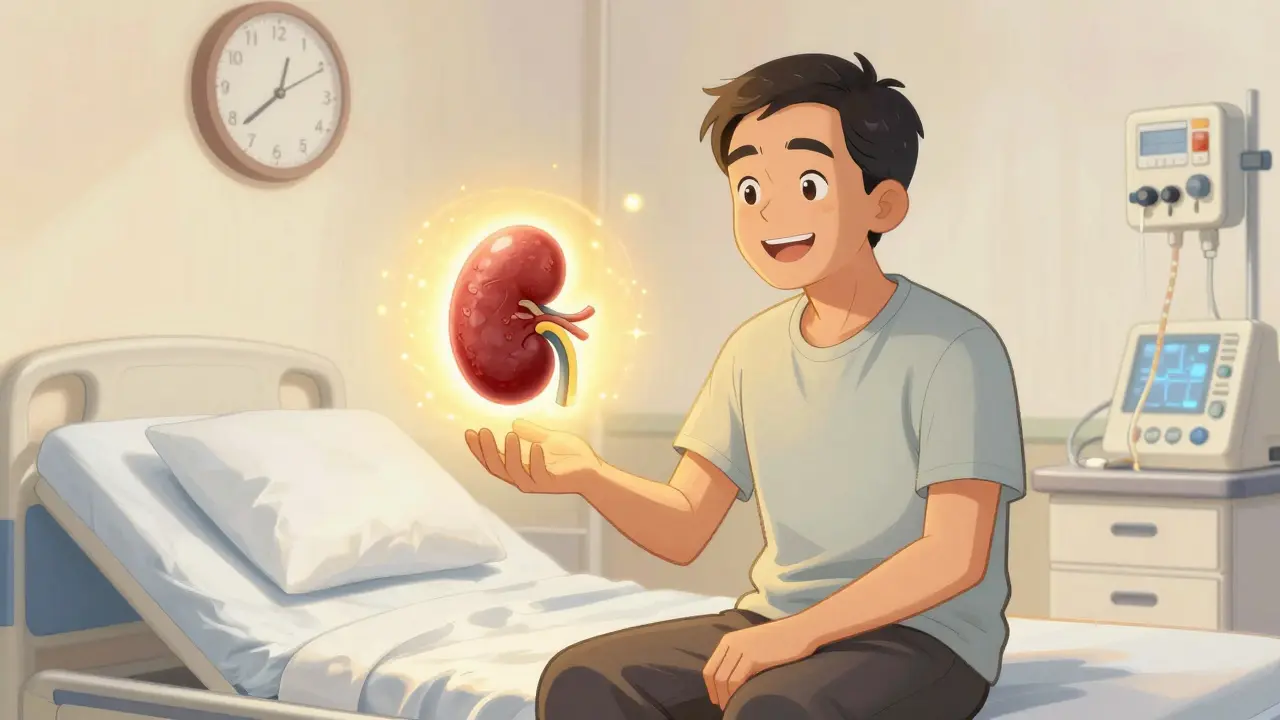
When your kidneys fail, life changes. Dialysis keeps you alive, but it’s exhausting, time-consuming, and doesn’t restore your quality of life the way a healthy kidney can. For many people with end-stage renal disease (ESRD), a kidney transplant isn’t just an option-it’s the best chance at a fuller, longer life. But it’s not as simple as saying "yes" to a new organ. There are strict rules, tough evaluations, and lifelong responsibilities that come with it. If you’re considering a transplant, here’s what you really need to know: who qualifies, what happens during surgery, and how to stay healthy after.
Who Is Eligible for a Kidney Transplant?
Not everyone with kidney failure gets on the transplant list. It’s not about how bad your kidneys are-it’s about whether your body can handle the surgery and whether you can stick with the lifelong care that follows. Most transplant centers require a glomerular filtration rate (GFR) of 20 mL/min or lower. Some, like Mayo Clinic, will consider patients with a GFR up to 25 mL/min if their kidney function is dropping fast or if they have a living donor ready to go. The goal? Get you transplanted before you’re too sick to survive the procedure.
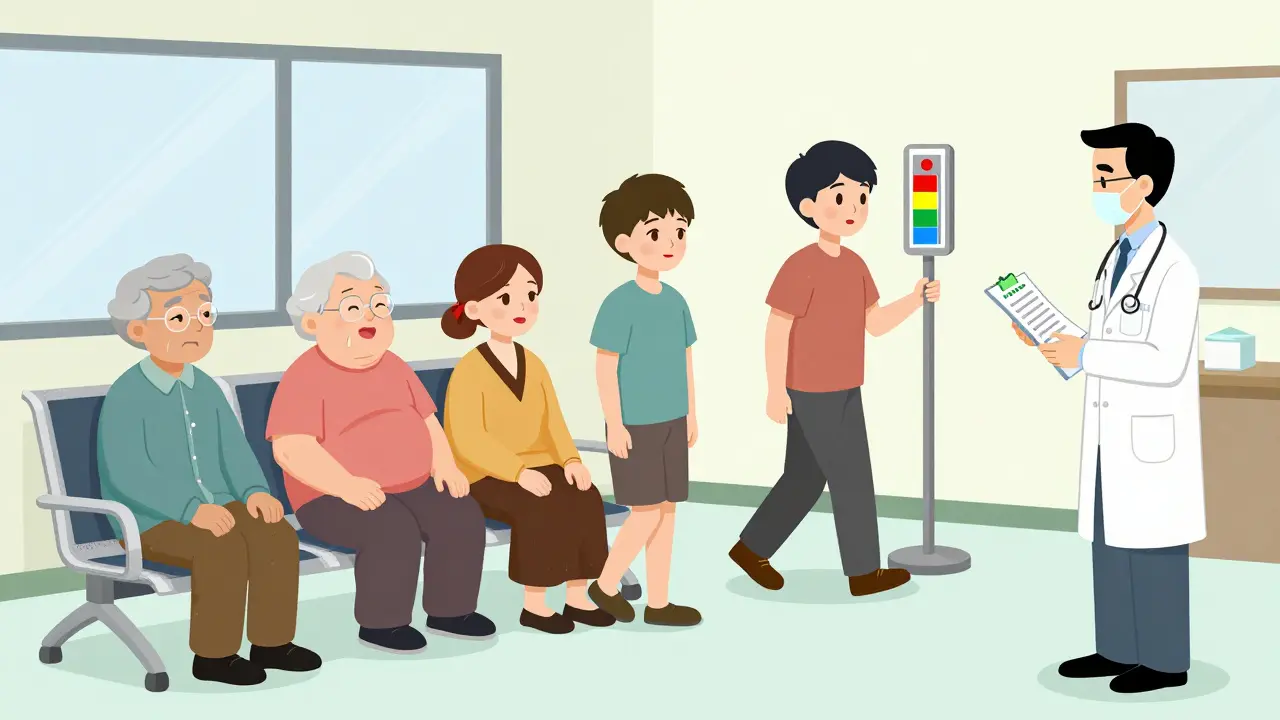
Age alone doesn’t disqualify you. While Vanderbilt University Medical Center says age 75 or older is a relative red flag, UCLA doesn’t set a hard cutoff. Instead, they look at your overall health: Are you strong? Can you walk without help? Do you have other conditions that make surgery risky? Frailty matters more than your birth year. Tests like grip strength, walking speed, and how easily you get tired help doctors decide if your body can take the stress.
Weight is another big factor. A BMI over 45 is an absolute barrier at most centers-surgery becomes too dangerous. Even a BMI above 35 raises your risk of complications. Obesity increases the chance of infection, poor wound healing, and even transplant failure by 20%. Some programs require you to lose weight before they’ll move forward. It’s not about looks-it’s about survival.
Heart and lung health are non-negotiable. If your right ventricle pressure exceeds 50 mm Hg (Mayo Clinic) or your pulmonary artery pressure hits 70 mm Hg (Vanderbilt), you won’t qualify. Long-term oxygen use? That’s a hard no. Your heart needs to pump well-ejection fraction above 35% is the minimum. If you’ve had a heart attack or have severe heart disease, you’ll need treatment first.
What Stops You From Getting a Transplant?
There are some things that automatically disqualify you. Active cancer is one. If your cancer could come back or spread after transplant, you’re not a candidate. But if you’ve been cancer-free for a few years-usually 2 to 5 years depending on the type-you might be eligible again. That’s why many centers require detailed cancer screenings before listing.
Untreated infections are another dealbreaker. HIV isn’t an automatic exclusion anymore-if your viral load is undetectable and your CD4 count is above 200, you can still get a transplant. Same with hepatitis B: if it’s controlled with medication, you’re in the game. But if the virus is still active and spreading? You’ll need treatment first.
Substance abuse is a hard stop. If you’re still using alcohol, opioids, or street drugs, transplant centers won’t list you. It’s not punishment-it’s practical. Medications after transplant are complex. Missing a dose or mixing drugs with immunosuppressants can kill the new kidney. You’ll need to show you’ve been clean for at least six months, often with counseling and monitoring.
Mental health matters too. Severe, untreated depression, psychosis, or dementia can prevent you from managing your care. But if you’re getting treatment-therapy, medication, support-you can still qualify. Transplant teams don’t want to set you up to fail. They want you to succeed.
What Happens During the Surgery?
The surgery itself takes 3 to 4 hours. You’re under general anesthesia, so you won’t feel a thing. The new kidney goes into your lower belly-not where your old kidneys are. Surgeons connect its main blood vessels to your own, and the ureter (the tube that carries urine) to your bladder. Your original kidneys usually stay in place unless they’re infected, causing pain, or dangerously high in blood pressure.
The new kidney often starts working right away. You might see urine flowing into your bladder within minutes of blood flow being restored. But sometimes, especially with kidneys from deceased donors, it takes a few days to wake up. About 1 in 5 recipients need temporary dialysis after surgery. That doesn’t mean the transplant failed-it just means the kidney needed time to adjust.
Most people leave the hospital in 5 to 7 days. You’ll have a catheter for a few days to monitor urine output. Pain is managed with medication, and you’ll start walking the day after surgery. Early movement helps prevent blood clots and speeds healing.
Life After the Transplant: The Real Work Begins
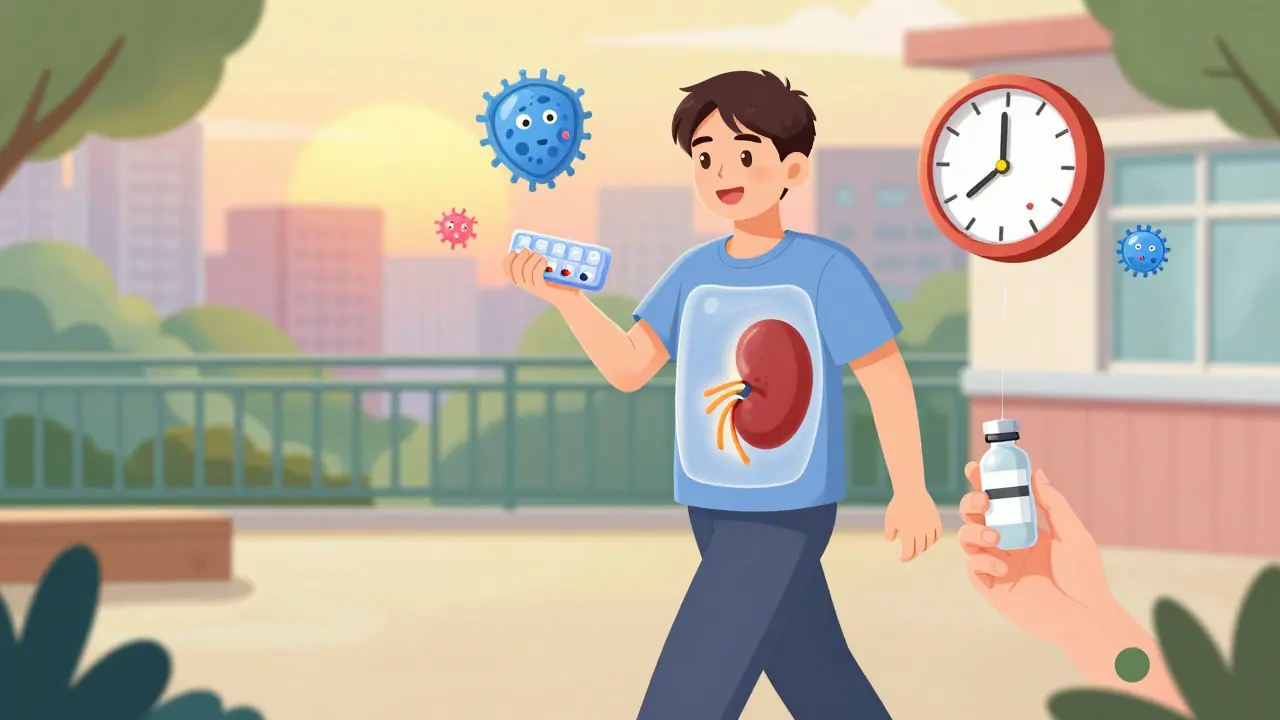
Getting the kidney is only half the battle. The other half is keeping it alive. You’ll take immunosuppressants for the rest of your life. These drugs stop your immune system from attacking the new organ. The standard combo includes tacrolimus (or cyclosporine), mycophenolate (or azathioprine), and a steroid like prednisone. Some people also get a one-time dose of a powerful antibody at the time of surgery to help the kidney settle in.
These drugs aren’t harmless. They raise your risk of infections, high blood pressure, diabetes, and even certain cancers. You’ll need regular blood tests to check drug levels, kidney function, and side effects. Too much immunosuppression? You get sick. Too little? Your body rejects the kidney. It’s a tightrope walk.
Follow-up visits are intense at first. Weekly for the first month, then monthly for 3 to 6 months. After that, you’ll see your transplant team every 3 months. Even after years, you’ll still need annual checkups. Missing appointments is one of the top reasons transplants fail.
Living donor transplants have better outcomes. One-year survival rates are 97% for living donor kidneys versus 93% for deceased donor kidneys. Why? Because living donor kidneys are healthier, and they’re transplanted before the donor dies-so there’s no cold ischemia time (the time the organ spends without blood flow). The kidney also has less damage from the donor’s illness or trauma.
Even with all the care, graft survival drops over time. About 85% of living donor kidneys last 5 years. For deceased donor kidneys, it’s 78%. That doesn’t mean you’re doomed. Many people live 10, 15, even 20+ years with one transplant. Some need a second transplant. Others stay stable for decades.
What You Need to Do Every Day
- Take your pills exactly as prescribed-no skipping, no doubling up.
- Watch for signs of rejection: fever, swelling, weight gain, reduced urine output, or pain near the transplant site.
- Avoid people who are sick. Wash your hands often. Skip crowded places during flu season.
- Don’t eat raw meat, unpasteurized cheese, or undercooked eggs. Your immune system can’t fight off these bugs like it used to.
- Stay active. Walk, swim, bike. Exercise helps control blood pressure and weight.
- Don’t smoke. Smoking kills blood vessels and speeds up kidney damage.
- Get vaccinated-flu, pneumonia, COVID, and shingles shots are essential.
You’ll also need a care partner. Someone who can remind you to take pills, drive you to appointments, and call your doctor if something feels off. Many centers require this before listing. It’s not optional-it’s life-saving.
What’s New in Kidney Transplants?
Doctors are getting smarter about matching kidneys to patients. The Kidney Donor Profile Index (KDPI) scores donor kidneys from 0 to 100. A low score means the kidney is likely to last longer. High-KDPI kidneys (above 85%) used to be seen as "junk." Now, we know they still give patients a better shot than staying on dialysis. A 65-year-old with a high-KDPI kidney might live 5 years longer than if they stayed on dialysis.
Researchers are also working on ways to reduce or eliminate lifelong immunosuppression. Clinical trials at Stanford and the University of Minnesota are testing methods to "train" the immune system to accept the new kidney without drugs. If this works, it could change everything.
Organ preservation is improving too. New machines keep donor kidneys alive with oxygen and nutrients during transport. That means kidneys from longer distances can still work well after transplant.
Is a Transplant Right for You?
If you’re on dialysis and feeling worn down, a transplant might be your best path forward. But it’s not a quick fix. It’s a long commitment-with rules, risks, and responsibilities. The upside? You’ll have more energy, better sleep, fewer restrictions, and a longer life. Studies show transplant recipients live 10 to 15 years longer than those on dialysis.
Start by talking to your nephrologist. Ask if you’re a candidate. Get evaluated. Even if you’re not ready now, the process can take months. The sooner you start, the sooner you might be on the list.
Can I get a kidney transplant if I’m over 70?
Yes, age alone doesn’t disqualify you. Centers like UCLA evaluate older patients based on overall health, not just age. If you’re physically strong, mentally capable, and have good support, you can still be listed. Frailty tests-like walking speed and grip strength-are more important than your birth year.
What if I have diabetes or high blood pressure?
Having diabetes or high blood pressure doesn’t automatically rule you out. In fact, many transplant recipients have these conditions. The key is control. If your blood sugar and blood pressure are well-managed with medication and lifestyle changes, you’re still a strong candidate. Poor control, however, increases the risk of transplant failure.
Do I need to be on dialysis to qualify?
Most centers require you to be on dialysis or very close to needing it-usually when your GFR is below 20 mL/min. But some, like Mayo Clinic, may list patients earlier if their kidney function is dropping fast or if they have a living donor. You don’t need to wait until you’re extremely ill.
Can I drink alcohol after a kidney transplant?
Moderate alcohol use is often allowed after transplant, but heavy drinking is not. Alcohol can damage your new kidney, interfere with medications, and raise your risk of liver disease. Most centers allow one drink a day, but you must be honest with your team. If you can’t limit it, you risk losing your transplant.
How long do kidney transplants last?
Living donor kidneys last about 15 to 20 years on average. Deceased donor kidneys last 10 to 15 years. But these are averages-some last 30 years or more. Success depends on how well you take care of yourself: taking meds, staying healthy, and attending follow-ups. Rejection, infection, and poor compliance are the main reasons transplants fail.
Can I get a second kidney transplant?
Yes, many people get a second transplant if their first one fails. You’ll need to go through the evaluation process again, but it’s common. Survival rates for second transplants are slightly lower than first ones, but still much better than staying on dialysis. The key is staying healthy between transplants.
If you’re thinking about a transplant, don’t wait until you’re desperate. Talk to your doctor. Get evaluated. Learn your options. A new kidney isn’t just a medical procedure-it’s a second chance at life.
jerome Reverdy
March 18, 2026 AT 21:27Man, I’ve been watching my uncle go through this for the last two years. GFR down to 18, on dialysis three times a week, and he’s still working full-time as a mechanic. The transplant team at Johns Hopkins told him he’s a solid candidate-no cancer, no active infections, just a BMI of 37 and a bit of hypertension. He’s been on a strict diet and hitting the treadmill daily. They’re doing the eval next month. It’s wild how much you take for granted until your body starts failing you. I never thought I’d see someone so stubborn about taking care of themselves. But hey, if you want to live, you gotta show up.
Also, the part about living donors? My cousin offered her kidney. No big deal to her. Just said, ‘I’d rather give one than watch you die slowly.’ That’s the kind of love you don’t see on TV.
PS: If you’re on the fence, get evaluated early. The waitlist ain’t getting shorter.
Andrew Mamone
March 20, 2026 AT 03:44Just wanted to say: kidney transplants are one of the few medical procedures where the success rate is actually higher than most people assume. 93% 1-year survival for deceased donors? That’s better than most elective surgeries. And the 97% for living donors? That’s almost surgical perfection.
Also, the part about immunosuppressants-yes, they’re a pain. But the trade-off? No more dialysis. No more 4-hour sessions three times a week. No more feeling like a ghost between appointments. I’ve seen it firsthand. The difference in energy, mood, even skin tone? Night and day.
And yes, you can drink one glass of wine. Just don’t make it a habit. And please, for the love of all that’s holy, don’t skip your labs.
MALYN RICABLANCA
March 21, 2026 AT 09:39OMG. I CAN’T EVEN. I JUST READ THIS ENTIRE THING AND I’M CRYING. 😭😭😭
Like-have you ever been on dialysis? IT’S NOT JUST A TREATMENT. IT’S A TORTURE CHAMBER. You sit there for hours. People are snoring. The machines beep. Your veins are Swiss cheese. You’re tired. You’re hungry. You’re scared. And then-BAM-you read this and realize there’s HOPE. Real, tangible, life-changing HOPE.
And the part about mental health? YES. I had a friend who was turned down because she had untreated bipolar disorder. She cried for weeks. Then she got a therapist, started meds, joined a support group-and got listed 8 months later. SHE GOT HER TRANSPLANT LAST YEAR. NOW SHE’S TRAVELING. TO MEXICO. ON HER OWN. 🌎✈️
TO EVERYONE WHO THINKS THIS IS ‘JUST MEDICAL’-NO. IT’S A SECOND CHANCE AT BEING HUMAN. I’M SO GLAD THIS POST EXISTS.
PS: I’m not even a patient. I just have a heart. And it’s breaking for all of you out there waiting.
gemeika hernandez
March 22, 2026 AT 02:57My mom got a kidney from my dad 12 years ago. He’s fine. She’s fine. We’re all fine. But here’s the thing no one talks about: the meds. You think it’s just about taking pills? Nah. It’s about remembering them. At 7 a.m. At 7 p.m. At 1 a.m. When you’re drunk. When you’re mad. When you’re on vacation. When you forget your bag. It’s a full-time job. And if you mess up once? You risk everything. So yeah, it’s worth it. But don’t romanticize it. It’s hard. Really hard.
Nicole Blain
March 22, 2026 AT 12:41My sister got her transplant last year. She’s back to gardening, hiking, and even baking sourdough again. 🌿🍞
She said the scariest part wasn’t the surgery. It was the first time she woke up and didn’t feel like death. Like, truly woke up. No fog. No exhaustion. Just… being.
Also, the care partner thing? So real. My brother drives her to every appointment. He didn’t even ask. Just showed up. That’s love.
Kathy Underhill
March 24, 2026 AT 06:49Transplant is not a cure. It’s a reprieve. A long, complicated, beautifully uncertain reprieve.
The body doesn’t forget what it’s been through. The drugs don’t make you invincible. The kidney doesn’t last forever. But for many, it’s the only path to a life that feels like their own.
Don’t rush. Don’t fear. Just prepare. And let the medical team guide you. They’ve seen it all.
And if you’re considering being a donor? You’re already more than most.
Srividhya Srinivasan
March 25, 2026 AT 19:30Whoa. Who let Big Pharma write this? 😏
Let me guess-you’re all being groomed to accept transplants so you’ll be hooked on immunosuppressants for life. Those drugs? They’re expensive. Super expensive. And guess who profits? The same companies that make the dialysis machines. It’s a loop. A beautiful, profitable loop.
And don’t even get me started on ‘living donors.’ What about the organ trade? What about the poor in India who sell kidneys for $5K? You think your ‘selfless’ cousin isn’t part of this system? 🤔
There’s a reason the government pushes transplants. It’s not about health. It’s about control.
Ask yourself: why is this information so sanitized? Why no mention of the 20% who die from infection after transplant? Why no talk about the 40% who develop cancer from immunosuppressants? They don’t want you to know.
Prathamesh Ghodke
March 26, 2026 AT 03:24Bro, I’m a nurse in Mumbai. I’ve seen people sell kidneys on the black market. I’ve also seen families sell their TVs to pay for transplant meds. It’s brutal.
But here’s the thing-none of that changes the fact that for someone on dialysis, a transplant is still the only real shot at life. You can hate the system all you want, but if your aunt is dying on a machine, do you really want her to die because you’re mad at the pharmaceutical industry?
Be angry. But also be human.
Also-yes, you can drink wine. Just don’t mix it with tacrolimus. I’ve seen people do it. Didn’t end well.
Stephen Habegger
March 27, 2026 AT 00:12Just got my eval results today. Passed. On the list. Waiting for a match.
Thanks for writing this. It helped me stop panicking and start planning.
Sanjana Rajan
March 27, 2026 AT 11:38Ugh. So much effort just to live a little longer? I mean, dialysis is basically just being a robot. Why not just… accept it? Live your last days peacefully? Why force yourself through surgery, meds, side effects, anxiety, appointments, fear, and all that? Life’s short anyway.
Also, why is everyone so obsessed with ‘living donor’? Like, aren’t we all gonna die? Why not just chill and enjoy tacos?
Also, I heard the new kidney can get rejected even if you take all your pills. So… what’s the point?
Just saying. Maybe we should stop pretending medicine can fix everything.