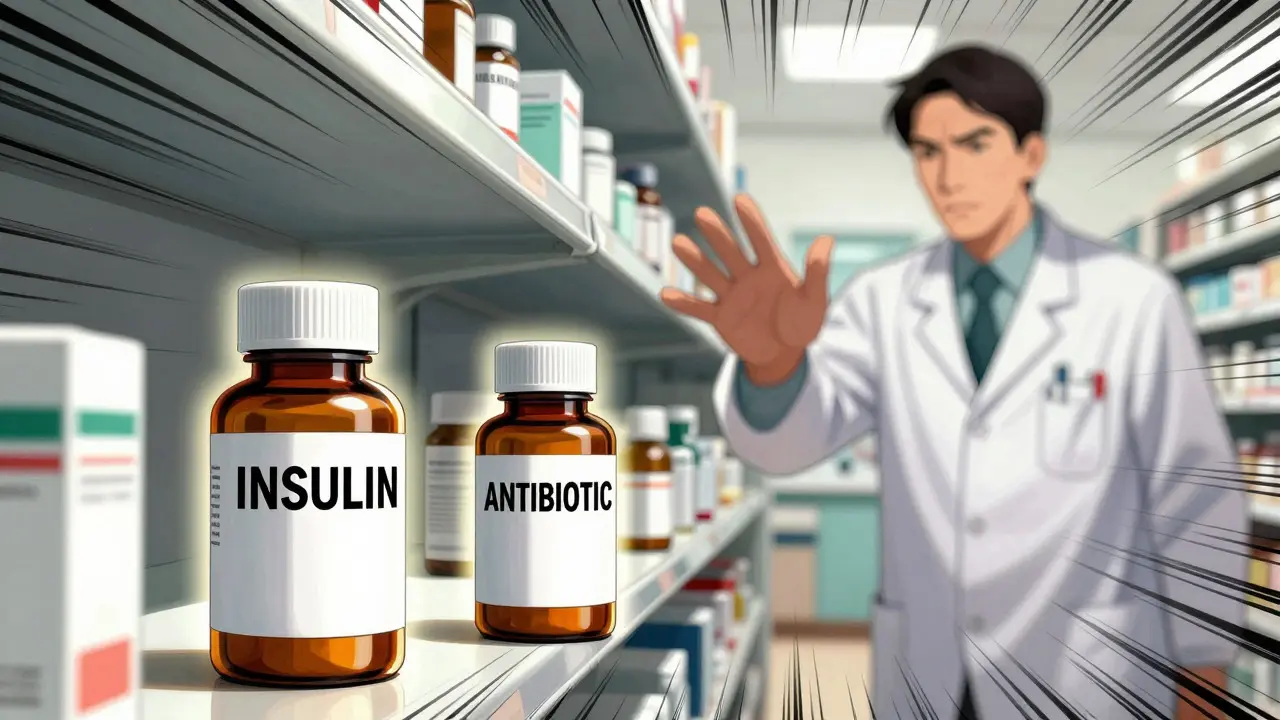
Imagine picking up a bottle of insulin instead of an antibiotic. Or worse, administering a paralytic agent because it sounds like a sedative. These aren’t just hypothetical nightmares; they are real risks that happen in hospitals and pharmacies every single day. The culprit? Look-alike, sound-alike (LASA) medication names. These confusing drug pairs account for a staggering portion of all medical mistakes, putting patient lives on the line due to simple visual or auditory similarities.
If you work in healthcare-or if you’ve ever taken prescription drugs-you need to understand why these errors happen and how systems are trying to stop them. It’s not about blaming tired nurses or distracted pharmacists. It’s about a systemic flaw in how we name, package, and handle medicines.
The Scale of the Problem: Why LASA Errors Matter
Let’s look at the numbers, because they are shocking. Research indicates that one out of every four medication errors reported in the United States is caused by name confusion. That means 25% of all mistakes stem from drugs that look or sound too similar. A comprehensive study published in Pharmacy Practice in 2022 broke this down further. They found that among LASA-related incidents, 64.62% were due to drug name confusion alone. Another 24.61% happened because packaging looked identical, and 10.77% occurred because the pills themselves looked alike.
These errors don’t just cause minor inconveniences. When they involve high-alert medications-like opioids, insulin, anticoagulants, or chemotherapy agents-the consequences can be fatal. The FDA’s MAUDE database recorded at least 128 deaths attributed to LASA errors between 2018 and 2022. Think about that. Over a hundred people died because a drug name was too close to another.
| Error Type | Percentage of LASA Errors | Primary Risk Factor |
|---|---|---|
| Drug Name Confusion | 64.62% | Orthographic & Phonetic Similarity |
| Packaging Confusion | 24.61% | Container Design & Labeling |
| Physical Appearance | 10.77% | Pill Shape, Color, Size |
How These Errors Happen: The Four Mechanisms
To fix the problem, we first have to understand exactly how our brains get tricked. LASA errors manifest through four distinct mechanisms, often working together to create a perfect storm for mistake-making.
- Orthographic Similarities (Visual): This is when two drug names look almost identical on paper or a screen. For example, simvastatin 10 mg and simvastatin 20 mg. The difference is tiny, but if you’re scanning a list quickly, your eye might skip over the number.
- Phonetic Similarities (Auditory): This happens during verbal orders or handoffs. If a doctor says "give him vecuronium" but the nurse hears "versed," the result is catastrophic. One is a muscle relaxant; the other is a sedative. They sound nearly identical in a noisy hospital hallway.
- Packaging Similarities: Sometimes the names are different, but the boxes look the same. Identical colors, fonts, and layout make it easy to grab the wrong box off the shelf.
- Physical Appearance: Even if the label is correct, the pill inside might look like another drug. Same color, same shape, same imprint. This is particularly dangerous when patients manage their own meds at home.
A landmark study in Medical Care developed a model using 22 computerized measures to assess these risks. They found that higher similarity scores directly correlated with increased error risk. In fact, their predictive model had an accuracy rate of 94.8%, proving that these similarities are measurable, predictable dangers-not just random bad luck.
Tall Man Lettering: Is It Working?
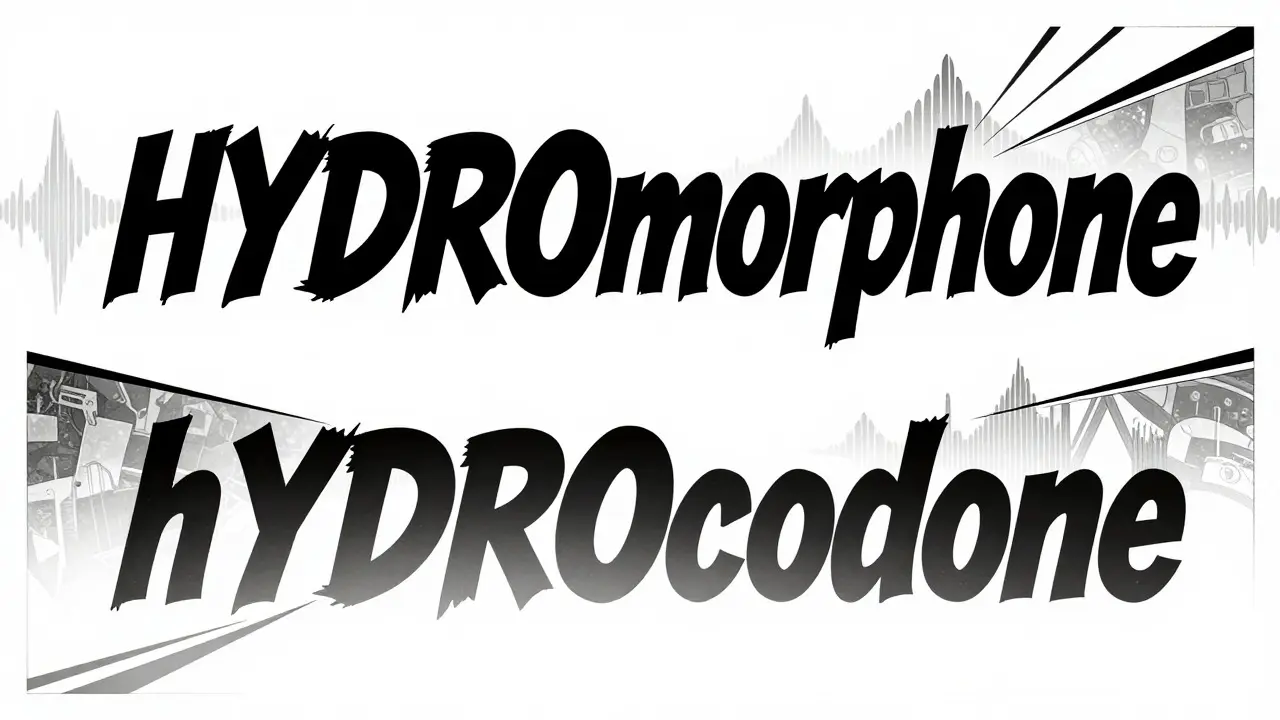
You’ve probably seen it on prescription labels or pharmacy shelves: HYDROmorphone vs. HYDROcodone. This technique is called Tall Man Lettering (TML). The idea is simple: capitalize specific letters within the drug name to highlight the differences visually. The FDA has applied TML to over 200 medication pairs since 2001.
But does it actually work? The answer is complicated. A systematic review in the Journal of Pharmacy Practice and Pharmaceutical Sciences concluded that Tall Man Lettering is only "marginally effective." Some experts call it a "quasi-placebo effect." It helps, but only if the person reading it knows *why* certain letters are capitalized. If a nurse isn’t aware that the capitalization signals a danger zone, they might ignore it entirely.
Moreover, TML doesn’t solve the phonetic problem. If a doctor dictates "hydrocodone" into a voice-to-text system, the software still hears the same sounds. TML is a band-aid, not a cure. It reduces errors slightly, but it hasn’t eliminated them.
Where Errors Occur: Prescribing vs. Administration
Not all stages of medication handling are equally risky. Data from Merative in 2023 shows a clear split in where mistakes happen:
- 68% of errors occur during administration. This is the moment the drug enters the patient’s body. Nurses are busy, shifts are changing, and distractions are high. This is the most critical vulnerability point.
- 24% of errors occur during prescribing. Doctors may select the wrong drug from an electronic dropdown menu or write a vague order that gets misinterpreted.
This distribution tells us something important: technology like Electronic Health Records (EHRs) helps with prescribing, but the human element at the bedside remains the biggest risk. A 2022 survey by the American Medical Association found that 78% of physicians reported encountering at least one LASA-related near-miss in the previous year. Oncologists had the highest incidence at 92%, largely because chemotherapy agents often have very similar names and high toxicity levels.
Real Stories from the Frontlines
Statistics are cold, but stories reveal the reality. On nursing forums, professionals share chilling accounts of how close they came to causing harm.
One nurse shared: "I almost gave levoTHYroxine instead of SYNTHROID during a night shift handoff. Both vials look identical, and the provider said 'thyroid med' without specifying." Another ICU nurse wrote: "The worst was mixing up vecuronium and versed. Thank god I caught it before administration."
These aren’t isolated incidents. They represent a culture where fatigue, workload, and ambiguous communication collide with poorly designed drug names. During busy periods, crucial details like drug strengths are often overlooked. Shift changes are particularly dangerous times when anticipatory errors spike.
Strategies to Prevent LASA Errors
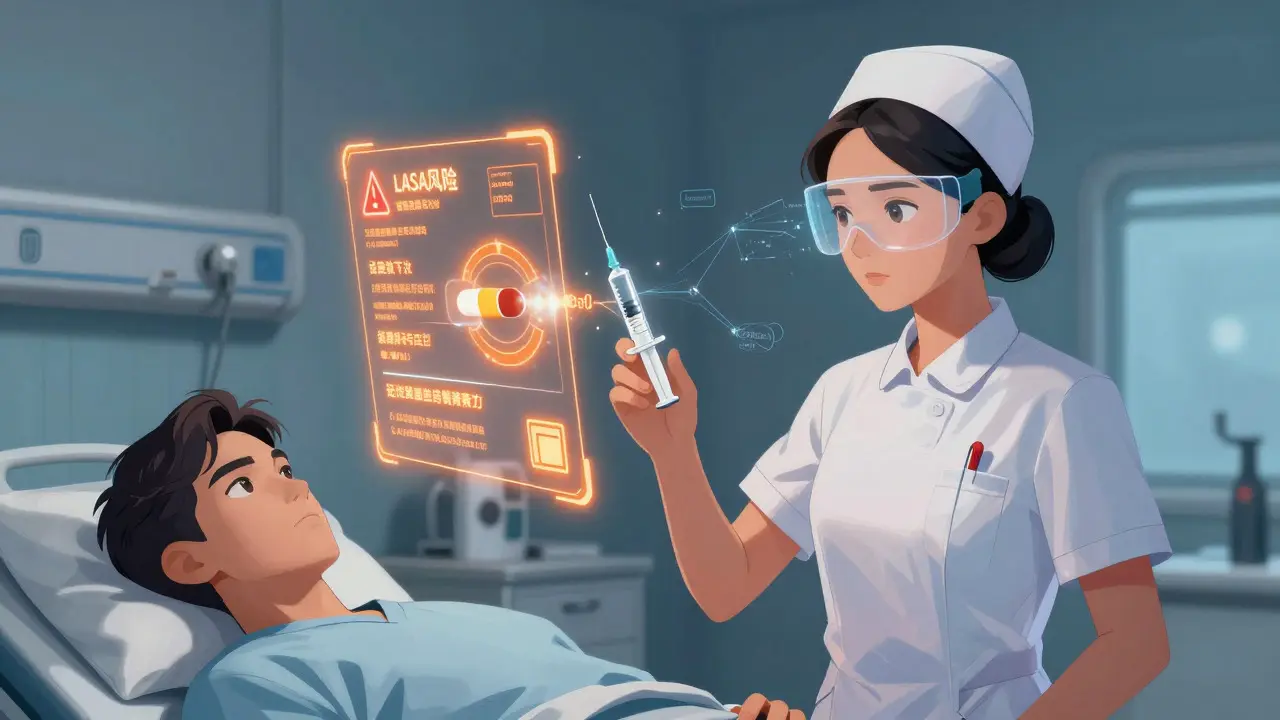
So, what can healthcare systems do? Blaming individuals doesn’t work. We need systemic solutions. Here are the most effective strategies currently being implemented:
- Personalized LASA Lists: The Joint Commission recommends that every hospital create its own LASA list based on its specific formulary. Don’t just copy a generic list from the internet. Update it annually. If your hospital doesn’t use Drug X, it shouldn’t be on your watch list.
- Clinical Decision Support (CDS): Modern EHR systems like Epic and Cerner now include LASA-specific alerts. Epic’s "SafeMed" module, for instance, reduced name-confusion errors by 28.7% in a 12-hospital study. These tools flag potential confusions at the point of prescribing.
- Movable Signage: Instead of permanent labels, use movable tags on pharmacy shelves to highlight LASA pairs. This keeps the warning visible even as inventory changes.
- Workforce Allocation: Staffing levels should match risk periods. High-workload transitions, like shift changes, need extra eyes. Reducing cognitive load during these times prevents oversight.
- Regulatory Prevention: The FDA denied 34 new drug name applications in 2022 specifically due to LASA concerns. We need stricter rules at the approval stage so confusing names never reach the market.
Healthcare systems that implement comprehensive LASA protocols have seen a 37.4% reduction in related errors. But implementation fidelity matters. Half-measures don’t cut it.
The Future of Medication Safety
We are moving toward a more tech-driven future. The Agency for Healthcare Research and Quality (AHRQ) is funding a $4.7 million study at Johns Hopkins testing AI-powered voice recognition systems. These systems aim to detect potential LASA confusions during verbal orders, with preliminary results showing 89.3% accuracy in identifying high-risk pairs.
Furthermore, the International Pharmaceutical Federation is advocating for universal design principles for medication naming and packaging to be adopted globally by 2030. Dr. Donald Berwick, a leading figure in healthcare quality, stated in a 2023 New England Journal of Medicine perspective that while LASA errors can never be fully eliminated, a systematic approach could reduce their incidence by 80% within a decade.
However, resource disparities remain a challenge. Only 38% of smaller U.S. hospitals have adopted comprehensive LASA protocols, compared to 72% of larger facilities. Ensuring that safety isn’t a luxury item for big hospitals is a critical next step.
What are some common examples of look-alike, sound-alike drug pairs?
Common high-risk pairs include HYDROmorphone and hYDROcodone (opioids), cisPLATIN and caraPLATIN (chemotherapy), vecuronium and versed (sedatives/paralytics), and simvastatin 10mg vs 20mg. The Institute for Safe Medication Practices (ISMP) maintains an updated list of these dangerous combinations.
How does Tall Man Lettering help prevent errors?
Tall Man Lettering uses capitalization to emphasize differences in drug names, such as writing DOXOrubicin instead of doxorubicin. This visual cue helps readers distinguish between similar-looking names, though studies show it is only marginally effective unless staff are trained to recognize its purpose.
Which stage of medication handling has the most LASA errors?
According to Merative data, 68% of LASA errors occur during the administration phase, typically by nurses at the bedside. Prescribing accounts for 24% of errors. This highlights the importance of double-checks and clear communication during patient care delivery.
Can technology completely eliminate LASA errors?
While technology like Clinical Decision Support (CDS) and AI voice recognition significantly reduces errors, complete elimination is unlikely. Human factors, fatigue, and system limitations mean that a multi-layered approach combining tech, training, and regulatory oversight is necessary.
Why are oncology departments at higher risk for LASA errors?
Oncology drugs often have complex, similar-sounding names and are high-alert hazardous medications. A 2022 AMA survey found that 92% of oncologists reported LASA near-misses, making it the specialty with the highest incidence of these errors.