
When someone is stuck in a low mood for weeks-no matter how hard they try to shake it off-they might be dealing with Major Depressive Disorder (MDD). It’s not just feeling sad. It’s losing interest in everything: hobbies, friends, even showering. The National Alliance on Mental Illness (NAMI) reports that about 15.5% of U.S. adults experience this every year. That’s one in six people. And it doesn’t care if you’re successful, young, or have everything going for you. MDD is real, treatable, and far more common than most people admit.
What Exactly Is Major Depressive Disorder?
MDD isn’t a one-time reaction to a bad day. It’s diagnosed when someone has a depressed mood or loss of interest in daily activities for at least two weeks, along with other symptoms like fatigue, trouble sleeping, feelings of worthlessness, or even thoughts of death. It can start after a loss, illness, or stress-but sometimes, it just shows up out of nowhere. First officially recognized in 1980 by the DSM, we now know it’s not caused by one thing. Genetics, brain chemistry, life events, and even inflammation all play a role. The good news? Treatment works. Studies show 70-80% of people see major improvement when they get the right care.
Psychotherapy: The Talk Therapy That Changes How You Think
Not all healing happens with pills. Psychotherapy, or talk therapy, is one of the most powerful tools we have. The most researched and recommended form is Cognitive Behavioral Therapy (CBT). It doesn’t just help you vent-it teaches you to spot the thoughts that trap you. Like, “I failed at this one thing, so I’m a total failure.” CBT helps you challenge those lies and replace them with something more realistic. You don’t just talk about your feelings-you do homework. You track your moods. You test out new behaviors. And over time, your brain rewires itself.
Another effective option is Interpersonal Therapy (IPT). This one focuses on your relationships. If you’re depressed because you’re isolated, stuck in a toxic relationship, or grieving a loss, IPT helps you rebuild those connections. It’s short-term, structured, and surprisingly effective-even for people who don’t like talking about their emotions.
For those who struggle with traditional therapy, Behavioral Activation is a simpler start. It’s not about changing your thoughts-it’s about changing your actions. You make a list of small, pleasant activities (a walk, calling a friend, listening to music) and do one every day, even if you don’t feel like it. The idea? Action comes before motivation. Movement breaks the cycle of inactivity that fuels depression.
And now, therapy isn’t just in a clinic. Computerized CBT (CCBT) lets you work through guided programs online, on your phone, or via DVD. It’s helpful for people in rural areas, those with mobility issues, or anyone who finds sitting in a therapist’s office intimidating. But it’s not magic. You still have to show up. Motivation matters. And it doesn’t replace human connection-it just expands access.
Antidepressants: What Works, What Doesn’t
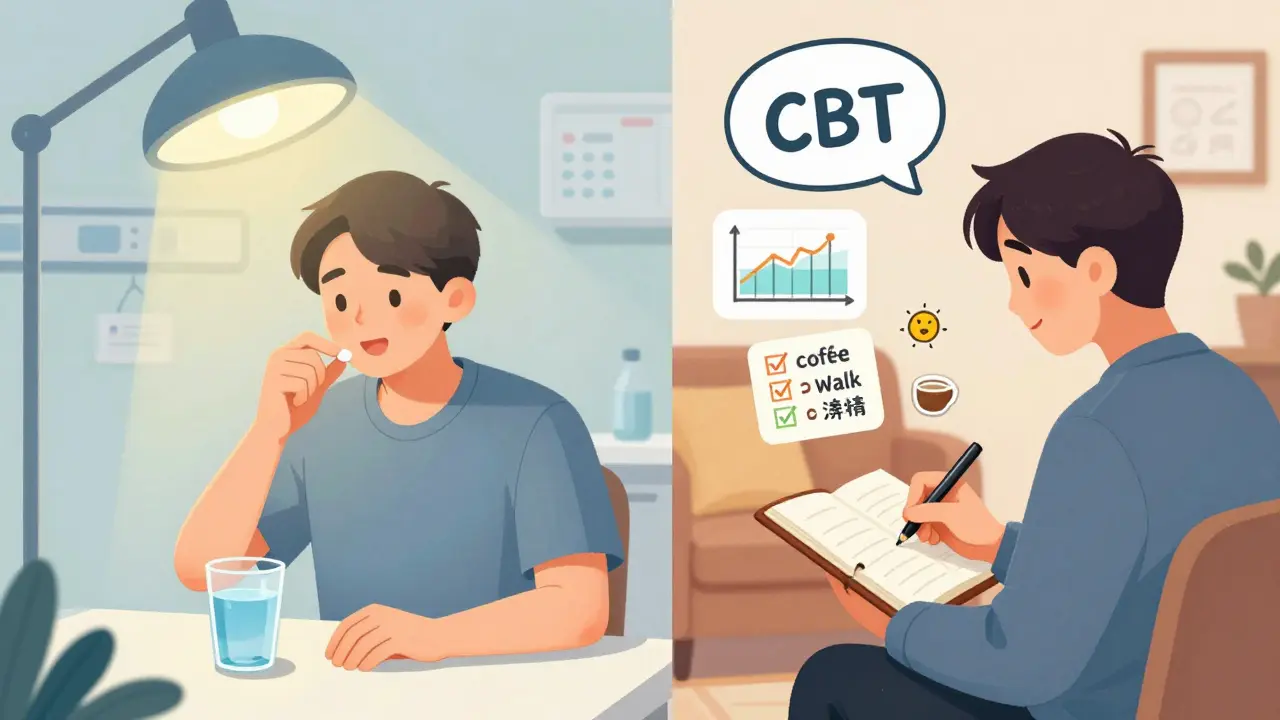
If your depression is moderate to severe, medication often makes sense. The first-line drugs today are second-generation antidepressants. That means fewer side effects than older pills, and better safety profiles. The most commonly prescribed are Selective Serotonin Reuptake Inhibitors (SSRIs), like sertraline, escitalopram, and fluoxetine. They’re gentle on the body, and doctors usually start here because they’re well-tolerated.
But not all SSRIs work the same for everyone. Research from the American Academy of Family Physicians (AAFP) shows that escitalopram, mirtazapine, paroxetine, venlafaxine, and amitriptyline have the strongest evidence for reducing symptoms by more than 50% within eight weeks. That doesn’t mean you’ll feel better right away. Most people notice small changes in energy or sleep within the first week or two. But full relief? That takes six to twelve weeks. Patience is part of the treatment.
Another class, Serotonin and Norepinephrine Reuptake Inhibitors (SNRIs) like venlafaxine and duloxetine, are often used when SSRIs don’t cut it-or when depression comes with physical pain. They’re especially helpful for people who feel emotionally numb, sluggish, or chronically tired.
Side effects? Yes, they exist. Nausea, weight gain, sexual problems, insomnia, or drowsiness are common at first. Most fade within a few weeks. If they don’t, your doctor can adjust the dose or switch you to another medication. It’s not a trial-and-error nightmare-it’s a science-backed process. You don’t have to suffer through bad side effects. There are options.
Combination Therapy: Why Together Works Better
Here’s the truth most people don’t hear: antidepressants and psychotherapy aren’t rivals. They’re teammates. Multiple studies, including one from Nature in 2025, confirm that using both together gives better results than either alone-especially for moderate to severe depression. The National Institute for Health and Care Excellence (NICE) recommends this combo for patients with a PHQ-9 score of 16 or higher.
Why? Because medication helps balance your brain chemistry, giving you the energy and emotional stability to engage in therapy. Therapy gives you tools to prevent relapse. Medication might get you out of the hole. Therapy teaches you how to stay out.
One person I spoke to-a teacher in Glasgow-said, “Prozac took the edge off. But CBT taught me why I kept spiraling. I still use those techniques three years later.” That’s the power of combining them.
What About Other Treatments?
When medication and therapy don’t work, there are still options. Electroconvulsive Therapy (ECT) is one of the most effective treatments for severe, treatment-resistant depression. It sounds scary, but it’s done under anesthesia, with muscle relaxants. You get a brief, controlled seizure. It’s not painful. It doesn’t cause brain damage. And for many who’ve tried everything else, it’s life-saving. The Cleveland Clinic reports that up to 80% of patients with severe depression see major improvement after a full course.
There’s also Behavioral Couples Therapy-if your depression is tied to relationship stress. This involves 15-20 sessions over several months, with both partners. It’s not about fixing your partner. It’s about learning how to communicate, support each other, and break patterns that feed the depression.
And while apps and digital tools are growing, they’re not replacements. The Mayo Clinic warns: “They’re helpful supplements, not substitutes.” Don’t skip seeing a doctor because you downloaded a mood tracker.
Choosing the Right Path for You
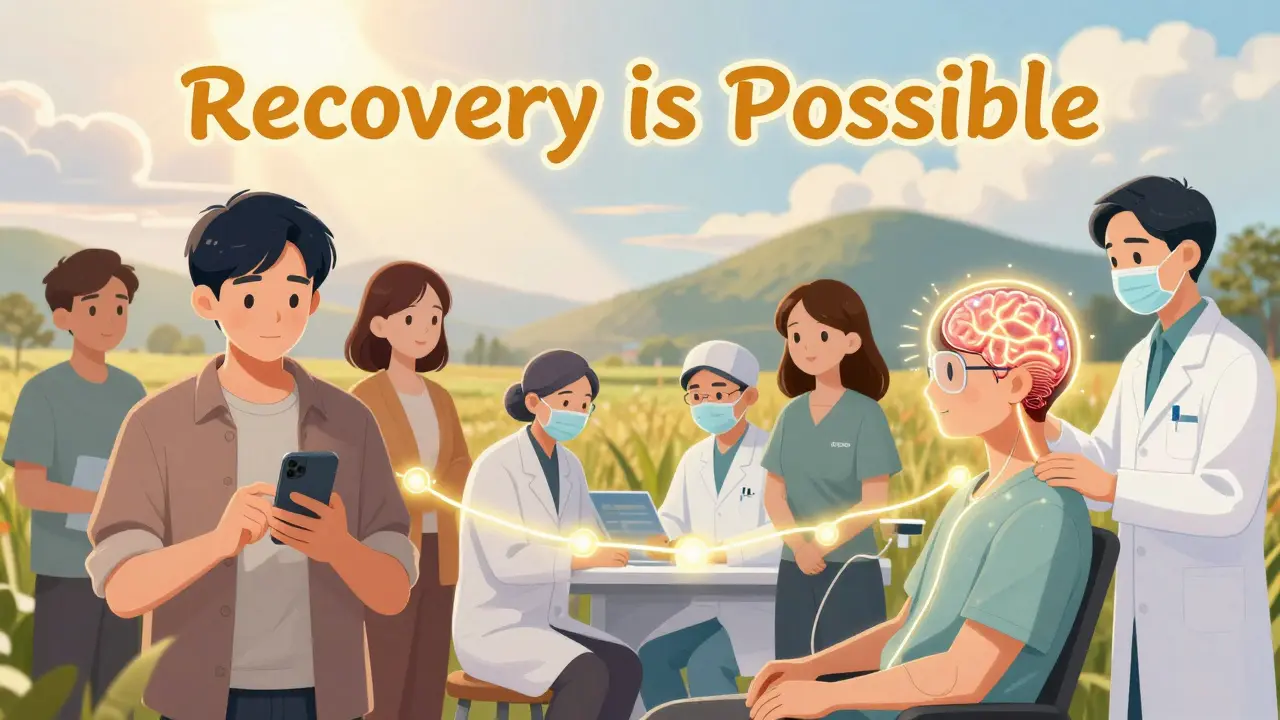
There’s no one-size-fits-all. For mild depression, therapy alone or even active monitoring (regular check-ins with your GP) might be enough. For moderate to severe, combine medication and CBT. For those who can’t afford therapy or wait months for an appointment, CCBT or medication might be the only realistic first step.
Factors that matter:
- How bad are your symptoms?
- Have you tried medication before? Did it help or hurt?
- Do you have the mental energy to do therapy homework?
- Can you access a therapist? Or is telehealth your only option?
- Do you have other health issues? (Like heart disease or chronic pain?)
And don’t forget: your voice matters. If a pill makes you feel emotionally flat, say so. If therapy feels pointless because you’re too tired to talk, tell your provider. Treatment isn’t a checklist-it’s a conversation.
Barriers to Care and What You Can Do
Let’s be honest: getting help isn’t easy. Waiting lists for NHS talking therapies can be months long. Rural areas have fewer therapists. Insurance might not cover everything. And stigma? Still real.
But options are expanding. Telehealth is now standard. Many employers cover mental health (83% of large companies in the U.S., according to SAMHSA). You can self-refer to online CCBT programs in the UK through the NHS. And if cost is a barrier, ask about sliding-scale clinics or university training programs where therapists are supervised and fees are lower.
And if you’re stuck? Call the NAMI HelpLine: 800-950-6264, text “NAMI” to 62640, or dial 988. It’s free, confidential, and available 24/7. You don’t have to figure this out alone.
What’s Next?
The future of depression treatment is personal. Researchers are testing genetic tests to predict which drugs work best for which people. We’re building AI tools to predict who will respond to therapy versus medication. But right now, the best tool you have is knowledge. Know your options. Know your symptoms. Know that recovery isn’t linear. Some days will feel like setbacks. That’s normal. What matters is that you keep going.
Depression doesn’t have to be a life sentence. With the right combination of support, science, and persistence, most people don’t just survive-they rebuild.
Can antidepressants cure depression permanently?
No, antidepressants don’t cure depression permanently. They help manage symptoms while you work on underlying causes through therapy or lifestyle changes. Most people take them for 6 to 12 months after feeling better, then taper off under medical supervision. Stopping too soon increases the risk of relapse. Long-term recovery comes from learning coping skills-not just chemical balance.
How long does it take for therapy to work?
Most people start noticing small improvements in 4 to 8 weeks of weekly therapy sessions. Full benefits usually take 12 to 20 sessions. CBT, for example, is designed as a short-term treatment-typically 12 to 16 weeks. It’s not about talking forever; it’s about learning tools you can use for life. Consistency matters more than speed.
Are SSRIs addictive?
SSRIs are not addictive. They don’t create cravings or euphoria like drugs of abuse. But your body can become used to them. Stopping suddenly can cause withdrawal symptoms-dizziness, nausea, brain zaps. That’s why you always taper off slowly under a doctor’s guidance. It’s not addiction. It’s physiology.
What if I can’t afford therapy or medication?
You’re not alone. Many clinics offer sliding-scale fees based on income. In the UK, NHS talking therapies are free. In the U.S., community health centers and university training clinics often provide low-cost care. Online CCBT programs like those from the NHS or SilverCloud are free or low-cost. Medication can be cheaper with generic versions or prescription discount cards. Don’t let cost stop you-ask for help.
Can I just use apps or online programs instead of seeing a therapist?
Digital tools can help, especially if you’re waiting for therapy or can’t access it. But they’re not replacements. Apps won’t challenge your thinking like a trained therapist. They won’t adapt to your unique struggles. The Mayo Clinic says they’re useful supplements-not substitutes. If your depression is moderate or severe, seeing a professional is still the gold standard.
Is ECT dangerous or does it cause memory loss?
ECT is safe when done correctly. Modern ECT uses anesthesia, muscle relaxants, and precise electrical pulses. Temporary memory loss around the time of treatment is common, but most people regain their memories within weeks or months. Serious, lasting memory damage is rare. For people with life-threatening depression who haven’t responded to anything else, ECT is often the only option that works. The benefits usually far outweigh the risks.
Adam M
March 11, 2026 AT 19:15Rosemary Chude-Sokei
March 12, 2026 AT 07:33Noluthando Devour Mamabolo
March 14, 2026 AT 04:46Aaron Leib
March 16, 2026 AT 03:32Dylan Patrick
March 16, 2026 AT 09:12Kathy Leslie
March 17, 2026 AT 13:18Amisha Patel
March 18, 2026 AT 09:57Elsa Rodriguez
March 19, 2026 AT 00:12