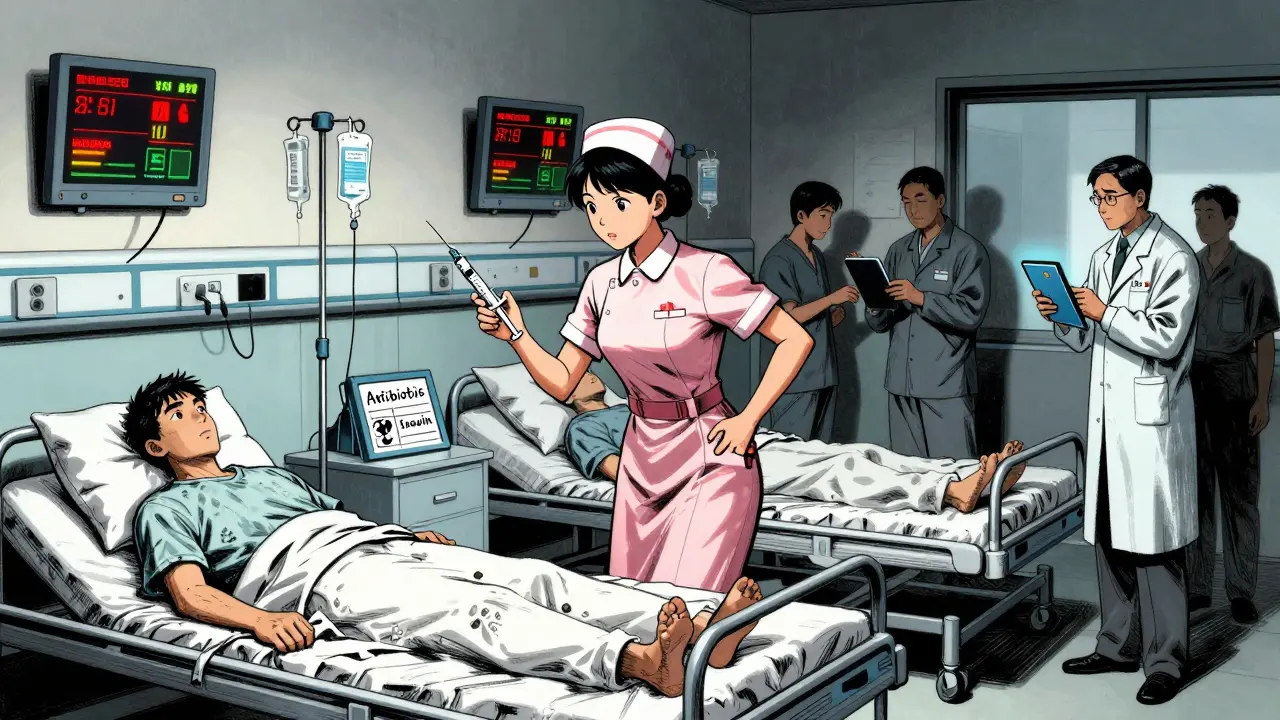
Every year, millions of people in the U.S. get the wrong medicine, the wrong dose, or wrong instructions - not because they asked for it, but because a system failed them. It doesn’t matter if the error happened in a hospital or your local pharmacy. What matters is that one mistake can land you in the ER, send you back to the hospital, or even cost you your life.
How Often Do Medication Errors Happen?
In hospitals, errors are everywhere. One 2006 study found that nearly 1 in 5 doses given to patients contained some kind of mistake - wrong drug, wrong time, wrong amount. Nurses were giving insulin when they meant to give antibiotics. Patients got double doses because someone misread a handwritten order. These aren’t rare cases. In a busy hospital, it’s normal for staff to handle hundreds of doses a day. Mistakes happen fast, and they pile up. But here’s the twist: hospitals have layers of checks. A pharmacist dispenses the medicine. A nurse double-checks it. The patient gets it. If something looks off, someone usually catches it before it causes harm. That’s why, even though errors are common, fewer actually hurt patients. Now look at retail pharmacies. The numbers look better at first glance. Studies show only about 1.5% of prescriptions have a dispensing error. That sounds low - until you realize how many prescriptions are filled every year. In 2023, U.S. pharmacies filled over 3 billion prescriptions. That means roughly 45 million errors slipped through. One error per 10,000 prescriptions might sound tiny, but multiply that across the country, and it’s a public health crisis. The real danger? In a pharmacy, there’s no one between you and the error. The pharmacist fills the bottle. You walk out. No nurse checks it. No doctor reviews it. You’re on your own.What Kind of Errors Happen Where?
In hospitals, the big problems are timing and dosage. A patient gets a drug too early. Or too late. Or ten times the right amount. These mistakes often come from messy handwriting, confusing abbreviations, or staff rushing between ten different patients. The system is overloaded, and people are tired. In retail pharmacies, the most common errors are simpler - but just as deadly. The wrong drug. The wrong dose. The wrong instructions. One case from the AHRQ reports a patient was told to take one pill twice a day - when the doctor had written twice a week. The patient took it daily for weeks. She ended up in the hospital with dangerously high estrogen levels. Another frequent retail error? Confusing similar-looking drugs. Metoprolol and methylphenidate. Levothyroxine and liothyronine. They look alike on paper. One wrong keystroke in the computer system, and you’re giving a heart patient a stimulant. Or a thyroid patient a drug meant for ADHD. Hospitals see more complex errors because patients are sicker. Retail pharmacies see more basic errors because the system is built for speed, not safety. A pharmacy tech might fill 250 prescriptions in a single shift. That’s one every 2 minutes. No one can stay sharp that long.Why Do These Errors Happen?
In hospitals, the root causes are teamwork breakdowns. Doctors don’t communicate clearly with pharmacists. Nurses are understaffed. Electronic systems don’t talk to each other. A doctor prescribes a drug in one system. The pharmacist pulls it from another. The nurse administers it from a third. No one sees the full picture. In retail pharmacies, the problem is human overload - and bad tech. Most errors come from cognitive mistakes: a pharmacist sees a common drug name and assumes the dose is standard. They don’t double-check. They’re tired. The computer system doesn’t warn them. The label printer glitches. The patient’s name is misspelled. The pill bottle says “take once daily” but the label says “take twice.” A 2023 AHRQ report found that 80% of community pharmacy errors are tied to how the workplace is set up - not because the pharmacist is careless. Long hours. Poor lighting. Distractions. Pressure to fill prescriptions faster. Automated dispensing machines that misread labels. These aren’t human failures. They’re system failures.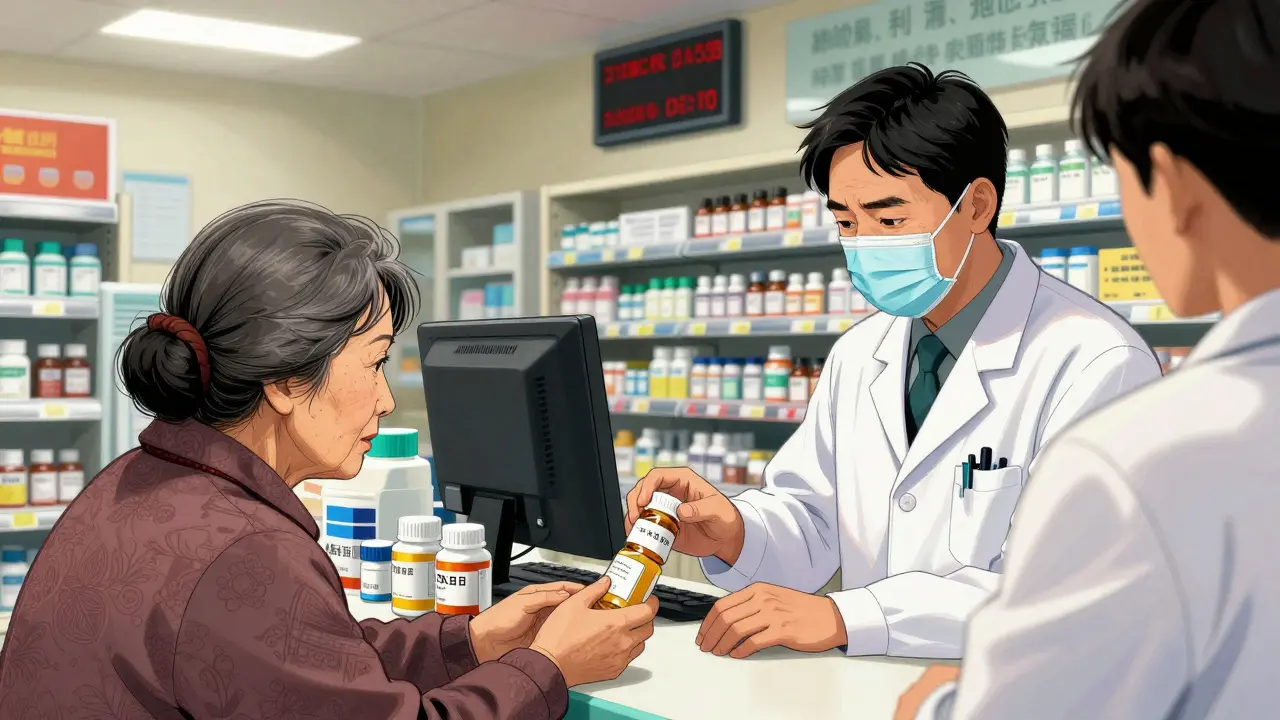
Who Gets Hurt - and How Badly?
Hospital errors can be catastrophic. A cancer patient gets the wrong chemo drug. A heart patient gets a drug that stops their heartbeat. But because hospitals monitor patients closely, many of these errors are caught before they cause lasting damage. Still, the CDC estimates that 3.5 billion in extra medical costs come from drug-related injuries in hospitals alone. Retail pharmacy errors are quieter. They don’t always show up right away. A diabetic gets too much insulin. They feel dizzy, but they think it’s just stress. They go to work. They drive. They pass out at the wheel. Then they end up in the ER - and now it’s an emergency. The NIH found that even though only one in 10,000 prescriptions has a serious error in a pharmacy, some of those lead to hospitalization. In one case, an elderly woman took the wrong blood thinner for weeks. She developed internal bleeding. She needed a blood transfusion. That wasn’t a rare accident. It was a preventable mistake. The truth? Retail pharmacy errors are less frequent, but more likely to reach the patient without anyone noticing. Hospital errors are more frequent - but less likely to hurt you, because someone usually stops them.How Are Errors Reported - and Why It Matters
Hospitals have reporting systems built in. Every time a nurse catches a mistake, it’s logged. Every time a pharmacist spots a wrong dose, it’s recorded. Hospitals track these numbers. They use them to train staff. They fix broken processes. Some big hospitals report 100 medication errors per month - not because they’re dangerous, but because they’re honest. Retail pharmacies? Not so much. For years, most didn’t report errors at all. There was no system. No requirement. Fear of punishment kept pharmacists quiet. If you made a mistake, you fixed it quietly and hoped no one noticed. That’s changing. California now requires pharmacies to log all errors. Other states are following. The FDA gets over 100,000 error reports a year - but experts say that’s less than 10% of what’s actually happening. Most errors never get reported. This matters because if you don’t measure a problem, you can’t fix it. Hospitals know where their weaknesses are. Retail pharmacies? Many still fly blind.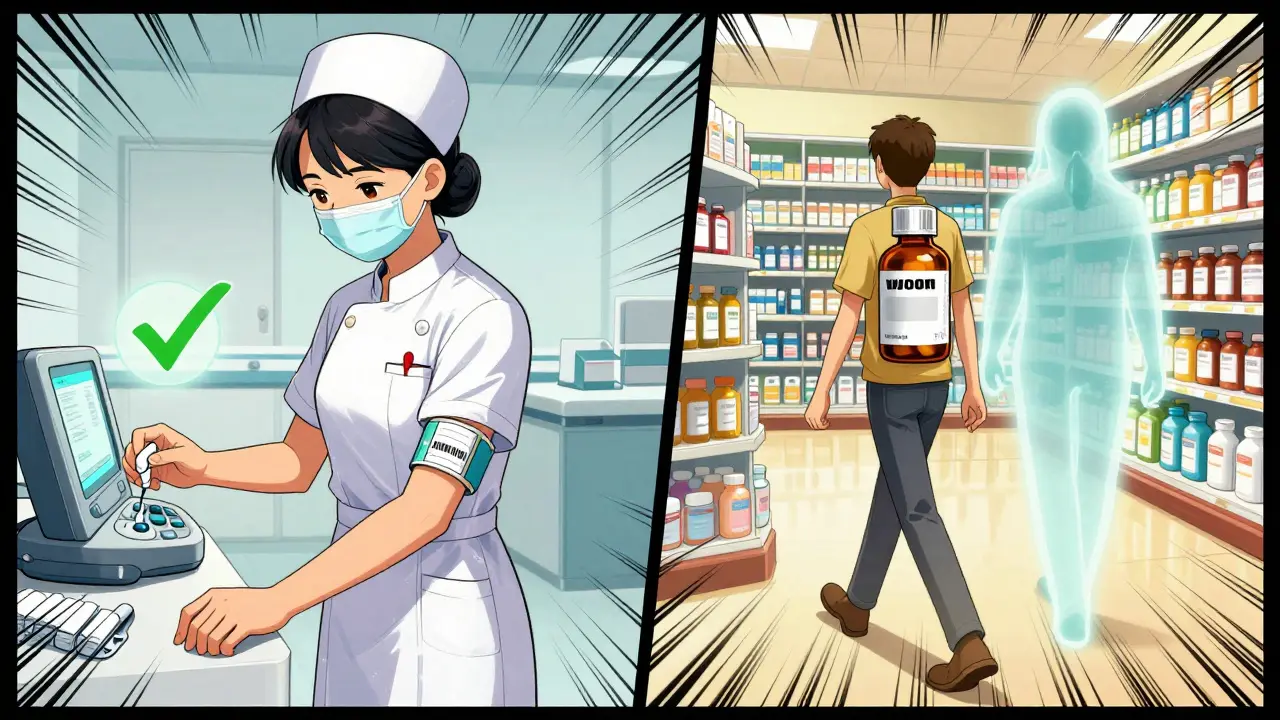
What’s Being Done to Fix This?
In hospitals, barcode scanning has cut errors by up to 86%. Before giving a drug, a nurse scans the patient’s wristband and the medication. If it doesn’t match, the system stops them. It’s simple. It works. CVS Health started using AI to check prescriptions in 2022. The software looks for mismatched doses, wrong drugs, and dangerous interactions. Their internal audit showed a 37% drop in dispensing errors in just one year. Mayo Clinic connected their electronic health records directly to their pharmacy system. When a doctor writes a prescription, it goes straight to the pharmacy - no typing, no copying, no misreading. They cut hospital errors by 52%. In retail pharmacies, Clinical Decision Support Systems (CDSS) are starting to appear. These tools flag dangerous prescriptions before they’re filled. If a doctor prescribes 100mg of a drug that should be 10mg, the system says: “Wait. This is 10 times the maximum.” The CDC and AHRQ now push for standardized error reporting across all pharmacies. That means every pharmacy - whether it’s in a hospital or a strip mall - reports errors the same way. That’s the only way we’ll know where the biggest problems are.What You Can Do to Protect Yourself
You don’t have to wait for the system to fix itself. You can protect yourself right now:- Always ask: “Is this the right medicine for me?”
- Check the label. Does it match what your doctor told you?
- Compare the pill to the last bottle you had. Is the color, shape, or size different?
- If you’re on a new drug, ask: “What side effects should I watch for?”
- If you’re in the hospital, ask the nurse: “What is this medicine for? Why am I getting it?”
Josh Kenna
January 20, 2026 AT 06:20Man, I had a friend who got the wrong blood thinner because the label printer glitched. She didn’t notice until she started bruising like a grape. Took three months to recover. This isn’t just about tech-it’s about how we treat people in the system. We treat pharmacies like factories, not care centers.
Malikah Rajap
January 22, 2026 AT 04:17It’s funny-hospitals have all these checks, but you still get the wrong drug because someone misread ‘BID’ as ‘TID’... and then you wonder why we’re all so anxious? We’ve outsourced our health to overworked humans in fluorescent-lit rooms. Maybe we need to stop pretending systems can fix what culture broke.
Erwin Kodiat
January 23, 2026 AT 20:30My grandma’s pharmacy in Ohio just got a new AI checker last year. She says she finally feels safe again. No more ‘oh, that’s just how it’s always been’ vibes. Small wins, y’know? Progress isn’t sexy-but it’s real.
Christi Steinbeck
January 25, 2026 AT 11:37STOP WAITING FOR THE SYSTEM TO SAVE YOU. Ask. Every. Single. Time. I used to be passive too-until my sister nearly died because she didn’t question the color of her new pills. Now I carry a checklist in my wallet. You think it’s awkward? Try being dead.
Jacob Hill
January 26, 2026 AT 15:29Barcodes in hospitals? Genius. Why aren’t pharmacies using them? It’s not that hard. CVS has them in some locations-why not all? We know it works. We’re just choosing not to scale it. That’s not negligence-it’s profit prioritization.
Lewis Yeaple
January 27, 2026 AT 04:54It is imperative to note that the statistical prevalence of dispensing errors in retail pharmacies is not indicative of systemic efficacy, but rather a reflection of the mathematical scaling of volume. One must distinguish between incidence rate and absolute harm. The CDC’s figures, while alarming, are not causally equivalent to hospital error mortality rates, which are more acute but mitigated by clinical surveillance.
Jackson Doughart
January 27, 2026 AT 17:09I’ve worked in both settings. The hospital errors? They’re loud. Someone yells, ‘Wait-that’s not her med!’ The pharmacy errors? Silent. A woman walks out with a bottle of lithium thinking it’s her antidepressant. No one knows until she’s shaking in the ER. We don’t talk about that enough.
sujit paul
January 28, 2026 AT 23:54Of course the system fails. The pharmaceutical-industrial complex has always designed this chaos. They profit from mistakes-repeated visits, ER trips, lifelong dependency. The AI? Just another marketing gimmick. They want you to believe tech will fix what they created. Wake up.
Tracy Howard
January 29, 2026 AT 03:46Canada doesn’t have this problem. Our pharmacists are licensed professionals, not order-filling robots. We don’t let corporations turn medicine into a fast-food drive-thru. Maybe if the U.S. stopped treating healthcare like Amazon Prime, people wouldn’t die because someone typed ‘Metoprolol’ instead of ‘Methylphenidate’.
Josh Kenna
January 29, 2026 AT 15:47Wait-so you’re saying Canada’s system works better? That’s not a surprise. They pay their pharmacists enough to actually look at the damn script. Here, they’re paid per script filled. No wonder people get the wrong drug. It’s not about tech-it’s about incentives. Fix the pay, fix the problem.