
It is nearly 10 PM. You are exhausted, your eyes feel heavy, but the moment your head hits the pillow, your mind races. You have tried counting sheep, drinking chamomile tea, and even turning off your phone an hour early. Nothing works. So, you reach for that small bottle of Melatonin, a popular over-the-counter supplement marketed as the ultimate natural sleep aid. But does it actually work? And if so, why do some people swear by it while others find it completely useless?
The truth is, melatonin is not a sedative in the traditional sense. It is not a hammer that knocks you unconscious like prescription sleeping pills. Instead, it is more like a gentle nudge-a signal to your body that says, "Hey, it's dark out. Time to wind down." Understanding this distinction is the key to using melatonin effectively. If you treat it like a tranquilizer, you will likely be disappointed. But if you use it as a tool to reset your internal clock, it can be a game-changer for specific sleep issues.
What Is Melatonin and How Does It Work?
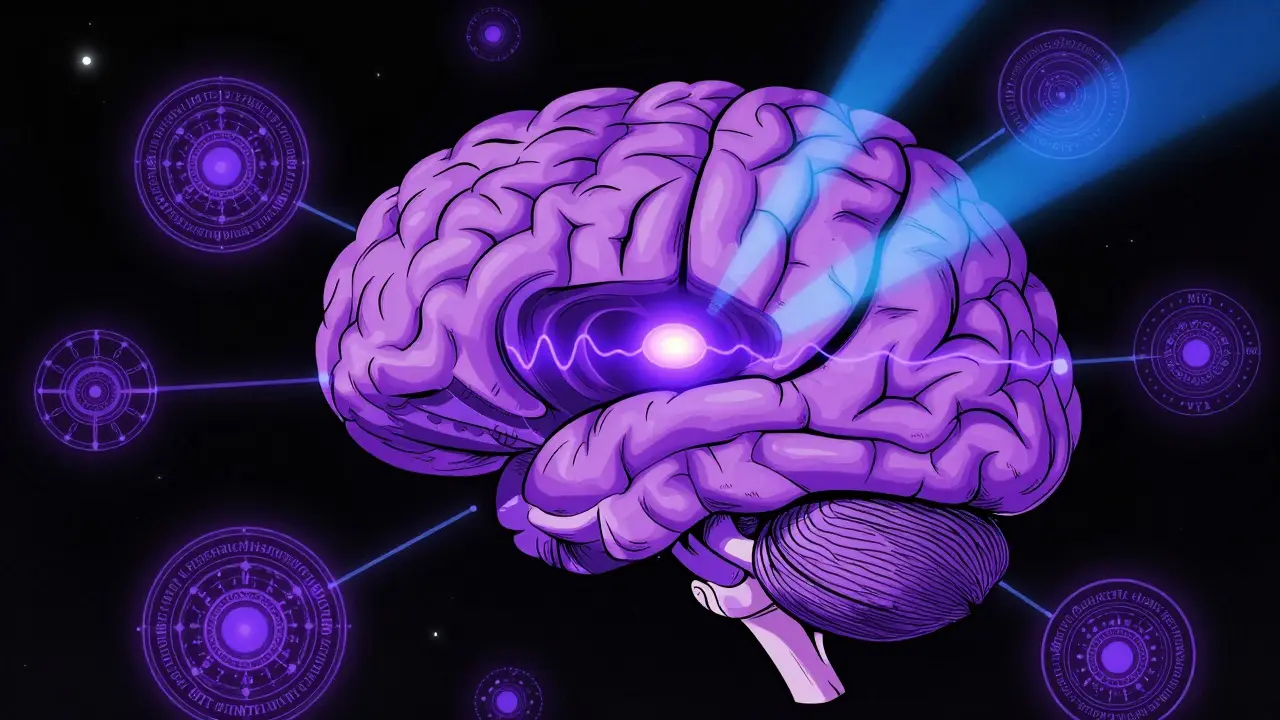
To understand how melatonin helps you sleep, we first need to look at where it comes from. Your body produces melatonin naturally. It is a neurohormone synthesized from the amino acid tryptophan. The primary factory for this hormone is the pineal gland, a tiny endocrine structure located deep within your brain's epithalamus.
Your pineal gland acts like a biological light meter. When it gets dark, the gland starts pumping out melatonin into your bloodstream. Levels typically begin to rise sharply between 9 PM and 10 PM, peak between 2 AM and 4 AM, and then drop off before morning light exposure. In healthy adults, these peak concentrations range from 50 to 150 picograms per milliliter (pg/mL). This surge tells your body’s master clock-the suprachiasmatic nucleus (SCN) in the hypothalamus-that it is nighttime.
Here is the catch: light kills melatonin production. Specifically, blue light wavelengths (around 460-480 nm) emitted by smartphones, tablets, and LED screens suppress the hormone almost instantly. This is why scrolling through social media in bed keeps you awake. You are literally blocking your body’s natural sleep signal. When you take a melatonin supplement, you are bypassing this blockage, artificially raising levels to mimic darkness.
The Science Behind the Receptors
Melatonin doesn't just float around randomly; it binds to specific receptors in your brain. There are two main types: MT1 receptors and MT2 receptors. Both are concentrated in the SCN, which regulates your circadian rhythms.
- MT1 Receptors: When melatonin binds here, it slows down neuronal firing in the SCN. It does this by inhibiting adenylate cyclase, which reduces cyclic adenosine monophosphate (cAMP) formation. The result? A feeling of drowsiness and a slight drop in core body temperature (about 0.3-0.5°C), preparing you for sleep.
- MT2 Receptors: These are responsible for shifting your circadian rhythm. Activating MT2 receptors helps reset your internal clock. This is crucial for conditions like jet lag or delayed sleep phase syndrome. Evening doses advance your clock (making you sleepy earlier), while morning doses delay it.
This dual action explains why melatonin is unique. Unlike benzodiazepines or Z-drugs (like zolpidem/Ambien), which force sedation by enhancing GABA neurotransmission, melatonin works with your body’s natural timing system. This means fewer side effects like next-day grogginess, dependence, or withdrawal symptoms.
Is Melatonin Effective for Insomnia?
If you suffer from general insomnia-where you lie awake due to stress, anxiety, or racing thoughts-melatonin might not be the silver bullet you hope for. Meta-analyses published between 2005 and 2017 show that melatonin improves sleep onset latency (the time it takes to fall asleep) by an average of only 7.06 minutes compared to a placebo. While statistically significant, this is modest. Prescription sleep aids often reduce sleep onset time by 20-30 minutes.
However, melatonin shines when the problem is related to timing, not just inability to sleep. For people with Delayed Sleep Phase Syndrome (DSPS), melatonin is highly effective. Studies show it can advance sleep onset by approximately 40 minutes and shift endogenous melatonin secretion by about 1.2 hours. Similarly, for jet lag, especially eastward travel, melatonin helps resynchronize your body to the new time zone much faster than waiting it out.
| Feature | Melatonin | Z-Drugs (e.g., Ambien) |
|---|---|---|
| Mechanism | Circadian rhythm regulator | GABA-enhancing sedative |
| Sleep Onset Improvement | ~7 minutes | 20-30 minutes |
| Best For | Jet lag, DSPS, shift work | General insomnia, acute sleeplessness |
| Risk of Dependence | Low | Moderate to High |
| Next-Day Grogginess | Minimal (if dosed correctly) | Common |
Dosing Mistakes That Make It Fail
One of the biggest reasons people say melatonin "doesn't work" is that they are taking the wrong dose at the wrong time. In the United States, melatonin is sold as a dietary supplement, meaning it is not strictly regulated by the FDA for potency. ConsumerLab testing in 2022 found that actual melatonin content in supplements ranged from 83% to 478% of what was listed on the label. This variability makes precise dosing difficult.
More importantly, most people overdose. The physiological level of melatonin in your blood is very low-typically 0.1 to 0.3 mg. Yet, many store-bought capsules contain 5 mg or even 10 mg. Dr. Neil Stanley, a UK sleep expert, warns that doses exceeding 0.5 mg often provide no additional benefit while increasing the risk of side effects like vivid dreams, headaches, and next-day drowsiness.
Timing is equally critical. Taking melatonin too late (after 10 PM for most adults) can cause a phase delay, making you stay awake later instead of falling asleep sooner. For best results:
- Start Low: Begin with 0.3-0.5 mg.
- Time It Right: Take it 2-3 hours before your desired bedtime. This allows the hormone to peak when you want to sleep.
- Be Consistent: Use it daily for a few weeks to shift your rhythm, rather than sporadically.
Jet Lag and Shift Work: Where Melatonin Excels
If you travel across multiple time zones, melatonin is one of the most effective tools available. The American Academy of Sleep Medicine conditionally recommends melatonin for jet lag. Here is how to use it based on your direction of travel:
- Flying East (e.g., London to New York): You need to fall asleep earlier. Take melatonin at your new local bedtime upon arrival. Continue for 2-3 days. Some experts recommend starting this 2-3 days before travel to pre-shift your clock.
- Flying West (e.g., New York to London): You need to stay up later. Take melatonin at your old home bedtime upon arrival to help you sleep through the early morning hours until you adjust.
User experiences back this up. On Reddit’s r/sleep community, 67% of users reported positive effects for jet lag, particularly when traveling eastbound across three or more time zones. One user noted, "Melatonin saved my Europe trip-I took 1mg at local bedtime after flying east and adjusted in 2 days instead of 5."

Safety, Side Effects, and Long-Term Use
Melatonin is generally safe for short-term use. However, it is not without side effects. Common complaints include next-day drowsiness (reported by 28% of users), vivid dreams or nightmares (22%), and headache (15%). These side effects are more common at higher doses (>1 mg).
There is also concern about long-term use. Some users report diminished effectiveness after 4-8 weeks of continuous use, suggesting possible receptor desensitization. Currently, there is insufficient evidence to recommend melatonin for chronic insomnia. The American Academy of Sleep Medicine does not recommend it for general insomnia due to lack of robust data.
In the UK and EU, melatonin is classified as a prescription medication (e.g., Circadin, a 2mg prolonged-release formulation) for insomnia in patients over 55. This stricter regulation reflects a more cautious approach to its medical use compared to the US market.
Who Should Avoid Melatonin?
While safe for most, melatonin may not be suitable for everyone. Consult your doctor before use if you:
- Are pregnant or breastfeeding.
- Have autoimmune diseases (melatonin may stimulate immune activity).
- Take blood thinners, diabetes medications, or immunosuppressants (potential interactions).
- Have epilepsy (may lower seizure threshold).
How much melatonin should I take for better sleep?
Start with the lowest effective dose, typically 0.3 mg to 0.5 mg. Most studies suggest that doses above 1 mg offer little additional benefit and increase the risk of side effects like morning grogginess. Since supplement potency varies, consider splitting a 1 mg capsule if needed.
When is the best time to take melatonin?
For circadian rhythm adjustment, take melatonin 2-3 hours before your desired bedtime. This allows levels to peak when you want to sleep. Taking it right before bed may be less effective for shifting your clock and could lead to next-day drowsiness.
Does melatonin work for general insomnia?
Evidence is mixed. Melatonin is most effective for sleep-onset issues related to circadian misalignment, such as jet lag or delayed sleep phase syndrome. For general insomnia caused by stress or anxiety, it may only reduce sleep onset time by about 7 minutes, which is less effective than prescription options.
Can I take melatonin every night?
Short-term nightly use is generally safe. However, long-term safety data is limited. Some users experience reduced effectiveness after several weeks. It is best used as a temporary tool to reset your sleep schedule rather than a permanent nightly crutch.
Why does melatonin make me feel weird the next day?
Next-day grogginess, vivid dreams, or headaches are common side effects, especially at higher doses (above 1 mg). This happens because high doses can linger in your system longer than your body needs. Lowering the dose to 0.3-0.5 mg and taking it earlier in the evening can mitigate these effects.