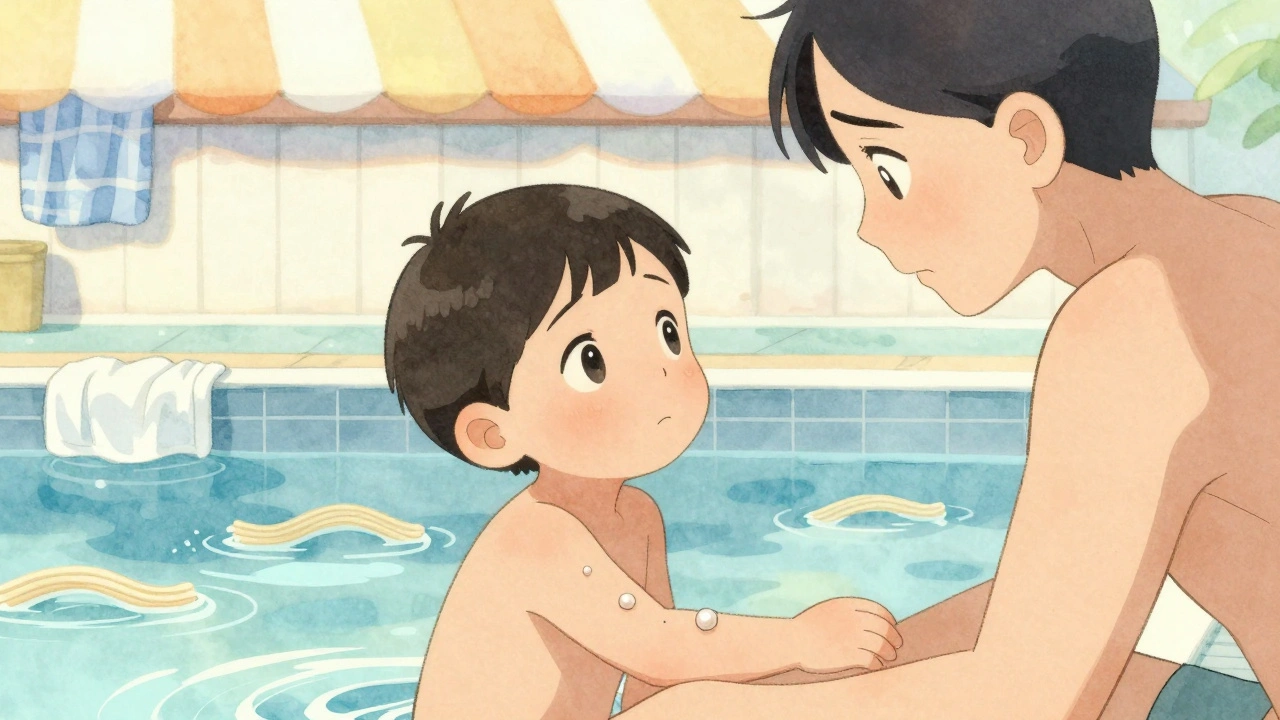
Imagine your child comes home from swimming class with a few tiny, pearly bumps on their arm. You panic. Are they contagious? Will they scar? Do you need to rush to the doctor? You’re not alone. Molluscum contagiosum is one of the most common viral skin infections in kids - and just as common in adults who catch it through close contact. The good news? It’s almost always harmless. The bad news? It’s sticky, it spreads fast, and most treatments don’t work as well as people think.
What Molluscum Contagiosum Actually Looks Like
Molluscum contagiosum isn’t a rash. It’s not a pimple. It’s a cluster of small, firm, dome-shaped bumps, usually 2 to 6 millimeters wide - about the size of a pencil eraser. The key sign? A tiny dimple or dot right in the center. That’s called an umbilication, and it’s what sets it apart from warts, chickenpox, or even insect bites. These bumps can be white, pink, or skin-colored. They often show up in clusters, especially where skin rubs together - armpits, groin, behind the knees, or on the face. In adults, they’re most common on the genitals, inner thighs, or lower abdomen, usually from sexual contact. In kids, they’re everywhere: arms, legs, face, even around the mouth. Unlike warts, which are rough and hard, molluscum bumps are smooth and soft. They don’t hurt. They don’t itch - at first. But if your child scratches them, they can become red, swollen, and infected. That’s when the real problem starts.How It Spreads - And Why It’s So Hard to Stop
The virus that causes molluscum is called MCV. It’s part of the poxvirus family, same as smallpox, but way less scary. It spreads easily through direct skin contact. A hug. A handshake. Sharing a towel. Even swimming in a pool with someone who has it. Here’s what most people don’t realize: the virus can live on surfaces for days. Towels, toys, pool noodles, bath sponges - all can carry it. Kids with eczema are 30% more likely to get it, because their skin barrier is already damaged. And once one bump appears, scratching can spread it to other parts of the body. Studies show scratching can triple the number of lesions in just weeks. In households, transmission rates hit 60-70%. If one child has it, there’s a high chance their sibling will too. Adults who get it through sex often have only a few bumps - but they can linger for months. And in people with weakened immune systems - like those with HIV or undergoing chemotherapy - molluscum can explode into hundreds of large, stubborn bumps that don’t go away for years.It Usually Goes Away On Its Own - Here’s Why That’s Okay
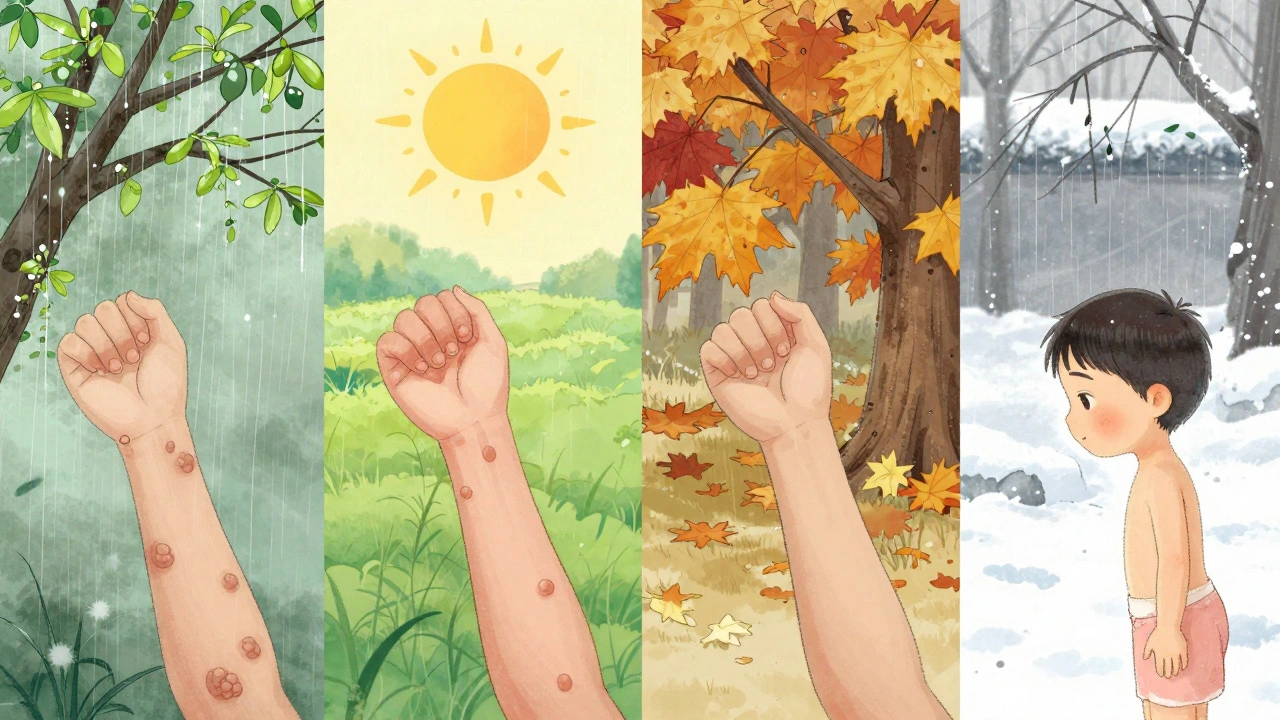
The biggest myth about molluscum? You need to treat it. You don’t. Not unless you want to. In healthy kids and adults, molluscum clears on its own. Most cases vanish within 6 to 12 months. Nearly 92% disappear completely within 18 months, with no scarring. That’s the data from the University of California San Francisco. The American Academy of Dermatology says: observation is the preferred treatment for most people. Why? Because the treatments often cause more harm than good. Cryotherapy (freezing with liquid nitrogen) burns the skin. Cantharidin (a blistering agent) stings like hell. Topical acids can irritate sensitive skin. And in kids, especially on the face, these treatments can leave marks that last longer than the bumps ever did. Doctors in the UK and Europe mostly just watch and wait. In the U.S., more parents push for treatment because of cosmetic worries - but that’s not always the right call. A 2021 study found 45% of kids with visible facial molluscum felt embarrassed or got teased at school. That’s real. But forcing a child to sit through painful procedures for bumps that will vanish anyway? That’s emotional damage too.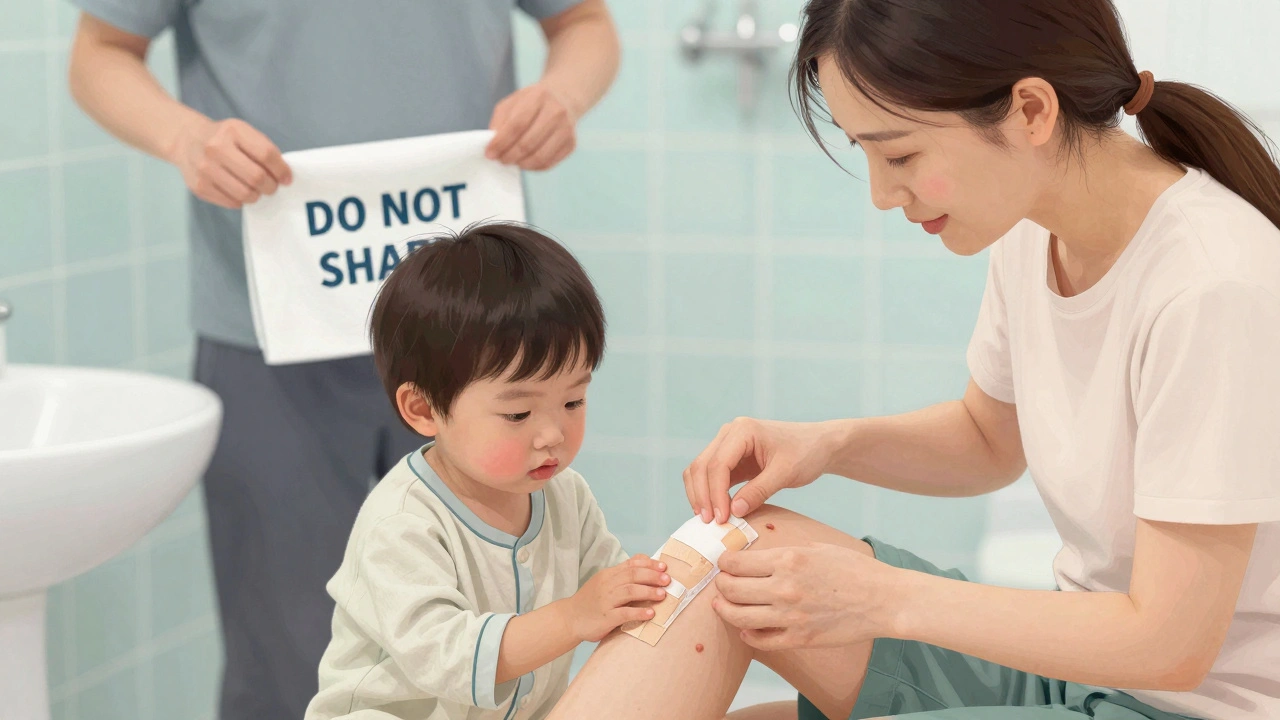
When Treatment Actually Makes Sense
There are times when treating molluscum isn’t just helpful - it’s necessary. First, if the bumps are in the genital area and you’re sexually active. Even if they’re not painful, they can spread to partners. Second, if your child has eczema and the molluscum is making it worse. Studies show the itching and inflammation feed each other - treating one helps the other. Third, if your child is immunocompromised. In those cases, molluscum doesn’t go away. It grows. It spreads. It becomes a medical issue. That’s when you need a dermatologist, not a home remedy. And fourth - if it’s causing real distress. If your 10-year-old won’t go to school because kids are pointing at her face, or if you’re avoiding intimacy because of genital bumps - then treatment is about quality of life, not just infection control.What Actually Works - And What’s a Waste of Money
Let’s cut through the noise. Here’s what the science says about treatments:- Cantharidin: Applied by a doctor, this blistering agent clears about 73% of cases in 12 weeks. It’s the most effective topical option - but it hurts. And you need a trained provider to use it safely.
- Potassium hydroxide (5-10%): Available in over-the-counter creams like MolluDab. Reviews are mixed, but 63% of users on Amazon report clearing bumps in 6-8 weeks. It’s cheap, easy, and less painful than freezing. Works best on small clusters.
- Cryotherapy: Freezing with liquid nitrogen. Effective, but painful. Scarring risk is high on the face or in kids. Only use if other options fail.
- Immunomodulators: New drugs like imiquimod or topical cidofovir are being tested. One phase 2 trial showed 82% clearance in 12 weeks - but it’s not widely available yet.
- Home remedies: Tea tree oil, apple cider vinegar, duct tape - no solid proof they work. Some people swear by them, but they’re not backed by clinical trials. And they can irritate skin.
How to Stop It From Spreading - Simple Rules That Work
You don’t need to quarantine your child. You don’t need to cancel swimming lessons. But you do need to follow a few basic rules:- Don’t share towels, clothes, or bath toys. CDC studies show this cuts household spread by 57%.
- Cover bumps with waterproof bandages during swimming. Many pools require this now - and for good reason.
- Keep nails short and discourage scratching. This is the #1 reason bumps multiply. Use mittens on toddlers if needed.
- Wash hands after touching bumps. Simple, but critical.
- Don’t shave over bumps. In adults, this can spread the virus to the beard or pubic area.
alaa ismail
December 3, 2025 AT 12:18Been there with my kid. Bumps showed up after swim class. Did nothing. Three months later, poof. Gone. No scars, no drama. Seriously, let it ride.
Stop panicking. It’s not a crisis. Just a weird little virus that’s way more common than people think.
ruiqing Jane
December 3, 2025 AT 14:56I appreciate how grounded this post is. Too many parents rush to ‘fix’ molluscum because they fear social stigma - not because it’s medically urgent.
Science backs observation. Empathy backs patience. And kids? They don’t care about the bumps. It’s the adults who turn them into a crisis.
Thank you for citing the CDC guidelines. This should be standard reading in pediatric waiting rooms.
Carolyn Woodard
December 5, 2025 AT 04:59The epistemological framework here is fascinating - the tension between biomedical interventionism and natural resolution trajectories.
When we pathologize transient, benign dermatological phenomena, we reinforce a medical-industrial complex that privileges action over observation.
Moreover, the psychosocial burden of ‘treatment’ - particularly in pediatric populations - often exceeds the physiological impact of the condition itself.
It’s not just about viral clearance. It’s about cultural narratives around bodily imperfection, parental anxiety, and the commodification of health.
Perhaps the most radical act is not treating at all.
Allan maniero
December 5, 2025 AT 07:41Interesting read. I’m from the UK and honestly, we barely even mention molluscum in GP surgeries unless it’s spreading like wildfire or the kid’s immunocompromised.
My niece had it for 14 months - never treated it. Just kept her nails trimmed, didn’t let her share towels, and that was it.
By the time she started school, it was all gone. No one even noticed. The fear is always worse than the reality.
And yeah, those cryo treatments? Horrifying for kids. I’ve seen the blisters. I’d rather wait.
Also, the part about eczema and scratching? Spot on. That’s the real trigger - not the virus itself, but the damage from scratching.
Anthony Breakspear
December 6, 2025 AT 08:15Let me tell you - I used to be the guy who Googled ‘how to burn off molluscum with apple cider vinegar’ at 2 a.m.
Turns out, my kid’s bumps were just vibin’ and didn’t need my overeager parenting.
Once I stopped treating it like a war and started treating it like a cold - same energy, same timeline - everything chillaxed.
Also, the ‘don’t shave over bumps’ tip? Gold. Learned that the hard way. Now I just slap on a band-aid and call it a day.
And yeah, that Molluscum Manager app? Downloaded it. Best 0.99 I ever spent.
Zoe Bray
December 6, 2025 AT 16:20While the observational approach is statistically sound, it is imperative to acknowledge the potential for secondary bacterial superinfection, particularly in individuals with atopic dermatitis. The American Academy of Dermatology’s 2022 consensus statement underscores that while spontaneous resolution is common, clinical intervention remains indicated in cases demonstrating inflammatory escalation or localized lymphadenopathy.
Furthermore, the absence of scarring does not equate to absence of psychosocial morbidity, especially in preadolescent populations where peer perception significantly influences self-concept.
Therefore, a risk-stratified, patient-centered model is optimal - not a binary ‘treat or wait’ dichotomy.
Girish Padia
December 7, 2025 AT 09:59People these days think everything is harmless. My cousin’s kid got it and now his whole family got it. Lazy parenting. You don’t let a virus spread like that. You kill it fast.
Why wait? Just burn it off. Why risk more kids? You’re being selfish.
Saket Modi
December 8, 2025 AT 12:58Ugh. Another ‘just wait’ post. Like my life isn’t stressful enough. 😩
My daughter’s face looked like a pimple party. School called. I cried. I paid $400 for cryo. Now there’s a white spot. Great. Thanks, science.
Can someone just give me a magic cream? I’m tired.
Chris Wallace
December 9, 2025 AT 05:36One thing people don’t talk about: the shame. Not the bumps - the silence around them.
Parents avoid playdates. Siblings get blamed. Teachers whisper. Kids start hiding their arms.
I watched my brother go through it - no treatment, just a towel he kept to himself. He never talked about it. Not even as an adult.
It’s not the virus that lingers. It’s the stigma.
That’s why the CDC’s ‘no exclusion’ rule matters. It’s not just about infection control. It’s about dignity.
william tao
December 9, 2025 AT 18:07Let me be blunt: this post is dangerously naive. You’re advocating for neglect under the guise of ‘science.’
What about the parents who can’t afford to wait? Who have to go to work? Who can’t risk their child being ostracized?
And you cite ‘studies’ but ignore the emotional toll - the sleepless nights, the endless Google searches, the judgment from relatives.
‘Just wait’ is a luxury. Not a universal solution.
And don’t get me started on that ‘Molluscum Manager’ app - it’s just another Silicon Valley distraction for anxious parents.
Sandi Allen
December 10, 2025 AT 22:33Wait, wait, WAIT - let me get this straight: you’re telling me the CDC says it’s safe for kids with molluscum to go swimming?!!
And you’re not even mentioning the government’s secret link to Big Pharma?!
They don’t want you to know - the virus is a Trojan horse! It’s not just skin - it’s a gateway to autoimmune disorders! They’re letting it spread so they can sell you imiquimod later!!
And why is the app free? Because they’re harvesting your data! Your child’s bumps are being mapped!!
Don’t trust the system. Don’t trust the ‘wait and see.’
Wear gloves. Wash with bleach. Burn the towels. And pray.
John Webber
December 11, 2025 AT 23:20my kid got it and i just let it go. no big deal. i dont care if it takes a year. its not cancer. people are too stressed out about everything now. just wash hands and dont let them scratch. done.
also, duct tape worked for me. not sure why but it did. maybe the air got cut off? who cares. it worked.
Shubham Pandey
December 11, 2025 AT 23:22Wait = lazy. Treat = responsible.
End of story.
Elizabeth Farrell
December 12, 2025 AT 09:08I want to say thank you - not just for the info, but for the tone. This is the kind of post that makes me feel seen as a parent.
I remember the first time my daughter’s teacher asked if she had ‘a rash.’ I felt like I’d failed. Like I’d let something slip through.
But after reading this, I realized: I didn’t fail. I was just scared.
So I stopped googling at 3 a.m. I started saying, ‘It’s just molluscum. It’s common. It’s temporary.’
And you know what? She didn’t care. She just wanted to play. And now, seven months later, it’s gone.
Thank you for reminding me that sometimes, the best thing we can do is just… be there.
Sheryl Lynn
December 14, 2025 AT 00:02Oh darling, this is such a *delightfully* nuanced take - I’m positively swooning over the epistemic humility.
It’s refreshing to encounter a piece that doesn’t reduce pediatric dermatology to a series of Instagram-ready ‘hacks’ or alarmist clickbait.
The juxtaposition of clinical data with psychosocial nuance? *Chef’s kiss.*
And the mention of the Molluscum Manager app? So very *of the moment.*
I shall be recommending this to my entire book club - we’re currently reading Foucault and discussing the medicalization of childhood. This is the perfect case study.
Truly, a masterpiece of modern health communication. Bravo.