
More new drugs were approved in 2024 than in any year since 2018. The FDA cleared 50 novel medications-many of them targeting diseases that have resisted treatment for decades. These aren’t just tweaks of old drugs. These are first-in-class therapies with entirely new ways of working in the body. But with every breakthrough comes a new set of risks. What do these approvals mean for patients? And how safe are they really?
Alzheimer’s Takes a Big Step Forward-With Caveats
Two drugs now target amyloid plaques in the brain to slow Alzheimer’s: lecanemab and donanemab-azbt (Kisunla). Kisunla, approved in late 2024, showed a 35% reduction in cognitive decline over 18 months in clinical trials. That’s meaningful for families watching loved ones fade. But the trade-off is serious: 24% of patients developed ARIA-amyloid-related imaging abnormalities. These are brain swellings or tiny bleeds, often asymptomatic but potentially dangerous. The FDA requires strict monitoring through its REMS program. Patients must get regular MRIs, especially if they carry the APOE ε4 gene, which raises ARIA risk. Real-world data already shows ARIA rates are higher outside clinical trials. For some, the benefit outweighs the risk. For others, the uncertainty is too high.A New Hope for Schizophrenia-Without the Weight Gain
For nearly 30 years, schizophrenia treatment has relied on blocking dopamine. Cobenfy, approved in September 2024, breaks that mold. It works on muscarinic receptors instead. In trials, it improved symptoms by 34% compared to placebo. And unlike older antipsychotics, it doesn’t cause major weight gain, metabolic issues, or movement disorders. Side effects? Nausea in 12% of users, constipation in 8%. That’s far better than the 25% nausea and 18% constipation rates seen with drugs like risperidone or olanzapine. But it’s still new. Long-term effects on memory, mood, or heart rhythm aren’t fully known. Doctors are watching closely.Epinephrine Without a Needle-Neffy Changes the Game
Anaphylaxis can kill in minutes. For years, the only option was an auto-injector-something many people panic about using, especially in emergencies. Neffy, approved in November 2024, is a nasal spray. In simulated use tests, 98% of untrained people got the dose right. That’s huge. But it’s not perfect. It takes 1.6 minutes longer to reach peak levels than an injection. In severe cases, that delay could matter. Early reports show a 22% higher chance of treatment failure in life-threatening reactions. It’s not a replacement for everyone. It’s a tool-for people who’ve struggled with injections, for kids, for caregivers. But you still need to call 911 after using it.Overdose Reversal Gets an Upgrade-Zurnai
Naloxone has saved millions from opioid overdoses. But its effects wear off in under two hours, and many opioids last much longer. Zurnai, approved in December 2024, is the first nasal spray version of nalmefene-a longer-acting opioid blocker. It lasts 6.2 hours, nearly three times longer than naloxone. In trials, it reduced the need for repeat doses by 28%. That’s critical in communities where fentanyl and carfentanil are common. Side effects? Similar to naloxone: withdrawal symptoms like agitation, sweating, nausea. But for people who’ve seen loved ones relapse after naloxone wears off, Zurnai could mean the difference between survival and tragedy.Thyroid Trouble Gets a Long-Term Fix-Yorvipath
Hypoparathyroidism means your body can’t regulate calcium. Patients spend years taking calcium pills and vitamin D-often still feeling fatigued, dizzy, or numb. Yorvipath, approved in October 2024, is a once-daily injection that replaces the missing parathyroid hormone. In 24 weeks, 89% of patients reached normal calcium levels without extra supplements. Side effects? Nausea in 22%, dizziness in 15%. That’s better than the 38% nausea and 29% dizziness seen with traditional therapy. It’s not a cure, but it’s a major step toward normal life.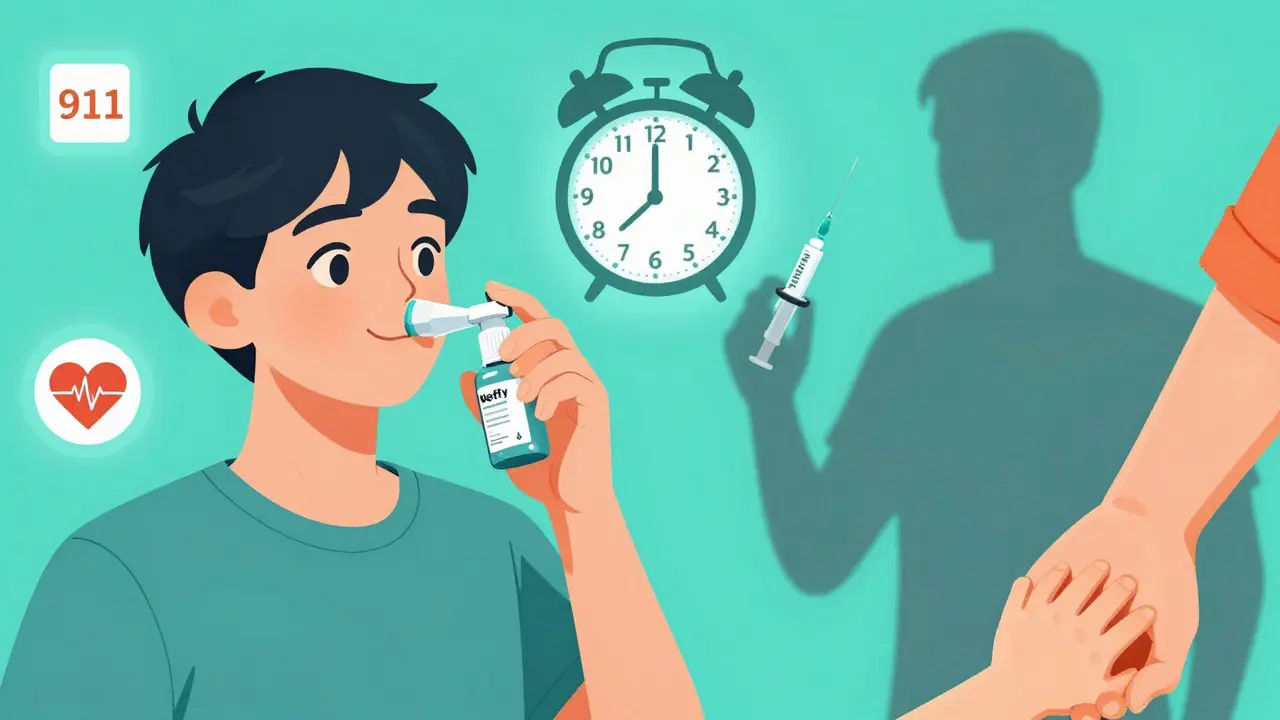
GLP-1 Drugs Keep Expanding-Zepbound for Sleep Apnea
Tirzepatide (Zepbound) was approved for weight loss. Now it’s also approved for obstructive sleep apnea. In the SURMOUNT-OSA trial, patients lost nearly 5% of their body weight and saw a 46% drop in breathing interruptions per night. That’s significant. But the side effects? Gastrointestinal issues in 32% of users-nausea, vomiting, diarrhea. These are the same as with other GLP-1 drugs. No new risks, but no magic either. It’s not for everyone. It’s for people with obesity and sleep apnea who’ve tried everything else. And it’s expensive. Insurance coverage is still catching up.Chronic Lung Disease Gets a New Weapon-Dupixent for COPD
Dupilumab (Dupixent) was already used for eczema and asthma. In November 2024, it got approved for COPD. In the BOREAS trial, it cut moderate-to-severe flare-ups by 29%. That’s good news for people stuck in cycles of hospital visits. But it comes with trade-offs: 17% had injection site reactions, and 9% developed eosinophilia-a rise in certain white blood cells. That’s higher than placebo. Doctors now have to weigh: does reducing flare-ups outweigh the risk of immune changes? For some, yes. For others, the risks aren’t worth it.Antibiotics Without the Black Box-Orlynvah
Fluoroquinolones like ciprofloxacin used to be the go-to for bladder infections. But they carry FDA black box warnings for tendon rupture and nerve damage. Orlynvah, approved in December 2024, offers an alternative. It’s a combination of sulopenem and probenecid. In trials, it cured 84% of cases. Side effects? Mostly mild: diarrhea in 11%, nausea in 9%. No cases of C. diff infection in the study. For patients with a history of tendon problems or nerve pain, this could be a safer option. But it’s not first-line yet. Doctors are still learning where it fits.What’s Coming in 2025?
The pipeline is packed. Etripamil (Cardamyst), a nasal spray for rapid heartbeats, could be approved by December 2025. It converts abnormal rhythms in 74% of cases within 30 minutes-with just nasal discomfort as the main side effect. Elinzanetant, for hot flashes, promises 52% reduction without hormone risks. And Wegovy’s oral version? Expected in late 2025, with 15% weight loss and the same GI side effects as the injection. The big question: will these new drugs be accessible? Many cost over $10,000 a year. Insurance hurdles are real.
Why Safety Monitoring Is Getting Stronger
The FDA isn’t just approving drugs and walking away. Twelve of the 50 2024 approvals require mandatory long-term safety studies. That’s up 40% from 2023. For Kisunla, that means tracking ARIA in real-world patients. For Cobenfy, it’s watching for unexpected neurological effects. The FDA is also working with Europe to share safety data faster. And early reports from doctors are already raising flags: Kisunla’s ARIA rate is higher outside trials. Neffy fails more often in severe reactions. These aren’t failures-they’re signs the system is working. The goal isn’t to stop innovation. It’s to make sure it’s safe.What This Means for You
If you or someone you care about is considering one of these new drugs, here’s what to ask:- Is this drug approved for my exact condition?
- What are the real-world side effects-not just trial numbers?
- Do I need special monitoring? (MRIs, blood tests, training?)
- What happens if I miss a dose or have another health issue?
- Is there a cheaper or safer alternative?
Dan Gaytan
December 22, 2025 AT 21:21Wow, this is actually one of the most balanced takes I've seen on new drug approvals. Kisunla's ARIA risk is terrifying, but knowing the FDA's pushing for real-world monitoring gives me a little hope. 🙏
For families watching Alzheimer’s steal someone they love, this might be the only shot. Not perfect, but better than nothing.
Also, Neffy? Game changer for kids and panic-prone adults. I’ve seen people freeze up with epinephrine pens. A nasal spray? That’s dignity.
And Cobenfy? Finally, a schizophrenia med that doesn’t turn you into a sleepy, bloated ghost. Thank you, science.
Austin LeBlanc
December 23, 2025 AT 23:23Let’s be real - none of these drugs were approved because they’re safe. They were approved because Big Pharma paid off the FDA with campaign donations and ghostwritten trials.
Remember Vioxx? Thalidomide? The same people who greenlit this are the ones who buried the data on side effects for years.
You think they care if 24% get brain bleeds? They care about quarterly earnings.
And don’t even get me started on the $10k/year price tags. This isn’t medicine. It’s extortion with a lab coat.
Katie Taylor
December 25, 2025 AT 08:55Whoa, Austin, you’re being dramatic again. Yes, the system’s flawed - but you’re ignoring the fact that 50 first-in-class drugs got approved in one year. That’s progress. Real, hard-won progress.
Yes, there are risks. But people with Alzheimer’s were dying with nothing. Now they have a chance.
And yes, the cost sucks - but that’s a policy problem, not a science problem. Don’t throw the baby out with the bathwater.
Georgia Brach
December 25, 2025 AT 22:31Actually, Katie, your optimism is naive. The FDA’s ‘mandatory long-term studies’ are a PR stunt. Most are underfunded, understaffed, and rarely followed through.
And ‘first-in-class’ is just corporate jargon for ‘untested on humans beyond 300 people.’
Look at the data: 12 of these 50 drugs have no Phase 4 data published yet. That’s not innovation - it’s regulatory capture.
And the fact that doctors are asking for training? That’s not responsible care. That’s incompetence being outsourced to patients.
EMMANUEL EMEKAOGBOR
December 26, 2025 AT 08:29While I respect the passion here, I believe we must acknowledge both the hope and the caution. In Nigeria, access to even basic medications is a daily struggle.
These breakthroughs matter - but only if they reach the people who need them.
Let us not celebrate innovation while ignoring equity. A drug that cures Alzheimer’s is meaningless if it costs more than a lifetime’s income.
May we push for science - and justice - together.
Gray Dedoiko
December 27, 2025 AT 12:33Just had a friend on Kisunla. Her mom’s 78, APOE ε4 positive. Got the first MRI - no ARIA. But she’s crying every time she has to go for the scan. It’s like living in a sci-fi movie where the cure has its own trauma.
And honestly? I didn’t know about Neffy until this post. My cousin with severe allergies is getting one next week.
It’s not perfect. But it’s something. And sometimes, that’s enough.
Adarsh Dubey
December 28, 2025 AT 16:55Interesting how Zurnai’s 6.2-hour duration is a game-changer for fentanyl overdoses. Most people don’t realize naloxone wears off faster than the opioid. That’s why so many relapse and die in ambulances.
Also, Orlynvah for UTIs? Huge. I had a tendon rupture from cipro three years ago. Never touch fluoroquinolones again.
These aren’t magic - but they’re better than what we had.
Usha Sundar
December 29, 2025 AT 18:28Yorvipath sounds like a miracle. My aunt’s been on calcium pills for 15 years. Still dizzy. Still tired. Still falling.
If this works, it’s not just medicine - it’s freedom.
Harsh Khandelwal
December 31, 2025 AT 07:5050 new drugs? LOL. You think they didn’t just rebrand old molecules with fancy names? Kisunla? Sounds like a cereal. Neffy? Like a sneeze. Zurnai? Sounds like a crypto coin.
And don’t even get me started on the ARIA thing - they’re just calling brain hemorrhages ‘imaging abnormalities’ to make it sound less scary.
Big Pharma’s playing 4D chess with our lives. And we’re all just pawns in a lab coat.
Lindsey Kidd
January 1, 2026 AT 11:04Thank you for writing this. I’ve been a caregiver for my dad with COPD. Dupixent gave him 4 months without a hospital trip. He’s sleeping through the night now.
Yes, he got a rash at the injection site. Yes, his eosinophils are up. But he’s alive. He’s watching his grandkids grow.
That’s worth a little risk. And if your doctor doesn’t talk to you like a human? Find a new one. You deserve better.
Paula Villete
January 3, 2026 AT 09:12So let me get this straight - we’re celebrating a nasal spray for anaphylaxis… that’s 22% less effective in life-threatening cases? And calling it a ‘tool’? Cute.
And Cobenfy doesn’t cause weight gain? Great. Now we just have to hope it doesn’t make you forget your own name in 10 years.
It’s not hope. It’s just new ways to die slowly while someone markets it as ‘progress.’
Also, who approved the name ‘Kisunla’? Sounds like a rejected Pokémon.
Bartholomew Henry Allen
January 5, 2026 AT 02:19The FDA has become a rubber stamp for multinational corporations. The American public is being sold snake oil dressed as salvation.
These drugs are not miracles. They are profit engines with clinical trial theater.
Real innovation would be lowering drug prices. Real safety would be banning corporate influence over regulatory bodies.
Until then, this is not medicine. It is capitalism with a stethoscope.
Bret Freeman
January 6, 2026 AT 20:09Let me just say this - I’ve watched my sister go through three rounds of chemo, then get prescribed a drug that made her hallucinate and lose her balance.
They told her it was ‘well-tolerated’ in trials.
Turns out ‘well-tolerated’ means ‘didn’t kill her before the trial ended.’
And now we’re supposed to be grateful for more of this?
These aren’t breakthroughs. They’re gambling chips on human lives.
And the FDA? They’re the house that always wins.