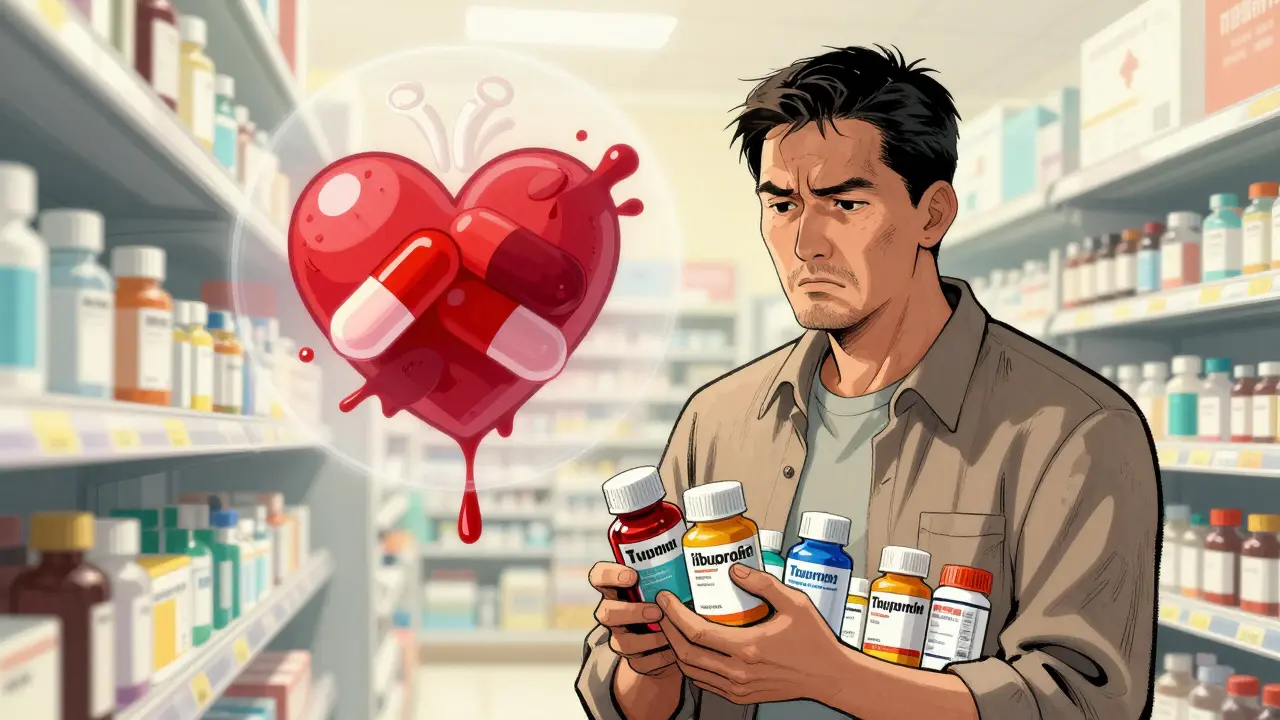
Every year, millions of people take over-the-counter (OTC) medications without thinking twice. A headache? Grab some ibuprofen. Trouble sleeping? A diphenhydramine pill does the trick. But what if you’re already on a prescription drug? That’s when things get dangerous - and most people don’t even realize it.
OTC meds aren’t harmless. They’re powerful chemicals, and when mixed with prescription drugs, they can turn harmless remedies into silent threats. You might not feel anything right away. But the damage? It can build up slowly - until it doesn’t.
Why OTC Medications Are Riskier Than You Think
Just because you can buy something without a prescription doesn’t mean it’s safe to use with everything else. The FDA estimates that 80% of U.S. adults take at least one OTC medicine every year. But only about 30% tell their doctor about it.
That’s a huge blind spot. Your doctor knows your prescription list. They don’t know about the cold medicine you took last week, the antacid you use daily, or the fish oil supplement you started because your friend swore by it. And that’s exactly where the danger hides.
Three types of interactions happen most often:
- Drug-drug: Two medications react inside your body
- Drug-food: What you eat or drink changes how the drug works
- Drug-condition: Your health problem makes a certain drug risky
None of these are theoretical. They happen every day - in kitchens, pharmacies, and hospital ERs.
Top 5 Dangerous OTC-Prescription Combinations
Some combinations are so risky they’ve been flagged by the FDA, MSD Manuals, and major medical journals. Here are the top five you need to know.
1. NSAIDs + Blood Thinners (Warfarin, Apixaban, Clopidogrel)
NSAIDs like ibuprofen, naproxen, and even aspirin can increase your risk of internal bleeding by 2 to 4 times when taken with blood thinners. This isn’t just a minor side effect. It’s life-threatening.
Even worse: if you take daily low-dose aspirin for heart protection, ibuprofen can block its antiplatelet effect. That means your heart isn’t getting the protection you think it is.
2. Acetaminophen (Tylenol) + Other Acetaminophen Products
Acetaminophen is in more than 600 OTC and prescription products - cold remedies, sleep aids, migraine pills, even some opioids. People think, “I’m just taking one for my headache and one for my cold.” But that’s how overdoses happen.
The safe daily limit is 4,000 mg. But many patients unknowingly hit 7,000 mg or more. That can cause sudden, irreversible liver failure. In 2023, acetaminophen overdose was the leading cause of acute liver failure in the U.S.
3. SSRIs + NSAIDs or Dextromethorphan
If you’re on an SSRI antidepressant like sertraline or fluoxetine, mixing it with NSAIDs or cough syrups containing dextromethorphan can trigger serotonin syndrome. This isn’t just nausea or dizziness. It’s high fever, seizures, irregular heartbeat, and sometimes death.
Studies show the risk of gastrointestinal bleeding triples when SSRIs are taken with NSAIDs. And dextromethorphan - common in cough syrups - is a hidden danger. Many people don’t realize it’s an active ingredient.
4. Antacids + Thyroid Medication (Levothyroxine)
Antacids with aluminum or magnesium - like Tums or Maalox - can cut the absorption of levothyroxine by up to 25%. That means your thyroid levels stay low, even if you’re taking your pill every morning.
Patients often take antacids for heartburn and levothyroxine on an empty stomach. But if they take them too close together, the antacid binds to the thyroid drug and stops it from working. The fix? Space them at least 4 hours apart.
5. Omeprazole + Clopidogrel
Omeprazole, a common acid blocker, reduces the effectiveness of clopidogrel - a blood thinner used after heart attacks or stents. A 2021 study found this combo cuts clopidogrel’s effect by 30-50%. That means your risk of another heart attack goes up.
It’s not just omeprazole. Other proton pump inhibitors like esomeprazole and lansoprazole have similar effects. If you’re on clopidogrel, ask your doctor about switching to an H2 blocker like famotidine instead.
Who’s at Highest Risk?
Not everyone is equally vulnerable. These groups need to be extra careful:
- People over 65: On average, they take 5+ medications daily. More pills = more chances for conflict.
- Those with kidney or liver disease: These organs break down drugs. If they’re damaged, drugs build up faster and stay longer.
- Patients with heart disease, diabetes, or high blood pressure: Many OTC meds raise blood pressure or interfere with glucose control.
- People with enlarged prostate or glaucoma: First-gen antihistamines like diphenhydramine can worsen these conditions.
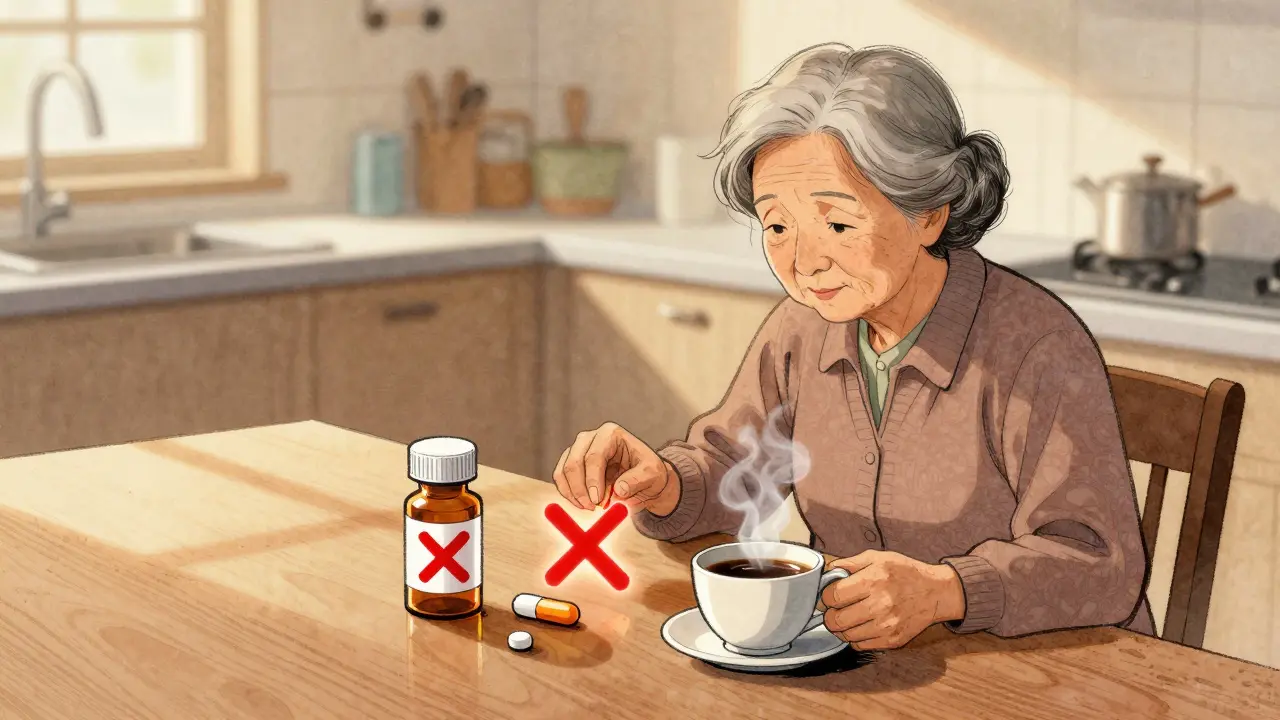
One real case: an 82-year-old woman took diphenhydramine for sleep and a prescription anxiety med. She fell, broke her hip, and ended up in the hospital. The combination caused severe drowsiness and balance loss - both preventable.
How to Protect Yourself: A Simple Checklist
You don’t need to be a pharmacist to stay safe. Just follow this checklist before you take any new OTC medicine:
- Check every label - Look for the active ingredient. Don’t just read the brand name.
- Never combine products with the same active ingredient - That’s how acetaminophen overdoses happen.
- Ask your pharmacist - They’re trained to spot interactions. Bring your list of all meds, including supplements.
- Keep a written list - Write down every pill, liquid, patch, or supplement you take. Include the reason and dose.
- Use the FDA’s Drug Interaction Checker - It’s free, updated regularly, and includes OTCs, herbs, and foods.
- Don’t assume “natural” is safe - St. John’s wort, ginkgo, garlic, and even grapefruit juice can interfere with medications.
One patient told her doctor she was fine - she didn’t take any “meds.” She didn’t count her daily multivitamin with iron, her fish oil, or the magnesium supplement she took for leg cramps. Turns out, the iron blocked her thyroid medication. Her TSH levels were off for months.
What to Do If You’ve Already Mixed Them
If you’ve taken an OTC drug with your prescription and feel unusual symptoms - dizziness, nausea, rapid heartbeat, confusion, dark urine, or bleeding - don’t wait. Call your doctor or go to urgent care.
Don’t panic. But don’t ignore it either. Many interactions don’t cause immediate pain. The harm builds over days or weeks.
If you’re unsure, call Poison Control at 1-800-222-1222. They’re available 24/7 and can tell you if you need to seek help.
Why This Keeps Happening
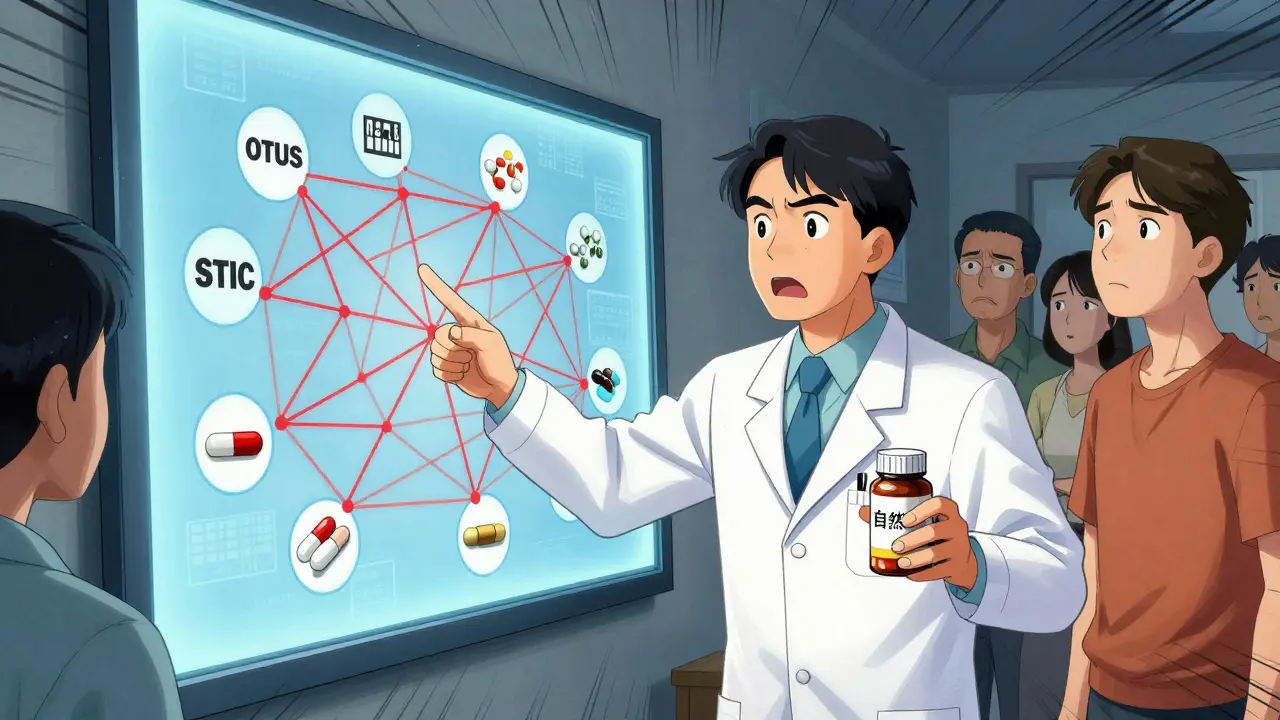
There’s a reason this is so common. OTC packaging doesn’t scream danger. It says “relieves headache” or “helps you sleep.” The warnings are tiny. The ingredients are buried.
And many people believe: “If it’s sold on a shelf, it can’t be that dangerous.” That’s the myth that kills.
Pharmacists and doctors can’t help if they don’t know what you’re taking. And most patients don’t think OTC meds count as “medications.” They’re just… stuff you pick up.
But they’re not just stuff. They’re medicine. And medicine can hurt you - even if you didn’t need a prescription to get it.
Final Rule: When in Doubt, Pause
Before you reach for that OTC bottle, ask yourself: “Is this safe with what I’m already taking?”
If you don’t know - don’t take it. Not today. Not tomorrow. Not until you’ve checked.
There’s no rush. Your health isn’t a race. It’s a long-term game. And the smartest move isn’t grabbing the fastest fix. It’s asking the right question first.
Can I take ibuprofen if I’m on blood pressure medicine?
Maybe, but not without caution. Ibuprofen and other NSAIDs can reduce the effectiveness of blood pressure medications like lisinopril or metoprolol. They can also raise your blood pressure by 5-15 mmHg. If you need pain relief, acetaminophen is usually safer - but check with your doctor first, especially if you have kidney issues.
Is it safe to take Tylenol with my antidepressant?
Yes, acetaminophen (Tylenol) is generally safe with most antidepressants. Unlike NSAIDs, it doesn’t increase bleeding risk or affect serotonin levels. But never exceed 3,000-4,000 mg per day, and avoid combining it with other acetaminophen-containing products like cold or sleep aids.
What OTC meds should I avoid with warfarin?
Avoid NSAIDs like ibuprofen, naproxen, and aspirin. Also avoid herbal supplements like ginkgo, garlic, and ginger, which can increase bleeding risk. Even some antacids and antifungals can interfere with warfarin. Stick to acetaminophen for pain, and always get your INR checked regularly if you’re on warfarin.
Can I take antacids with my thyroid pill?
Not at the same time. Antacids with aluminum or magnesium can block levothyroxine absorption. Take your thyroid pill on an empty stomach, and wait at least 4 hours before taking any antacid, calcium, or iron supplement.
Do herbal supplements count as OTC medications?
Yes. Supplements like St. John’s wort, ginkgo biloba, and garlic can interact with prescription drugs just like pills. St. John’s wort can make birth control, antidepressants, and blood thinners less effective. Always tell your doctor about every supplement you take - even if you think it’s “just natural.”
How do I know if my OTC medicine has been recalled or updated?
Sign up for FDA recall alerts at fda.gov/safety/recalls. Also, check the label every time you buy a product - manufacturers can change ingredients without changing the packaging. If you’re unsure, ask your pharmacist to verify the active ingredients.
Next time you pick up an OTC bottle, pause. Look at the active ingredient. Think about what else you’re taking. Ask one question - to your pharmacist, your doctor, or even just yourself. That pause could save your life.
Steve Hesketh
January 21, 2026 AT 00:09I used to think OTC meds were just harmless little pills until my dad ended up in the ER after mixing ibuprofen with his blood thinner. No warning labels screamed at him. Just a little bottle on the shelf like it was candy. Now I check every label like it’s a bomb defusal manual. Don’t be like my dad. Pause. Read. Ask.
Philip Williams
January 21, 2026 AT 14:58While the article presents a compelling case regarding OTC-drug interactions, it would benefit from citing peer-reviewed meta-analyses to substantiate the statistical claims, particularly the 80% usage and 30% disclosure figures. Additionally, the FDA’s Drug Interaction Checker, while useful, is not universally accessible to patients without digital literacy or reliable internet access-a critical equity gap in public health education.
Barbara Mahone
January 22, 2026 AT 01:46I’m 71 and take six prescriptions. I never realized that my Tums could be sabotaging my thyroid med. I space them now-four hours apart, like the article said. Small change. Big difference. Also, I keep a little notebook in my purse with everything I take. My pharmacist calls it ‘the bible.’ I call it my safety net.
MARILYN ONEILL
January 23, 2026 AT 13:16Ugh. I can’t believe people still don’t get this. It’s not rocket science. If you’re on meds, don’t be an idiot and mix random pills you bought at CVS. I had a cousin die from Tylenol overdose because she took her cold medicine AND her painkiller. Both had acetaminophen. She didn’t even read the label. People are lazy. And now they want a pamphlet? Just stop. Be responsible.
Coral Bosley
January 24, 2026 AT 08:34I’ve been on SSRIs for eight years. I used to take NyQuil every time I had a cold. Then I read about serotonin syndrome. I started crying in the pharmacy aisle. Not because I was scared-but because I realized how many times I’d almost killed myself with something labeled ‘for relief.’ I don’t touch anything without checking now. And I tell everyone I know. Because nobody warns you. Not really.
Dee Monroe
January 25, 2026 AT 18:33There’s a deeper truth here that the article barely touches: we live in a culture that treats medicine like a vending machine. Want to feel better? Pop a pill. Want to sleep? Pop a pill. Want to forget your anxiety? Pop a pill. We’ve outsourced our bodies to corporations who sell us solutions without context, without warning, without humanity. OTC meds aren’t the problem-they’re the symptom. The real danger is believing that health can be bought, quick, cheap, and anonymous. We’ve forgotten how to listen to our bodies because we’ve been trained to silence them with chemicals. The checklist is good. But what we really need is a cultural reckoning.
Alex Carletti Gouvea
January 27, 2026 AT 09:27Why are we even talking about this? In America, you can buy a gun easier than you can buy a prescription. But now we’re acting like a bottle of Advil is a weapon? This is overregulation. People should be allowed to make their own choices. If you want to mix pills and die, that’s your business. Stop treating adults like children.
Melanie Pearson
January 28, 2026 AT 11:49While the article is well-intentioned, it fails to acknowledge the systemic failure of pharmaceutical marketing practices. The normalization of polypharmacy among the elderly is not an individual oversight-it is the direct result of aggressive direct-to-consumer advertising, incentivized prescribing, and the commodification of health. Until regulatory bodies enforce mandatory interaction disclosures on packaging at a federally mandated font size, this will remain a preventable epidemic. Furthermore, the inclusion of supplements as equivalent to pharmaceuticals is scientifically inaccurate; regulatory standards for supplements are non-existent. This conflation undermines legitimate medical discourse.
Rod Wheatley
January 28, 2026 AT 13:48PLEASE-everybody, stop and read this again. I’m a pharmacist. I see this every. single. day. One woman came in last week with a bag full of 17 different bottles-some expired, some duplicate, some with the same active ingredient in three different names. She thought she was “just being proactive.” She was on three blood pressure meds, a blood thinner, and an antidepressant-and she’d been taking Advil for her back pain every day for a year. Her kidneys were failing. She didn’t know. Nobody told her. Don’t be her. Write it down. Ask your pharmacist. Even if you think it’s “nothing.” It’s always something. I’m not exaggerating. Your life is not a gamble. Be smart. Be safe. And please-don’t wait until it’s too late.