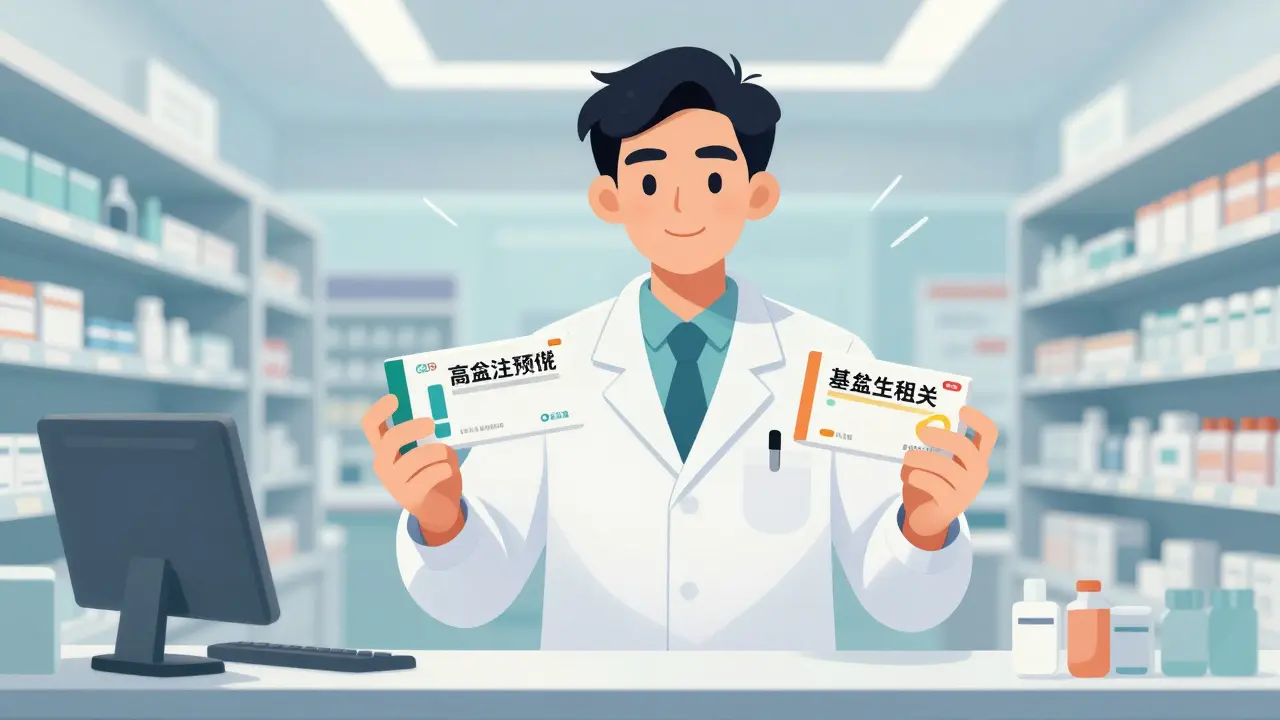
Imagine a patient walking into your pharmacy counter with a prescription for a high-cost biologic. You know there is a biosimilar available that offers the same clinical effect at a fraction of the cost. But unlike swapping out a generic ibuprofen for store-brand ibuprofen, this switch isn’t automatic. It requires trust, specific legal clearance, and most importantly, a conversation.
This is where you come in. The role of the pharmacist in biosimilar substitution and counseling has shifted from passive dispenser to active gatekeeper of cost savings and patient safety. With biologics accounting for roughly half of all prescription drug spending in the United States despite making up only 2% of prescriptions, the pressure is on. Pharmacists are now the primary drivers of bioconversion-the process of switching patients from originator biologics to their biosimilar counterparts.
Understanding the Core Difference: Generics vs. Biosimilars
To counsel effectively, you first need to understand why this feels different than generic substitution. A generic small-molecule drug is chemically identical to its reference product. If the original pill is made of compound X, the generic is also made of compound X, down to the atomic level. You can swap them without a second thought because the chemistry is exact.
Biosimilars, however, are not chemically identical copies. They are highly similar to an FDA-approved reference product (the originator) but may have minor structural differences. Why? Because they are manufactured using living cells. Living systems are complex; no two batches of a biologic are ever exactly the same, even if they come from the same manufacturer. Therefore, a biosimilar is defined by having "no clinically meaningful differences" in safety, purity, and potency compared to the reference product.
This distinction matters for counseling. When a patient asks, "Is this the exact same medicine?" you cannot say yes in the chemical sense. Instead, you explain that it is the same in every way that matters for their health outcome. This nuance is the foundation of effective patient education.
The Regulatory Framework: BPCIA and Interchangeability
The ability to substitute biosimilars rests on the Biologics Price Competition and Innovation Act (BPCIA), enacted in 2009 as part of the Affordable Care Act. This legislation created an abbreviated approval pathway for biosimilars, allowing them to enter the market without repeating all the clinical trials done for the originator.
However, not all biosimilars can be substituted automatically. The FDA designates certain biosimilars as interchangeable. To earn this status, a biosimilar must meet additional rigorous standards, including data showing that switching back and forth between the reference product and the biosimilar does not pose a higher risk than continuous treatment with the reference product alone.
As of late 2023, only a limited number of biosimilars have received this interchangeable designation. This creates a critical checkpoint for pharmacists: you must verify the interchangeability status of the product before substituting. In many states, even if a biosimilar is approved, state laws may restrict automatic substitution unless the prescriber explicitly allows it or the product holds the interchangeable label.
| Feature | Generic Small-Molecule Drug | Biosimilar Biologic |
|---|---|---|
| Chemical Structure | Identical to reference | Highly similar, minor structural variations possible |
| Manufacturing Process | Chemical synthesis | Living cell culture (complex) |
| Substitution Rate | ~97% (due to broad state laws) | Lower (restricted by stricter state laws) |
| Counseling Focus | Minimal (often unnecessary) | High (addressing safety, efficacy, appearance changes) |
| Regulatory Pathway | Hatch-Waxman Amendments | BPCIA (2009) |
Autonomous Substitution: The Pharmacist’s Power Move
One of the most significant shifts in recent years is the move toward autonomous substitution. This is the independent professional practice of substituting one medicinal product for another without explicit interaction with the prescriber at the point of dispensing. For biosimilars, this means the pharmacist makes the decision to switch based on established protocols, rather than calling the doctor for every single change.
Data from the American Society of Clinical Oncology (ASCO) Quality Care Symposium highlights the impact of this approach. Research led by Dr. David Michael Waterhouse showed that pharmacist-driven interventions led to a statistically significant increase in biosimilar adoption over just one year. In contrast, physician-driven conversion efforts often stalled due to provider burden and interruptions.
Consider the case of pegfilgrastim (Neulasta). Before May 2021, when US Oncology Network relied on physicians to convert prescriptions, adoption barely moved. After implementing a pharmacy-driven process where pharmacists handled the substitution autonomously, bioconversion happened rapidly. This model frees providers to focus on front-end patient care while pharmacists manage the back-end medication logistics.
However, autonomous substitution is not a free-for-all. The International Federation of Pharmaceutical Manufacturers & Associations (IFPMA) outlines strict conditions for this practice:
- A structured, science-based framework must be in place.
- The prescribing physician must have the right to indicate "do not substitute."">
- Data must demonstrate that repeated switching poses no higher risk than continuous treatment.
- Patient traceability measures, including batch number identification, must be implemented for pharmacovigilance.

Counseling Strategies: Building Trust and Confidence
You might think that once the legal box is checked, the job is done. It isn’t. Patient adherence drops by 21% when medication appearance changes-such as size, shape, or color of the vial or pen. Since biosimilars often look different from originators, counseling is not optional; it is essential for retention.
Here is how to structure your conversation:
- Normalize the Switch: Start by explaining that switching to a biosimilar is common and safe. Use phrases like, "The FDA requires these products to have the same clinical effect with no meaningful differences."
- Address the "Why": Patients want to know why they are getting a different box. Explain cost savings for them or the healthcare system, and emphasize that the active ingredient works the same way.
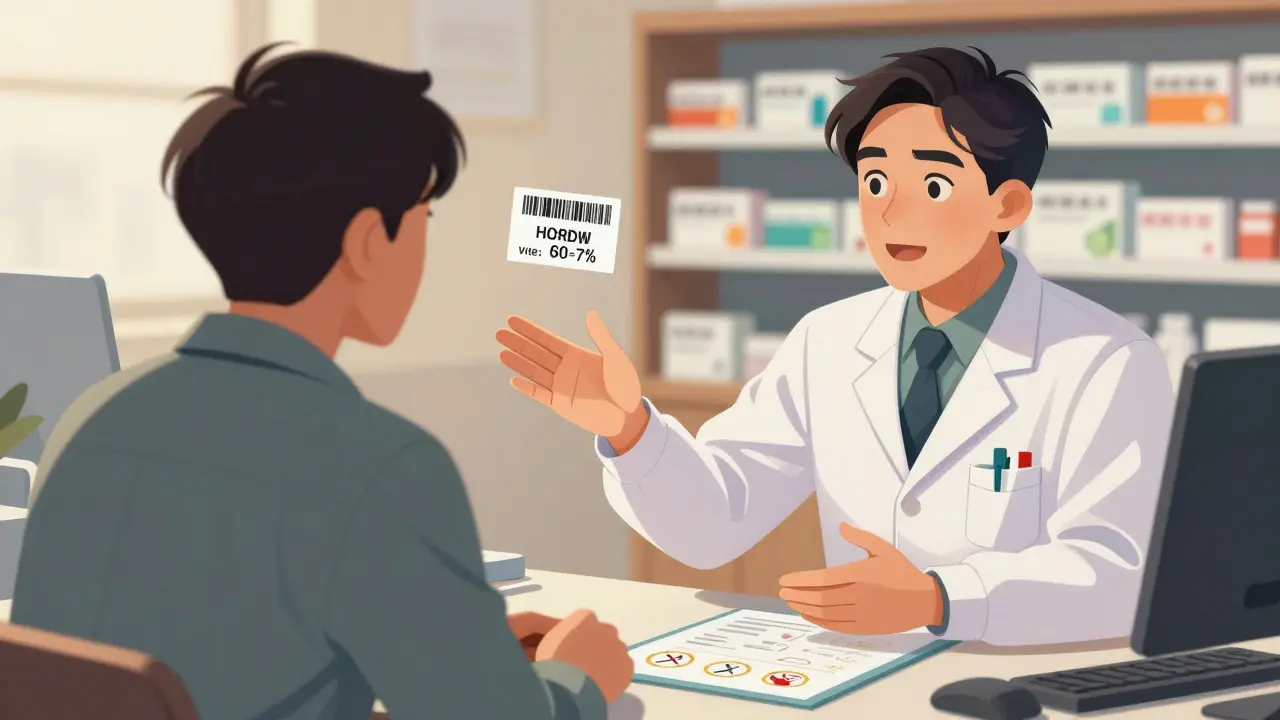
- Manage Expectations on Appearance: Show the new packaging. Point out any differences in the injection device or solution clarity. Reassure them that these visual changes do not affect efficacy.
- Empower with Questions: Ask, "What concerns do you have about this new medication?" Listening is more powerful than lecturing.
A study in the Journal of Managed Care & Specialty Pharmacy found that 87.3% of pharmacists recommended biosimilars, compared to only 62.1% of physicians. This gap exists because pharmacists are better positioned to educate. You are the last line of defense before the patient leaves with the medication. Your confidence directly influences their comfort level.
Navigating Barriers: Prescriber Resistance and State Laws
Not every experience will be smooth. Prescriber resistance is a real hurdle. Some physicians may insist on "dispense as written" for all biologics, fearing liability or lacking familiarity with biosimilars. In these cases, documentation is your shield. Ensure you have signed acknowledgment forms from providers regarding automatic substitution policies. If a provider objects, document the discussion and follow local protocol.
State laws vary significantly. As of October 2023, 48 states have enacted laws regarding biosimilar substitution, but the specifics differ. Some states allow automatic substitution for all FDA-approved biosimilars, while others restrict it only to those designated as interchangeable. You must stay current with your state board of pharmacy regulations. Ignorance of local law is not a valid defense in a substitution error.
Additionally, rebate structures and Pharmacy Benefit Manager (PBM) contracts can sometimes favor originator products, creating financial disincentives for substitution. Advocacy at the institutional level, combined with clear communication about long-term cost savings, helps mitigate these barriers.
Pharmacovigilance and Traceability: The Safety Net
Because biosimilars are complex biological products, monitoring for adverse events is critical. Unlike generics, where tracking is straightforward, biosimilar substitution requires robust pharmacovigilance systems. The IFPMA emphasizes the need for traceability-the unique identification of the biological medicine, including the batch number handed to the patient.
When you perform a substitution, you must update the medical record accurately. This includes noting which specific biosimilar was dispensed, its lot number, and the date of substitution. This data is vital if an adverse event occurs later. Without accurate records, it becomes impossible to determine whether the reaction was linked to the originator, the biosimilar, or another factor.
Clinical pharmacists play a holistic role here, bridging the gap between clinical profile, logistical considerations, and supply chain factors. By maintaining complete records, you protect the patient and contribute to the broader evidence base supporting biosimilar safety.
Future Outlook: Accelerating Adoption
The landscape is evolving quickly. The FDA has been reviewing its evidence requirements for interchangeability, with some officials proposing eliminating the separate interchangeable designation entirely in the future. If this happens, substitution could become more streamlined, resembling generic drug practices more closely.
Meanwhile, educational initiatives are expanding. Mandatory e-learning programs for physicians, nurses, and pharmacists are becoming standard in large networks. These programs ensure everyone is on the same page regarding safety and efficacy. As a pharmacist, continuing education units (CEUs) related to biosimilars are not just checkboxes; they are tools to sharpen your expertise.
The need for a pharmacy specialty dedicated to biotherapeutics is growing. As the market for these complex medications expands, pharmacists who master biosimilar counseling and substitution will be indispensable. You are not just dispensing drugs; you are managing access, ensuring safety, and driving value in healthcare.
Can I substitute a biosimilar without the prescriber's permission?
It depends on your state laws and the specific product's status. Generally, you can only substitute automatically if the biosimilar is designated as "interchangeable" by the FDA and your state permits autonomous substitution. Always check if the prescriber has marked the prescription "dispense as written" or "do not substitute."
What is the difference between a biosimilar and a generic drug?
A generic drug is chemically identical to its reference product. A biosimilar is highly similar to its reference biologic but may have minor structural differences due to complex manufacturing processes involving living cells. Both are considered safe and effective, but biosimilars require more nuanced counseling regarding appearance and traceability.
How do I counsel a patient who is afraid of switching to a biosimilar?
Acknowledge their concern and explain that the FDA rigorously tests biosimilars to ensure no clinically meaningful differences in safety or efficacy. Emphasize that the switch is common and often driven by cost savings. Show them the new packaging and explain any visual differences so they are not surprised.
Why is traceability important for biosimilars?
Traceability ensures that if an adverse event occurs, healthcare providers can identify exactly which product and batch number the patient received. This is crucial for pharmacovigilance, especially since biosimilars are complex biological products manufactured in living cells.
What is the BPCIA?
The Biologics Price Competition and Innovation Act (BPCIA) of 2009 established the regulatory framework for biosimilars in the United States. It created an abbreviated approval pathway that allows biosimilars to enter the market without repeating all clinical trials performed for the originator biologic.