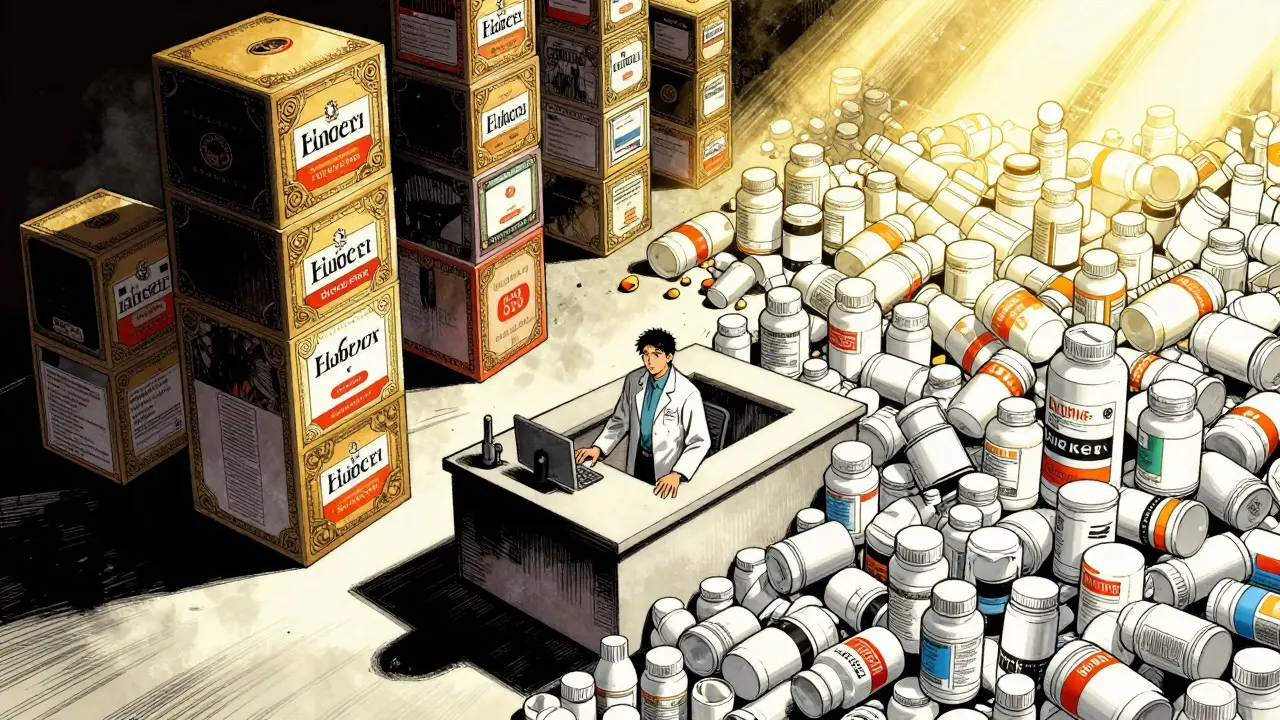
Walk into any pharmacy in the United States today, and you’ll see a paradox. Brand-name drugs dominate the checkout total, accounting for roughly three-quarters of all prescription spending. Yet, if you look at the pharmacy’s bottom line, those expensive brands are barely keeping the lights on. The real money? It’s hiding in the cheap white bottles. Generic drugs, which make up about 90% of prescriptions dispensed, generate nearly twelve times more profit per prescription than their brand-name counterparts. This counterintuitive reality defines modern pharmacy margin economics, creating a landscape where volume matters far more than price.
This isn’t just an academic curiosity; it’s the reason independent pharmacies are closing at alarming rates while large chains consolidate power. To understand why your local pharmacist is struggling to stay open despite selling millions in medication, we have to pull back the curtain on the pharmaceutical supply chain. We need to look at how value flows from manufacturers to patients, and who gets squeezed along the way.
The Profit Paradox: High Volume vs. High Price
The core of this economic puzzle lies in the difference between gross margin percentage and absolute profit dollars. A study by the Commonwealth Fund in August 2021 revealed that pharmacies average a gross margin of 42.7% on generic drugs. Compare that to a mere 3.5% gross margin on brand-name drugs. At first glance, generics look like a goldmine. But percentages can be misleading when the base prices differ so drastically.
Consider the math. If a generic drug costs $10 and has a 40% markup, the pharmacy makes $4. If a brand drug costs $100 with a 5% markup, the pharmacy also makes $5. However, the operational effort to dispense either pill is identical. The real shift happens when you factor in rebates and Pharmacy Benefit Manager (PBM) contracts. In practice, the net result is often that pharmacies derive the vast majority of their revenue from generics because they can move them faster and with fewer administrative hurdles related to prior authorizations.
| Metric | Generic Drugs | Brand-Name Drugs |
|---|---|---|
| Share of Prescriptions Dispensed | ~90% | ~10% |
| Share of Total Drug Spending | ~25% | ~75% |
| Average Pharmacy Gross Margin | 42.7% | 3.5% |
| Profit Per Prescription (Est.) | $32 | $3 |
As the Schaeffer Center’s 2022 analysis highlights, pharmacies make almost twelve times as much money on generic expenditures compared to branded ones ($32 versus $3 per prescription). This disparity forces pharmacies to prioritize generic dispensing not just for patient savings, but for their own survival.
The Middlemen: PBMs and Spread Pricing
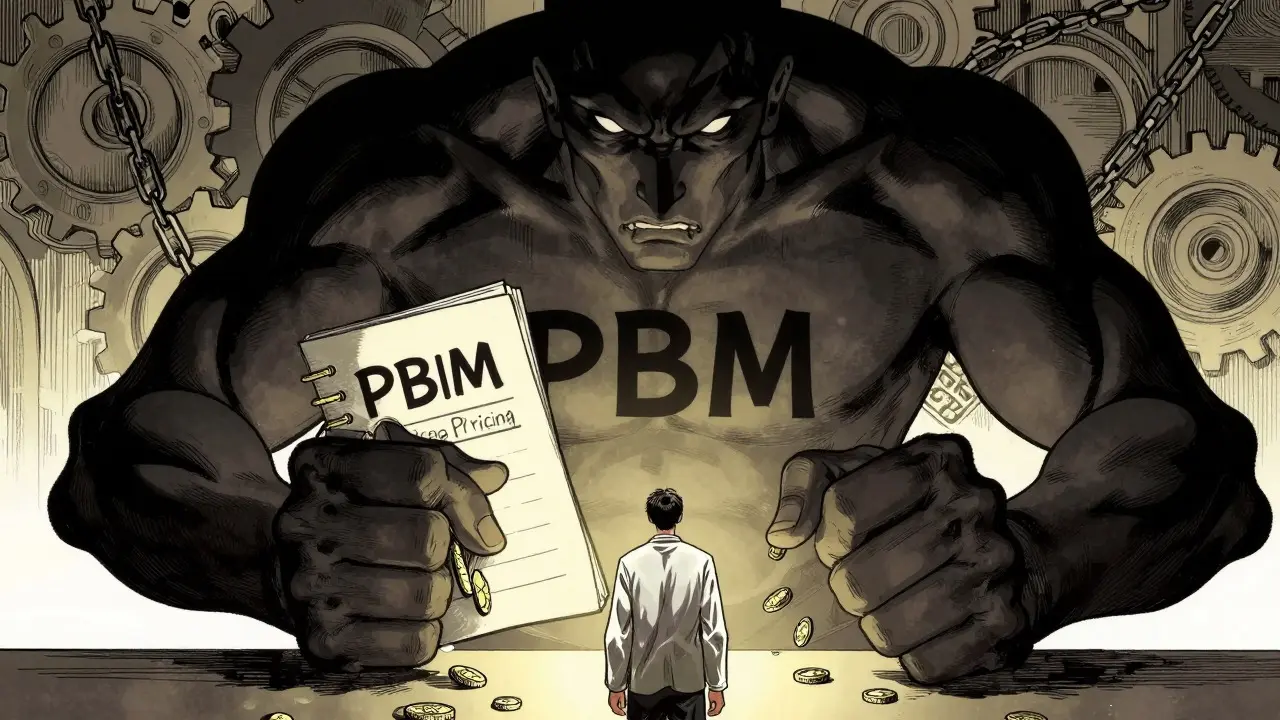
If generics are so profitable, why are so many pharmacies failing? The answer lies in the invisible layer between the pharmacy and the insurer: the Pharmacy Benefit Managers (PBMs). Three dominant PBMs-CVS Caremark, Express Scripts, and OptumRx-control approximately 80% of prescription transactions. They act as gatekeepers, negotiating rebates from manufacturers and setting reimbursement rates for pharmacies.
Here is where the economics get murky. PBMs often use a tactic called "spread pricing." This means they charge the health plan one amount for a drug but reimburse the pharmacy a lower amount, keeping the difference as profit. For generic drugs, this squeeze is particularly painful. According to the National Community Pharmacists Association (NCPA), 68% of independent pharmacy owners identified declining generic drug reimbursement as their top business threat in 2022.
An independent pharmacy owner in Ohio noted in a 2023 interview that their net profit on generics had dropped from 8-10% five years prior to barely 2%, while overhead costs surged by 35%. This compression happens because PBMs have immense leverage. If a pharmacy refuses to accept low reimbursement rates, the PBM can simply steer patients toward competitors or mail-order options. This dynamic turns the high-volume generic model into a race to the bottom for smaller players.
Manufacturers vs. Distributors: Who Captures the Value?
To fully grasp the margin structure, we must look upstream. The Hatch-Waxman Act of 1984 created the pathway for generic approval, intending to spur competition and lower prices. And it worked-at least initially. The FDA reports that increased generic competition leads to price declines of about 20% within three years in markets with multiple competitors.
However, the market has consolidated significantly. Between 2014 and 2016, there were nearly 100 mergers in generic manufacturing worth close to $80 billion. Today, the top five generic manufacturers control 45% of the market, up from 32% in 2015. This consolidation has shifted the balance of power. Manufacturers now capture higher gross margins on branded drugs (76.3%) compared to generics (49.8%), according to the Schaeffer Center. But downstream, the story flips. Wholesalers make eleven times as much on generic drugs as on brands, and PBMs make four times as much.
This creates a fragile ecosystem. When only one manufacturer produces a specific generic (a "single-source" generic), competition vanishes. Prices can spike dramatically, sometimes exceeding the cost of the brand-name equivalent. SureCost’s 2024 white paper notes instances where generic prices surpassed brand prices due to these supply constraints, leaving pharmacies stuck with inventory that no longer generates the expected margin.
The Rise of Mail-Order and Specialty Channels
Traditional retail pharmacies face another threat: channel migration. Mail-order pharmacies and specialty pharmacies are growing rapidly, capturing a larger share of the market. These channels operate with different margin structures that favor scale over community presence.
Data from Washington state analyzed by 3Axis Advisors in June 2024 shows stark differences. For generic drugs, average markups in the mail-order channel are more than four times the estimated margins yielded by grocery store pharmacies. For brand drugs, mail-order markups are more than 35 times higher than those from small chains and independents. In extreme cases involving drugs with opaque pricing, mail-order pharmacies made roughly 1,000 times more margin relative to the underlying drug cost for generics compared to retail peers.
Why does this happen? Mail-order operations benefit from centralized processing, reduced labor costs per script, and direct contracting with insurers that bypasses some traditional PBM layers. As employers and insurers push patients toward these lower-cost channels to manage overall healthcare spending, brick-and-mortar pharmacies lose their primary profit driver: the steady stream of generic refills.
Survival Strategies for Independent Pharmacies
Facing these headwinds, independent pharmacies are forced to innovate. Relying solely on dispensing generics is no longer viable. Successful pharmacies are diversifying their revenue streams through services that PBMs cannot easily replicate or automate.
- Medication Therapy Management (MTM): Offering clinical consultations to optimize patient health. This service commands higher reimbursement and builds patient loyalty.
- Specialty Pharmacy Designation: Handling complex, high-cost medications for conditions like cancer or autoimmune diseases. These drugs require specialized care and monitoring, providing a more stable revenue stream.
- Direct Pay Models: Bypassing PBMs entirely by charging cash prices. Initiatives like Mark Cuban’s Cost Plus Drug Company have popularized transparent pricing ($20 plus a $3 dispensing fee), proving consumers are willing to pay out-of-pocket if the savings are significant.
- Rebuttal Training: Staff are increasingly trained to challenge PBM reimbursement decisions. The NCPA’s Rebuttal Academy has trained over 8,500 staff members since 2019, helping pharmacies recover lost revenue by identifying coding errors and contract violations.
According to Pharmaceutical Executive’s 2023 analysis, pharmacies implementing these strategies report 3-5% higher net margins. However, this requires time and expertise. The average pharmacy owner spends 15-20 hours per week managing reimbursement issues, time that could otherwise be spent on patient care or business development.
Regulatory Shifts and Future Outlook
The political landscape is shifting in response to these economic pressures. The Federal Trade Commission (FTC) has intensified its scrutiny of PBM practices, filing antitrust lawsuits against generic manufacturers for alleged price-fixing and holding workshops on pharmacy reimbursement transparency. Several states, including California, Texas, and Illinois, passed laws in 2022-2023 requiring greater transparency in how PBMs calculate reimbursements.
Additionally, the Inflation Reduction Act’s Medicare drug price negotiation provisions, effective in 2026, may indirectly affect generic margins by reducing overall drug spending pressure. While negotiations currently target high-cost brand drugs, the ripple effects could reshape the entire reimbursement ecosystem.
Despite these changes, the outlook remains challenging. Goldman Sachs predicted in 2023 that without significant reimbursement reform, 20-25% more independent pharmacies could close by 2027. Conversely, Leerink Partners suggests that pharmacies successfully diversifying into services could achieve sustainable 4-6% net margins. The key takeaway is clear: the era of passive dispensing is over. Pharmacies must actively manage their margins, negotiate fiercely with PBMs, and expand their service offerings to survive.
Why do pharmacies make more money on generic drugs than brand-name drugs?
Pharmacies make more money on generics because the gross margin percentage is much higher (around 42.7% for generics vs. 3.5% for brands). Even though brand drugs cost more, the rebate structures and PBM contracts often leave pharmacies with very little profit per brand prescription. Generics provide higher volume and better per-unit profitability, making them the backbone of pharmacy revenue.
What is spread pricing in pharmacy economics?
Spread pricing occurs when a Pharmacy Benefit Manager (PBM) charges a health plan a certain amount for a drug but reimburses the pharmacy a lower amount, keeping the difference as profit. This practice significantly squeezes pharmacy margins, especially on generic drugs, and is a major source of financial stress for independent pharmacies.
How do PBMs affect pharmacy profits?
PBMs control access to insurance networks and set reimbursement rates. Because the top three PBMs control 80% of transactions, they have significant leverage to dictate low payment terms. They also use mechanisms like clawbacks (requiring pharmacies to refund money later) and opaque formulas that reduce net profit, forcing pharmacies to rely on high volume to survive.
Why are independent pharmacies closing at high rates?
Independent pharmacies face thinning net margins (often around 2%) due to PBM pressure, rising overhead costs, and competition from mail-order and large chains. Without the scale to negotiate better rates or absorb losses, many cannot sustain operations. Additionally, the shift toward single-source generics has led to unpredictable pricing spikes that further disrupt revenue stability.
Can pharmacies increase profits by offering services instead of just dispensing drugs?
Yes. Services like Medication Therapy Management (MTM), immunizations, and specialty pharmacy care provide higher reimbursement rates and build patient loyalty. By diversifying beyond simple dispensing, pharmacies can offset low drug margins and create more stable revenue streams, potentially achieving net margins of 4-6%.