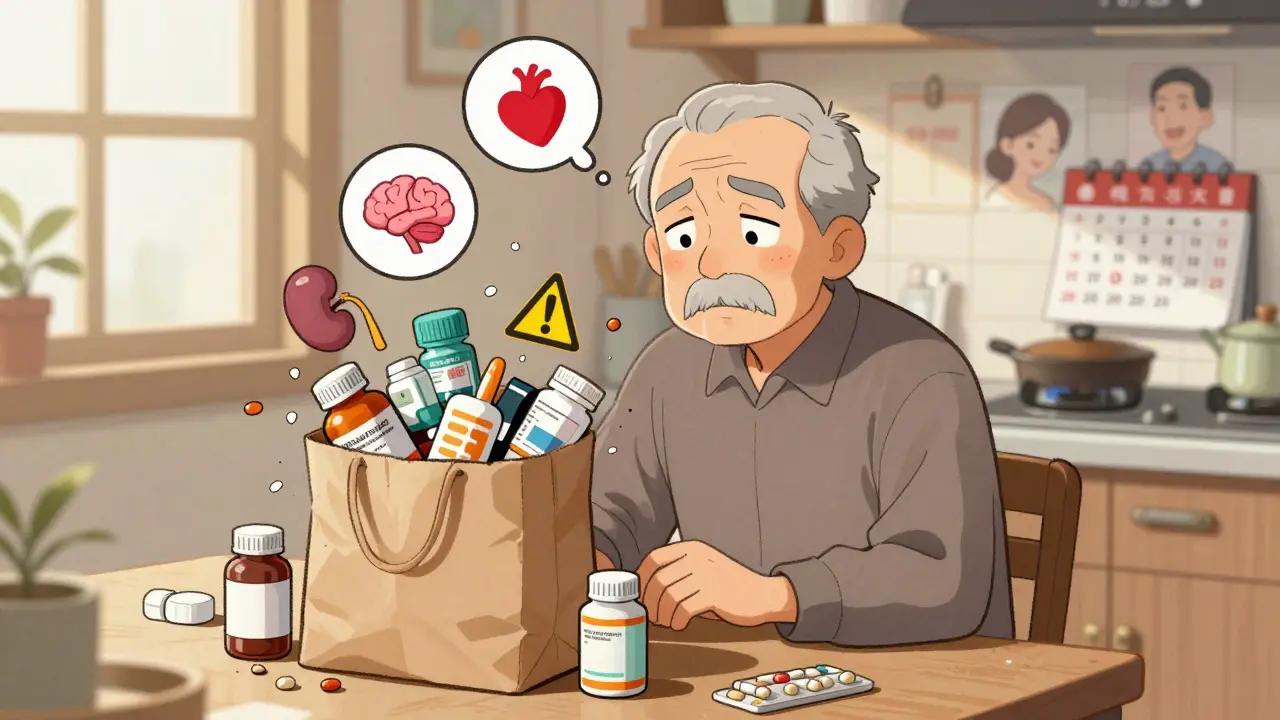
More than 40% of adults over 65 take five or more prescription drugs every day. For many, it’s not a choice-it’s a reality. Heart pills, blood pressure meds, diabetes drugs, pain relievers, sleep aids, antidepressants. Add in over-the-counter supplements, vitamins, and creams, and the pill organizer can easily spill over into three or four containers. This isn’t just clutter-it’s a hidden danger. Polypharmacy, the term for taking five or more medications at once, is now one of the biggest threats to health in older adults. And it’s not about being lazy or forgetful. It’s about how our healthcare system works-and how it often fails seniors.
Why Polypharmacy Happens
It doesn’t start with a doctor saying, “Here, take ten pills.” It starts with one condition, then another. A hip replacement leads to painkillers. A bout of acid reflux brings on a proton pump inhibitor. Then comes high cholesterol, then arthritis, then insomnia. Each specialist sees one piece of the puzzle. Cardiologist adds a beta-blocker. Neurologist prescribes an anticonvulsant for nerve pain. Psychiatrist recommends an antidepressant. No one steps back and asks: “What’s the whole picture?” By the time a senior sees their primary care doctor, they’re already on seven or eight medications. And many of them were started years ago, when the patient was younger and their body handled drugs differently. The problem isn’t just the number-it’s that most of these drugs weren’t ever reviewed together. A 2022 study found that 42% of seniors get prescriptions from three or more different doctors. Nobody talks to each other. And nobody asks the patient: “Are these pills actually helping you live better?”The Real Risks: More Than Just Side Effects
Taking too many meds doesn’t just cause nausea or dizziness. It can change your life in ways you never expect. Falls are the biggest danger. One in three seniors falls each year. And medications like benzodiazepines (used for anxiety or sleep) can double that risk. These drugs slow reaction time, blur vision, and lower blood pressure when standing up. A simple stumble becomes a broken hip. And once that happens, recovery is harder, longer, and often leads to nursing home placement. Then there’s delirium-sudden confusion that can look like dementia but is often caused by drug interactions. Anticholinergic drugs, found in many allergy pills, bladder meds, and even some antidepressants, block a brain chemical called acetylcholine. Long-term use raises dementia risk by 50% over seven years, according to the American Geriatrics Society. And many seniors don’t even know they’re taking them. Kidneys and liver don’t work like they used to. After age 40, kidney function drops about 1% per year. Liver metabolism slows by 30-50% in people over 80. That means drugs stick around longer. A dose that was fine at 55 becomes toxic at 75. The result? Higher risk of internal bleeding from NSAIDs, low sodium from diuretics, or kidney damage from multiple painkillers. And then there’s cost. One in four seniors skips doses because they can’t afford their meds. A single month’s supply of a brand-name heart drug can cost $300. When you’re on ten prescriptions, that’s $3,000 a year-on top of rent, food, and utilities.What’s Being Done? The Shift Toward Deprescribing
The old model was: if a pill helps, keep giving it. The new model says: if the risk outweighs the benefit, stop it. That’s called deprescribing. It’s not about stopping everything. It’s about stopping the wrong things. A 2021 Duke Health review found that careful deprescribing reduces hospital visits by 17% and cuts adverse drug events by 22%. That’s not a small win-it’s life-changing. The American Geriatrics Society’s Beers Criteria, updated in 2023, lists 56 medications that are risky for older adults. These include:- Benzodiazepines (like diazepam or lorazepam) - high fall risk
- NSAIDs (like ibuprofen or naproxen) - stomach bleeding and kidney damage
- Anticholinergics (like diphenhydramine or oxybutynin) - confusion, memory loss
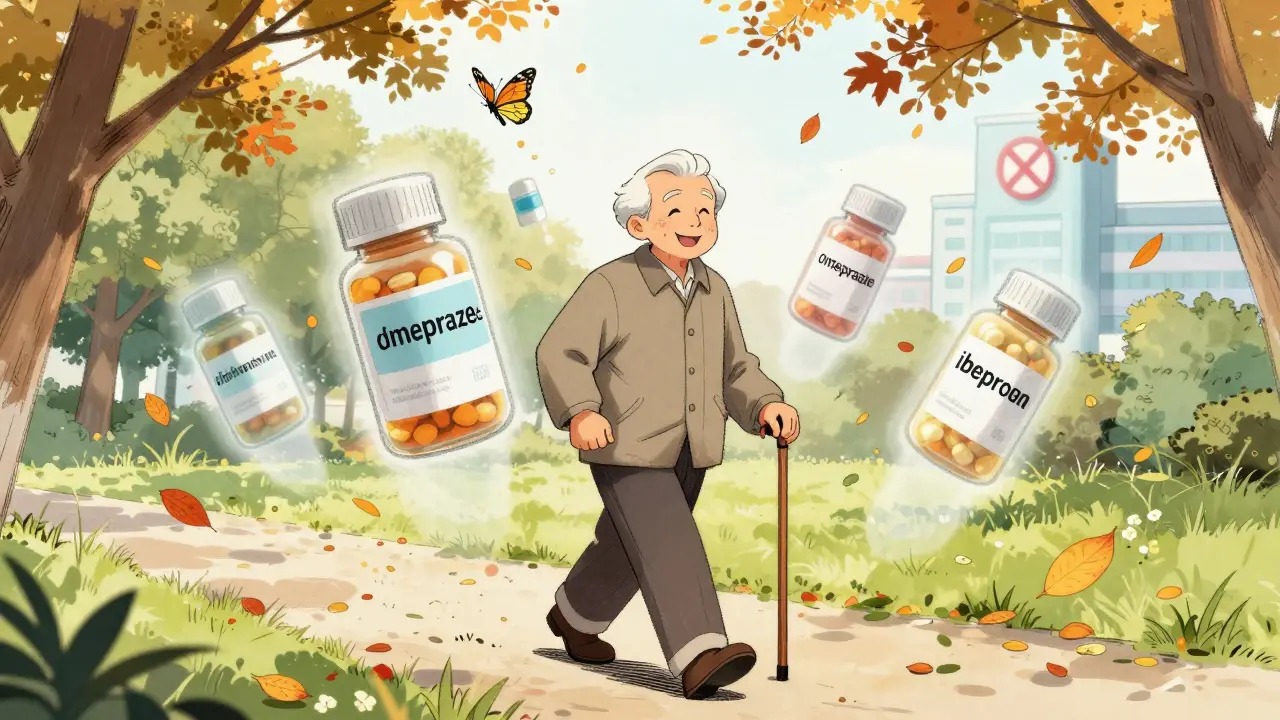
- Long-term proton pump inhibitors (like omeprazole) - bone fractures and infections
- Antipsychotics in dementia patients - increased risk of death
How to Start a Medication Review
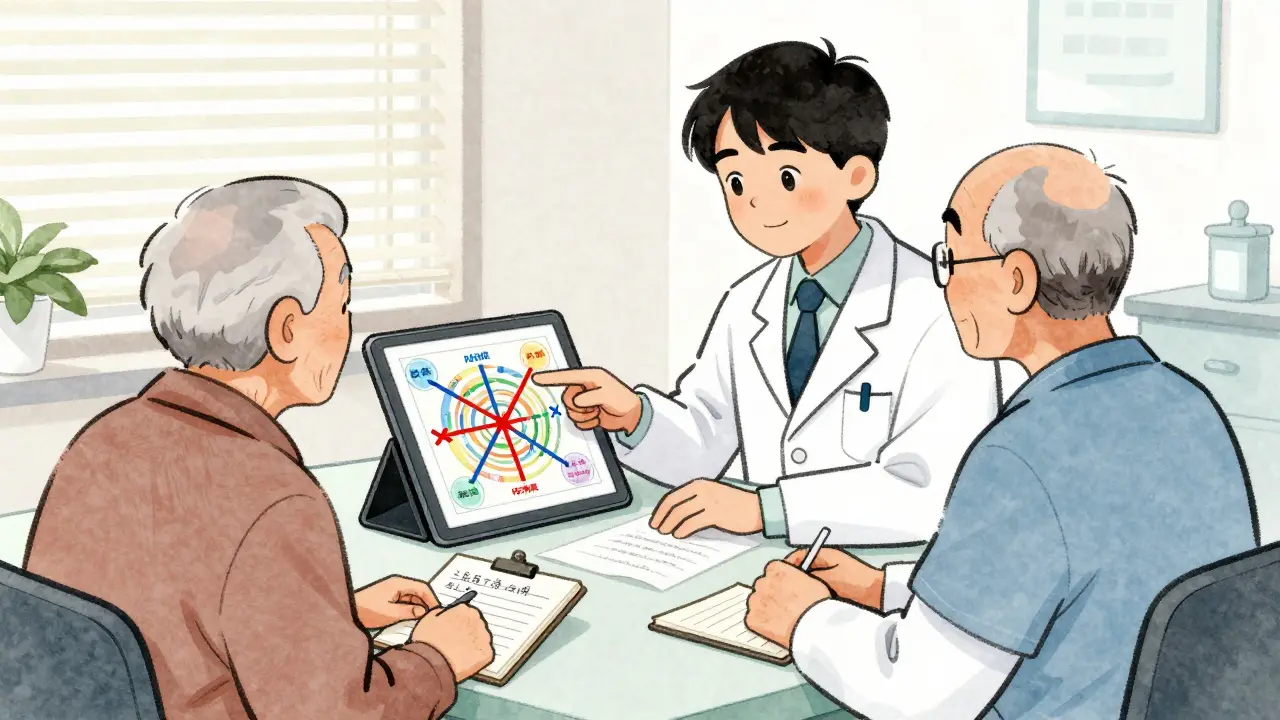
You don’t need a specialist. You don’t need a fancy app. You just need to take action. Step 1: Do a brown bag review. Empty every pill bottle, capsule, patch, and supplement into a brown paper bag. Bring it to your next doctor’s visit. Don’t leave anything out-not even the aspirin you take “just in case.” Most people forget about OTC meds and herbal supplements. But these are often the most dangerous. St. John’s Wort, for example, can cancel out blood thinners. Calcium supplements can interfere with thyroid meds. Step 2: Ask three questions. For every medication, ask:- Why am I taking this?
- What’s it supposed to do?
- What happens if I stop?
Technology and Tools That Help
There’s new tech making this easier. The FDA-approved MedWise platform uses genetic data to predict how your body will react to each drug. In a 2022 trial, patients using it had 41% fewer adverse reactions. It’s not available everywhere yet-but ask your doctor if it’s an option. Electronic health records now flag drug interactions. But here’s the catch: they’re wrong 78% of the time. They’ll warn you about a “dangerous combo” that’s perfectly safe for you. Or they’ll miss the real danger because the drugs are from different doctors. So tech helps-but it doesn’t replace human judgment.What Families Can Do
If you’re caring for an older parent, you’re not just a helper-you’re a critical part of the team.- Keep a written list of all meds, doses, and times. Update it every time a new prescription comes in.
- Go with them to appointments. Doctors often talk over seniors. You’ll catch things they miss.
- Watch for changes: confusion, falling, loss of appetite, new rashes. These could be drug side effects.
- Don’t assume “more meds = better care.” Sometimes, fewer meds mean more life.
The Bigger Picture
This isn’t just about pills. It’s about how we treat aging. We’ve built a system that treats each disease separately-but not the person. We fix the heart, then the knee, then the bladder, then the mood-without ever asking: “What kind of life are we helping you live?” The future of geriatric care isn’t about adding more drugs. It’s about removing the ones that don’t serve the person anymore. The National Institute on Aging is funding $42 million in research to create personalized medication plans based on biology, not just age. Imagine a world where your meds are chosen not because you’re 78, but because your liver processes drugs slowly, your kidneys are weak, and your goal is to stay independent at home. That’s not science fiction. It’s the next step.When to Seek Help
If you or a loved one is on five or more medications and:- Has fallen in the past year
- Feels confused or forgetful
- Skips doses because of cost or complexity
- Can’t name what each pill is for
- Sees multiple specialists without a central doctor coordinating care
What is polypharmacy?
Polypharmacy means taking five or more medications regularly. It’s common in older adults due to multiple chronic conditions, but it increases the risk of side effects, falls, confusion, and hospital stays. The issue isn’t the number alone-it’s whether each drug is still necessary and safe.
Are all medications for seniors dangerous?
No. Many medications save lives-like blood pressure drugs, insulin, or statins. The danger comes from taking drugs that are no longer needed, have better alternatives, or interact harmfully. The goal isn’t to stop all meds-it’s to stop the ones that do more harm than good.
Can I stop a medication on my own?
Never stop a prescription drug without talking to your doctor. Some medications, like blood pressure or antidepressant pills, can cause serious withdrawal symptoms if stopped suddenly. But you can ask your doctor: “Is this still helping me?” and start a conversation about deprescribing.
What’s the brown bag method?
Bring all your medications-prescription, over-the-counter, and supplements-to your doctor’s appointment in a brown paper bag. This helps your provider see exactly what you’re taking. Studies show this reveals an average of 2.8 unnecessary or duplicate drugs per person.
How can I afford my medications?
Talk to your pharmacist or doctor about generic alternatives. Many drugs have cheaper versions that work just as well. Medicare Part D offers cost-saving programs. You can also check nonprofit organizations like NeedyMeds or RxAssist for patient assistance. Skipping doses because of cost is dangerous-there are always better options.
Is deprescribing safe?
Yes, when done properly. Deprescribing is a planned, gradual process guided by a doctor or pharmacist. It’s not random stopping. Studies show it reduces hospital visits by 17% and improves quality of life. Many patients feel better after stopping unnecessary meds-less dizziness, clearer thinking, fewer stomach issues.
LALITA KUDIYA
January 7, 2026 AT 10:03Paul Mason
January 7, 2026 AT 23:00Rachel Steward
January 9, 2026 AT 10:44Jonathan Larson
January 10, 2026 AT 06:22Alex Danner
January 11, 2026 AT 08:33Katrina Morris
January 13, 2026 AT 06:50Aparna karwande
January 14, 2026 AT 04:53Emma Addison Thomas
January 16, 2026 AT 02:50Anthony Capunong
January 16, 2026 AT 03:05Sai Ganesh
January 17, 2026 AT 10:01Ayodeji Williams
January 18, 2026 AT 02:33Anastasia Novak
January 18, 2026 AT 20:21steve rumsford
January 19, 2026 AT 14:38Andrew N
January 20, 2026 AT 15:45