
Itching that won’t stop. No rash, no obvious cause, just an intense urge to scratch that gets worse at night. If you are pregnant and experiencing this, you might not be dealing with dry skin or a mild allergy. You could have Intrahepatic Cholestasis of Pregnancy, also known as obstetric cholestasis. This is a liver condition specific to pregnancy where the flow of bile from your liver slows down or stops. Bile acids build up in your blood instead of moving into your digestive system. While it rarely harms the mother physically, it poses serious risks to the baby if left unchecked.
This article breaks down what cholestasis is, how doctors diagnose it, and most importantly, what safe treatments exist to protect both you and your baby. We will look at the latest medical guidelines, including those from the Royal College of Obstetricians and Gynaecologists (RCOG) and the American College of Obstetricians and Gynecologists (ACOG), to help you understand your options.
What Is Intrahepatic Cholestasis of Pregnancy?
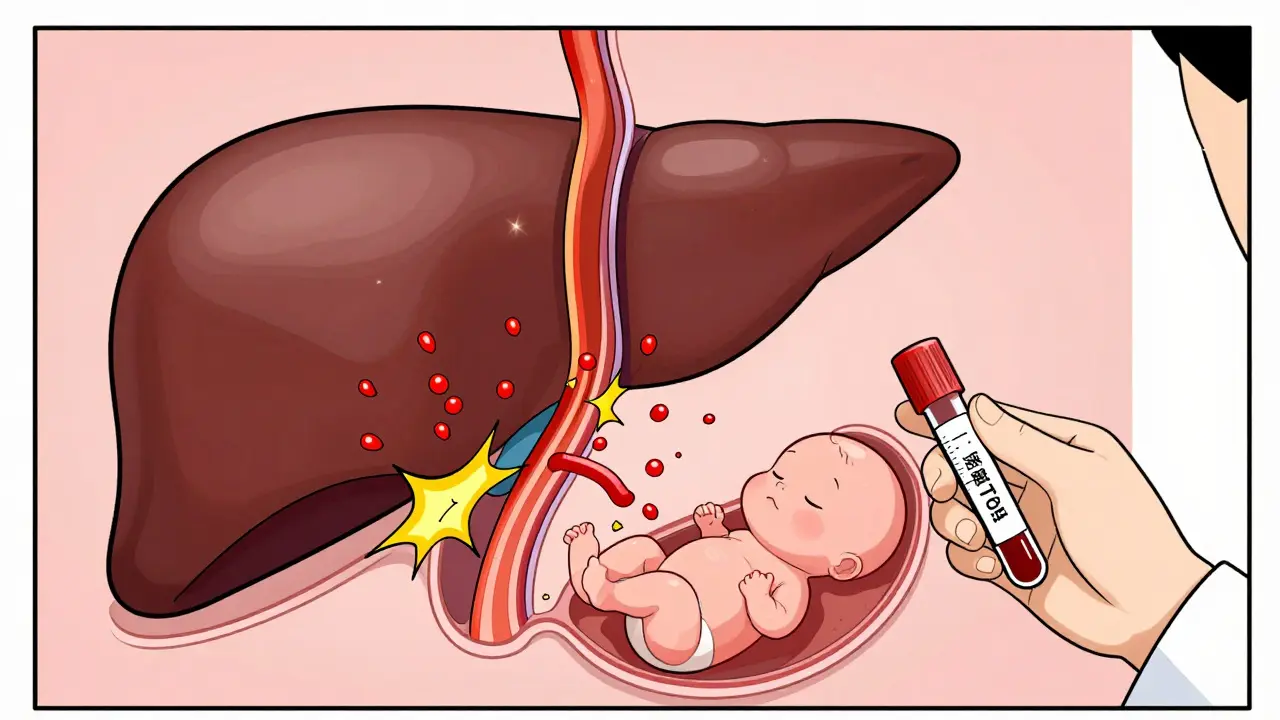
Intrahepatic Cholestasis of Pregnancy (ICP) is a liver disorder occurring specifically during pregnancy that disrupts the normal flow of bile from the liver, resulting in accumulation of bile acids in the bloodstream. Think of your liver as a filter. It produces bile to help digest fats. Normally, this bile flows into tiny tubes called canaliculi and then into your intestines. In ICP, these tubes get clogged or the pumps that move bile out don't work right. The result? Bile backs up into your liver cells and leaks into your blood.
Why does this happen? It’s largely driven by hormones. During pregnancy, estrogen levels rise significantly. In some women, high estrogen interferes with the proteins responsible for transporting bile out of the liver. Genetics play a huge role here. If your mother or sister had ICP, your risk jumps dramatically-up to 12 to 15 times higher than average.
The timing matters too. Symptoms usually start in the late second trimester or early third trimester, when hormone levels peak. The good news? For 95% of women, the itching and liver issues resolve within 1 to 3 days after delivery because hormone levels drop rapidly once the baby is born.
Symptoms and Diagnosis: How Do You Know?
The hallmark symptom of ICP is pruritus-intense itching. Unlike eczema or heat rash, there is no visible rash on your skin. The itching often starts on the palms of your hands and soles of your feet before spreading to your whole body. It tends to worsen at night, making sleep nearly impossible. Some women also report dark urine, pale stools, or yellowing of the skin and eyes (jaundice), but these are less common.
If you experience this itching, do not wait. Contact your healthcare provider immediately. Diagnosis relies on blood tests, not just symptoms. Here is what doctors look for:
- Serum Bile Acids: This is the gold standard test. A level above 10 µmol/L confirms ICP. Levels between 10 and 40 µmol/L are considered mild to moderate. Levels above 40 µmol/L indicate severe ICP, and levels over 100 µmol/L carry the highest risk for complications.
- Liver Function Tests (LFTs): About 60-70% of women with ICP show elevated enzymes like ALT (alanine aminotransferase) and AST (aspartate aminotransferase). However, normal LFTs do not rule out ICP if bile acids are high.
- Autotaxin Enzyme: Emerging research suggests autotaxin activity is a highly sensitive marker. Studies show it has 98.6% sensitivity for diagnosing ICP, potentially becoming a key tool alongside bile acid testing.
New technology is speeding up diagnosis. The FDA-approved CholCheck® rapid test provides results in 15 minutes, compared to the 24-72 hours required for standard lab processing. This allows for faster intervention, which is critical for fetal safety.
Risks to Mother and Baby
For the mother, ICP is primarily uncomfortable. The itching can lead to anxiety, depression, and sleep deprivation. There is a slightly increased risk of postpartum hemorrhage due to vitamin K malabsorption, but serious maternal health crises are rare.
For the baby, the stakes are higher. High levels of bile acids in the placenta can be toxic to the fetus. The main risks include:
- Stillbirth: This is the most feared complication. The risk correlates directly with bile acid levels. Women with levels below 100 µmol/L have a stillbirth risk of about 0.28%, while those above 100 µmol/L face a risk of 3.4%.
- Preterm Birth: Spontaneous preterm labor occurs in 30-60% of ICP cases. Doctors may also recommend early delivery to prevent stillbirth, leading to iatrogenic prematurity.
- Meconium Staining: Babies with ICP are more likely to pass their first stool (meconium) in the womb, which can lead to breathing difficulties at birth.
Understanding these risks helps explain why doctors monitor ICP pregnancies so closely. It is not about causing alarm; it is about preventing tragedy through proactive care.
Safe Treatments for Cholestasis in Pregnancy
There is no cure for ICP other than delivery. However, several treatments can lower bile acid levels, reduce itching, and improve outcomes. Always consult your doctor before starting any medication.
| Treatment | Function | Effectiveness | Key Considerations |
|---|---|---|---|
| Ursodeoxycholic Acid (UDCA) | First-line therapy | Reduces itching by ~70%; lowers bile acids | Dose: 10-15 mg/kg/day. Generally safe. May not fully eliminate stillbirth risk alone. |
| S-adenosyl Methionine (SAMe) | Alternative therapy | Reduces itching by 40-50% | Used if UDCA fails or causes side effects. Limited large-scale data. |
| Cholestyramine | Bile acid binder | Reduces itching | Causes vitamin K malabsorption (risk of bleeding). Often used as second-line. |
| Dexamethasone | Steroid | May help in severe cases | Reserved for extreme cases due to potential fetal side effects. |
Ursodeoxycholic Acid (UDCA) is the gold standard. Dr. Emily Jackson from Cedars-Sinai notes that UDCA at 15 mg/kg/day remains the first-line treatment. It works by replacing toxic hydrophobic bile acids with safer hydrophilic ones. While a 2022 Cochrane Review stated there is insufficient evidence that UDCA reduces perinatal mortality, clinical consensus strongly supports its use for symptom relief and bile acid reduction. Many specialists believe that lowering bile acids indirectly protects the baby.
If UDCA doesn’t work, doctors might add SAMe or switch to it. SAMe is an antioxidant that supports liver function. Another option is Cholestyramine, which binds bile acids in the gut so they aren’t reabsorbed. However, Cholestyramine can block the absorption of fat-soluble vitamins, especially Vitamin K. Since Vitamin K is crucial for blood clotting, women taking this drug often need Vitamin K supplements to prevent bleeding issues during delivery.
For symptom relief at home, cool baths, calamine lotion, and loose cotton clothing can help soothe the skin. Avoid hot showers, which can worsen itching.
Monitoring and Delivery Timing
Once diagnosed, your pregnancy becomes "high-risk" in terms of monitoring frequency. The goal is to catch any signs of fetal distress early.
Standard care includes:
- Serial Bile Acid Testing: Blood tests every 1-2 weeks. Dr. Maria Rodriguez emphasizes that 30% of women progress from mild to severe disease within 14 days. Tracking trends is vital.
- Fetal Monitoring: Non-stress tests (NSTs) twice a week starting at 32-34 weeks. These check the baby’s heart rate in response to movement.
- Ultrasound: Regular growth scans and amniotic fluid checks.
When should you deliver? This is one of the most debated topics in ICP management. The RCOG 2022 guidelines recommend:
- Mild ICP (Bile acids < 40 µmol/L): Delivery at 37-38 weeks.
- Severe ICP (Bile acids > 40 µmol/L): Consider delivery at 34-36 weeks, depending on severity and hospital protocol.
- Very Severe (Bile acids > 100 µmol/L): Delivery often recommended earlier, around 34-35 weeks, to minimize stillbirth risk.
However, new data suggests personalized approaches. Dr. Sarah Thompson notes that with aggressive management (UDCA plus weekly monitoring), stillbirth risk remains low even if delivery is delayed to 38 weeks for mild cases. The trend is moving toward tailoring delivery dates based on individual bile acid trajectories rather than rigid cutoffs.

Long-Term Health After ICP
After your baby is born, the itching stops, and your liver tests normalize. But ICP leaves a mark on your long-term health profile. Women who have had ICP are at higher risk for developing chronic liver and gallbladder diseases later in life.
A 2021 study published in Hepatology found that women with a history of ICP have:
- 3.2 times higher risk of hepatobiliary disorders overall.
- 2.8 times higher risk of Hepatitis C.
- 3.1 times higher risk of chronic hepatitis.
- 4.3 times higher risk of gallstones.
This means you should inform future healthcare providers about your ICP history. Regular liver screenings and gallbladder ultrasounds may be advisable. Additionally, if you plan another pregnancy, discuss preventive strategies with your doctor beforehand, as recurrence rates are high (60-70%).
Next Steps and Troubleshooting
If you suspect you have ICP, do not self-diagnose. Itching in pregnancy is common, but only blood tests can confirm cholestasis. Here is your action plan:
- Contact Your Provider: Report persistent itching, especially on hands and feet, immediately.
- Request Bile Acid Tests: Ask specifically for serum total bile acids, not just liver function tests.
- Follow Treatment Plans: Take prescribed medications consistently. Do not skip doses of UDCA.
- Monitor Fetal Movement: Keep a daily kick count. Report any decrease in movement to your hospital immediately.
- Prepare for Early Delivery: Pack your hospital bag by 32 weeks. Have a birth plan that accounts for possible induction.
Remember, while ICP sounds scary, modern medicine manages it effectively. With proper monitoring and treatment, the vast majority of women with ICP deliver healthy babies.
Is intrahepatic cholestasis of pregnancy dangerous for the mother?
Physically, ICP is rarely dangerous for the mother. The primary issue is severe discomfort from itching and potential sleep loss. However, there is a slightly increased risk of postpartum hemorrhage due to vitamin K deficiency, which is why doctors may prescribe vitamin K supplements. Long-term, mothers have a higher risk of developing liver or gallbladder disease later in life.
Can ICP cause stillbirth?
Yes, ICP increases the risk of stillbirth, particularly when bile acid levels are very high (above 100 µmol/L). The risk is correlated with the severity of bile acid elevation. This is why close monitoring and often early delivery are recommended to ensure fetal safety.
What is the best treatment for ICP?
Ursodeoxycholic Acid (UDCA) is the first-line treatment. It helps lower bile acid levels and reduces itching. Other options include S-adenosyl methionine (SAMe) and Cholestyramine, but these are usually secondary choices. Treatment plans should always be managed by a healthcare professional.
How soon after delivery do ICP symptoms go away?
Symptoms typically resolve quickly after delivery. Most women find that the itching stops within 1 to 3 days after giving birth, as hormone levels drop. Liver function tests usually return to normal within a few weeks.
Will I get ICP again in future pregnancies?
Recurrence rates for ICP are high, estimated between 60% and 70%. If you had ICP in one pregnancy, you should inform your doctor early in any subsequent pregnancies so they can monitor your bile acid levels proactively.