Probiotic Safety Risk Estimator
Patient Profile & Conditions
Adjust the parameters below to simulate a clinical scenario.
Risk Assessment Result
Ready to Analyze
Please adjust the patient profile settings and click "Assess Risk Level" to see potential contraindications based on current medical guidelines.
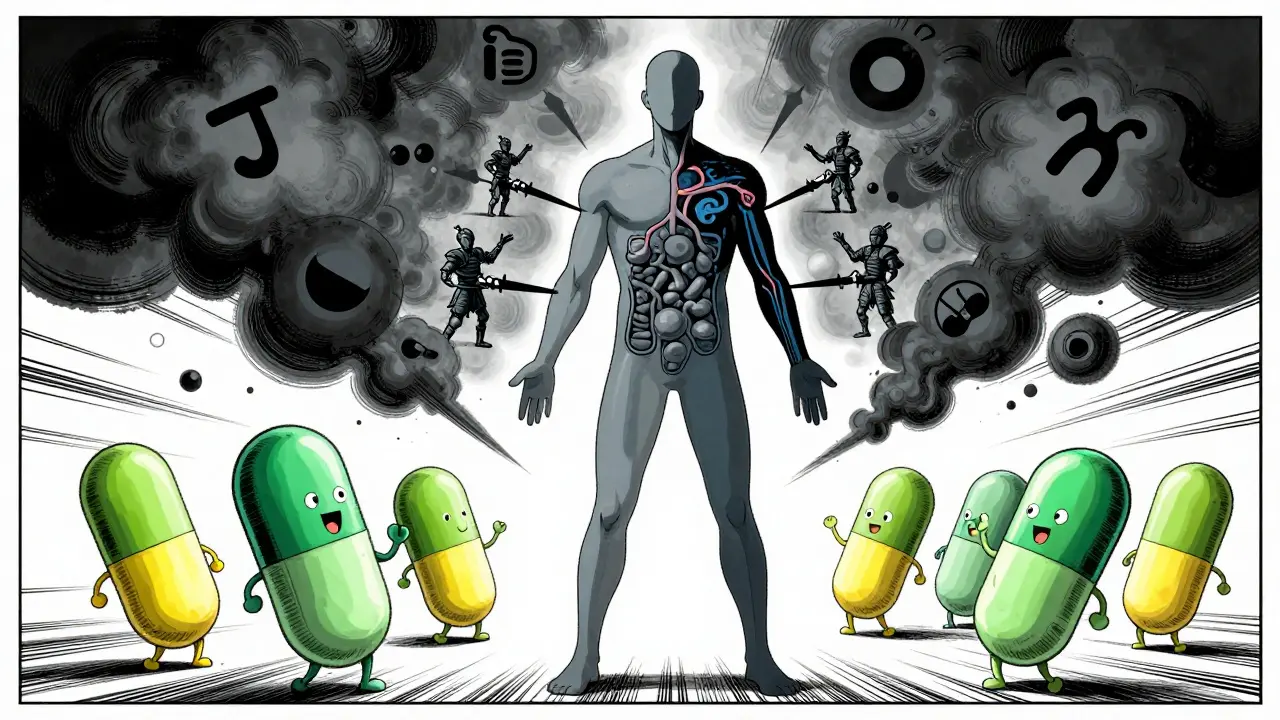
It sounds like a perfect match on paper. You take a pill to boost your gut health, and you take another to calm down an overactive immune system. But when probiotics are combined with medications that suppress the immune system, the result isn't always harmony. For many people living with autoimmune diseases or recovering from transplants, this combination carries a hidden danger: serious, sometimes fatal infections.
We often think of probiotics as harmless helpers. The World Health Organization defines them as live microorganisms that confer health benefits when consumed in adequate amounts. But "live" is the keyword here. When your immune system is intentionally weakened by drugs, those live bacteria or yeasts can cross the gut barrier and invade your bloodstream. This article breaks down who is at risk, which specific strains are dangerous, and how to navigate these decisions safely with your healthcare team.
The Mechanism: Why Live Cultures Become Dangerous
To understand the risk, we have to look at how immunosuppressants work. These medications-such as cyclosporine, tacrolimus, mycophenolate mofetil, and biologics like rituximab-are designed to stop your body from attacking itself or rejecting a new organ. They do this by dampening the activity of white blood cells, particularly neutrophils and T-cells.
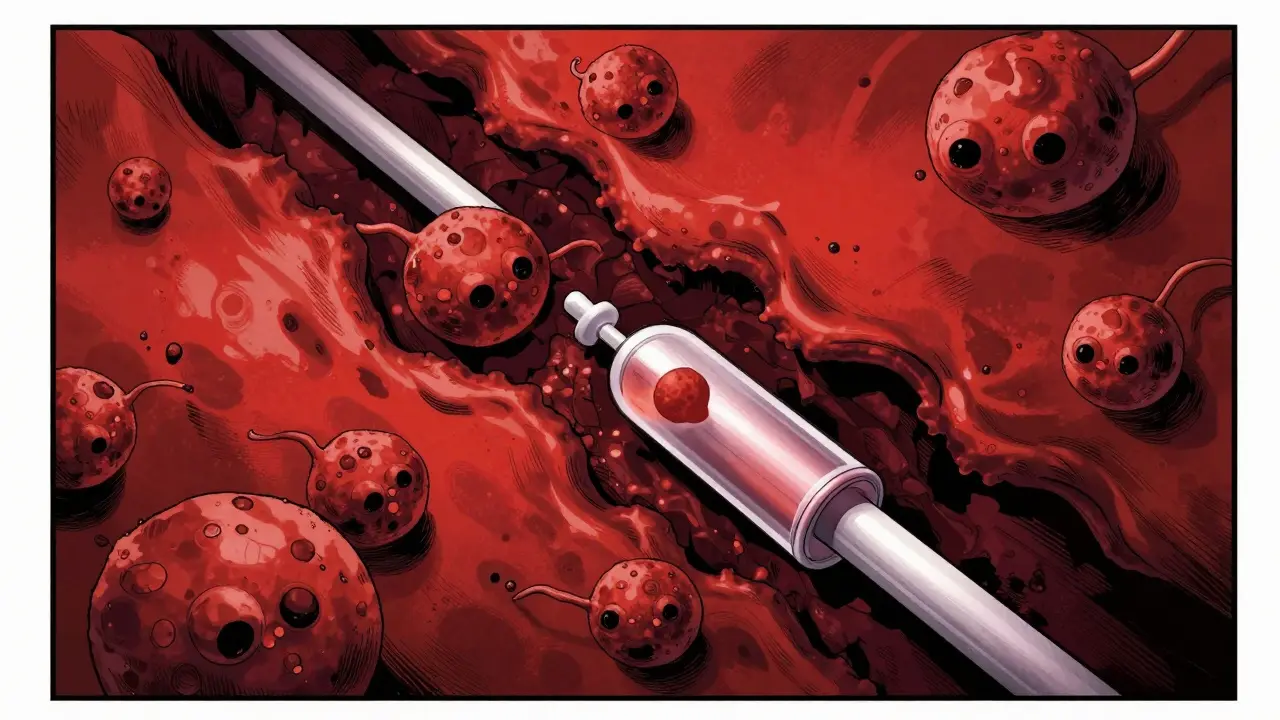
In a healthy person, if a probiotic bacterium escapes the intestines and enters the blood, the immune system quickly identifies it as foreign and destroys it. In an immunosuppressed patient, that defense mechanism is offline. The microbe finds a nutrient-rich environment with little competition and begins to multiply. This process, known as translocation, can lead to bacteremia (bacteria in the blood) or fungemia (yeast in the blood).
Dr. Joanna Scott-Lutyens, a nutritional therapist, explains that microbes can grow in internal organs where nutrients are high. This uncontrolled growth can cause septicemia, abscesses, or even infect the heart lining (myo-endocarditis). It’s not that the probiotic strain is inherently "bad," but rather that the host lacks the ability to keep it contained within the gut.
High-Risk Populations: Who Should Avoid Probiotics?
Not everyone on medication needs to avoid probiotics, but certain groups face significantly higher risks. Medical guidelines generally categorize patients into risk tiers based on their current immune status.
| Risk Category | Patient Profile | Recommendation |
|---|---|---|
| Highest Risk | Neutropenia (<500 cells/µL), recent stem cell transplant, central venous catheters | Absolute contraindication. Do not use. |
| Moderate Risk | Solid organ transplant (first 3 months), severe autoimmune disease on multiple drugs | Use only with infectious disease specialist consultation. |
| Lower Risk | Stable autoimmune disease on single agent, HIV patients with CD4 >200 | Selective strains only; monitor closely. |
| Low Risk | No immunosuppression | Standard use. |
The most critical red flag is the presence of a central venous catheter. A 2019 study in JAMA Internal Medicine found that patients with central lines had a 27% higher risk of catheter-related bloodstream infections when using probiotics containing Saccharomyces boulardii. This yeast strain is particularly notorious because it can colonize plastic medical devices, making it nearly impossible to clear without removing the line.
Specific Strains and Their Risks
Not all probiotics are created equal, and some carry more danger than others in immunocompromised hosts. The two most common genera, Lactobacillus and Bifidobacterium, are generally considered safer, but they are not risk-free. Between 2000 and 2020, a review documented 47 cases of probiotic-related infections, with Lactobacillus rhamnosus GG being the most frequently implicated pathogen (28 cases).
However, the biggest concern remains Saccharomyces boulardii. This is a yeast, not a bacteria. While effective for preventing antibiotic-associated diarrhea in healthy people, it poses a unique threat to immunosuppressed patients. A 2018 review in Clinical Infectious Diseases reported case fatality rates of 22% for S. boulardii fungemia in vulnerable populations. If you are on immunosuppressants, you should strictly avoid any supplement listing this strain unless explicitly approved by your doctor.
Multi-strain products also present a higher risk than single-strain formulations. A 2022 study in Clinical Microbiology and Infection showed that multi-strain probiotics had a 63% lower translocation risk compared to single-strain ones? No, actually, the study found that single-strain probiotics had a 63% lower translocation risk. Multi-strain blends increase the complexity of the microbial load, making it harder for clinicians to identify the source of an infection if one occurs. Always opt for simplicity and transparency in strain identification.
Conflicting Evidence: Transplant vs. Autoimmune
The medical literature isn't entirely black and white. Different patient groups show different outcomes, which complicates general advice.
For liver transplant recipients, the data is surprisingly positive. A 2022 meta-analysis in Liver Transplantation showed that probiotics reduced bacterial infections by 34% with no increase in serious adverse events. This suggests that in specific contexts, the benefit of maintaining gut integrity might outweigh the infection risk.
In contrast, bone marrow transplant recipients face a starkly different reality. A 2020 study in Blood Advances documented a 4.2-fold increased risk of probiotic-related bacteremia in these patients. Similarly, chemotherapy patients experiencing myelosuppression (low white blood cell counts) are advised to avoid probiotics at 87% of major U.S. cancer centers. The logic is simple: when your neutrophil count drops below 1,000 cells/µL, your body cannot fight off even friendly invaders.
HIV patients offer another nuance. Those with CD4 counts above 200 cells/µL appear to tolerate probiotics well, according to a 2021 cohort study. However, when CD4 counts drop below 100, the risk of fungemia increases 3.8 times. This highlights why "one-size-fits-all" advice fails in immunology.

Practical Guidance for Patients and Providers
If you are taking immunosuppressants, do not make unilateral decisions about starting probiotics. Here is a practical framework for discussion with your healthcare provider:
- Check Your Neutrophil Count: If your absolute neutrophil count (ANC) is below 500 cells/µL, probiotics are generally contraindicated.
- Review Your Catheters: If you have a central line, PICC line, or port, avoid Saccharomyces boulardii completely.
- Identify Specific Strains: Ask for the full strain designation (e.g., Lactobacillus rhamnosus GG ATCC 53103). Generic labels like "Lactobacillus blend" provide no safety guarantee.
- Monitor for Fever: If you start a probiotic under medical supervision, watch for fever (>38.3°C / 101°F). This is often the first sign of systemic infection.
- Consider Postbiotics: Emerging research looks at "postbiotics"-inactivated microbial cells and metabolites. These may offer gut benefits without the risk of live infection. A phase 2 trial (NCT04873011) showed promising results for C. difficile prevention in immunocompromised patients.
The Infectious Diseases Society of America (IDSA) recommends weekly blood cultures during the initial phase of probiotic use in moderate-risk patients. This seems extreme, but catching a bacteremia early can save your life.
Regulatory Gaps and Market Realities
One of the biggest challenges is regulation. In the United States, the FDA classifies most probiotics as dietary supplements, not drugs. This means they do not undergo rigorous pre-market safety testing for high-risk populations. The European Food Safety Authority (EFSA) has rejected 95% of health claims for probiotics due to insufficient evidence.
This regulatory gap leaves patients vulnerable. You might buy a product labeled "safe" without realizing it contains a strain linked to fatalities in immunocompromised hosts. In July 2023, the FDA issued a safety communication requiring warning labels on Saccharomyces boulardii products for immunocompromised patients, but enforcement varies. Always check the label for warnings and discuss any supplement with your pharmacist.
Insurance coverage adds another layer of complexity. Medicare Part D covers only prescription-grade probiotics like VSL#3 for specific conditions like pouchitis. Most commercial probiotics require out-of-pocket payment, averaging $38.50 per month. Given the potential risks, spending money on unverified supplements may not be worth the gamble.
Can I take probiotics if I have rheumatoid arthritis and am on methotrexate?
This depends on your specific immune status. Methotrexate is an immunosuppressant, but many patients maintain stable immune function. If your neutrophil count is normal and you are not on additional biologics, low-dose, single-strain Lactobacillus or Bifidobacterium may be acceptable. However, you must consult your rheumatologist first. Avoid Saccharomyces boulardii entirely.
Are fermented foods like yogurt safe for immunosuppressed patients?
Generally, yes. Fermented foods contain live cultures, but the bacterial load is much lower than in concentrated probiotic supplements. Additionally, the food matrix provides some protection. However, if you are severely neutropenic (ANC <500), even fermented foods should be avoided until your counts recover. Pasteurized fermented products are the safest option.
What are postbiotics, and are they safer?
Postbiotics are inactivated microbial cells, cell fragments, or metabolites produced by probiotics. Because they are dead, they cannot cause infection. Early trials suggest they may help reduce inflammation and prevent C. difficile infection without the risks associated with live organisms. They are a promising alternative for immunocompromised individuals, though long-term data is still emerging.
Why is Saccharomyces boulardii specifically dangerous?
Saccharomyces boulardii is a yeast, not a bacteria. Yeasts can adhere to plastic surfaces like central venous catheters and form biofilms that are resistant to antibiotics. In immunocompromised patients, this can lead to fungemia (yeast in the blood), which has a high mortality rate (up to 22% in some studies) because antifungal treatments are less effective against established biofilm infections.
Should I stop probiotics immediately if I develop a fever?
Yes. If you are taking probiotics and develop a fever greater than 38.3°C (101°F), stop the supplement immediately and contact your healthcare provider. Fever can be the first sign of bacteremia or fungemia. Blood cultures should be drawn to identify the pathogen, and treatment should begin promptly.