Recent Authorized Generic Approvals: Current Options
If you are looking for lower-cost medications, the landscape has shifted significantly in the last year. While many patients still ask for Authorized Generics, fewer options are hitting the shelves compared to three years ago. As of early 2026, understanding exactly what counts as an authorized generic-and why they are becoming rarer-is crucial for managing your prescription costs.
You might notice that while traditional generic drugs flood the market every month, true authorized generics appear less frequently. This shift isn't accidental. Regulatory changes and market dynamics have altered how pharmaceutical companies release identical versions of their own brand-name drugs. Below, we break down the current status of these approvals and what they mean for your wallet and health.
Understanding the Basics: What Is an Authorized Generic?
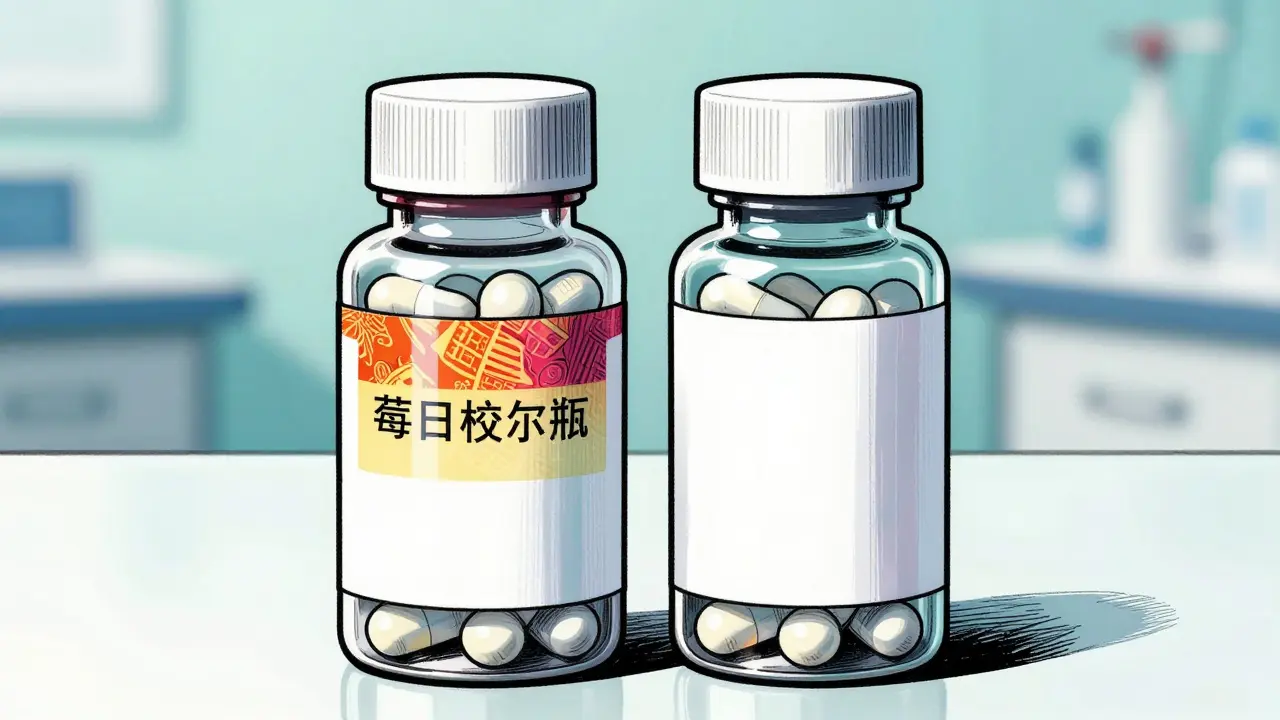
To navigate the market, you first need to know what sets an authorized generic apart from the generic pills you see at the counter. An authorized generic is essentially the exact same product as the brand-name drug. It comes from the same manufacturer, uses the same active ingredients, and has the same inactive ingredients.
The only difference is the packaging and label. Instead of seeing the big brand logo, you see a plain label, often just the generic name. According to the U.S. Food and Drug Administration (FDA), this allows sponsors to sell their own approved New Drug Application (NDA) product under a different trademark. Unlike standard generics, which are made by different companies and might have different fillers, an authorized generic is chemically identical to the original.
This distinction matters for patients who are sensitive to minor formulation changes. If you are worried about side effects when switching brands, an authorized generic offers the highest guarantee of consistency because it skips the bioequivalence testing required for traditional competitors.
Current Approval Trends in 2025 and 2026
When looking for "recent approvals," the data tells a story of decline. In 2022, there were 37 new authorized generics launched. By 2025, that number dropped to just 12. Why the sharp decrease? The Federal Trade Commission (FTC) has been cracking down on practices where companies launch authorized generics specifically to block competition or delay cheaper alternatives.
Despite the slowdown, some products did enter the system recently. The most significant update to the public registry occurred on October 10, 2025. Two specific products were added to the list during that period:
- Xyrem (sodium oxybate): A version marketed by Jazz Pharmaceuticals under a different label appeared in the October 2025 update.
- Trulance (plecanatide): Distributed by Ironwood Pharmaceuticals, this option also entered the database around the same time.
These aren't random findings. They represent strategic moves by the brand manufacturers to maintain market presence without launching full-scale generic competition. However, don't get confused by similar-sounding lists. For instance, several denosumab products (like Ospomyv or Bildyos) were approved in 2025, but those are traditional biosimilars, not authorized generics. Their naming conventions-ending in suffixes like -dssb or -nxxp-signal they are separate biological entities, not identical repackaged versions.
Why Finding Them Matters for Your Wallet
The primary reason patients care about authorized generics is price. Traditionally, these products offer a discount compared to the brand-name version, though it is rarely as steep as a traditional generic. Studies indicate an authorized generic typically costs about 10-15% less than the brand. Compare that to a standard generic, which often drops prices by 80% or more.
This price gap creates a specific dynamic. Some pharmacy benefit managers (PBMs) prefer traditional generics because they negotiate higher rebates. You might encounter situations where your insurance company denies coverage for an authorized generic because it forces them to accept a lower rebate from the brand company. For example, in mid-2025, reports surfaced regarding Blue Cross plans removing coverage for Jardiance authorized generics to force use of competing third-party generics. This highlights a risk: even if an identical version exists, your plan might refuse to pay for it unless it is the "cheapest" option in the network.
The Identification Challenge
One of the biggest hurdles for consumers is spotting an authorized generic in real life. When the pharmacist hands you the bag, there is often no sticker saying "Authorized Generic." The bottle might look almost identical to the brand, or it might be indistinguishable from a third-party generic depending on the state laws.
A survey of over 2,000 pharmacists conducted in 2025 found that nearly two-thirds couldn't reliably identify an authorized generic without checking external databases. This puts the burden on the patient or the prescriber. To verify, you or your healthcare provider can consult the FDA's official listing maintained in the Orange Book. This list tracks products that have been identified as authorized generics since 1999. While the FDA updates this quarterly, the lag time means you might miss immediate launches until the next report cycle.
Education programs are catching up to this issue. Institutions like the Community College of Philadelphia have begun adding specific modules to their pharmacy technician curriculum to teach staff how to differentiate these products. Until that knowledge trickles down to every pharmacy counter, you may need to ask explicitly if a low-priced brand-name equivalent is actually an authorized generic.
Comparing Your Options
| Feature | Brand Name | Authorized Generic | Traditional Generic |
|---|---|---|---|
| Manufacturer | Original Company | Original Company | Different Company |
| Ingredients | Specific Formula | Identical Formula | Bioequivalent (Fillers may vary) |
| Potential Discount | N/A (Base Price) | ~10-15% off | ~80%+ off |
| Regulatory Hurdle | New Drug Application | None (Already Approved) | ANDA / Bioequivalence Study |
From this comparison, you can see where the trade-offs lie. If your priority is absolute formulation consistency, the authorized generic wins. If your priority is cost minimization, the traditional generic is usually better. With 1,247 authorized generics currently listed on the FDA registry, they remain a viable option for niche needs, especially for narrow therapeutic index drugs where tiny differences in absorption matter.
Facing the Future: Legislation and Shift
As we move further into 2026, the outlook for authorized generics remains uncertain due to pending legislation. The RELIEF Act (H.R. 4086), introduced in May 2025, proposes requiring immediate price parity between authorized generics and traditional generics. This would effectively eliminate the slight financial advantage brand companies gain by selling their own branded copycat versions.
Furthermore, the market is pivoting heavily toward biosimilars. Companies are increasingly investing in interchangeable versions for biologic medicines rather than small-molecule authorized generics. While authorized generics served as a quick route to generic competition for chemical drugs, biosimilars now dominate the strategy for complex biologics. Analysts predict that by 2027, authorized generics could comprise less than 5% of all new generic entries.
However, experts like Dr. Aaron Kesselheim from Harvard Medical School argue that we shouldn't lose sight of their value. For specific conditions where even slight variations in manufacturing affect outcomes, these products serve as an underutilized safety tool. As long as that clinical justification holds, the FDA and industry will continue to support them despite the regulatory headwinds.
Frequently Asked Questions
Is an authorized generic exactly the same as the brand drug?
Yes. An authorized generic is manufactured by the same company using the same facilities and formula. It differs only in the label and packaging.
How much money do I save with an authorized generic?
Savings are typically modest, ranging from 10% to 15% compared to the brand price. Traditional generics usually offer 80% or greater discounts.
Can my insurance deny an authorized generic?
Yes. Insurance plans often prioritize traditional generics because they secure larger rebates from manufacturers. You may need to check your formulary specifically.
How do I know if I received an authorized generic?
Ask your pharmacist directly or check the packaging for the NDC code. You can cross-reference this with the FDA's Orange Book list of authorized generics.
Are there more authorized generics being approved in 2026?
No. Approval numbers have declined significantly. Only 12 new authorized generics launched in 2025 compared to 37 in 2022, a trend expected to continue.
Mark Zhang
April 3, 2026 AT 10:45It really helps to understand the difference between authorized generics and regular ones. Many patients struggle with the pricing models and feel lost in the pharmacy aisles. Knowing that the manufacturer stays the same gives peace of mind for some conditions. It is important to advocate for yourself during the prescription pickup process.
Rachelle Z
April 3, 2026 AT 19:32This whole situation is absolutely ridiculous!!! 😂 Everyone pretends these generic drugs are magic pills! 💊😒 It is just marketing spin from big Pharma!! 🙄 #PharmaScam #GenericDrugs 📉📈
Vicki Marinker
April 5, 2026 AT 02:38The decline in approvals suggests a systemic shift rather than a random fluctuation. Regulatory scrutiny appears to be the primary driver behind the reduction in launches. Consumers often overlook the strategic implications of these market movements. Precision in terminology matters significantly when discussing bioequivalence standards.
Aysha Hind
April 7, 2026 AT 01:59The pharmaceutical industry has always known exactly what they are doing. They release authorized generics to control the market prices artificially. Patients think they are getting a deal when they see those savings. The discount is barely enough to matter compared to the real cost. Insurance companies agree to help them hide the truth. PBMs force you into their preferred networks without any choice. You cannot easily find the list of authorized generics online. The FDA database updates too slowly for anyone who needs meds. They want to keep us guessing about which bottle is the safe one. It makes perfect sense to fear the traditional generics instead. Traditional generics change the fillers in the pill structure. Small changes can cause bigger problems for sensitive people. We should trust the original manufacturer only for safety. Big pharma claims safety to justify the higher price tag. Independent studies never show the full picture clearly.
Lawrence Rimmer
April 7, 2026 AT 03:58There is a deeper philosophical question about who controls access to life-saving medication. The system seems designed to benefit intermediaries more than the patient themselves. Efficiency in healthcare is often sacrificed for profit margins. We accept this reality without questioning the fundamental fairness of the arrangement.
Jenna Carpenter
April 7, 2026 AT 20:32I recieve my pills and dont know if they are real generocs.
Brian Shiroma
April 8, 2026 AT 07:15Sure everyone is clueless until they get the bill. Then they wonder why the wallet shrinks every month. The lack of transparency is the biggest issue facing pharmacies today. Pharmacists work under pressure and rarely explain these distinctions. Patients deserve better information than vague labels.
Dipankar Das
April 9, 2026 AT 22:57We must recognize the importance of legislative efforts like the RELIEF Act. These measures aim to level the playing field for all medication categories. Market dynamics will eventually favor the most cost-effective solutions for patients. Transparency in pricing is a key component of modern healthcare reform. Stakeholders must collaborate to ensure equitable access for all citizens.
Hope Azzaratta-Rubyhawk
April 10, 2026 AT 00:42You should definitely talk to your doctor about formulary options. It empowers you to make informed choices regarding your health expenses. Staying proactive prevents unnecessary stress during billing cycles. Every small saving contributes to long-term financial stability.
sophia alex
April 10, 2026 AT 05:16My friends ignore the warnings until they pay the price! 😡💸 The government lets corporations run wild with our money! 📢🇺🇸 We need to take back control NOW! 👊
Hudson Nascimento Santos
April 10, 2026 AT 11:17Regulatory frameworks are merely reflections of societal values at a given moment. The tension between innovation and accessibility defines current debates. One could argue that profit motives inevitably conflict with public health goals. Balancing these forces remains the central challenge of policy makers.
The Charlotte Moms Blog
April 11, 2026 AT 23:21It is frustrating how many people miss the obvious risks here!!! They think generic is the same as brand!!! Safety protocols differ between companies!!! Do not trust the cheap version blindly!!!!!! ⚠️⚠️⚠️
simran kaur
April 12, 2026 AT 02:36The elite push this narrative to maintain their grip on the market.