
If you’ve ever lain awake at night with an unbearable urge to move your legs-like something’s crawling under your skin, or your muscles are buzzing with tension-you’re not alone. About 1 in 10 adults in the U.S. and Europe experience this, and it’s not just stress or bad sleep. It’s restless legs syndrome (RLS), and for many, the root cause isn’t mystery-it’s iron. Not the kind in your blood, but the kind stored in your brain. And the key to fixing it? Your ferritin level.
Why Your Legs Won’t Stay Still
Restless legs syndrome isn’t about being fidgety. It’s a neurological condition where your brain misfires signals, making your legs feel like they’re on fire, tingling, or aching. The urge to move is overwhelming, especially when you’re trying to rest. Symptoms get worse at night, which means sleep vanishes. And if you’ve tried stretching, massage, or even sleeping pills, you know they don’t fix the real problem. The truth? Most doctors test for anemia, see normal hemoglobin, and say, "You’re fine." But that’s like checking the fuel gauge and ignoring the engine. Your body might have enough iron circulating, but your brain? It’s starving. And that’s where ferritin comes in.Ferritin Isn’t Just a Number-It’s Your Brain’s Iron Reserve
Ferritin is the protein that stores iron in your body. Think of it as your iron savings account. When your brain needs iron to make dopamine-the chemical that helps control movement-it pulls from this reserve. If your ferritin is too low, your brain can’t make enough dopamine, and your legs pay the price. Here’s what most people don’t know: the normal range for ferritin is 12-300 ng/mL. But for RLS, that range is misleading. Research shows that even if your ferritin is "normal," if it’s below 50 ng/mL, your brain is likely in deficit. Studies from Johns Hopkins, Vanderbilt, and the American Academy of Neurology all agree: ferritin below 50 ng/mL is a treatable trigger for RLS. One 2020 study in Nature Scientific Reports found that RLS patients with ferritin under 50 had symptoms twice as bad as those above 75. Another trial showed that 52% of patients with ferritin under 50 saw at least half their symptoms disappear after iron therapy-compared to just 18% on placebo.Iron Supplements: The Right Kind, the Right Dose
If your ferritin is below 50, iron supplements aren’t optional-they’re the first-line treatment. But not all iron is created equal. Most doctors start with ferrous sulfate: 325 mg tablets, which give you 65 mg of elemental iron. Take it on an empty stomach for best absorption, or with 100-200 mg of vitamin C (like a glass of orange juice or a supplement). Vitamin C helps your body pull iron into your bloodstream. But here’s the catch: about 1 in 3 people can’t tolerate it. Stomach pain, nausea, constipation-these aren’t side effects you just "get used to." They’re signs your body’s rejecting it. That’s why many experts recommend alternate-day dosing. Take your iron every other day instead of daily. It’s just as effective, but gentler on your gut. If you’ve tried oral iron for 8-12 weeks and your ferritin hasn’t budged, or you’re below 30 ng/mL, it’s time to talk about IV iron. Intravenous ferric carboxymaltose (1,000 mg single dose) can raise ferritin by over 120 ng/mL in six weeks. One 2021 study showed 68% of patients had major symptom relief after just one infusion.Why Dopamine Pills Aren’t the Answer (Even Though They Work)
You might have heard of pramipexole or ropinirole-pills that calm RLS fast. They work by mimicking dopamine. And yes, they help. But here’s the hidden cost: augmentation. Augmentation means your symptoms get worse over time. They start earlier in the day. Spread to your arms. Become unbearable even when you’re walking. Up to 80% of people on these drugs for more than five years develop it. And once it happens, you can’t go back. The drugs stop working, and your condition becomes harder to treat. Iron therapy doesn’t cause augmentation. It doesn’t trick your brain. It fixes the problem at the source. And while it takes 4-8 weeks to feel better, the results last. One 2021 study followed patients for two years. Those who got IV iron maintained symptom control in 65% of cases. Those on dopamine drugs? Only 32%.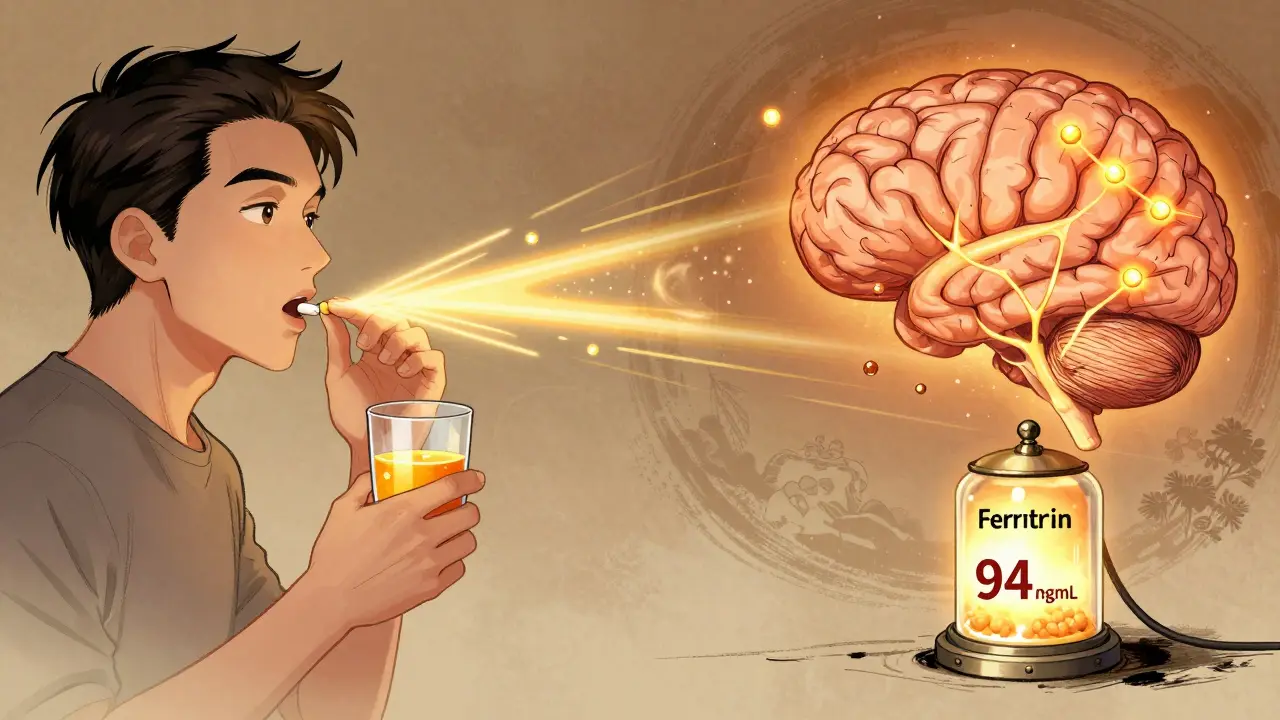
What About Diet? Can I Just Eat More Steak?
You can try. But it won’t be enough. Heme iron from red meat is the most absorbable form. A 3-ounce serving of beef gives you about 1-2 mg of absorbable iron. A single ferrous sulfate tablet gives you 65 mg. That’s 30-65 times more. Plus, many people with RLS have high hepcidin-a hormone that blocks iron absorption. Even if you eat iron-rich foods, your body won’t use them. That’s why supplements are necessary. Diet helps as a backup, not a solution.Testing and Monitoring: What You Need to Ask For
Don’t assume your doctor will test ferritin. Most don’t unless you ask. Request these five blood tests:- Serum ferritin
- Serum iron
- Total iron-binding capacity (TIBC)
- Transferrin saturation
- Hepcidin (if available)
What If Iron Doesn’t Work?
If you’ve taken iron for 3 months, at the right dose, and still feel restless? There are other possibilities. Sleep apnea, kidney disease, pregnancy, or nerve damage can mimic RLS. But if your ferritin was low and you didn’t respond, you might need a higher IV dose, or your body might need more time. New forms of iron are coming. Liposomal iron and ferric maltol are in trials and show promise-better absorption, fewer stomach issues. But right now, ferrous sulfate and IV iron are your best bets.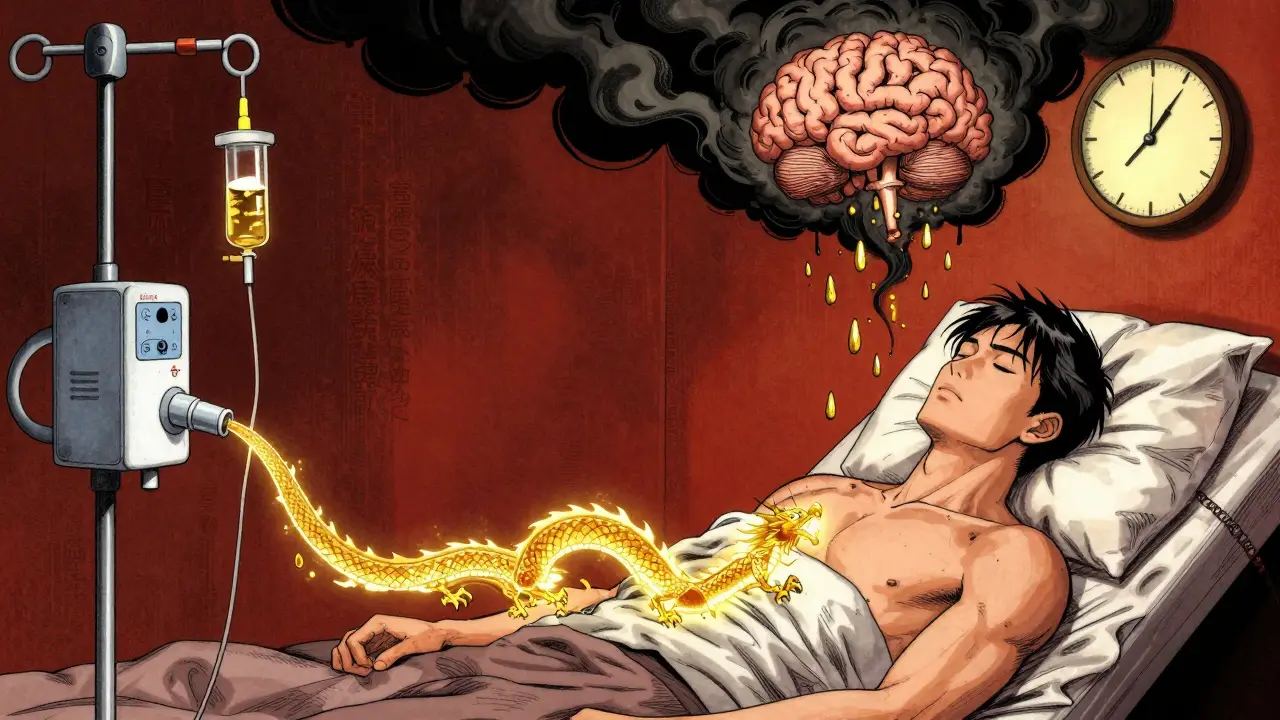
Real Results: What Patients Actually Experience
One woman, 58, had RLS for 12 years. She took ropinirole daily. Her legs burned every night. She couldn’t sleep more than 3 hours. Her ferritin was 22 ng/mL. She switched to 65 mg of iron daily with vitamin C. After 10 weeks, her ferritin hit 94. Her symptoms dropped 80%. She stopped the dopamine pill. Two years later, she sleeps through the night. Another man, 45, tried everything-magnesium, yoga, sleep hygiene. Nothing worked. His ferritin was 18. He got one IV iron infusion. Within 10 days, the crawling sensation vanished. He didn’t need pills. He didn’t need to move his legs anymore. These aren’t outliers. They’re the rule when ferritin is the missing piece.Cost Matters Too
Oral iron costs $185-$350 a year. Dopamine pills? $2,400-$4,800. IV iron? Around $1,200 per dose-but one dose lasts months, sometimes years. And you avoid the long-term costs of worsening symptoms, sleep loss, depression, and medication side effects. Iron therapy isn’t just better. It’s cheaper. And safer.Bottom Line: What to Do Now
If you have restless legs syndrome:- Ask your doctor for a ferritin test. Don’t accept "normal" if it’s under 75.
- If it’s below 50, start iron therapy-65 mg elemental iron daily with vitamin C.
- If you can’t tolerate it, switch to alternate-day dosing.
- If ferritin stays low after 3 months, ask about IV iron.
- Retest ferritin in 8-12 weeks. Aim for 75-100 ng/mL.
- Hold off on dopamine pills unless absolutely necessary.
Andrew Freeman
January 14, 2026 AT 15:14iron fixes rls lol sure buddy next youll tell me drinking bleach cures cancer
Vicky Zhang
January 15, 2026 AT 02:52oh my gosh this is so important i cant believe no one talks about this before i had rls for years and felt like i was going crazy until i got my ferritin tested and it was 19 now its 87 and i sleep like a baby i just want everyone to know you dont have to suffer like i did
Susie Deer
January 15, 2026 AT 22:58american medical system is broken they dont test ferritin because its cheaper to keep you on pills that make money for big pharma
TooAfraid ToSay
January 17, 2026 AT 19:38iron deficiency is a third world problem why are we even talking about this in the usa where we have food aplenty
Robert Way
January 19, 2026 AT 04:34i tried iron and it made me vomit so much i had to stop then i got ropinirole and now i can sleep but my legs feel weird when i walk
Sarah Triphahn
January 19, 2026 AT 21:55youre all missing the point this isnt about iron its about dopamine dysfunction and you people are reducing a complex neurochemical disorder to a nutritional fix like its 1985
Allison Deming
January 21, 2026 AT 06:10It is deeply concerning that so many individuals are willing to accept unverified medical claims without consulting their physicians. Iron supplementation without proper diagnostics can lead to hemochromatosis, a potentially fatal condition. Please exercise caution and seek professional guidance before self-treating neurological symptoms.
Jason Yan
January 21, 2026 AT 17:21this is actually one of the most thoughtful pieces i've read in a long time i used to think rls was just stress or bad sleep until i learned about brain iron and ferritin levels i had mine tested at 28 and after 3 months of iron with orange juice my symptoms dropped by 90% its not magic its just biology working the way its supposed to
Dylan Livingston
January 21, 2026 AT 19:01oh wow another wellness influencer pushing iron as the cure for everything i bet you also drink celery juice and wear crystals to balance your chakras
says haze
January 23, 2026 AT 05:04the study cited from nature scientific reports has a conflict of interest disclosure that was buried in the appendix. the lead researcher received funding from a supplement company. this is not science its marketing dressed as medicine
Henry Sy
January 24, 2026 AT 23:12my legs used to feel like they were full of ants on fire then i started taking iron and now i sleep like a king i used to think i was just weird now i know i was just starving
Anna Hunger
January 26, 2026 AT 05:41While the emotional resonance of personal testimonials is compelling, clinical guidelines from the American Academy of Sleep Medicine still classify iron supplementation for RLS as a category B recommendation. We must prioritize evidence-based protocols over anecdotal narratives.
shiv singh
January 26, 2026 AT 09:20you americans think everything can be fixed with a pill or a shot but in india we have been using turmeric and yoga for centuries you should try real medicine not this western junk
Alvin Bregman
January 28, 2026 AT 04:47just got my ferritin back at 82 after 4 months of iron every other day and yeah its life changing no more midnight leg dances i dont know why this isnt common knowledge