St. John's Wort Interaction Checker
Check Medication Safety
Enter your prescription medications to see if they interact dangerously with St. John's Wort.
Many people turn to St. John’s Wort because it’s natural, widely available, and marketed as a gentle remedy for low mood. But here’s the harsh truth: St. John’s Wort isn’t harmless. It can quietly sabotage your prescription medications - sometimes with life-threatening results.
You might think, "It’s just a herb," but this plant doesn’t play by the same rules as your vitamins or tea. It actively changes how your body processes drugs. And if you’re on anything from birth control to antidepressants to heart meds, you’re at risk.
How St. John’s Wort Changes Your Body’s Chemistry
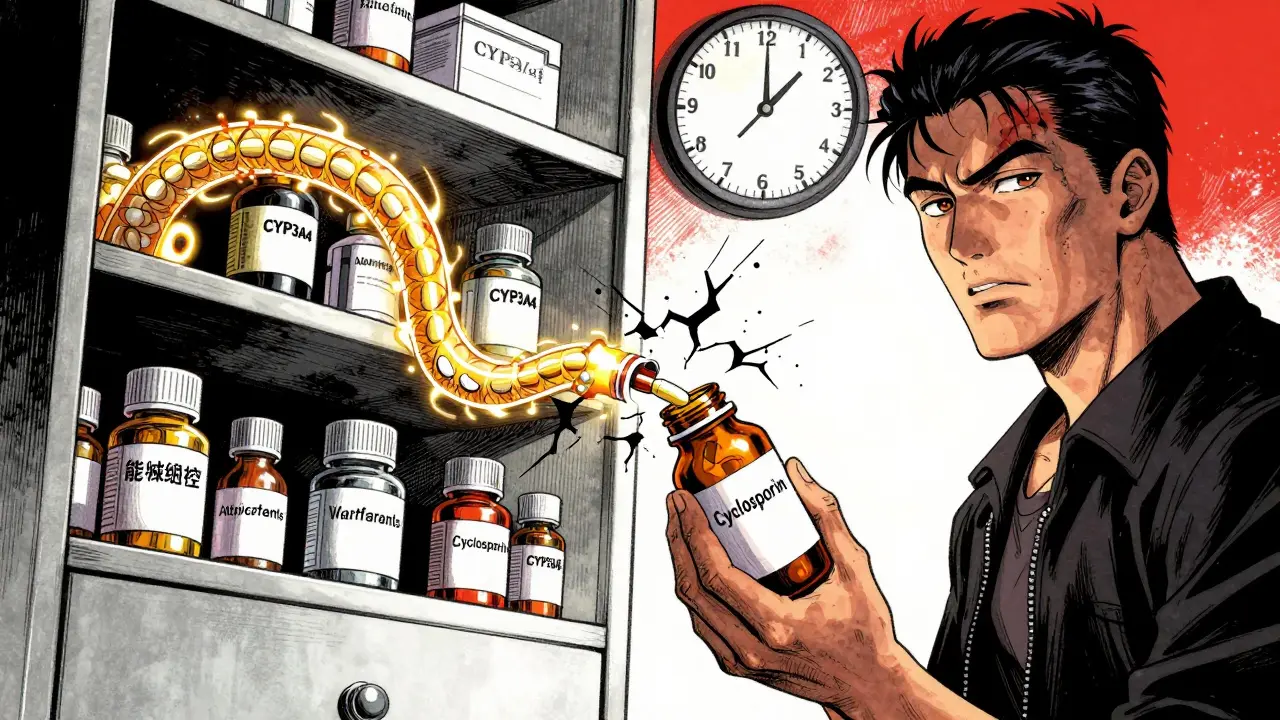
St. John’s Wort doesn’t just sit in your system. It turns on powerful enzymes in your liver - especially CYP3A4 and P-glycoprotein - that act like speed dialers for drug breakdown. When these enzymes get revved up, your body starts clearing out medications way faster than it should.
Imagine your pill is a delivery truck. Normally, it takes 8 hours to deliver its cargo (the medicine) to your cells. But after taking St. John’s Wort? The truck gets chased off the road after 2 hours. The medicine never arrives. That’s what happens with drugs like warfarin, cyclosporin, or birth control pills.
This effect isn’t mild or rare. Studies show it can reduce blood levels of medications by 30% to 70%. And here’s the kicker: it doesn’t matter if you take St. John’s Wort in the morning and your pill at night. The enzyme boost lasts for days. You can’t time your way out of this.
The Medications at Risk - And Why It Matters
There’s no single list that catches everything, but experts have documented dozens of dangerous pairings. Here are the ones you absolutely need to know about.
- Antidepressants (SSRIs, SNRIs) - Combining St. John’s Wort with fluoxetine (Prozac), sertraline (Zoloft), or venlafaxine (Effexor) can trigger serotonin syndrome. Symptoms? Shaking, fever, confusion, fast heartbeat. In severe cases, it leads to seizures or death. The American Academy of Family Physicians warns this combination is unsafe.
- Birth Control Pills - St. John’s Wort makes your body break down hormones faster. That means breakthrough bleeding, unplanned pregnancy, and failed contraception. Even if you’ve been on the pill for years, one bottle of St. John’s Wort can undo its effectiveness.
- Heart Medications - Warfarin (Coumadin) and rivaroxaban (Xarelto) are meant to thin your blood. St. John’s Wort makes them less effective, raising your risk of clots, stroke, or heart attack. One case report showed a patient develop a fatal pulmonary embolism after starting the herb.
- Immunosuppressants - After an organ transplant, drugs like cyclosporin and tacrolimus keep your body from rejecting the new organ. St. John’s Wort drops their levels, which can cause rejection. There are documented cases of kidney transplant failure linked to this interaction.
- Antiseizure Drugs - Phenytoin (Dilantin), carbamazepine (Tegretol), and phenobarbital become less effective. That means more seizures. Patients have been hospitalized after starting St. John’s Wort thinking it would help their mood.
- Antiretrovirals - For people living with HIV, medications like efavirenz and protease inhibitors must stay at precise levels. St. John’s Wort can drop them so low that the virus rebounds - and drug resistance can develop.
- Methadone - Used for pain or addiction treatment, methadone levels can plummet when mixed with St. John’s Wort. That leads to withdrawal symptoms, cravings, and increased overdose risk if the person resumes use later.
- Antipsychotics - Clozapine (Clozaril) and other antipsychotics can become less effective, worsening psychosis. The Merck Manuals flag this as a serious concern.
- Other Common Drugs - Omeprazole (Prilosec), fexofenadine (Allegra), theophylline, and even some anesthetics are affected. The list keeps growing.
It’s Not Just About Taking Them Together
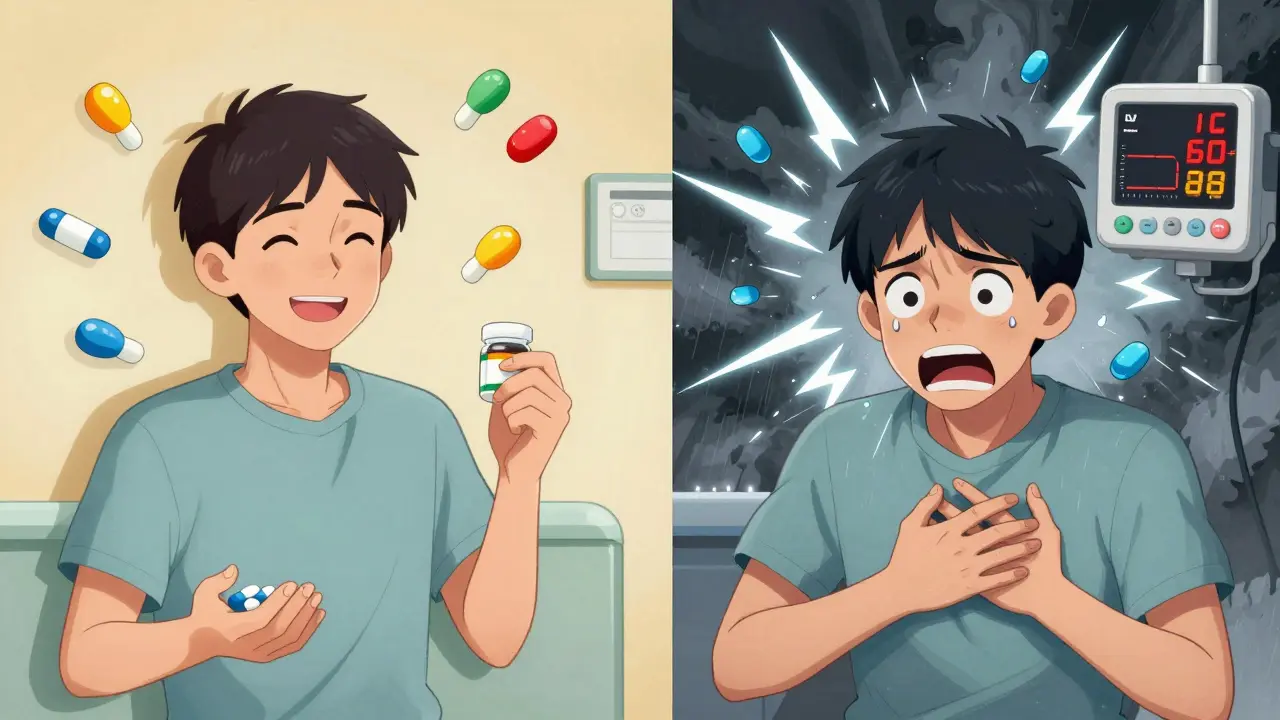
Most people think the danger is only when they take St. John’s Wort and their pill at the same time. But the real problem is what happens when you stop.
Once you quit St. John’s Wort, your liver enzymes slowly return to normal. But your prescription meds? They’re still at the same dose. Suddenly, your body can’t clear them as fast. Blood levels spike. You could overdose.
The Therapeutic Goods Administration in Australia documented cases where patients developed toxicity after stopping St. John’s Wort - including one case where cyclosporin levels jumped so high it damaged the kidneys. This isn’t theoretical. It’s happened.
Why Doctors Don’t Always Know
Most doctors don’t ask about herbal supplements. They assume patients only take what’s prescribed. But St. John’s Wort is sold next to tea bags in supermarkets. People don’t see it as a drug.
Regulatory agencies like the UK’s Committee on Safety of Medicines and Australia’s TGA have issued warnings for over two decades. Sweden and the UK now require warning labels on St. John’s Wort products. But in the U.S., it’s sold as a dietary supplement - meaning no FDA review for safety or interaction risks.
That gap is deadly. A 2023 Mayo Clinic review found that nearly 40% of patients taking St. John’s Wort were also on at least one interacting medication - and most didn’t tell their doctor.
What You Should Do - Right Now
If you’re taking any prescription medication and you’re considering St. John’s Wort - stop. Don’t wait. Talk to your pharmacist or doctor first.
If you’re already taking it:
- Don’t quit cold turkey. Talk to your provider about tapering.
- Get your medication levels checked - especially if you’re on warfarin, cyclosporin, or antiseizure drugs.
- Use a backup form of birth control if you’re on the pill.
- Watch for symptoms: unexplained bruising, mood changes, seizures, irregular heartbeat, or sudden fatigue.
There’s no safe dose of St. John’s Wort if you’re on other meds. No timing trick. No "natural" loophole. The science is clear: it interferes with how your body handles at least half of all prescription drugs.
What Are the Alternatives?
If you’re using St. John’s Wort for depression, you deserve better than a risky herb. Evidence-backed options exist:
- Therapy - CBT (cognitive behavioral therapy) is as effective as antidepressants for mild to moderate depression.
- Exercise - Just 30 minutes of walking, 5 days a week, has been shown to lift mood as effectively as SSRIs in some studies.
- Prescription alternatives - If you need medication, your doctor can choose one that doesn’t clash with your other drugs.
There’s no shortcut to mental health. But there are safe paths - if you know where to look.
Can I take St. John’s Wort if I’m not on any medications?
Even if you’re not on prescription drugs now, you might be in the future. St. John’s Wort can still cause side effects like severe sunburn, dizziness, or anxiety. Plus, if you start taking any new medication - even an over-the-counter one like ibuprofen or antihistamines - the interaction risk returns. It’s not worth the gamble.
Is there a "safe" brand of St. John’s Wort?
No. The problem isn’t the brand - it’s the active ingredients. All St. John’s Wort products contain hyperforin, the compound that triggers enzyme induction. Whether it’s a $10 bottle or a $50 organic version, the effect is the same. There’s no "pharmaceutical-grade" herbal version that avoids this.
How long does St. John’s Wort stay in my system?
The herb itself clears in a few days. But the enzyme changes it causes? They can last for up to two weeks after you stop taking it. That’s why you can’t just wait a day before starting a new medication. You need at least 14 days - and even then, consult your doctor before restarting any prescription.
I’ve been taking St. John’s Wort for years. Is it too late to stop?
It’s never too late to reassess. If you’re on medications with known interactions, continuing could be dangerous. Talk to your doctor about a safe plan to stop. Your body can adjust - but you need guidance. Don’t try to do it alone.
Can I take St. John’s Wort with vitamins or supplements?
Some vitamins and supplements can also interact. For example, SAM-e, 5-HTP, or L-tryptophan can raise serotonin levels - increasing the risk of serotonin syndrome when combined with St. John’s Wort. Even melatonin or garlic supplements have been linked to bleeding risks. Always check with a pharmacist before mixing any supplement with St. John’s Wort.
shannon kozee
March 21, 2026 AT 01:28St. John’s Wort isn’t a supplement-it’s a silent drug interaction waiting to happen. If you’re on anything prescription, just don’t. No exceptions. Period.
Johny Prayogi
March 22, 2026 AT 10:52I had no idea this was a thing 😳 My mom’s been taking it for 'anxiety' for years and she’s on Lipitor. I’m calling her right now. Thanks for the wake-up call!
Natali Shevchenko
March 24, 2026 AT 06:38It’s wild how we treat herbs like they’re harmless because they’re 'natural.' That’s like saying a rattlesnake is harmless because it doesn’t wear a suit. St. John’s Wort is pharmacologically active-hyperforin doesn’t care if you bought it at Whole Foods or Walmart. It’s not a tea, it’s a metabolic wrench. And the fact that it lingers for weeks after you stop? That’s not a side effect, that’s a biological hostage situation. People think they’re being smart by avoiding SSRIs, but they’re just trading one risk for a dozen others they can’t even see. The body doesn’t distinguish between 'medicine' and 'supplement.' It only sees molecules. And hyperforin? It’s a molecular ninja.
And don’t get me started on how we’ve normalized ignoring this. You can walk into CVS and grab a bottle next to chamomile, but if you tried to buy warfarin over the counter, you’d be arrested. Why? Because we’ve convinced ourselves that 'natural' means 'safe.' That’s a myth built on ignorance and marketing. The FDA doesn’t regulate supplements because we let them get away with it. We’re not victims of the system-we’re enablers.
I’ve seen patients on cyclosporin after transplants who thought they were 'boosting their mood' with this herb. One guy lost his kidney. Not because he was reckless-he was just trusting a label that said 'herbal support.' We need to stop pretending this is about personal choice. It’s about public health. And until we treat herbal supplements like the drugs they are, more people are going to die quietly.
Nicole James
March 24, 2026 AT 12:10They don't want you to know this... they're all in on it... Big Pharma, the FDA, the supplement companies-they're all the same entity... they profit from your confusion... they want you dependent on pills... but herbs? They're free... and that's why they're banned from being labeled properly... it's a controlled narrative... they don't want you to know that nature has better solutions... but they also don't want you to know that St. John's Wort is a weaponized enzyme disruptor... it's all connected... the suppression... the silence... the lack of warning labels... it's not an accident... it's a system... you're being played... and you're the one paying for it with your health...
Nishan Basnet
March 25, 2026 AT 08:07As someone from India where herbal remedies are deeply woven into daily life, I’ve seen both sides. My grandmother swore by neem and turmeric-but she also knew when to stop and call a doctor. This post is a masterclass in clarity. The real tragedy isn’t the interaction-it’s the silence around it. People assume 'natural' means 'safe' because they’ve never been taught otherwise. We need community health educators, not just online posts. Pharmacists in rural clinics should be trained to ask: 'Are you taking any herbs?' Not just 'Are you on medication?' That simple shift could save lives. And yes-SAM-e, 5-HTP, melatonin-they’re not innocent either. The body doesn’t care if it’s a pill or a powder. It just reacts.
Paul Cuccurullo
March 26, 2026 AT 08:20Thank you for writing this with such care and precision. It’s easy to feel alone in this-like you’re the only one who’s ever been warned. But your words? They’re a lifeline. Please keep sharing truths like this. The world needs more clarity, not more noise.
Solomon Kindie
March 27, 2026 AT 18:47trudale hampton
March 28, 2026 AT 08:29My therapist told me to try St. John’s Wort for mild depression. I asked if it interacted with my blood pressure meds. She said, 'Oh, that’s probably fine.' I didn’t take it. I’m still here. And I’m glad I listened to my gut.
Doctors aren’t trained in herbs. Pharmacists are. Next time you’re thinking about it-walk into a pharmacy. Ask them. Don’t Google it. Ask a human who deals with this daily.
Shaun Wakashige
March 30, 2026 AT 04:52lol why are we even talking about this. just dont take it if you're on meds. duh. i take it and i'm not on anything. chill out.
Bryan Woody
March 30, 2026 AT 12:12Let me guess-you’re one of those people who thinks 'natural' means 'safe' because your yoga instructor told you so. Newsflash: Nature is full of poison. Poison ivy. Belladonna. Snake venom. St. John’s Wort? It’s just the latest in a long line of 'wellness' traps designed to make you feel like you’re taking control while actually making you a walking drug interaction waiting to happen. You don’t need a naturopath. You need a pharmacist. And a brain. Stop romanticizing herbs. They’re not your friends. They’re biochemical actors with one goal: to mess with your liver. And if you’re on meds? You’re not being 'holistic.' You’re being reckless. And no, 'I’ve been taking it for years' doesn’t make you brave. It makes you statistically overdue for a hospital visit.
Chris Dwyer
March 31, 2026 AT 20:31I used to take St. John’s Wort when I was in college, thinking it was helping my mood. Then I started having weird heart palpitations. Turns out I was on a generic antibiotic at the time. I didn’t connect the dots until I read this. I’m so glad I stopped. Now I use exercise and therapy-and honestly? I feel better than ever. No magic herb needed. Just consistency. And a little self-respect.
If you’re reading this and you’re still taking it? You’re not weak. You’re just unaware. And awareness is the first step. I’m proud of you for even clicking on this post. That’s courage.
Timothy Olcott
March 31, 2026 AT 23:35Why is America letting this happen? In Europe they warn you. In Sweden they put labels on it. But here? We let Big Herb sell poison next to tea bags. This is why we’re falling behind. We don’t respect science. We worship vibes. St. John’s Wort? It’s a Trojan horse. And we’re all too busy scrolling to notice the warhead.