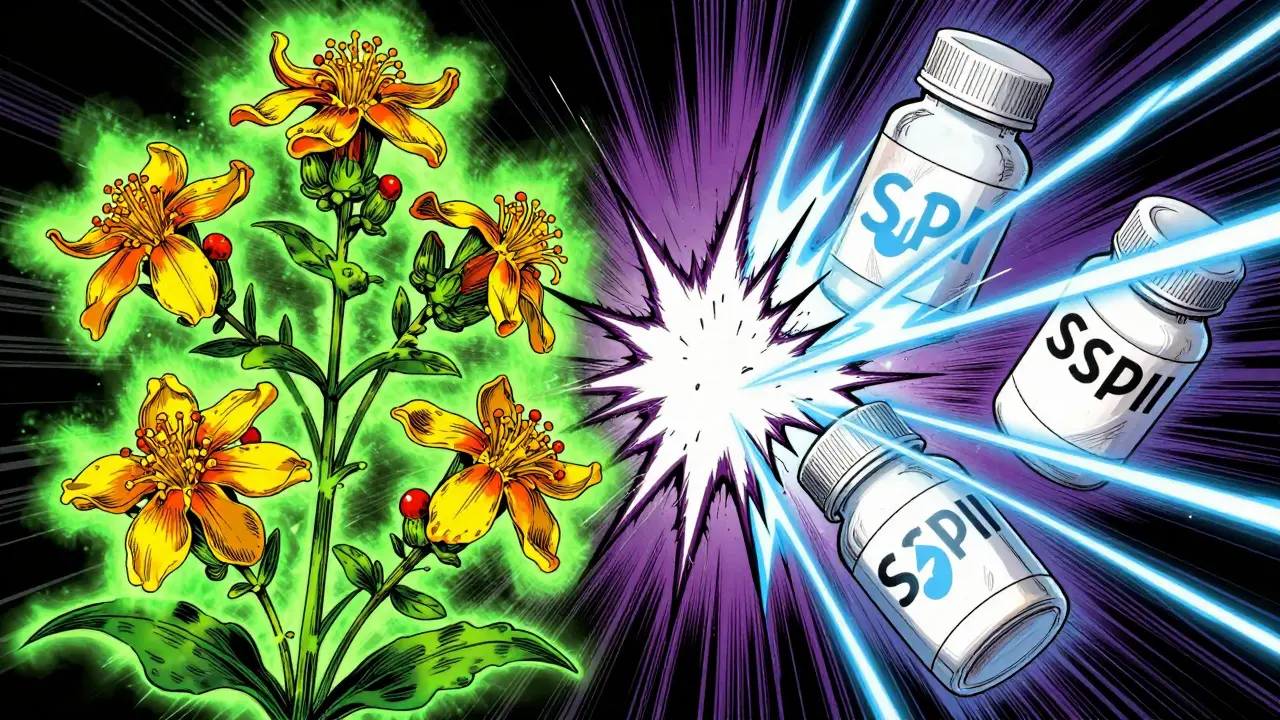
Serotonin Syndrome Risk Checker
Medication Interaction Assessment
This tool helps identify potential risks when combining supplements with prescription medications. Always consult your healthcare provider for medical advice.
⚠️ HIGH RISK DETECTED
Combining St. John's Wort with your selected medication(s) creates a significant risk for serious adverse effects, including potentially life-threatening serotonin syndrome.
- Immediate Action: Do NOT combine these substances
- If already combined: Seek medical attention immediately if experiencing symptoms like agitation, tremors, sweating, rapid heart rate, or muscle rigidity
- Consult your doctor: Before making any changes to your medication regimen
⚠️ MODERATE RISK DETECTED
St. John's Wort may significantly reduce the effectiveness of your selected medication(s), potentially leading to treatment failure.
- Effectiveness Concern: Your medication may not work as intended
- Recommended Action: Consult your healthcare provider before using St. John's Wort
- Alternatives: Discuss safer options for managing your condition
✓ LOWER RISK PROFILE
No high-risk interactions detected with your current selections. However, always consult your healthcare provider before starting any new supplement, as individual factors may affect safety.
Symptom Recognition Guide
Watch for these signs if you've combined St. John's Wort with serotonergic medications:
Safe Alternatives
- Cognitive Behavioral Therapy (CBT): Evidence-based approach for mild depression
- Lifestyle Changes: Regular exercise, adequate sleep, balanced nutrition
- Light Therapy: Effective for seasonal affective disorder
- Professional Guidance: Work with your doctor to find safe treatment options
You might think that because St. John’s Wort is sold in the supplement aisle rather than behind a pharmacy counter, it is safe to mix with your prescription medication. That assumption could be deadly. Combining this popular herbal remedy with selective serotonin reuptake inhibitors (SSRIs) creates a high risk for serotonin syndrome, a condition that can escalate from uncomfortable symptoms to life-threatening organ failure within hours.
Many people turn to St. John’s Wort for mild depression or anxiety, viewing it as a "natural" alternative to pharmaceuticals. But nature does not mean harmless. When you add an herb that boosts serotonin levels to a drug designed to do the exact same thing, you are not getting double the benefit. You are flooding your brain with too much neurotransmitter activity. This article breaks down exactly why this combination is dangerous, what signs to watch for, and how to protect yourself if you are currently using both.
Why St. John’s Wort and SSRIs Don’t Mix
To understand the danger, we need to look at how these substances work inside your body. St. John’s Wort (Hypericum perforatum) is not just a passive plant extract; it is pharmacologically active. It contains compounds like hypericin and hyperforin that affect how your brain processes chemicals. Specifically, it acts as a weak monoamine oxidase inhibitor (MAOI) and inhibits the reuptake of serotonin, norepinephrine, and dopamine.
Selective serotonin reuptake inhibitors (SSRIs), such as sertraline (Zoloft), fluoxetine (Prozac), and citalopram (Celexa), are prescribed antidepressants that block the reabsorption of serotonin in the brain. Their job is to keep more serotonin available between nerve cells. When you take an SSRI alone, your doctor carefully titrates the dose to achieve therapeutic levels without overwhelming your system.
When you introduce St. John’s Wort into this equation, two bad things happen simultaneously:
- Pharmacodynamic Interaction: Both the herb and the drug increase serotonin levels. This additive effect pushes serotonin concentrations beyond safe limits, leading to overstimulation of serotonin receptors in the central nervous system.
- Pharmacokinetic Interaction: St. John’s Wort induces cytochrome P450 enzymes (specifically CYP3A4, CYP2C9, and CYP2C19). These enzymes break down drugs in the liver. While this might sound like it would lower drug levels, the interaction is complex. In some cases, it alters the metabolism of SSRIs unpredictably, while the direct serotonergic action of the herb remains strong enough to cause toxicity regardless of blood levels.
The result is serotonin syndrome. This is not a minor side effect like nausea or drowsiness. It is a medical emergency caused by excessive accumulation of serotonin in the synaptic clefts.
Recognizing the Signs of Serotonin Syndrome
Serotonin syndrome can develop rapidly-often within 24 hours of starting the combination or increasing a dose. Symptoms range from mild confusion to severe physical distress. If you are taking an SSRI and have started St. John’s Wort, you must monitor yourself closely for the following clusters of symptoms:
Mental Status Changes
You may feel unusually agitated, anxious, or confused. Some people report feeling "wired" or unable to sit still. In severe cases, hallucinations or delirium can occur.
Autonomic Dysfunction
Your body’s automatic systems go into overdrive. Look out for:
- Heavy sweating (diaphoresis)
- Rapid heart rate (tachycardia)
- Elevated blood pressure
- Dilated pupils
- Diarrhea
Neuromuscular Abnormalities
This is often the most distinct sign. You might experience:
- Tremors or shaking
- Muscle rigidity or stiffness
- Shivering
- Incoordination or clumsiness
- Myoclonus (quick, jerking muscle movements)
- Hyperreflexia (overactive reflexes)
If these symptoms progress unchecked, they can lead to hyperthermia (body temperature exceeding 106°F/41.1°C), rhabdomyolysis (muscle breakdown that damages kidneys), disseminated intravascular coagulation, and death. Do not wait for the fever to start. If you notice agitation combined with tremors and sweating after mixing these substances, seek emergency care immediately.
Which SSRIs Are Most Dangerous?
All SSRIs carry a risk when mixed with St. John’s Wort, but some have higher documented rates of severe reactions. Clinical reviews, including data from the European Psychiatric Association, highlight specific patterns:
| SSRI Medication | Metabolic Pathway | Interaction Risk Level | Key Concern |
|---|---|---|---|
| Sertraline (Zoloft) | CYP2C19 / CYP3A4 | High | Frequently cited in severe case studies |
| Paroxetine (Paxil) | CYP2D6 | High | Strong anticholinergic effects compound symptoms |
| Fluoxetine (Prozac) | CYP2D6 | High | Long half-life increases duration of risk |
| Citalopram (Celexa) | CYP2C19 / CYP3A4 | Moderate-High | Direct serotonin inhibition adds to herbal load |
| Escitalopram (Lexapro) | CYP2C19 / CYP3A4 | Moderate-High | Similar mechanism to citalopram |
Note that the risk isn't just about which enzyme breaks down the drug. It is about the total serotonergic burden on your brain. Even SSRIs that are metabolized differently can trigger serotonin syndrome when paired with the dual-action mechanism of St. John’s Wort.

The Hidden Danger: Lack of Disclosure
A major reason why patients end up in the hospital is simple miscommunication. A study published in JAMA Internal Medicine found that only 32.7% of patients disclosed their use of herbal supplements to their physicians. Why? Because many people believe that "natural" means "safe."
St. John’s Wort is regulated as a dietary supplement in the United States under the Dietary Supplement Health and Education Act of 1994. This means it does not undergo the rigorous pre-market safety testing required for prescription drugs. Manufacturers are not required to prove efficacy or safety before selling it. However, once it is in your body, its chemical impact is real and potent.
If you are seeing a psychiatrist or primary care provider, you must list every supplement you take. Be honest. Doctors are not there to judge your choice to try natural remedies; they are there to prevent fatal interactions. Hiding your use of St. John’s Wort puts you at unnecessary risk because your doctor cannot adjust your SSRI dosage or warn you appropriately.
Other Critical Drug Interactions
The dangers of St. John’s Wort extend far beyond antidepressants. Because it activates the pregnane X receptor (PXR) and upregulates CYP3A4 and P-glycoprotein, it speeds up the metabolism of many other critical medications. This reduces their effectiveness, potentially leading to treatment failure.
- Hormonal Contraceptives: St. John’s Wort can reduce the blood levels of birth control pills by 30-50%. This has led to documented cases of unplanned pregnancies. Women using oral contraceptives should avoid this herb entirely.
- Immunosuppressants: Patients taking cyclosporine or tacrolimus after organ transplants face a risk of graft rejection due to lowered drug levels.
- Anticoagulants: Warfarin levels can drop significantly, reducing the INR and increasing the risk of blood clots.
- Antiseizure Medications: Drugs like phenytoin and carbamazepine may become less effective, increasing seizure risk.
- HIV Protease Inhibitors: Levels of drugs like indinavir can plummet, compromising viral suppression.
If you are on any long-term medication, assume St. John’s Wort will interact with it until proven otherwise.
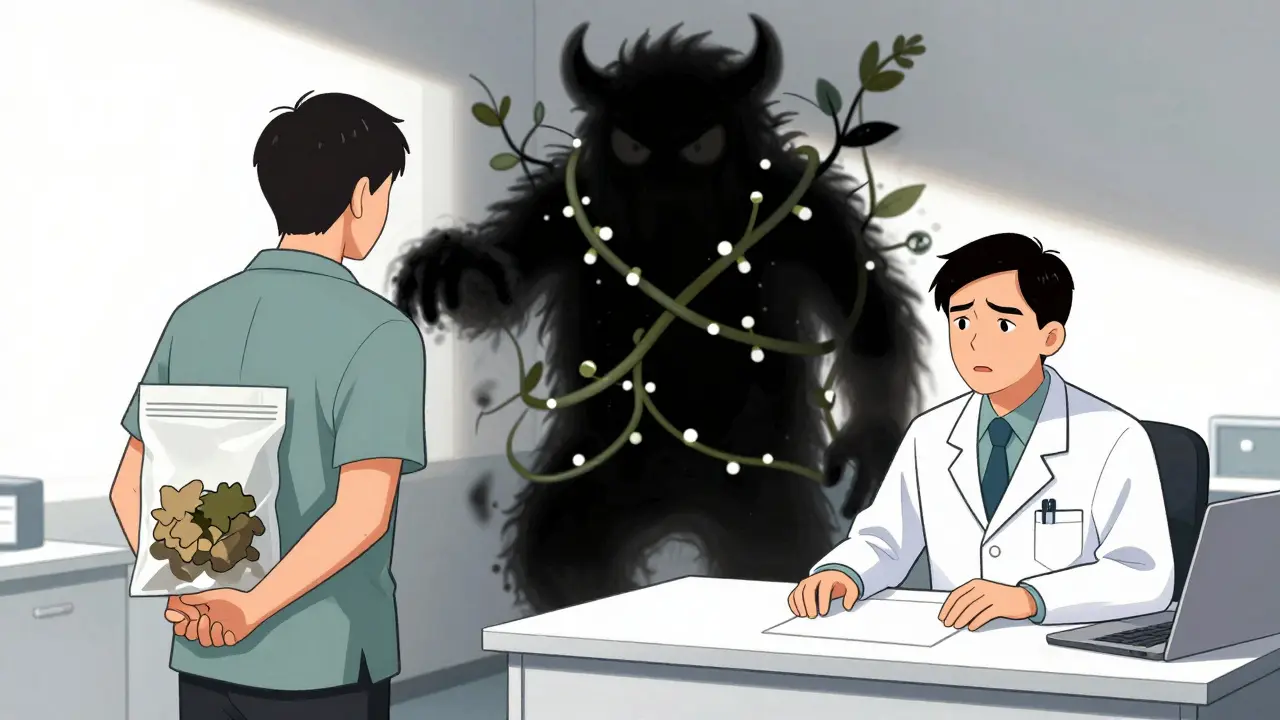
What Should You Do Instead?
If you are struggling with mild depression and considering St. John’s Wort, talk to your doctor first. There are safer alternatives. Cognitive behavioral therapy (CBT), lifestyle changes, exercise, and light therapy can all support mental health without the risk of serotonin toxicity.
If you are already taking an SSRI and want to stop, do not replace it with St. John’s Wort abruptly. Work with your healthcare provider to taper off the medication safely. If you decide to try St. John’s Wort after stopping an SSRI, observe a washout period. Most experts recommend waiting at least two weeks after discontinuing an SSRI before starting the herb, though longer periods may be needed for drugs with long half-lives like fluoxetine.
Conversely, if you are taking St. John’s Wort and your doctor prescribes an SSRI, stop the herb immediately. Inform your doctor so they can monitor you for withdrawal symptoms from the herb and adjust the SSRI initiation plan accordingly.
Regulatory Landscape and Future Outlook
Public health agencies are becoming increasingly aware of these risks. The FDA has issued multiple consumer safety alerts regarding St. John’s Wort interactions. In 2024, the FDA proposed requiring prominent interaction warnings on all packaging. Meanwhile, countries like Canada have moved to restrict St. John’s Wort to prescription-only status following reports of serotonin syndrome cases.
Research is also exploring whether standardized formulations free of hyperforin-the compound responsible for enzyme induction-could offer antidepressant benefits without the metabolic chaos. Until such products are widely available and proven safe, the current medical consensus is clear: complete avoidance of concurrent use.
The Cleveland Clinic and Mayo Clinic both explicitly state that the risks of combining St. John’s Wort with SSRIs significantly outweigh any potential benefits. With 12.3% of U.S. adults reporting use of this supplement, the gap between public perception and clinical reality remains wide. Bridging that gap starts with informed caution.
Can I take St. John’s Wort with Zoloft?
No. Combining St. John’s Wort with sertraline (Zoloft) significantly increases the risk of serotonin syndrome. Sertraline is frequently cited in case studies of severe reactions when mixed with this herb. You should never combine them without explicit direction and monitoring from a specialist, which is rarely recommended.
How quickly does serotonin syndrome develop?
Symptoms can appear within 24 hours of starting the combination or increasing the dose. In some cases, it may take up to 14 days, but rapid onset is common. Immediate medical attention is required if symptoms like agitation, tremors, or heavy sweating begin.
Is St. John’s Wort safe for mild depression?
It may be effective for mild to moderate depression when used alone, but it is not "safe" in the sense of being free from risks. It interacts with many medications and can cause side effects like photosensitivity and gastrointestinal issues. Always consult a doctor before starting it, especially if you take other prescriptions.
Does St. John’s Wort interact with birth control?
Yes. St. John’s Wort accelerates the metabolism of hormonal contraceptives, reducing their effectiveness by 30-50%. This can lead to unplanned pregnancies. Women relying on birth control pills should avoid this supplement entirely.
How long should I wait after stopping an SSRI before taking St. John’s Wort?
Most clinicians recommend a washout period of at least two weeks after discontinuing an SSRI before starting St. John’s Wort. For medications with long half-lives like fluoxetine (Prozac), a longer wait may be necessary to ensure the drug is fully cleared from your system.
Why don’t doctors always ask about herbal supplements?
Doctors do ask, but many patients fail to disclose usage because they view supplements as harmless. Studies show only about one-third of patients mention herbal product use. It is crucial for patients to proactively share this information to prevent dangerous interactions.
Are there any safe alternatives to St. John’s Wort?
For mild depression, non-pharmacological approaches like cognitive behavioral therapy (CBT), regular exercise, adequate sleep hygiene, and light therapy are effective and carry no risk of drug interactions. Discuss these options with your healthcare provider.