
Finding out you have a growth on your thyroid can feel overwhelming, but here is the good news: most thyroid cancers are incredibly treatable. In fact, for people under 45 with the most common type, the 10-year survival rate is over 98%. The challenge often isn't whether you'll recover, but how to navigate the various treatment paths-from surgery to radiation-without overdoing it. Whether you're staring at a pathology report or preparing for a consultation, understanding the different types of thyroid cancer is a malignancy originating in the butterfly-shaped endocrine gland at the base of the neck helps you ask the right questions. Let's break down what you need to know about the types and the treatments that actually move the needle.
The Different Faces of Thyroid Cancer
Not all thyroid cancers are the same. Your treatment plan depends entirely on the cellular makeup of the tumor. Most cases fall into the "differentiated" category, meaning the cells still look and act somewhat like normal thyroid cells.
- Papillary Thyroid Carcinoma (PTC): This is the most common version, making up about 70-80% of all cases. It usually grows slowly and is highly responsive to treatment.
- Follicular Thyroid Carcinoma (FTC): Accounting for 10-15% of cases, this type is similar to papillary cancer but can be slightly more aggressive in how it spreads through the bloodstream.
- Medullary Thyroid Carcinoma (MTC): This rare type (3-5%) comes from the C-cells of the thyroid. It doesn't respond to radioactive iodine and can sometimes be hereditary.
- Anaplastic Thyroid Carcinoma (ATC): This is the rarest and most aggressive form, appearing in less than 2% of patients. It requires immediate, aggressive multimodal therapy because it grows so quickly.
Staging for these cancers isn't one-size-fits-all. For example, if you're under 55 and have papillary or follicular cancer, the system is simpler, focusing mainly on whether the cancer has spread. If you're over 55, the staging is more detailed. Anaplastic cancer, however, is automatically staged as Stage IV because of its nature.
Understanding Thyroidectomy: The Surgical Path
Surgery is almost always the first line of defense. A thyroidectomy is the surgical removal of all or part of the thyroid gland. Depending on the size and location of your tumor, your surgeon will suggest one of three main approaches.
A lobectomy involves removing only one side (lobe) of the thyroid. This is often preferred for small, low-risk tumors because it leaves some natural hormone production intact. A total thyroidectomy removes the entire gland. This is usually necessary for larger tumors or if the cancer has spread to both sides. Finally, a completion thyroidectomy happens when a patient who previously had a lobectomy needs the rest of the gland removed later.
| Procedure | Incision Size | Recovery Time | Hormone Impact |
|---|---|---|---|
| Lobectomy | 4-6 cm | Often same-day discharge | Partial loss; may not need meds |
| Total Thyroidectomy | 6-8 cm | 1-2 days hospital stay | Total loss; lifelong hormone replacement |
| Robotic-Assisted | Variable (Small/Hidden) | Similar to total | Total loss |
Modern surgery focuses heavily on protecting the recurrent laryngeal nerve-the nerve that controls your vocal cords. Surgeons now use intraoperative nerve monitoring, which has dropped permanent voice change rates significantly. However, it's not without risk; some patients still experience voice changes or permanent hypoparathyroidism, which requires taking calcium supplements for life.
Radioactive Iodine Therapy: The Precision Tool
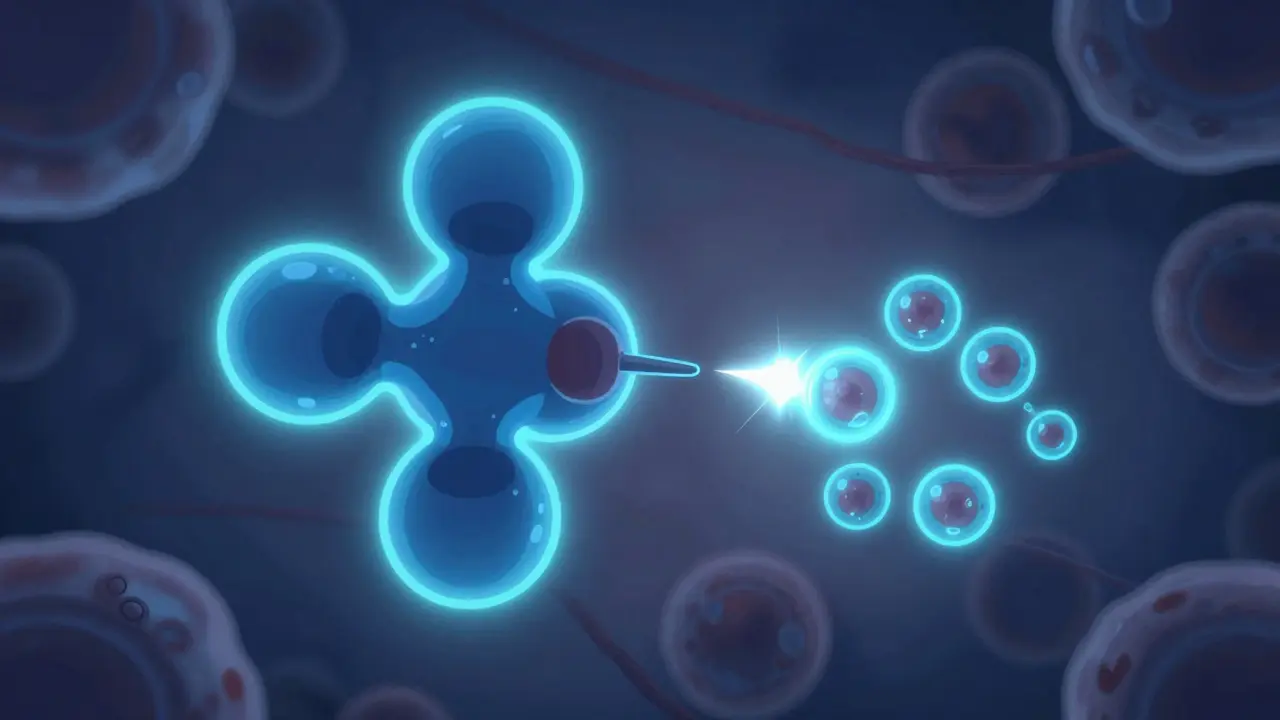
After surgery, some patients need an extra "clean-up" phase. This is where Radioactive Iodine Therapy (RAI) comes in. Since thyroid cells are the only cells in the body that absorb iodine, doctors can use a radioactive isotope, I-131, to seek out and destroy any remaining thyroid tissue or cancer cells hiding in other parts of the body.
RAI is a powerhouse for papillary and follicular cancers, but it doesn't work for medullary or anaplastic types because those cells don't absorb iodine. The process typically involves a 2-4 week preparation. You'll either stop taking your thyroid hormone meds to let your TSH levels rise (which "wakes up" the remaining thyroid cells) or take a shot of synthetic TSH (Thyrogen®) to avoid the fatigue of hypothyroidism.
Interestingly, there is a growing move toward "de-escalation." The HiLo trial showed that for low-risk patients, a small dose of 30 mCi was just as effective as a 100 mCi dose for removing remnants. This means many patients can avoid unnecessary radiation exposure without compromising their health.
Life After Treatment: The New Normal
Once the thyroid is gone, your body can't produce the hormones needed to regulate your metabolism. This means a lifetime of taking levothyroxine, a synthetic version of T4. While this medication is effective, it's not always a perfect substitute. Many survivors report "brain fog" or persistent fatigue even when their blood tests look normal.
Recovery from a total thyroidectomy usually takes 2-4 weeks. You'll likely be told not to drive for about a week and to avoid heavy lifting for three. The most critical thing to monitor in the first few days post-surgery is your calcium level. If your parathyroid glands were accidentally bruised or removed, your calcium can drop, leading to tingling in the fingers and toes.
When Less is More: The Case for Active Surveillance
One of the biggest debates in endocrinology today is whether every tiny tumor needs surgery. Many people have "papillary microcarcinomas"-tumors smaller than 1 cm-that are found incidentally during other scans. In Japan, data shows that only about 3.8% of these tiny tumors actually progress over 10 years.
Because of this, some experts now advocate for active surveillance. Instead of immediate surgery, doctors monitor the nodule with regular ultrasounds. This prevents the "overtreatment" that Dr. David Ain of Memorial Sloan Kettering warns affects up to 30% of patients. If the tumor stays small, you avoid the risks of surgery and the lifelong need for medication.
Advanced Options for High-Risk Cases
For those with more aggressive cancers, like RET-mutant medullary cancer, the game has changed with targeted therapies. Drugs like selpercatinib now provide a way to manage hereditary cases that previously had few options. For anaplastic cancer, which remains a dire diagnosis, the combination of dabrafenib and trametinib has helped nearly double median survival for those with the BRAF V600E mutation.
If radioactive iodine doesn't work (RAI-refractory disease), doctors might turn to external beam radiation. While it can shrink tumors, it's a tougher road, with over half of patients experiencing dry mouth (xerostomia) and a higher risk of secondary cancers over time.
Will I have to take medication for the rest of my life?
If you have a total thyroidectomy, yes. Your body needs thyroid hormone to function, and without a gland, you'll need daily levothyroxine. If you only have a lobectomy (half removed), the remaining half can often produce enough hormone on its own, meaning you might not need medication at all.
Is radioactive iodine dangerous for people around me?
The radiation is primarily internal, but you do emit some radiation for a few days. You'll usually be advised to sleep in a separate bed, avoid hugging children or pets, and flush the toilet twice for a short period after taking the dose. Your doctor will give you a specific "isolation" protocol based on the dose you receive.
What is the "low-iodine diet" and why is it necessary?
Before RAI, you must avoid iodine-rich foods (like iodized salt, seafood, and dairy) for 1-2 weeks. This "starves" your thyroid cells of iodine so that when you finally take the radioactive iodine pill, the cells absorb it like a sponge, making the treatment far more effective.
Can thyroid cancer come back after surgery and RAI?
Recurrence is possible, but for differentiated types, the long-term outlook remains excellent. Regular check-ups involving ultrasound and blood tests for thyroglobulin (a protein made only by thyroid cells) allow doctors to catch any recurrence early and treat it effectively.
How do I know if I'm a candidate for active surveillance?
Generally, active surveillance is considered for papillary microcarcinomas under 1 cm that haven't spread to lymph nodes and don't show "aggressive" features on the pathology report. You should discuss this with an endocrine surgeon to see if your specific tumor fits these low-risk criteria.
Next Steps for Recovery
If you are heading into surgery, focus on your post-op kit: have soft foods ready and a way to track your calcium levels. If you're preparing for RAI, start planning your low-iodine meals early to avoid the stress of last-minute shopping. Most importantly, keep a log of your symptoms-especially mood swings or "brain fog"-and share them with your endocrinologist. Finding the right dose of hormone replacement is often a game of trial and error that takes a few months to perfect.
Rauf Ronald
April 9, 2026 AT 21:03Dealing with the brain fog is the real battle after the surgery is done!! I've seen so many people get their TSH levels 'perfect' on paper but still feel like they're walking through mud every single day. It's all about finding that sweet spot with your dosage and sometimes switching brands of levothyroxine makes a huge difference because of the fillers. Keep pushing and keep tracking everything in that log because your endocrinologist needs that data to actually help you. You've got this!
Jitesh Mohun
April 10, 2026 AT 04:33stop overthinking the radiation and just do what the doc says if you are low risk just get the low dose and move on with your life
Victoria Gregory
April 11, 2026 AT 23:51It's just so wild how our bodies have these little biological 'glitches' 🦋... but the way the medical world is evolving to be more cautious with active surveillance is just beautiful!!! It gives us room to breathe and not just rush into the knife for something that might never have caused a problem anyway 🌿✨
Ethan Davis
April 13, 2026 AT 06:31Sure, they tell you it's 'safe' and 'standard' but the push for lifelong meds is just a goldmine for big pharma. Why do you think they're suddenly talking about 'active surveillance' now? Probably because the side effects of the total thyroidectomies are becoming too obvious to ignore. I wouldn't trust a 'robotic' arm in my neck if I were you.
Danielle Kelley
April 14, 2026 AT 18:55Exactly!! They want us on those synthetic hormones forever because it makes us dependent on the system. Once you're on the levothyroxine loop you're just a recurring payment for some company in a skyscraper. Don't let them trick you into a total thyroidectomy if a lobectomy is an option because they're just trying to maximize the profit per patient.
Timothy Burroughs
April 15, 2026 AT 10:34Typical a bunch of people scared of a little pill while the real American healthcare system is what's actually broken here no one cares about the actual health just the billing codes it is a joke
Kathleen Painter
April 16, 2026 AT 03:57I remember when I first went through a similar health scare and the feeling of being completely untethered from your own biology is something that's hard to put into words, but looking back, the journey of learning to balance the hormones actually taught me so much about the connection between my physical state and my mental clarity, and I think it's just so important for new patients to know that the 'new normal' isn't a destination but a process that requires a lot of grace and patience with oneself, especially when the fatigue hits you out of nowhere on a Tuesday afternoon and you feel like you can't even lift a coffee mug.
Brady Davis
April 16, 2026 AT 11:40Oh wow, a 'low iodine diet'. Because nothing says 'healing' like avoiding salt and seafood for two weeks. Truly a gourmet experience for the ages. 🙄
Toby Sirois
April 17, 2026 AT 16:55You people are way too soft. If you have cancer, you cut it out. Period. This whole 'active surveillance' thing is just an excuse for people who are too scared to go under the knife. I've seen the data and if you're not aggressive, you're just gambling with your life. It's common sense, but apparently, common sense isn't so common anymore.
Nikhil Bhatia
April 18, 2026 AT 20:40Too long.
Jay Vernon
April 20, 2026 AT 06:14Glad to see the options are getting better for everyone 👍😊
shelley wales
April 20, 2026 AT 16:18It's really encouraging to see how much the survival rates have improved over the years. For anyone feeling scared right now, just know that there are so many people who have walked this path and come out the other side feeling healthy and strong. You are not alone in this, and taking it one step at a time is the best way to handle the overwhelm.
Sarabjeet Singh
April 22, 2026 AT 01:09Stay strong and keep a positive mindset throughout the recovery process!