
Levothyroxine is one of the most common prescription drugs in the UK and the US. Around 260 million packs were dispensed in the UK between 2016 and 2020 alone. It’s used to treat hypothyroidism - a condition where the thyroid doesn’t make enough hormone. For many people, it’s life-changing. Fatigue fades. Weight stabilizes. Brain fog lifts. But here’s the catch: levothyroxine only works well when it’s dosed right and monitored closely. Get it wrong, and you risk serious side effects - or no relief at all.
Why Levothyroxine Isn’t Just Another Pill
Levothyroxine replaces the thyroid hormone your body can’t make. It’s synthetic T4, the same hormone your thyroid would produce naturally. Sounds simple, right? But thyroid hormones affect every cell in your body. Your heart, your metabolism, your mood, even your body temperature. That means even small changes in dose can cause big shifts in how you feel. The narrow therapeutic window is the key issue. The difference between too little and too much is tiny. A 12.5 microgram change - less than half a pill - can push someone from feeling fine to having palpitations, anxiety, or worsening fatigue. That’s why you can’t just take it and forget it.How Often Should You Get Tested?
When you start levothyroxine, your doctor should check your TSH (thyroid stimulating hormone) level after six weeks. That’s not a suggestion - it’s a requirement. TSH tells you how hard your pituitary is working to stimulate your thyroid. If it’s high, you’re under-treated. If it’s low, you’re over-treated. After the first test, you’ll need another in three months. Once your TSH is stable - meaning two tests in a row are within range, spaced three months apart - you can drop to every six to twelve months. But here’s where things go wrong: NHS data shows only 58% of UK primary care practices follow this schedule. Nearly one in three patients goes more than 18 months without a blood test. That’s dangerous. Pregnant women, people over 65, or those with heart disease need even closer monitoring. During pregnancy, your dose may need to increase by 20-30% in the first trimester. If you’re over 65, your target TSH might be higher - up to 7.5 mIU/L - because lower levels can increase heart risks. Yet many GPs still use the same range for everyone.What Happens When You Switch Brands?
Generic levothyroxine is cheaper. That’s good for the NHS. But not all generics are created equal. Even though they’re supposed to be bioequivalent, small differences in fillers, binders, or manufacturing can affect how well your body absorbs the hormone. The MHRA received 335 reports of problems linked to brand switches between 2015 and 2019. Symptoms? Fatigue, headaches, anxiety, weight gain, heart palpitations. In 78% of cases, fatigue was the main complaint. Yet only 27 of those reports included thyroid blood tests. That means most of the time, doctors didn’t check if the problem was the medicine - or something else. Patients on forums like Thyroid UK report the same thing: 68% of people who switched brands noticed symptoms returning. One Reddit user wrote: “I was fine on the green tablet. Switched to the white one - two weeks later, I couldn’t get out of bed.” If you’ve ever had trouble after a switch, ask your doctor to prescribe by brand name. The MHRA now advises this for patients who’ve had problems. Don’t accept a substitution without checking.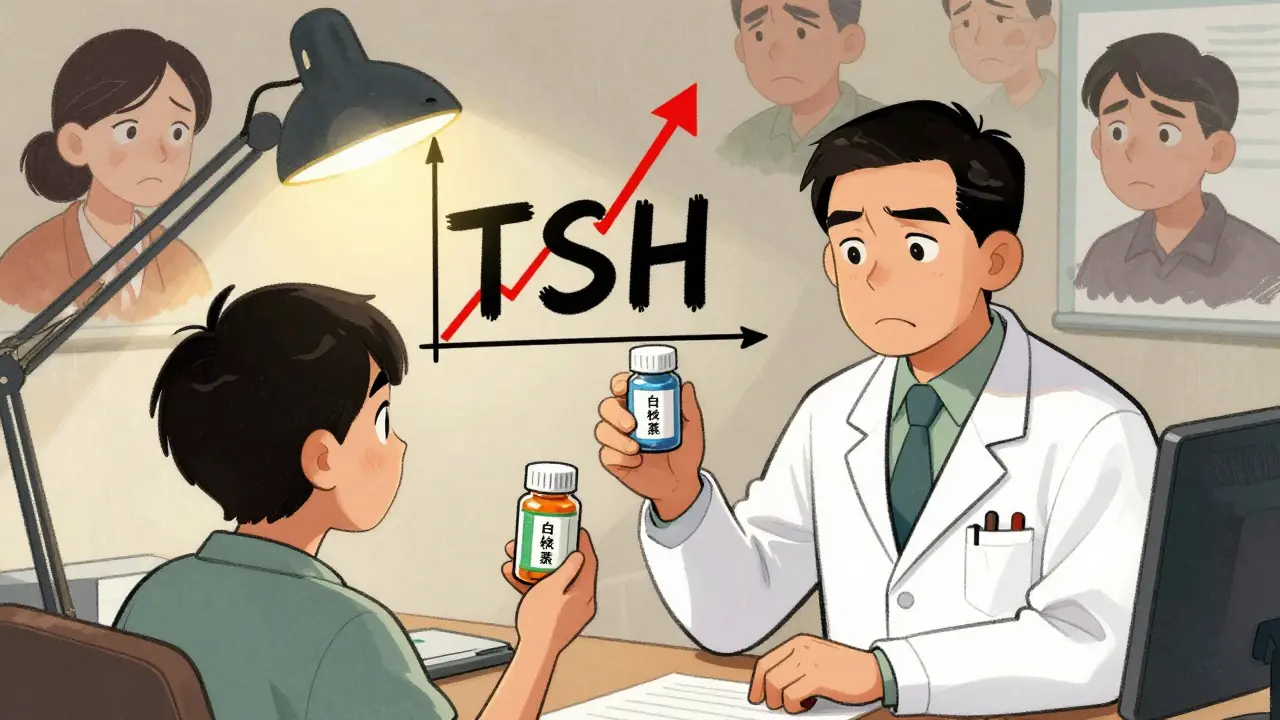
How to Take It Right
Taking levothyroxine wrong can make it useless. You need to take it on an empty stomach, at least 30 to 60 minutes before breakfast. Coffee, calcium, iron, antacids, and even soy milk can block absorption. If you take supplements, wait four hours after your pill. Some people take it at night instead. Studies show this works just as well - if not better - for some. The key is consistency. Take it the same way every day. Don’t skip doses. Don’t double up if you forget. If you miss one, just take the next dose as scheduled.Who Needs Extra Care?
Not everyone can be managed by a GP. You should be referred to an endocrinologist if you’re:- Under 16
- Pregnant or in the first year after giving birth
- Have pituitary disease
- Have heart disease and are over 65
- Take amiodarone or lithium

What If You Still Feel Bad?
About 15-20% of patients need annual dose changes. Why? Because your body changes. You gain weight. You age. You start or stop other meds. Even stress can shift your hormone needs. If you’re taking your pill correctly, getting tested regularly, and still feel tired, cold, or depressed - don’t assume it’s “just how it is.” Ask for a Free T4 test. Sometimes, even with normal TSH, your Free T4 is low. That’s when some doctors consider adding T3 (liothyronine), though this isn’t standard yet. Research is ongoing, especially at places like the Mayo Clinic, where they’re studying whether genetics play a role in how people respond to levothyroxine.Long-Term Safety
Levothyroxine is safe for life - if you’re monitored. There’s no evidence it damages your thyroid or liver. But taking too much long-term can weaken your bones and increase heart rhythm problems. That’s why annual testing isn’t optional. Even if you feel great, your dose might need tweaking. The American Thyroid Association and UK Specialist Pharmacy Service agree: don’t stop testing. Don’t assume stability lasts forever. Your needs change. Your body changes. Your medication needs to keep up.What to Do If You’re Not Getting Proper Care
If your GP won’t test your TSH for over a year, or keeps switching your brand without asking, speak up. Bring printed guidelines from the SPS or American Thyroid Association. Ask for a referral to an endocrinologist if you’re in a high-risk group. Keep a symptom journal. Note when you feel better or worse - especially after dose changes or brand switches. You’re not overreacting. You’re being smart. Levothyroxine works. But only if you’re part of the process.Can levothyroxine cause weight gain?
Levothyroxine itself doesn’t cause weight gain. In fact, it usually helps with weight loss if you were hypothyroid. But if your dose is too low, your metabolism stays slow, and weight gain can continue. If you’re gaining weight despite taking your pill correctly, your dose may need adjusting - not because the drug is making you fat, but because you’re still under-treated.
Is it safe to take levothyroxine with other medications?
Some medications interfere with levothyroxine absorption. Calcium, iron, antacids, and cholesterol drugs like cholestyramine can block it. Take these at least four hours apart. Also, avoid soy products and high-fiber meals right after taking your pill. Always tell your doctor and pharmacist about every supplement or drug you take.
Why do some people feel worse after switching to a generic brand?
Even though generics are supposed to be identical, small differences in inactive ingredients can affect how your body absorbs the hormone. Some people are sensitive to these changes. If you notice fatigue, anxiety, or heart palpitations after a switch, ask your doctor to prescribe your original brand. You’re not imagining it - this is a documented issue.
How long does it take for levothyroxine to work?
You might feel better in a few weeks, but full effects take 3 to 6 months. That’s because thyroid hormones work slowly in your cells. Don’t expect instant results. And don’t increase your dose on your own. Wait for your blood test and your doctor’s advice.
Can I stop taking levothyroxine if I feel fine?
No. Hypothyroidism is usually a lifelong condition. Stopping levothyroxine will bring your symptoms back - often worse than before. Even if you feel great, your body still needs the hormone. Stopping can lead to dangerous complications like myxedema coma, a rare but life-threatening condition.
What’s the best time of day to take levothyroxine?
Morning, 30-60 minutes before breakfast, is the standard. But if you can’t stick to that, taking it at bedtime - at least 3-4 hours after eating - works just as well. The key is consistency. Pick one time and stick to it every day.
laura Drever
January 13, 2026 AT 19:51Been on levothyroxine for 7 years and my GP still switches brands like it’s a grocery sale. Last time I got the white one, I couldn’t get out of bed for a week. No blood test. No apology. Just ‘it’s the same thing.’ Yeah right.
Randall Little
January 15, 2026 AT 00:57So let me get this straight - we’re okay with a life-altering hormone replacement being swapped out like a cheap lightbulb because the NHS wants to save a few quid? And then we act surprised when people start feeling like zombies? Classic.
jefferson fernandes
January 15, 2026 AT 04:01Let’s be real: levothyroxine isn’t just a pill - it’s a precision instrument. Your body doesn’t care if the pill is green or white - it cares if the bioavailability is consistent. And guess what? The fillers change. The particle size changes. The dissolution profile changes. And yes - that’s why people crash after a switch. This isn’t anecdotal. It’s pharmacokinetics. Stop dismissing people who feel worse. Get a TSH. Get a Free T4. And if your doctor won’t listen? Find a new one. Your life depends on it.
Acacia Hendrix
January 15, 2026 AT 04:38The pharmacoeconomic calculus underlying generic substitution in thyroid hormone replacement is fundamentally flawed when applied to a drug with a narrow therapeutic index and high inter-individual variability in absorption kinetics. The MHRA’s passive surveillance system is woefully inadequate for capturing subclinical decompensation events, particularly when patient-reported outcomes are not corroborated by biomarker validation. In essence, we’re conducting a population-level experiment without proper endpoints or longitudinal monitoring - and the collateral damage is a cohort of chronically under-treated individuals.
sam abas
January 16, 2026 AT 12:40Everyone’s acting like this is new news. I’ve been screaming about this since 2018. My TSH was 4.8 on brand A, then switched to generic - TSH jumped to 8.2. I went to my GP, they said ‘it’s fine, you’re still in range.’ Range? The range is 0.4–4.0. I was double the upper limit. They didn’t even check my Free T4. Then they blamed my diet. My diet hasn’t changed since 2015. I stopped eating gluten because I thought that was the issue. Turns out, it was the damn white pill. I had to pay out of pocket to get my original brand back. And now I’m stuck paying £45 a month because the NHS won’t cover it unless you’re ‘clinically unstable’ - which apparently means you’re in the ER.
Angel Molano
January 17, 2026 AT 08:48You’re not special. Stop complaining. Take your pill. Get tested. Done.
Vinaypriy Wane
January 19, 2026 AT 04:13I understand the frustration, but please don’t blame the system entirely. My cousin in Delhi was on levothyroxine for 12 years without a single test. No blood work. No doctor visits. Just bought it from the pharmacy. She felt fine. Then she had a heart attack at 54. I’m not saying the system is perfect - but many of us don’t even have access to basic care. Maybe we need to push for better access, not just better brands.
Jesse Ibarra
January 20, 2026 AT 05:03Let me tell you about the time I was told ‘your TSH is fine’ while I was crying in my car because I couldn’t hold a spoon. I had a Free T4 of 0.7 - below the lab’s reference range - and my doctor said ‘you’re fine because TSH is 2.9.’ I left that office in tears. They don’t care. They’re trained to follow algorithms, not people. I had to find a functional medicine doctor who actually listened. And guess what? She added T3. I felt human again. But now I’m labeled ‘difficult.’ Because I asked for more than a number.
Pankaj Singh
January 21, 2026 AT 23:37People who say ‘I feel worse after switching’ are just lazy. If you can’t handle a different pill, you shouldn’t be on meds. Just take it. End of story.
Scottie Baker
January 23, 2026 AT 15:29I used to be fine. Then they switched me. Then I lost my job. Then my partner left. Then I started having panic attacks every morning. I thought it was me. I thought I was broken. I didn’t connect it until I saw the brand change on my prescription slip. I begged my doctor to switch me back. He said ‘it’s the same.’ I cried. He didn’t blink. Now I take it at night. I’m stable. But I’ll never trust a doctor again.
Kimberly Mitchell
January 24, 2026 AT 01:59The data is clear: TSH alone is insufficient for monitoring thyroid hormone replacement therapy in patients with complex comorbidities. The reliance on TSH as a sole biomarker reflects a reductionist approach to endocrine management that ignores the heterogeneity of peripheral tissue conversion, transport protein binding, and intracellular deiodinase activity. Until clinical guidelines incorporate Free T3 and Free T4 as primary indicators - particularly in patients with persistent symptoms despite ‘normal’ TSH - we are failing in our duty of care.
Diana Campos Ortiz
January 24, 2026 AT 19:09Thank you for writing this. I was terrified to speak up about my symptoms after switching brands. I thought I was just being dramatic. But now I’ve printed the MHRA report and brought it to my GP. They agreed to prescribe my original brand. I feel like myself again. You’re not alone. Keep pushing.
John Tran
January 25, 2026 AT 02:17Think about it - levothyroxine isn’t just a drug. It’s a metaphysical anchor. It’s the invisible thread that ties your body to the rhythm of existence. When you switch brands, you’re not just changing a pill - you’re altering your quantum resonance with the universe. Your cells remember the old formulation. They mourn it. They rebel. That’s why you feel fatigue. That’s why your dreams feel hollow. That’s why your coffee tastes like ash. It’s not bioequivalence. It’s soul-equivalence. And the system doesn’t care about your soul. It only cares about cost-per-dose. But you? You’re more than a number. You’re a symphony of hormones. And you deserve to be tuned properly - not mass-produced.