Tramadol Seizure Risk Estimator
Select any that apply to you.
Select anything you currently use with Tramadol.
Educational estimate only. Individual tolerance varies widely. Always confirm dosing and alternatives with your neurologist or prescribing physician.
Imagine taking a prescribed painkiller for a bad back or post-surgical recovery, only to experience a sudden, violent convulsion within 24 hours. For patients with seizure disorders, this isn't a rare nightmare; it's a documented medical risk associated with Tramadol. While often viewed as a safer alternative to stronger opioids, Tramadol carries a unique pharmacological profile that can significantly lower the the minimum level of electrical activity required to trigger a seizure in the brain seizure threshold. If you or a loved one has epilepsy or a history of unprovoked seizures, understanding how this specific medication works is critical for your safety.
The core issue lies in how Tramadol interacts with your brain's chemistry. Unlike traditional opioids that primarily target pain receptors, Tramadol works on two fronts. It acts as a weak agonist at mu-opioid receptors, but it also inhibits the reuptake of serotonin and norepinephrine. This dual mechanism is exactly what makes it potent for pain relief but dangerous for those with unstable neural firing patterns. Clinical guidelines from major institutions like UCSF explicitly contraindicate its use in patients with pre-existing seizure disorders, yet prescriptions continue to rise. Why? Because many patients and even some prescribers still view it as a "mild" opioid without fully appreciating its neurotoxic potential.
How Tramadol Lowers Your Seizure Threshold
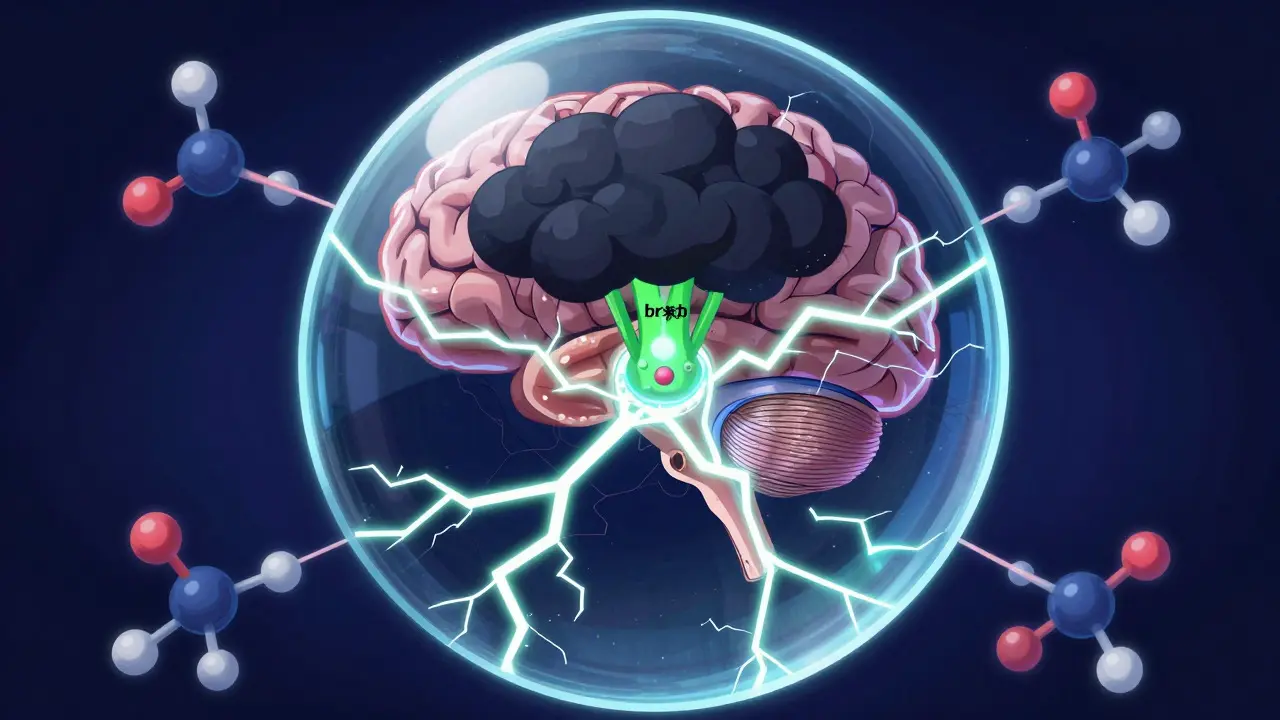
To understand the risk, we have to look at the molecular level. Tramadol exists as two enantiomers (mirror-image molecules). The (+) enantiomer stimulates serotonin release and inhibits its reuptake, while the (-) enantiomer inhibits norepinephrine reuptake. In a healthy brain, this balance helps manage pain perception. However, in a brain already prone to seizures, this shift in neurotransmitter levels can destabilize electrical activity further. Recent research published in Neurology.org suggests that Tramadol and its primary metabolite, O-desmethyltramadol (M1), may decrease the seizure threshold by inhibiting gamma-aminobutyric acid (GABA). GABA is the brain's main "brake pedal"; when it's suppressed, neurons fire more easily, leading to convulsions.
This effect is dose-dependent but not strictly limited to overdose. Preclinical studies in rats show that at normal analgesic doses, Tramadol can actually be anti-convulsant. But push the dose into the medium-to-high range, and it flips to pro-convulsant, causing myoclonic jerks and generalized tonic-clonic seizures. The danger zone is tricky because individual tolerance varies. A patient might take 50mg safely for weeks, then hit a tipping point due to an interacting medication or metabolic change, triggering a seizure within the first 24 hours of administration.
Who Is Most at Risk?
While anyone taking Tramadol faces some degree of increased risk, certain groups are far more vulnerable. The most obvious group is individuals with diagnosed epilepsy or a history of unprovoked seizures. But the risk extends beyond formal diagnoses. People with other conditions that inherently lower the seizure threshold-such as traumatic brain injury, stroke, or severe electrolyte imbalances-are also at heightened risk.
Age and gender play roles too. A significant 3-year study analyzing 28 subjects with Tramadol-associated seizures found that 92.8% were male, with a mean age of 28.4 years. This demographic skew suggests that young adult males, who may be more likely to combine painkillers with alcohol or illicit substances, represent a high-risk cohort. However, don't let the statistics fool you into thinking women are safe. Seven percent of cases involved females, and the Medsafe New Zealand report documented seizures in patients aged 15 to 49, highlighting that age range matters less than overall neurological stability.
Renal function is another critical factor. Since Tramadol is excreted through the kidneys, impaired renal function leads to drug accumulation. A case documented in the Medsafe report involved a patient with renal failure who received 300mg IV and subsequently seized. If you have kidney issues, your doctor must adjust dosing carefully, or consider avoiding Tramadol altogether.
Dangerous Drug Interactions to Watch
One of the biggest hidden dangers of Tramadol is its interaction with other common medications. You aren't just taking a painkiller; you're introducing a serotonergic agent into a system that might already be loaded with other drugs affecting serotonin or norepinephrine levels.
- Antidepressants: Tricyclic antidepressants (TCAs) and Selective Serotonin Reuptake Inhibitors (SSRIs) are frequent culprits. The Medsafe report noted three patients taking TCAs concurrently with Tramadol who experienced seizures. Two of these occurred specifically when the Tramadol dose was increased. This combination increases the risk of both seizures and serotonin syndrome.
- Antipsychotics: Many antipsychotic medications independently lower the seizure threshold. Adding Tramadol to this mix creates a compounding effect. One case report highlighted a patient taking an antipsychotic, an SSRI, and Tramadol who suffered repeated seizures.
- Alcohol and Illicit Drugs: The 2013 study found that seizures were more common in subjects concomitantly consuming alcohol or illicit drugs. Alcohol depresses the central nervous system and can exacerbate the pro-convulsant effects of higher Tramadol doses.
- Other Opioids: Administering Tramadol intravenously alongside pethidine or cyclizine has been linked to seizures. This is particularly relevant in hospital settings where multiple agents are used for pain and nausea control.
Polypharmacy is the norm rather than the exception. In the 2013 study, 57.1% of seizure cases involved the concurrent use of other drugs. This means that if you are on a complex medication regimen, the risk isn't just about the Tramadol-it's about the chemical cocktail you're creating in your bloodstream.
Clinical Evidence and Real-World Cases
The data supporting the link between Tramadol and seizures is robust. Between 2001 and 2006, the Centre for Adverse Reactions Monitoring (CARM) in New Zealand received ten reports of seizures attributed to Tramadol. During that period, Tramadol was the most commonly implicated medicine in seizure reports. More recently, emergency department visits related to Tramadol rose by 250% between 2005 and 2011, mirroring an 88% increase in prescriptions between 2008 and 2013. This correlation suggests that as more people take the drug, more adverse events occur.
Consider the case of a patient with a pre-existing seizure history who started oral Tramadol at 400mg daily. Within 24 hours, they experienced a marked increase in seizure frequency, despite not taking other interacting medications. This proves that even monotherapy (taking only one drug) can trigger events in susceptible individuals. Conversely, EEG findings in many of these cases showed abnormalities initially (42.9% in the first 24 hours) but normalized after one week (only 3.6% abnormal). This indicates that the neurological impact is often transient, but the acute window is where the danger lies.

Safer Alternatives and Management Strategies
If you have a seizure disorder, does that mean you can't manage pain effectively? Not at all. It just means you need to avoid Tramadol and choose alternatives that don't share this specific risk profile.
| Medication | Seizure Risk Profile | Key Mechanism Difference |
|---|---|---|
| Tramadol | High (Contraindicated in epilepsy) | Inhibits serotonin/norepinephrine reuptake; lowers GABA |
| Morphine | Low to Moderate (Dose-dependent) | Pure mu-opioid agonist; no significant serotonergic activity |
| Oxycodone | Low | Pure mu-opioid agonist; generally safer for seizure-prone patients |
| Naproxen/Ibuprofen | Very Low | Non-opioid NSAIDs; do not affect central seizure threshold directly |
For many patients, non-opioid options like NSAIDs (Naproxen, Ibuprofen) or acetaminophen remain the first line of defense. When opioids are necessary, pure mu-opioid agonists like Morphine or Oxycodone are generally considered safer regarding seizure risk, though they carry their own set of side effects like respiratory depression and constipation. Always consult your neurologist and pain specialist before switching medications. They can assess your specific seizure type and medication history to determine the safest path forward.
If you are currently taking Tramadol and have a new diagnosis of epilepsy, do not stop the medication abruptly without medical supervision, as withdrawal can itself cause stress and physiological changes. Instead, work with your doctor to taper off gradually while starting appropriate anti-seizure medication. Monitoring for the first 24 hours after any dose change is crucial, as this is when the majority of Tramadol-induced seizures occur.
Frequently Asked Questions
Can I take Tramadol if I have epilepsy?
Generally, no. Most clinical guidelines, including those from UCSF, contraindicate Tramadol in patients with pre-existing seizure disorders because it lowers the seizure threshold. If you have epilepsy, ask your doctor about safer alternatives like Morphine or non-opioid pain relievers.
What is the maximum safe dose of Tramadol?
The standard maximum recommended daily dose is 400mg. However, for patients with seizure risks, even therapeutic doses below this limit can be dangerous. Individual tolerance and interactions with other drugs mean there is no single "safe" dose for everyone, especially those with neurological vulnerabilities.
Does Tramadol interact with antidepressants?
Yes, significantly. Combining Tramadol with SSRIs, SNRIs, or tricyclic antidepressants increases the risk of both seizures and serotonin syndrome. If you are on these medications, inform your prescribing doctor immediately so they can evaluate the risk-benefit ratio.
How quickly can Tramadol cause a seizure?
Most Tramadol-associated seizures occur within the first 24 hours of intake or after a dose increase. This short window highlights the importance of monitoring closely when starting the medication or changing the dosage.
Is Tramadol safer than other opioids for pain?
It depends on your health history. For general pain management in healthy adults, Tramadol may have a lower abuse potential than stronger opioids. However, for patients with seizure disorders, kidney impairment, or those taking serotonergic drugs, it is often less safe than pure opioids like Oxycodone or non-opioid options.
Garry Hedges
August 20, 2026 AT 03:23the brain is a chaotic system and this drug just tips the scales. its not about being weak its about chemistry. if you have epilepsy dont gamble with your neurons. the dual mechanism is the real killer here. serotonin and norepi reuptake inhibition is a recipe for disaster in an unstable neural field. most people think opioids are just pain blockers but tramadol is different. it acts like a psychotropic agent in disguise. the GABA suppression is the silent assassin. when the brake pedal fails the car crashes. that is what happens in the brain during a seizure. we need to stop treating this as a mild painkiller. it is a neurotoxin for the vulnerable. respect the threshold or pay the price.
Jamaal Johnson
August 21, 2026 AT 20:05It is quite remarkable how often medical professionals overlook the specific pharmacological nuances of Tramadol, particularly regarding its impact on the GABAergic system. The distinction between its mu-opioid agonism and its serotonergic/noradrenergic properties is crucial, yet frequently underemphasized in patient education. One must consider that the enantiomeric composition plays a pivotal role in determining whether the net effect is anti-convulsant or pro-convulsant. This duality presents a significant clinical challenge for practitioners who may rely solely on standard dosing guidelines without accounting for individual metabolic variances. Furthermore, the interaction with common psychiatric medications necessitates a more rigorous review of concurrent therapies. It would be prudent for healthcare providers to adopt a more conservative approach when prescribing this agent to patients with any history of neurological instability. The data suggests that the risk is not merely theoretical but clinically manifest in a substantial number of cases. Therefore, informed consent should include a detailed discussion of these potential adverse events. Patients deserve clarity on why this particular opioid carries a higher burden of proof than others. Ultimately, the goal is to mitigate harm through precise understanding and careful monitoring.
Ankit Sinha
August 23, 2026 AT 13:31everyone thinks they know better than the doctor but really they just dont read labels. its basic biology if you take a drug that messes with serotonin you get seizures. stop complaining about side effects and just follow instructions. the study says young males are at risk so maybe stay away from alcohol. its not complicated. if you have epilepsy you shouldnt be taking it period. its called contraindicated. learn the word. the kidney issue is also obvious if you have bad kidneys everything stays in your body longer. simple math. stop making excuses. the drug works for some people but not all. accept reality. its not a conspiracy its just medicine. take your meds properly or suffer the consequences. its that simple. no one owes you a perfect life. just manage your health. its your responsibility not the doctors fault. wake up and take charge of your own body. less drama more discipline.
Jw George John Warren
August 25, 2026 AT 12:57oh great another scary article 🙄🔥 i bet you all love this stuff. its not like anyone actually dies from it right? 🤷♂️ just take it with food and youll be fine lol. the stats are made up by pharma to sell other drugs anyway. 📉💊 who cares about GABA levels? just ignore the warning signs and keep popping pills. 😴⚡️ maybe the problem is we are too sensitive these days. 🧠✨ trust me its totally safe if you dont mix it with beer. 🍺🚫 just my two cents from a guy who has never had a seizure. 💀👋
Rachel Robinson Interiors
August 25, 2026 AT 13:53This is such important information for anyone managing chronic pain alongside a neurological condition. It is reassuring to see clear alternatives listed, especially the distinction between pure opioids and Tramadol. Many patients feel stuck because they fear switching medications will disrupt their pain management routine. However, knowing that options like Oxycodone or NSAIDs exist provides a sense of hope and control. It is vital to communicate openly with both neurologists and pain specialists to create a cohesive care plan. Do not hesitate to ask for a second opinion if you feel your current regimen is not addressing all aspects of your health. Your safety is paramount, and being proactive in your medical journey is always a strength. Keep advocating for yourself, as your doctors want to help you find the best balance. You are capable of navigating this with the right support and information. Stay strong and informed. Your health matters deeply.
Jesse Barlau
August 27, 2026 AT 08:37While the article makes valid points about the seizure threshold, it is worth noting that the decision to prescribe Tramadol is often influenced by the desire to avoid stronger opioids due to addiction concerns, which creates a complex ethical dilemma for prescribers who must weigh the risk of seizures against the risk of dependence. Furthermore, the variability in individual metabolism means that even low doses can be problematic for some, suggesting that genetic testing might be a valuable addition to the pre-prescription workflow for high-risk patients, although this remains largely unimplemented in general practice. The mention of renal impairment is critical, as many older adults have subclinical kidney function decline that goes undetected until a drug accumulation event occurs, highlighting the need for routine monitoring rather than just initial assessment. Additionally, the transient nature of EEG abnormalities post-seizure could lead to false reassurance if clinicians do not maintain vigilance during the acute phase, potentially missing early signs of recurrence. The interplay between polypharmacy and Tramadol is indeed a significant factor, and perhaps more emphasis should be placed on pharmacist-led medication reviews to identify dangerous combinations before they result in adverse events. Ultimately, a multidisciplinary approach involving neurology, psychiatry, and primary care is essential for managing patients with complex comorbidities effectively. We must strive for a more integrated model of care that addresses these multifaceted risks holistically. Patient education materials should be updated to reflect these nuanced interactions clearly. Let us continue to refine our clinical practices based on emerging evidence. The goal is always to minimize harm while maximizing quality of life.
Michael Smith
August 28, 2026 AT 17:15sarcastically speaking this is the most obvious thing in the world. of course a drug that messes with your brain causes seizures. genius discovery. next they will tell us water is wet. thanks for the info i guess. really helpful. nothing new here folks. move along. 👏
Eunice Chen
August 30, 2026 AT 13:06this is super helpful! i was worried about my mom taking this after her surgery. glad to know there are safer options. thanks for sharing!
Usha Ranji
September 1, 2026 AT 12:46In India, we often see Tramadol prescribed for minor ailments due to its lower cost compared to other opioids, which exacerbates the risk for patients with undiagnosed seizure disorders. It is important to educate local practitioners about the specific contraindications mentioned here, as awareness varies significantly across regions. The interaction with common over-the-counter remedies is another area that needs closer scrutiny in our context. Perhaps we can discuss more about the cultural factors influencing medication adherence in such cases. It would be beneficial to have localized guidelines that account for these regional differences in prescribing habits. Let us work together to improve patient safety outcomes globally. Thank you for this comprehensive overview. It serves as a good reminder for all of us in the medical community. Let us stay vigilant and informed.
sonia rockett
September 1, 2026 AT 22:13You guys are overthinking this! Just take the pill and enjoy life! If you have a seizure well that means you were weak! Stop being so fragile! 💪🔥 This is the way forward! No more whining about side effects! Be strong! 💥
Ella Mentry
September 2, 2026 AT 07:03Oh my god I knew something was wrong with my cousin after he started taking those painkillers! He got so weird and then just collapsed! I told him to stop drinking but he ignored me! Now look at him! This article proves I was right all along! Why didn't his doctor listen to me? I am so angry! Who else has a story like this? Share it please! I want to hear every single detail! Don't hide anything! It's all connected! 🌐👀
Saher Ghattas
September 2, 2026 AT 19:04The pharmaceutical industrial complex is clearly suppressing the true extent of the neurotoxicity associated with this particular xenobiotic compound, leveraging regulatory capture mechanisms to ensure continued market penetration despite adverse pharmacokinetic profiles. The observed correlation between prescription volume and emergency department visits is not coincidental but rather indicative of a systemic failure in post-market surveillance protocols, likely exacerbated by off-label promotion strategies targeting vulnerable demographics. One must consider the broader implications of serotonergic modulation in the context of global mental health trends, where the proliferation of SSRI prescriptions creates a fertile ground for synergistic adverse events. The enantiomeric separation issue remains a critical point of contention, as current formulations do not adequately address the differential convulsant potentials of the (+) and (-) isomers. This suggests a deliberate neglect of chiral purity standards in manufacturing processes, possibly driven by cost-reduction imperatives within the supply chain. Furthermore, the renal excretion pathway highlights a hidden vulnerability in elderly populations, whose declining glomerular filtration rates are rarely factored into initial dosing algorithms. The data presented here is merely the tip of the iceberg, obscuring a deeper narrative of institutional negligence and profit-driven prioritization over patient welfare. We must demand transparency and independent verification of these clinical trials. The truth is buried in the footnotes. Stay skeptical. 🕵️♂️📉