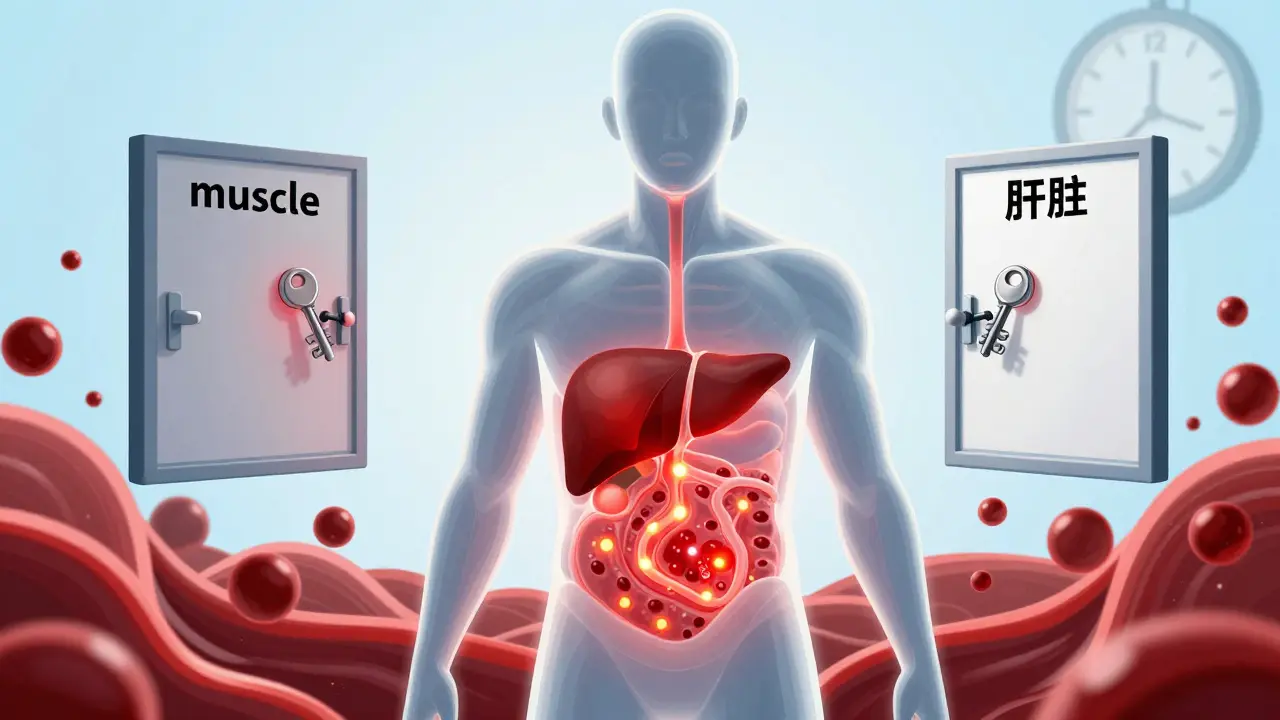
When your body stops responding to insulin like it used to, things start to unravel - not slowly, but steadily. This isn’t just about sugar levels. It’s about how your entire metabolism begins to misfire, and it’s the quiet engine behind type 2 diabetes. Around 96% of all diabetes cases are type 2, and for most people, it didn’t happen overnight. It started with insulin resistance - a hidden problem that creeps in years before a diagnosis ever shows up on a lab report.
What Is Insulin Resistance?
Insulin is the hormone your pancreas releases to tell your muscles, fat, and liver: "Take in this glucose. Use it for energy." But when you eat too much, especially refined carbs and sugars, over and over again, your cells start to tune out. That’s insulin resistance. It’s not that insulin disappears - it’s that your body stops listening.
Think of it like a door that’s been jammed. The key (insulin) still turns, but the door won’t open. Glucose piles up in your blood. Your pancreas tries to fix it by pumping out more insulin. That’s called hyperinsulinemia - high insulin levels trying to compensate. For years, this works. But eventually, the beta cells in your pancreas get worn out. They can’t keep up. And that’s when fasting blood sugar climbs above 126 mg/dL - the line into type 2 diabetes.
Research from the University of Texas Health Science Center shows that 80-90% of people with type 2 diabetes already had insulin resistance before they were diagnosed. The real problem? Most people don’t know they have it until their glucose levels are already out of range.
Metabolic Syndrome: The Warning Signs You’re Missing
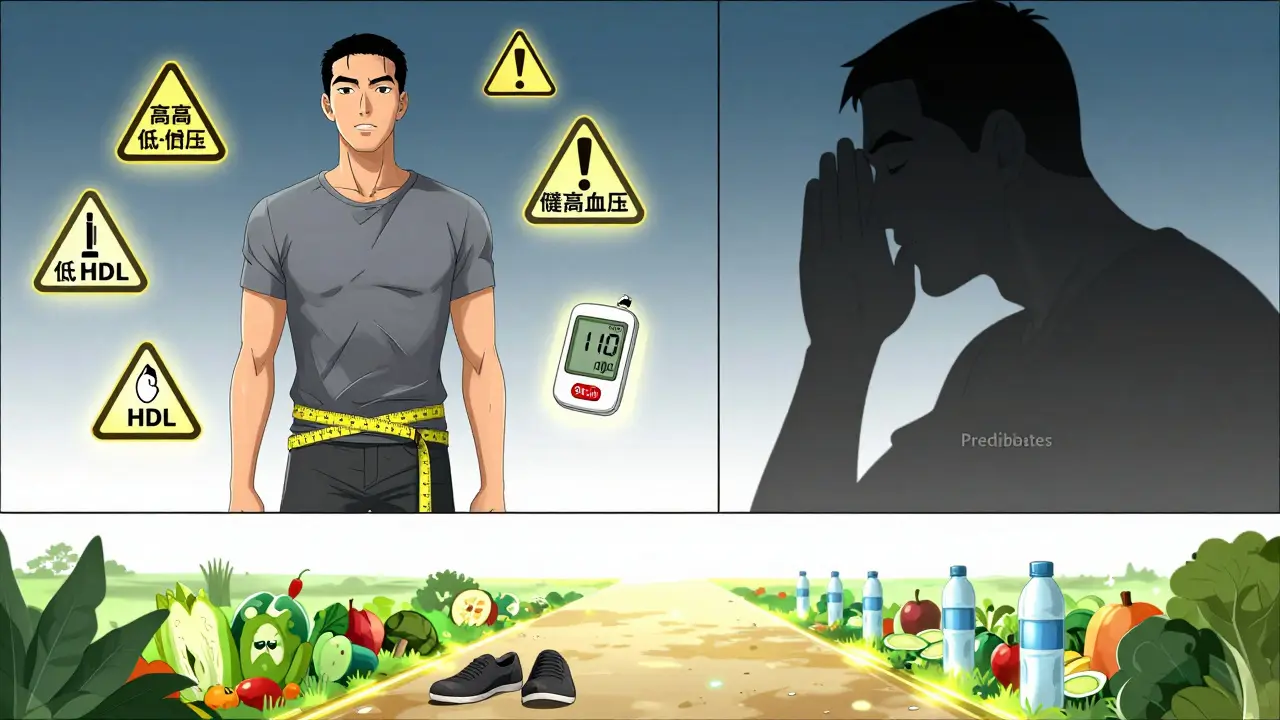
Metabolic syndrome isn’t a single disease. It’s a cluster of warning signs that your metabolism is breaking down. Back in 1988, Dr. Gerald Reaven called it "Syndrome X" - a group of conditions that, together, raise your risk of heart disease and diabetes. Today, experts are pushing to rename it "metabolic dysfunction syndrome" because it’s not just a pattern - it’s active damage.
The International Diabetes Federation says you have metabolic syndrome if you have at least three of these five things:
- Waist size over 94 cm for men in Europe (or 90 cm for South Asian, Chinese, or Japanese men)
- Waist size over 80 cm for women (same thresholds for South Asian, Chinese, or Japanese women)
- Triglycerides above 150 mg/dL
- HDL cholesterol below 40 mg/dL for men or 50 mg/dL for women
- Blood pressure at or above 130/85 mmHg
And here’s the kicker: if you have metabolic syndrome, your chance of developing type 2 diabetes is 5 to 6 times higher than someone who doesn’t. That’s not a small risk. That’s a red flag.
It’s not just about being overweight. About 30-40% of people who are obese never develop metabolic syndrome. Why? It’s where the fat sits. Fat around your belly - especially inside your liver and around your organs - is the real troublemaker. That fat releases inflammatory chemicals that block insulin signals. It’s not the number on the scale. It’s the location.
How Insulin Resistance Leads to Type 2 Diabetes
The path from insulin resistance to full-blown diabetes is a slow burn. It starts with your liver. When insulin stops working properly, the liver keeps making glucose even when you don’t need it. Then your muscles stop taking in glucose. Fat cells start leaking fatty acids into your bloodstream. All of this floods your body with fuel it can’t use.
That excess fuel causes stress. Your cells get overwhelmed. The endoplasmic reticulum - the part of the cell that folds proteins - starts to malfunction. Oxidative stress builds up. Inflammation spreads. Your fat tissue becomes a source of trouble, not storage.
At some point, your pancreas can’t keep producing enough insulin to match the resistance. Beta cells start to die. Studies show they decline at about 4-5% per year in people with prediabetes. Once you lose too many, your blood sugar climbs past 126 mg/dL on an empty stomach - and you’re officially diagnosed with type 2 diabetes.
It’s not inevitable. The Diabetes Prevention Program proved that. People with prediabetes and metabolic syndrome who lost 7% of their body weight and exercised 150 minutes a week cut their diabetes risk by 58% over three years. Lifestyle changes work - not because they’re trendy, but because they reverse the root cause.
What’s the Difference Between Prediabetes and Type 2 Diabetes?
Prediabetes is your body’s last chance to turn things around. Your fasting glucose is between 100 and 125 mg/dL. Your HbA1c is between 5.7% and 6.4%. Your pancreas is still working - it’s just working overtime. Insulin resistance is there, but your beta cells haven’t given up yet.
Type 2 diabetes is when that system breaks down. Fasting glucose hits 126 mg/dL or higher. HbA1c climbs above 6.5%. Beta cells are damaged. Insulin production drops. The body can’t keep up. And unlike type 1 diabetes - which is an autoimmune attack on beta cells - type 2 is a slow collapse from overuse.
What’s alarming is how often people miss prediabetes. The American Diabetes Association found that 80% of people with prediabetes don’t know they have it. That’s because there are no obvious symptoms. No thirst. No frequent urination. Just fatigue. Brain fog. Hunger after meals. Weight that won’t budge, no matter what you do.
Why Some People Get It - And Others Don’t
Not everyone who eats poorly gets type 2 diabetes. Not everyone who’s overweight has metabolic syndrome. Genetics play a role. So does fat distribution. People of South Asian descent, for example, develop insulin resistance at lower body weights. Their fat tends to collect around organs earlier. That’s why waist measurements for this group are lower than for Europeans.
And then there’s the lean type 2 diabetic. A growing number of people with normal weight develop type 2 diabetes. Why? Their beta cells may have a genetic weakness. Their liver may be more sensitive to fat buildup. Their muscles may be less efficient at using glucose. This challenges the old idea that type 2 is just "a disease of obesity."
Dr. Anna Gloyn from Oxford University points out that in some lean, South Asian patients, beta cell failure might be the main driver - not insulin resistance. That means treatment can’t be one-size-fits-all. For some, the fix isn’t weight loss. It’s protecting beta cells.
How to Reverse It - Before It’s Too Late
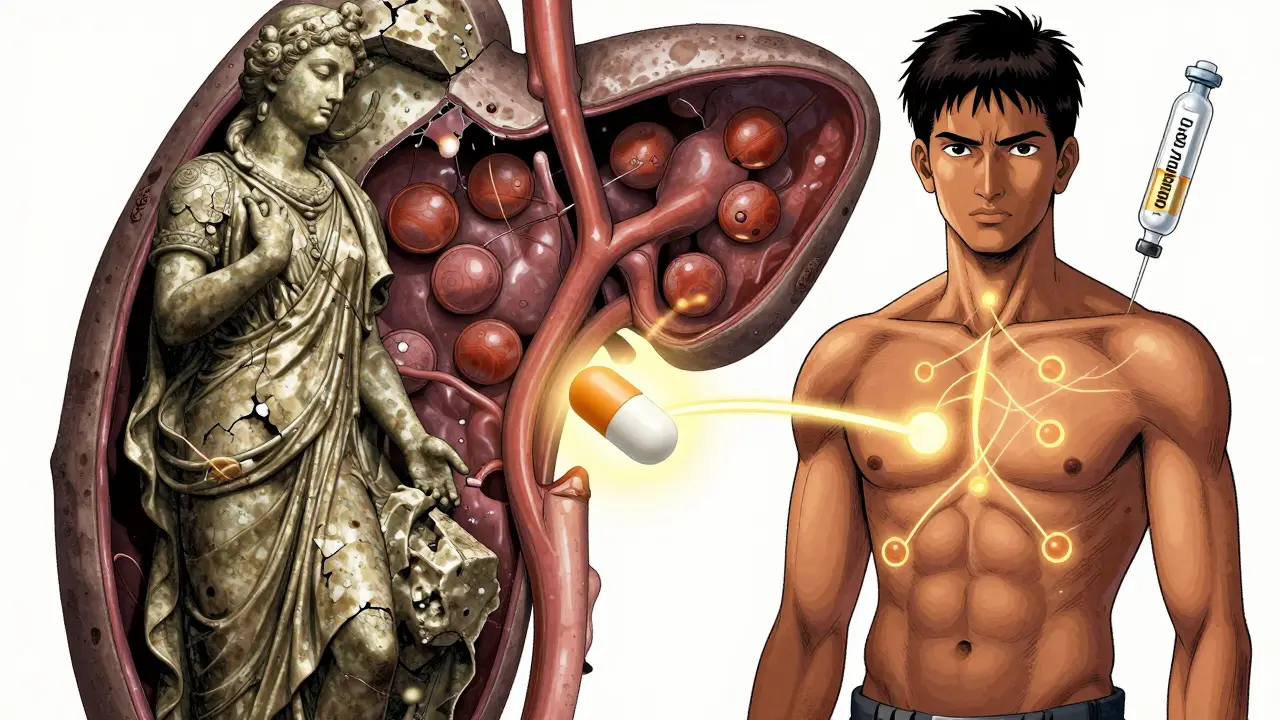
The good news? Insulin resistance is reversible. Metabolic syndrome can be undone. You don’t need a miracle drug. You need consistency.
Here’s what works - backed by real studies:
- Drop 5-7% of your body weight. For someone who weighs 200 pounds, that’s 10-14 pounds. That’s enough to improve insulin sensitivity by 20-30%.
- Move 150 minutes a week. Brisk walking, cycling, swimming - anything that gets your heart rate up. Muscle uses glucose. More muscle = better insulin response.
- Change what you eat. Cut out sugary drinks, white bread, pastries, and processed snacks. Focus on whole foods: vegetables, legumes, lean proteins, nuts, and healthy fats. Avoid constant snacking - your pancreas needs breaks.
- Try metformin if your doctor recommends it. The Diabetes Prevention Program showed it cuts diabetes risk by 31% in people with metabolic syndrome. It doesn’t cause weight loss, but it helps your body use insulin better.
- Consider newer medications if needed. Drugs like semaglutide (Wegovy, Ozempic) and tirzepatide (Mounjaro) don’t just lower blood sugar - they reduce appetite and body weight dramatically. In trials, people lost over 14% of their weight, and many went into remission.
The Look AHEAD trial showed that with intensive lifestyle changes, over half of participants reversed their diabetes within a year. Twelve percent stayed in remission eight years later. It’s not magic. It’s metabolic healing.
What’s Changing in 2026
The medical world is shifting. The term "metabolic syndrome" is fading. Experts now prefer "metabolic dysfunction syndrome" because it’s clearer: this isn’t a collection of symptoms - it’s active tissue damage.
Diagnosis tools are improving too. Continuous glucose monitors (CGMs), like the Dexcom G7, are now available without a prescription. They show how your blood sugar reacts to meals, sleep, stress - not just fasting numbers. Many people with prediabetes are using them to fine-tune their diet before it’s too late.
And research is moving fast. Stem cell therapies like Vertex’s VX-880 are showing promise in restoring insulin production. GLP-1 drugs are being tested not just for diabetes, but for fatty liver disease and heart failure. The goal isn’t just to manage disease anymore - it’s to reverse it.
But the biggest shift is cultural. We’re starting to see type 2 diabetes not as a personal failure, but as a metabolic crisis fueled by modern food environments, sedentary lifestyles, and sleep deprivation. Fixing it means changing more than individual habits - it means changing how we design cities, schools, workplaces, and food systems.
What You Can Do Today
You don’t need to wait for a diagnosis. If you’re tired all the time, feel hungry soon after eating, carry weight around your middle, or have high blood pressure - start now.
Measure your waist. Walk 30 minutes a day. Swap soda for water. Eat dinner three hours before bed. Get seven hours of sleep. These aren’t "diet rules." They’re metabolic reset buttons.
Insulin resistance doesn’t have to become type 2 diabetes. Metabolic syndrome doesn’t have to become heart disease. The window to act is wide open - if you know what to look for.
Can you have insulin resistance without being overweight?
Yes. While obesity increases risk, people with normal weight can still have insulin resistance - especially if they have genetic traits, high visceral fat, or a sedentary lifestyle. Lean individuals of South Asian descent are particularly at risk, even at lower body weights.
Is metabolic syndrome the same as prediabetes?
No. Prediabetes is a blood sugar condition - fasting glucose between 100-125 mg/dL. Metabolic syndrome is a cluster of risk factors (waist size, blood pressure, cholesterol, triglycerides, and glucose). You can have metabolic syndrome without prediabetes, and vice versa - but they often overlap. Having both greatly increases your risk of type 2 diabetes.
Can type 2 diabetes be reversed?
Yes - in many cases. Studies show that losing 5-10% of body weight, improving diet, and increasing physical activity can restore normal blood sugar levels and put type 2 diabetes into remission. The Look AHEAD trial found 12% of participants maintained remission for eight years after lifestyle changes.
Why do some people with metabolic syndrome never develop diabetes?
It comes down to beta cell resilience. Some people’s pancreas can keep producing enough insulin to compensate for resistance, even with high fat and sugar intake. Genetics, muscle mass, physical activity, and fat distribution all influence whether the system breaks down.
What’s the best way to check if I have insulin resistance?
There’s no single test, but doctors look for signs: high waist circumference, elevated triglycerides, low HDL, high blood pressure, and fasting glucose above 100 mg/dL. A fasting insulin test or HOMA-IR calculation can help, but these aren’t routine. If you have three or more components of metabolic syndrome, you likely have insulin resistance.
William Minks
March 6, 2026 AT 07:48Susan Purney Mark
March 7, 2026 AT 02:19Roland Silber
March 8, 2026 AT 11:46Patrick Jackson
March 9, 2026 AT 14:38Adebayo Muhammad
March 9, 2026 AT 22:00Pranay Roy
March 11, 2026 AT 11:09Joe Prism
March 11, 2026 AT 17:54Bridget Verwey
March 13, 2026 AT 02:25Andrew Poulin
March 14, 2026 AT 15:45Weston Potgieter
March 16, 2026 AT 14:09Vikas Verma
March 16, 2026 AT 16:07Sean Callahan
March 17, 2026 AT 13:20Ferdinand Aton
March 18, 2026 AT 19:16Jeff Mirisola
March 20, 2026 AT 10:26