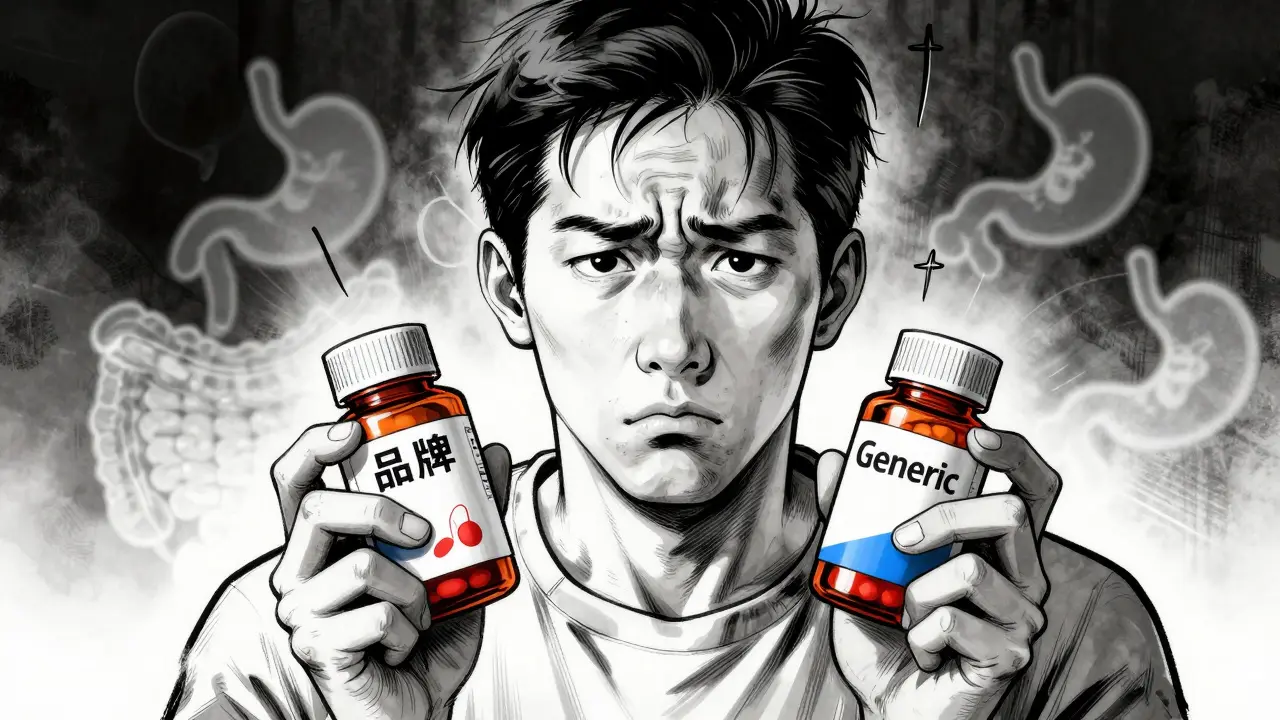
Switching from a brand-name drug to its generic counterpart is supposed to be seamless. You get the same active ingredient, often at a fraction of the cost, with no change in how you feel. But for millions of patients, that switch comes with a surprise: new headaches, digestive upset, or worse. If you’ve recently changed medications and started feeling off, you might wonder if it’s all in your head-or if something is actually wrong.
The truth is, while generic medications are regulated alternatives to brand-name drugs that contain the same active ingredients but may differ in inactive components, they are not always identical in every way. The U.S. Food and Drug Administration (FDA) requires generics to be "bioequivalent," meaning they deliver the same amount of active ingredient into your bloodstream within a specific range. However, small differences in formulation, manufacturing, or inactive ingredients can trigger unexpected reactions in sensitive individuals. Knowing when to ignore minor glitches and when to call your doctor can save you from serious health complications.
Why Generics Can Feel Different Than Brand-Name Drugs
To understand why a generic might cause side effects, you first need to look past the active ingredient-the part of the pill that treats your condition-and focus on what else is inside. Every tablet contains inactive ingredients, known as excipients are non-active substances used to bind, coat, or preserve medication tablets. These include fillers, binders, dyes, and preservatives.
While the FDA mandates that the active ingredient must match the brand-name version, manufacturers have freedom in choosing these inactive components. This is where problems often start. For example:
- Allergens and Intolerances: Some generics use gluten-based fillers or lactose, which can trigger severe digestive flare-ups in patients with celiac disease or lactose intolerance. A study by Healing Roots Wellness Center noted that these hidden allergens are a common source of unexplained gastrointestinal distress after switching brands.
- Artificial Dyes: Red 40 and Yellow 5 are frequently used to color pills. In sensitive individuals, particularly children, these dyes have been linked to headaches, rashes, and even hyperactivity.
- Preservatives: In liquid forms like eye drops, preservatives vary significantly. Travatan Z, a branded glaucoma drop, uses a preservative called SofZia. Many generic versions use benzalkonium chloride (BAK). Patients sensitive to BAK often experience significant eye irritation and redness when switched to the generic, a phenomenon documented in the *Review of Ophthalmology*.
It’s not just about allergies. The physical structure of the pill matters too. Differences in how a tablet dissolves can affect how quickly the drug enters your system. For most people, this variance is negligible. But for those on delicate medication regimens, it can be the difference between stability and side effects.
The High-Risk Category: Narrow Therapeutic Index Drugs
Not all medications carry the same risk. The danger zone lies with Narrow Therapeutic Index (NTI) drugs are medications where small changes in blood concentration can lead to treatment failure or severe toxicity. With NTI drugs, the margin between a helpful dose and a harmful one is razor-thin. Even a slight deviation in bioavailability-how much of the drug reaches your bloodstream-can cause serious issues.
The FDA identifies roughly 18 such medications, including:
- Warfarin (Coumadin): A blood thinner where slight increases in potency can lead to dangerous bleeding.
- Levothyroxine (Synthroid): Used for thyroid conditions; variations can cause heart palpitations, anxiety, or fatigue.
- Phenytoin (Dilantin): An anti-seizure medication where under-dosing can trigger seizures.
Data paints a clear picture of the risks here. A 2020 analysis in *JAMA Internal Medicine* found that 14.7% of patients taking generic warfarin experienced unexpected bleeding events after switching manufacturers, compared to just 4.2% of those who stayed on consistent brand-name Coumadin. Similarly, patient reviews on platforms like GoodRx show that thyroid medications have the highest rate of reported side effect differences (23.7%) after generic switches.
If you are taking an NTI drug, do not assume all generics are interchangeable. Small shifts in dosage absorption can have big consequences for your health.
Manufacturing Quality and Global Supply Chains
Another factor contributing to unexpected side effects is manufacturing quality. While the FDA enforces Good Manufacturing Practices (GMPs), oversight varies globally. According to a 2022 Government Accountability Office report, 73% of active pharmaceutical ingredients for generics are manufactured outside the United States, primarily in India and China.
This global supply chain introduces potential risks. A stark example occurred during the 2018-2019 valsartan recall. Approximately 2.3 million patients across 22 countries were affected by contamination with N-nitrosodimethylamine (NDMA), a probable human carcinogen, found in some generic blood pressure medications. While rare, such incidents highlight that the source of your medication matters.
Furthermore, industry consolidation means fewer players dominate the market. The top five generic manufacturers now control nearly 44% of the U.S. market. If one manufacturer has a quality issue, it can impact thousands of patients simultaneously. Checking the manufacturer listed on your pharmacy label is a simple step that can help you track consistency.
When to Seek Immediate Medical Help
So, how do you know if your reaction is normal adjustment or a medical emergency? The FDA defines serious side effects as those resulting in death, life-threatening conditions, hospitalization, permanent disability, or birth defects. Here are specific warning signs that require immediate attention:
- Stevens-Johnson Syndrome (SJS): A life-threatening skin reaction characterized by painful rash, blisters, and mucous membrane involvement. It is associated with medications like lamotrigine (Lamictal) and allopurinol (Zyloprim). If you see a spreading rash with blistering, go to the ER immediately.
- Priapism: A painful erection lasting more than four hours, associated with medications like trazodone and bupropion (Wellbutrin). This is a urological emergency that can cause permanent damage if not treated promptly.
- Severe Allergic Reactions: Difficulty breathing, swelling of the face or throat, or hives appearing shortly after starting a new generic.
For less critical but persistent issues, contact your healthcare provider within 24 hours if you experience:
- Severe gastrointestinal distress lasting more than 48 hours.
- New or worsening neurological symptoms, such as tremors, confusion, or severe headaches.
- Significant changes in blood pressure or heart rate (more than 15% from your baseline).
- Unexplained skin reactions or rashes.
Dr. Robert H. Shmerling from Harvard Health Publishing advises that patients should not discontinue medications without consulting their provider. Instead, report any new symptom that begins within 1-2 weeks of a medication switch and doesn’t resolve within 3-5 days.
How to Manage Your Medication Safely
You don’t have to accept side effects as inevitable. Taking proactive steps can help you maintain your health while benefiting from the affordability of generics.
| Action Step | Why It Matters | What to Do |
|---|---|---|
| Check the Manufacturer | Different makers use different excipients and processes. | Look at your prescription bottle. Note the company name. If you switch pharmacies, ask if they can keep the same manufacturer. |
| Track Symptoms | Helps distinguish between placebo/nocebo effects and real reactions. | Keep a log of any new symptoms, noting when they started relative to your last refill. |
| Communicate with Your Doctor | Doctors can override automatic substitutions. | If a generic causes issues, ask for a "dispense as written" note for the brand name or a specific generic manufacturer. |
| Report Adverse Events | Helps the FDA identify patterns and unsafe batches. | Submit a report via the FDA’s MedWatch program, including lot numbers and manufacturer details. |
A 2023 Johns Hopkins study found that documenting specific generic manufacturers that work well for individual patients reduced side effect-related discontinuations by nearly 38%. This simple practice puts you in control of your care.
Frequently Asked Questions
Are generic medications less effective than brand-name drugs?
Generally, no. The FDA requires generic drugs to be bioequivalent to their brand-name counterparts, meaning they must deliver the same amount of active ingredient into your bloodstream within a strict range (80-125%). For the vast majority of patients, generics work just as well. However, for narrow therapeutic index drugs, small variations can sometimes lead to perceived differences in effectiveness or side effects.
Can I ask my pharmacist to give me a specific generic manufacturer?
Yes, you can request a specific manufacturer, though insurance plans may not cover the extra cost if a cheaper alternative is available. If you have had a good experience with a particular generic maker, write down the company name and share it with your pharmacist. They can often check inventory to see if that specific version is in stock.
What should I do if I suspect a generic caused a rash?
If you develop a mild rash, contact your doctor within 24 hours. If the rash is accompanied by fever, blistering, or involves your mouth or eyes, seek emergency care immediately, as this could be Stevens-Johnson Syndrome. Do not stop taking your medication abruptly without medical advice, especially if it is for a chronic condition, but do inform your healthcare provider right away.
Why do some people feel worse after switching to generics?
This can happen due to several factors. First, sensitivity to inactive ingredients like dyes or fillers. Second, slight differences in how the pill dissolves can affect absorption rates, particularly for narrow therapeutic index drugs. Third, the "nocebo effect"-where expecting negative outcomes can actually cause physical symptoms-plays a role. Studies show patients perceive generics as having higher risks, which can amplify minor sensations into noticeable discomfort.
Is it safe to switch between different generic manufacturers?
For most medications, yes. The FDA ensures that all approved generics meet strict bioequivalence standards. However, for high-risk drugs like blood thinners, thyroid medications, or anti-seizure drugs, frequent switching between manufacturers can lead to fluctuations in blood levels. Consistency is key for these specific classes of drugs to avoid side effects or loss of efficacy.
How can I report a side effect from a generic drug?
You can report adverse events to the FDA through the MedWatch program online or by mail. When reporting, include the medication name, manufacturer, lot number, and a detailed description of the side effect. This data helps regulators identify potential safety issues and protect other patients.