Iron Absorption Optimizer
Calculate Your Absorption Rate
Adjust the sliders to see how Vitamin C boosts iron absorption and how inhibitors block it.
The Safety Window: Medication Timing
Drag the slider to simulate your daily schedule. See which medications conflict with your Iron + Vitamin C dose.
You might be taking an iron supplement or eating spinach every day, yet you still feel exhausted. Why? Because your body isn't actually absorbing the iron. Without the right partner in your gut, most dietary iron passes right through you. That partner is Vitamin C (ascorbic acid). It’s not just a buzzword; it is the chemical key that unlocks iron absorption, especially from plant-based foods.
However, there is a catch. While Vitamin C helps iron get into your system, other common drugs and foods can block them both. If you take your thyroid medication, calcium, or antacids at the same time as your iron, you are essentially flushing money down the drain. Getting this timing wrong is the number one reason people fail to correct their Iron Deficiency Anemia.
The Chemistry of Absorption: Why You Need Both
To understand why this pairing matters, we have to look at what happens in your small intestine, specifically the duodenum. Most iron in our diet comes from plants like beans, lentils, and fortified cereals. This type is called Non-Heme Iron. Unlike the iron found in meat (heme iron), non-heme iron is stubborn. It exists in a form called ferric iron (Fe³⁺), which your gut cells struggle to absorb.
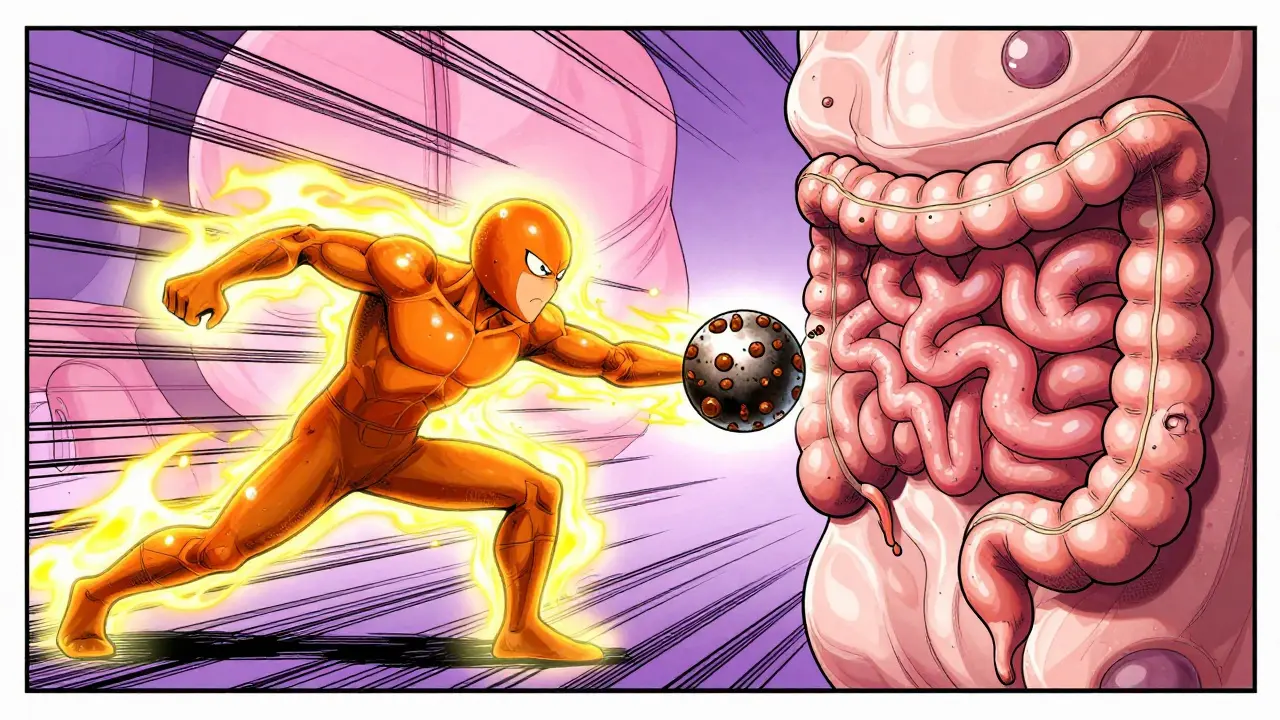
Vitamin C acts as an electron donor. In a process confirmed by X-ray crystallography studies at Japan's SPring-8 synchrotron facility, Vitamin C binds to enzymes on the surface of your intestinal cells. It donates electrons to the ferric iron, reducing it to ferrous iron (Fe²⁺). Ferrous iron is soluble and easy for your body to grab onto via a transporter protein called DMT-1. Without Vitamin C, only about 2% to 20% of plant-based iron gets absorbed. With adequate Vitamin C, that rate can jump to 30% or 40%. It is a massive difference for someone trying to rebuild their blood stores.
| Food Source | Iron Type | Absorption with Vitamin C |
|---|---|---|
| Fortified Cereals | Non-Heme | +67% |
| Lentils & Legumes | Non-Heme | +123% |
| Spinach | Non-Heme | +89% |
| Red Meat | Heme | No significant change |
Note that Vitamin C does very little for heme iron found in animal products. Heme iron already absorbs well (15-35%), so if you eat plenty of red meat, you rely less on this trick. But for vegetarians, vegans, or anyone relying on plant sources, Vitamin C is non-negotiable.
The Dosage Sweet Spot: More Isn't Always Better
How much Vitamin C do you need? Research published in ACS Omega suggests a dose-dependent relationship. You don't need to chug liters of orange juice. The optimal window is 100mg to 200mg of Vitamin C per meal containing iron. This amount increases absorption by roughly 100% to 150% compared to taking iron alone.
Here is what 100mg looks like in real food terms:
- One medium orange
- Half a cup of orange juice
- One cup of strawberries
- Half a cup of raw red bell pepper
The Timing Trap: Separating Iron from Other Drugs
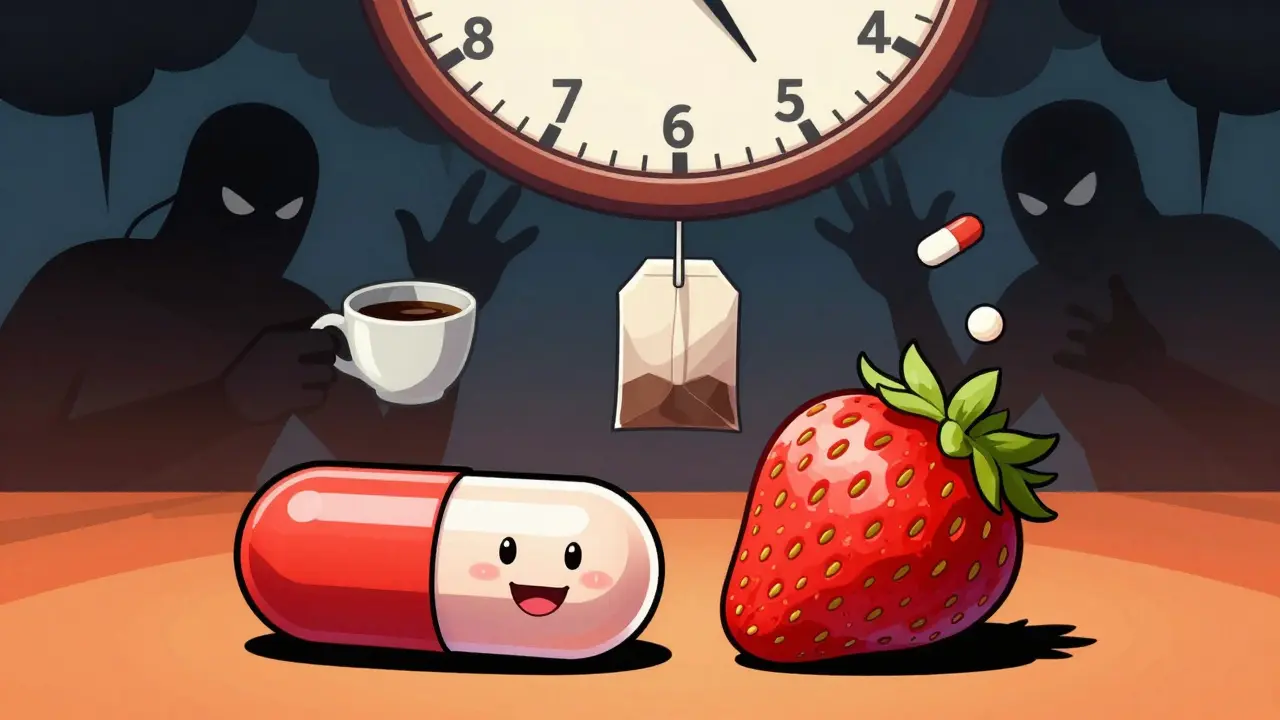
This is where most people mess up. You can pair your iron with Vitamin C perfectly, but if you also drink coffee or take your morning medications at the same time, you cancel out the benefits. Several substances compete with iron for the same absorption pathways or chemically bind to iron, making it insoluble again.
You must create specific time gaps between your iron intake and these inhibitors:
- Coffee and Tea: Polyphenols in tea and coffee inhibit iron absorption by up to 65%. Wait at least two hours after your iron-rich meal before having your caffeine fix.
- Calcium Supplements: Calcium blocks iron absorption by 50-60%. Do not take your multivitamin with calcium or dairy products within four hours of your iron dose.
- Antacids: Medications containing aluminum or magnesium hydroxide reduce stomach acid. Since acid helps dissolve iron, these drugs can cut absorption by 70-80%. Separate them by at least two hours.
- Thyroid Medication (Levothyroxine): Iron interferes with the absorption of levothyroxine. Take your thyroid med first thing in the morning on an empty stomach, and wait at least two hours before taking iron.
The rule of thumb is simple: Iron wants an acidic environment and no competition. Keep it isolated from other supplements and meals high in phytates or polyphenols.
Practical Strategies for Daily Life
Knowing the science is one thing; doing it daily is another. Many users report forgetting the timing rules. A study in WIC programs showed that while education works, habit formation takes effort. Here are practical ways to make this stick without feeling like you're managing a chemistry lab.
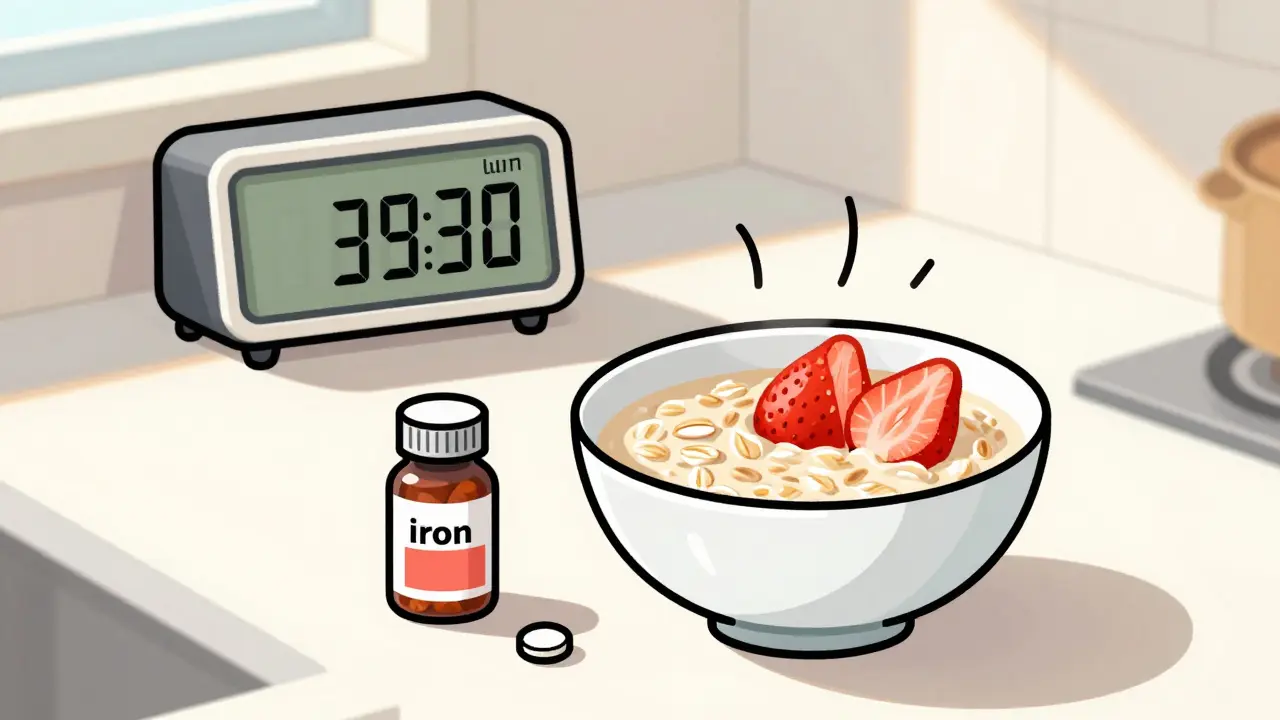
Create "Iron Anchor Meals." Pick one meal a day-usually breakfast or lunch-to be your primary iron source. If you eat oatmeal with fortified cereal, top it with sliced strawberries (Vitamin C) instead of milk (calcium). If you eat a lentil soup, add a squeeze of lemon juice or serve it with a side salad dressed in vinaigrette (acidic) rather than creamy dressing.
If you are taking a supplement, keep a bottle of Vitamin C tablets next to your iron bottle. Taking a 100mg Vitamin C pill with your iron capsule is often easier than forcing yourself to eat fruit when you aren't hungry. Just remember to take this combination away from your other meds. For example, take your thyroid pill at 7 AM, eat your iron/Vitamin C breakfast at 9 AM, and have your coffee at 11 AM.
Who Needs This Strategy Most?
While everyone benefits from better nutrition, certain groups see the biggest impact from this strategy. Pregnant women often develop iron deficiency because their blood volume expands rapidly. The WHO recommends pairing Vitamin C with iron-rich plant meals as a first-line defense against anemia in pregnancy. Vegetarians and vegans are also prime candidates since they lack the highly bioavailable heme iron from meat.
Elderly individuals often suffer from achlorhydria (low stomach acid), which naturally reduces iron absorption. For them, the acidic boost from Vitamin C is even more critical. However, be cautious if you have hemochromatosis, a condition where your body stores too much iron. In that case, enhancing absorption could be dangerous, so always consult your doctor before boosting your intake.
Can I take Vitamin C and iron together with my multivitamin?
It depends on the multivitamin. Most multivitamins contain calcium, zinc, or magnesium, which all compete with iron for absorption. If your multivitamin has calcium, take it at a different meal than your iron. If it is a basic B-complex or Vitamin D only, it is likely safe to take together, but separating them by a few hours is always the safest bet for maximum absorption.
Does orange juice work as well as Vitamin C pills?
Yes, absolutely. Half a cup of orange juice provides roughly 100mg of Vitamin C, which is the optimal dose for enhancing iron absorption. Juice is often preferred because the natural acids in the fruit help lower stomach pH, further aiding the dissolution of iron salts. Just ensure it is fresh-squeezed or not-from-concentrate to avoid excessive added sugars.
Why does tea block iron absorption?
Tea contains tannins and polyphenols. These compounds bind tightly to non-heme iron in the digestive tract, forming an insoluble complex that your body cannot break down or absorb. This effect is strong enough to reduce iron uptake by nearly half. It is best to enjoy tea between meals rather than with them if you are monitoring your iron levels.
How long does it take to see results from this pairing?
It varies based on the severity of your deficiency. Clinical data suggests that consistent pairing of Vitamin C and iron can raise hemoglobin levels by 0.5 to 1.2 g/dL over 12 weeks. Many users report feeling less fatigued within two to four weeks as their cellular energy production improves, even before blood tests show normal ranges.
Is it safe to take 1000mg of Vitamin C daily for iron?
While 1000mg is below the tolerable upper intake level of 2000mg, it is unnecessary for iron absorption. The benefit plateaus around 200mg per meal. Higher doses increase the risk of kidney stones in susceptible individuals and can cause gastrointestinal issues like nausea and diarrhea. Stick to 100-200mg with your iron-containing meals for the best balance of efficacy and comfort.