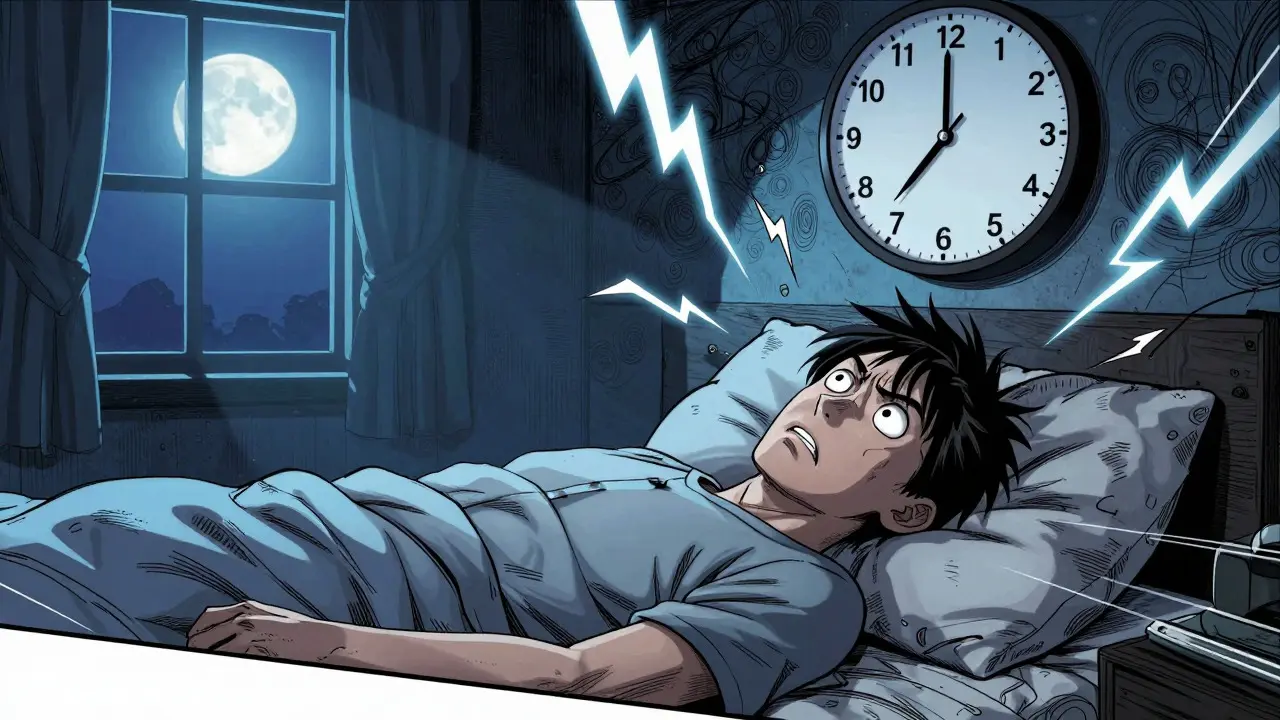
Imagine lying in bed at 2 AM, staring at the ceiling, calculating exactly how many hours of sleep you have left before your alarm goes off. You’ve tried everything: the expensive mattress, the lavender spray, the herbal tea. Yet, your mind races, and sleep feels like a distant memory. If this sounds familiar, you are not just tired; you might be dealing with chronic insomnia, defined by the persistent difficulty initiating or maintaining sleep occurring at least three nights per week for three months.
Most people reach for a sleeping pill first. It’s quick, it’s easy, and it seems to work-for a while. But here is the hard truth: medications mask the problem without fixing it. The medical community has shifted gears. Today, the gold standard for treating chronic insomnia isn’t a pill bottle. It is a structured psychological approach called Cognitive Behavioral Therapy for Insomnia (CBT-I), recognized as the first-line treatment recommended by major health organizations including the American College of Physicians. While sleep hygiene is often touted as a cure-all, experts warn it is rarely enough on its own. So, what actually works? Let’s break down the science, the methods, and why your brain needs retraining, not just relaxation.
The Myth of Sleep Hygiene Alone
We’ve all heard the advice: keep your room cool, avoid screens, and stick to a schedule. This collection of habits is known as sleep hygiene, which refers to environmental and behavioral practices designed to promote consistent, uninterrupted sleep. On paper, it makes perfect sense. In practice, for someone with chronic insomnia, it often falls flat.
Dr. Jack D. Edinger, a leading researcher in the field, notes that sleep hygiene education alone is minimally effective for chronic cases. Think of it this way: if your house is on fire, putting out candles (sleep hygiene) helps prevent future fires, but it won’t put out the blaze already burning in the living room. For chronic insomnia, the "fire" is a complex mix of anxiety, conditioned arousal, and distorted beliefs about sleep.
That said, sleep hygiene is still a necessary foundation. It creates the right environment for healing. Here are the non-negotiables:
- Temperature Control: Keep your bedroom around 65°F (18.3°C). Your body temperature needs to drop to initiate sleep.
- Light Management: Use blackout curtains or an eye mask. Light suppresses melatonin, the hormone that signals sleepiness.
- Noise Reduction: White noise machines can mask disruptive sounds that trigger micro-awakenings.
- Caffeine Cut-off: Eliminate caffeine at least six hours before bedtime. Its half-life means it’s still active in your system when you try to sleep.
But remember: these steps prepare the stage. They do not perform the play. To truly fix chronic insomnia, you need CBT-I.
How CBT-I Rewires Your Brain for Sleep
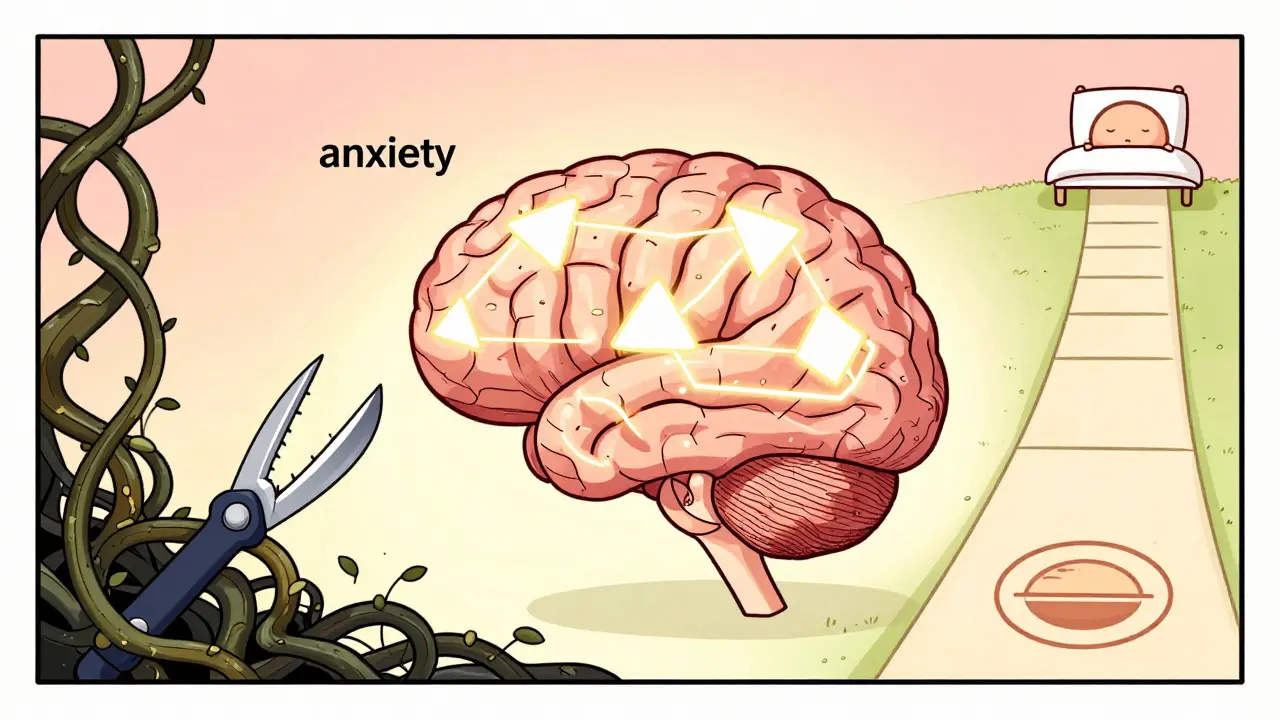
CBT-I is a structured, multi-component therapeutic approach that addresses both nighttime sleep disturbances and daytime impairments through behavioral changes and cognitive restructuring. Unlike medication, which alters brain chemistry temporarily, CBT-I targets the root causes of insomnia based on the three-factor model: predisposing factors (your genetics), precipitating factors (stressful life events), and perpetuating factors (bad habits and anxieties that keep insomnia going).
The goal is to rebuild your brain’s association between bed and sleep. When you have chronic insomnia, your bed becomes a place of stress, frustration, and wakefulness. CBT-I breaks this cycle through several core components.
Stimulus Control Therapy
This is often the hardest part because it requires discipline. The rule is simple: only lie down when you are sleepy. If you haven’t fallen asleep within 15-20 minutes, get out of bed. Go to another room and do something boring until you feel sleepy again. Then return to bed. Repeat as necessary.
Why does this work? It stops you from associating your bed with tossing and turning. By leaving the bed when awake, you reinforce the idea that the bed is strictly for sleep. Most people find this brutal at first, but it is highly effective in reducing sleep-related anxiety.
Sleep Restriction Therapy
This component sounds counterintuitive, so brace yourself. Sleep restriction involves limiting your time in bed to match your actual sleep time. If you spend eight hours in bed but only sleep six, you restrict your time in bed to six hours.
This creates mild, controlled sleep deprivation. It increases your "sleep drive," making it easier to fall asleep and stay asleep. As your sleep efficiency improves (typically calculated over 7-14 days using a sleep diary), you gradually increase your time in bed. Users often report that the first two weeks are tough, but the long-term payoff is significant. One Reddit user noted their sleep efficiency jumped from 68% to 89% after eight weeks of strict adherence.
Cognitive Restructuring
Insomnia feeds on fear. You worry about not sleeping, which makes it harder to sleep. Cognitive restructuring challenges these maladaptive beliefs. Instead of thinking, "If I don’t get eight hours, I’ll fail at work tomorrow," you learn to replace it with, "I can function adequately on less sleep, and worrying will only make it worse." Studies show this reduces sleep-related anxiety in 65% of patients.
CBT-I vs. Medication: The Data Speaks
If you’re on the fence about trying therapy instead of pills, look at the numbers. A 2020 meta-analysis published in Sleep Medicine Reviews compared CBT-I directly with pharmacotherapy (like zolpidem or eszopiclone). The results were clear:
| Metric | CBT-I | Pharmacotherapy |
|---|---|---|
| Reduction in Sleep Onset Latency | 18.2 minutes | 12.1 minutes |
| Reduction in Wake After Sleep Onset | 27.4 minutes | 15.8 minutes |
| Long-Term Efficacy (12 Months) | Persists after treatment ends | Benefits disappear after discontinuation |
| Risk of Dependence | None | Potential for tolerance and dependence |
Medications provide short-term relief, but their efficacy diminishes after four to six weeks. CBT-I effects last. Dr. Rachel Manber from Stanford University puts it bluntly: "CBT-I changes the relationship with sleep, whereas medications merely mask the symptoms."
Digital CBT-I: Accessible Treatment Options
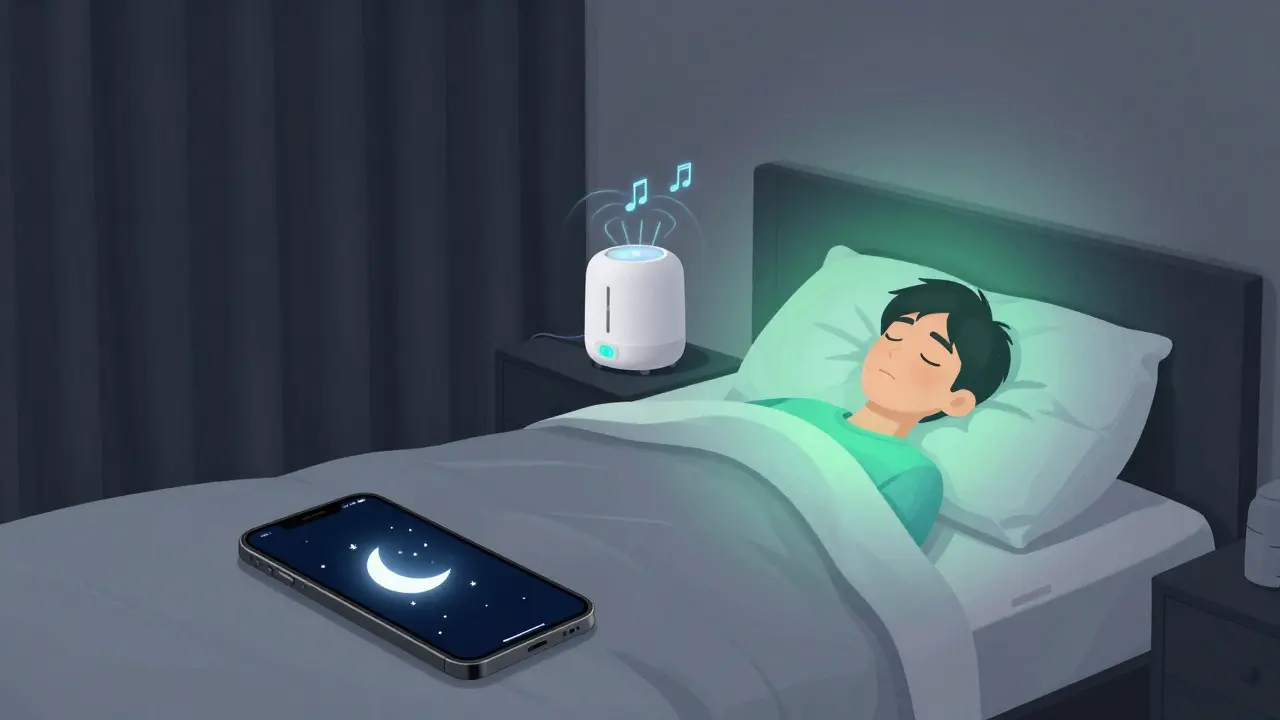
One major barrier to CBT-I is access. There are only about 0.5 certified therapists per 100,000 people in the United States. However, digital health has bridged this gap. Internet-based programs like Sleepio and SHUTi have shown remission rates of 50-60%, compared to 15-20% in control groups.
In 2021, the FDA cleared Somryst, the first prescription digital therapeutic for insomnia. It delivers CBT-I through an app, guiding users through the same principles of stimulus control and sleep restriction. These apps are particularly useful for those in rural areas or those with insurance that limits therapy sessions. Just ensure any app you choose is evidence-based and ideally FDA-cleared or backed by clinical trials.
Getting Started: A Practical Roadmap
If you decide to pursue CBT-I, whether through a therapist or a digital program, expect a learning curve. Improvement typically begins in 2-4 weeks, with full benefits realized after 8-12 weeks. Here is how to set yourself up for success:
- Track Your Sleep: Use a sleep diary or a wearable device like Fitbit to monitor your sleep efficiency. Be honest-this data drives your treatment plan.
- Set a Fixed Wake Time: This is crucial. Wake up at the same time every day, even on weekends. This anchors your circadian rhythm.
- Limit Fluid Intake: Stop drinking fluids after 7 PM to reduce nocturia (waking up to urinate).
- Manage Alcohol: Limit alcohol to one or two drinks, finishing them at least four hours before bed. Alcohol may help you fall asleep, but it fragments sleep later in the night.
- Be Patient: Accept that the first few weeks of sleep restriction might be uncomfortable. Trust the process.
Remember, chronic insomnia is a treatable condition. It is not a life sentence. By combining solid sleep hygiene with the proven techniques of CBT-I, you can reclaim your nights and your days.
Is CBT-I covered by insurance?
Coverage varies widely. As of 2023, only 38% of recommended CBT-I sessions are covered by some insurance plans. Many Fortune 500 companies now offer CBT-I through employee assistance programs. Check with your provider specifically for "behavioral sleep medicine" or CBT-I codes, and consider FDA-cleared digital options like Somryst, which may have different coverage rules.
How long does CBT-I take to work?
Most people see initial improvements in 2 to 4 weeks. Full benefits are typically realized after 8 to 12 weeks of consistent application. The first two weeks can be challenging due to sleep restriction, but persistence is key to long-term success.
Can I use CBT-I if I am currently taking sleeping pills?
Yes, but you should taper off medication under medical supervision. CBT-I is often used alongside a gradual reduction in medication dosage. This combination approach helps manage withdrawal symptoms while building new sleep habits.
What is the difference between sleep hygiene and CBT-I?
Sleep hygiene refers to environmental and lifestyle habits (like keeping the room cool) that support sleep. CBT-I is a comprehensive therapy that includes sleep hygiene but also adds behavioral interventions like sleep restriction and stimulus control, plus cognitive techniques to change negative thoughts about sleep. Sleep hygiene alone is rarely enough for chronic insomnia.
Are there online alternatives to in-person CBT-I?
Yes. Digital platforms like Sleepio, SHUTi, and the FDA-cleared app Somryst deliver evidence-based CBT-I remotely. Studies show these programs achieve remission rates of 50-60%, making them a viable option for those who cannot access a specialist.
Diane Nash
August 6, 2026 AT 03:26It is truly remarkable how the medical community has finally pivoted away from the quick fixes of pharmacology toward a more holistic, albeit demanding, psychological framework. The distinction drawn between mere sleep hygiene and the rigorous cognitive restructuring required by CBT-I is not just semantic; it is foundational to understanding why so many individuals remain trapped in cycles of chronic insomnia despite adhering to basic environmental controls. One must consider that the human mind, when subjected to the perpetual anxiety of performance regarding rest, creates a self-fulfilling prophecy of wakefulness that no amount of lavender or blackout curtains can adequately suppress. Therefore, the implementation of stimulus control therapy, though initially counterintuitive and perhaps even distressing, serves as a necessary corrective mechanism to recondition the neural pathways associated with the bedroom environment. It is imperative that we view this not merely as a treatment for sleep, but as a rehabilitation of our relationship with the fundamental biological necessity of rest.
Alli Crumley
August 7, 2026 AT 09:59Oh, look at you, trying to psychoanalyze your own circadian rhythms like it’s some grand existential crisis 🙄 Sleep restriction is basically just self-imposed torture for people who think they’re too smart for pills. But sure, keep telling yourself that ‘cognitive restructuring’ will fix the fact that your brain is wired to panic at 3 AM because you watched one true crime documentary. The real issue? You’re probably overthinking everything anyway. Classic neurotic behavior. 😒
Marc H
August 8, 2026 AT 23:28Bravo! A masterpiece of understatement. I’ve been lying in bed staring at the ceiling for three years, calculating my life expectancy based on REM cycles, and you tell me I just need to ‘get out of bed if I’m not asleep in 20 minutes.’ Oh, right. Because nothing screams ‘relaxation’ like sitting in a dark living room feeling like a failure while your cat judges you. Truly, the pinnacle of modern medicine. Can’t wait to try this ‘brutal’ discipline that apparently cures all ills except for the fact that I’m an insomniac. Thanks for the pep talk, I’ll be here all night. 👏
Chris McQuaid
August 9, 2026 AT 08:13Look, everyone’s acting like CBT-I is this new revolutionary discovery, but it’s just common sense packaged with fancy academic jargon to justify charging insurance companies. The whole point is that your brain has learned to associate your bed with stress, so you have to break that association. It’s classical conditioning 101. Pavlov didn’t use sleeping pills; he used bells and meat juice. You’re using boredom and frustration. Same principle. The problem isn’t the method; it’s that people are lazy and want a magic pill instead of doing the hard work of retraining their own nervous systems. If you can’t handle getting up and reading a boring book for an hour, you don’t deserve good sleep.
sam howard
August 10, 2026 AT 05:56cbt-i is bs mostly its just sleep restriction which is dumb. you restrict sleep then you are tired then you sleep. obvious. but the cognitive part is just thinking positive thoughts which never works. i tried it for 6 months still awake. meds work better short term. long term whatever. most people here are just complaining about being tired instead of fixing their lifestyle. drink less coffee stop looking at phones simple. why do we need 8 weeks of therapy for that?
Samuel Hershberger
August 11, 2026 AT 17:20I completely agree with the sentiment here, Chris, but let’s not discount the structured approach entirely. While the core concepts might seem intuitive, the discipline required to maintain them consistently is where most people stumble. Having worked with several patients transitioning off benzodiazepines, I can attest that the ‘simple’ advice of limiting caffeine or avoiding screens often fails because the underlying anxiety remains unaddressed. CBT-I provides a scaffold for that transition. It’s not about blaming the patient for being lazy; it’s about providing a proven roadmap through a very difficult physiological hurdle. That said, Sam makes a fair point about the simplicity of the mechanics-it’s the execution that requires support. We should encourage those struggling to seek professional guidance rather than feeling defeated by the initial difficulty.
Mathew Stuckey
August 11, 2026 AT 22:53Hey guys, let’s keep the vibes positive! ✨ It’s totally normal to feel frustrated when sleep doesn’t come easy. I started CBT-I last month and wow, week two was rough. 😅 But sticking to the fixed wake time really helped anchor my rhythm. Don’t give up! You’ve got this! 💪🌙
John Divers
August 13, 2026 AT 21:54The philosophical underpinning of CBT-I suggests that our perception of sleep dictates our ability to achieve it. By challenging the catastrophic thinking surrounding sleep loss, we alter the emotional response to wakefulness. This aligns with Stoic principles of controlling what is within our power-our actions and thoughts-rather than external outcomes like immediate unconsciousness. A concise and effective approach to mental fortitude.
Ambria St louis
August 15, 2026 AT 02:01Indeed! And let us not forget the importance of community support in this journey; for many, the isolation of insomnia can be profoundly debilitating, making shared experiences invaluable. Furthermore, the emphasis on cognitive restructuring is not merely about ‘positive thinking,’ but rather about cultivating a realistic and compassionate dialogue with oneself during moments of vulnerability. When we acknowledge the fear without succumbing to it, we begin to dismantle the conditioned arousal that perpetuates the cycle. It is a delicate balance of acceptance and action, requiring both patience and persistence. Let us continue to uplift one another in this endeavor, for healing is rarely a solitary path.
Dennis Leeftink
August 15, 2026 AT 23:06this article is wrong. cbt-i only works for mild cases. if you have severe insomnia you need meds. the data shown is cherry picked. most people cant do sleep restriction because they have jobs. its impractical. just take zolpidem and go to sleep. simple solution. why complicate it with therapy?