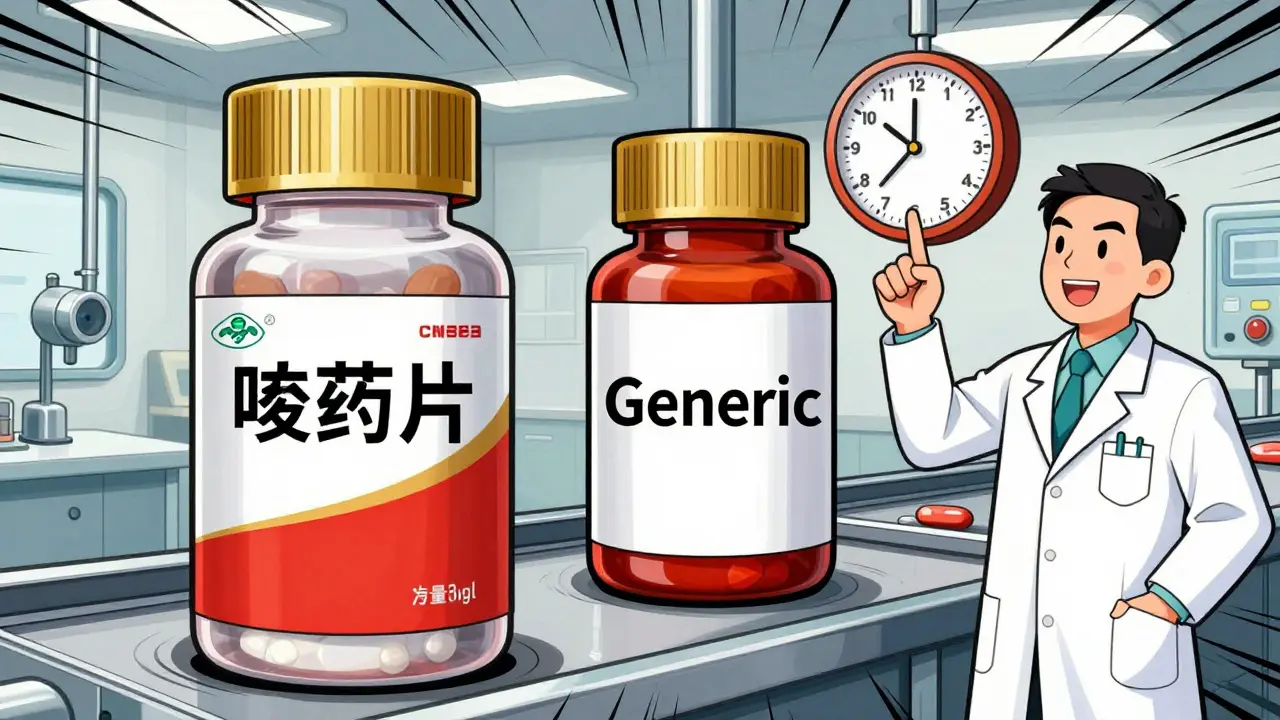
When a brand-name drug loses its patent, you’d expect prices to drop fast - and they usually do. But sometimes, the same company that made the original drug starts selling it again under a generic label. That’s an authorized generic. It’s not a copycat. It’s the exact same pill, same factory, same packaging - just without the brand name. And in the next five years, these products will play a bigger, more complex role in shaping drug prices, competition, and patient access than ever before.
What Exactly Is an Authorized Generic?
An authorized generic isn’t approved through the usual generic pathway (ANDA). Instead, it’s made by the original brand manufacturer and sold under a generic name, often right after the brand’s patent expires. Think of it like Coca-Cola launching a version called "Cola Soda" - same recipe, same bottle, different label. The FDA has tracked these since 1999, and between 2010 and 2019, over 850 were launched. Most of them targeted oral tablets and capsules - the easiest drugs to copy - and nearly 75% came after the first traditional generic entered the market.
Why do companies do this? It’s not charity. It’s strategy. By launching their own generic version, brand manufacturers can keep a slice of the market instead of watching it vanish overnight. They undercut traditional generics on price, sometimes even before those generics get a chance to gain traction. In markets where a generic company has 180 days of exclusivity, about 70% of authorized generics launched during that window - not after. That’s not coincidence. That’s precision timing.
Why Authorized Generics Are Becoming More Common
The U.S. generic drug market is growing fast. It hit $138.24 billion in 2024 and is projected to hit nearly $197 billion by 2034. That growth isn’t random. It’s driven by a tidal wave of patent expirations. Between 2025 and 2030, drugs generating $217 billion to $236 billion in annual sales will lose exclusivity. Monoclonal antibodies like ustekinumab and vedolizumab are next on the list - each worth billions. When these go generic, the pressure on prices will be intense.
Brand manufacturers know this. They’re not waiting to be pushed out. They’re getting ahead of it. Authorized generics let them control the transition. Instead of letting a competitor capture 80% of the market, they stay in the game. And because they already have the manufacturing setup, they can launch faster than any new entrant. In 2024, generic and biosimilar medicines saved the U.S. healthcare system $467 billion. That’s real money. But a lot of that savings came from traditional generics. Authorized generics? They don’t always drive savings - they often just shift where the money goes.
The Shift in Strategy: Delayed Launches Are Declining
For years, brand companies would wait. They’d let the first generic competitor enter, then drop their own version as a counterattack. That tactic kept their branded version profitable longer. But according to RAPS in June 2025, that’s changing. The practice of delaying authorized generic launches is declining. Why?
Regulators are watching. Policymakers are asking harder questions. The FDA’s new pilot program, announced in October 2025, prioritizes review of generic drugs made and tested entirely in the U.S. That’s a big deal. It means if you want faster approval, you need to build your supply chain here. For brand manufacturers, that means investing in domestic production - something they’ve avoided for cost reasons. Now, it’s becoming a competitive advantage.
So instead of waiting to ambush traditional generics, some companies are launching authorized generics earlier - even before the first ANDA approval. They’re not just reacting. They’re reshaping the rules. And that’s making the market less predictable, but also more transparent.
Authorized Generics vs. Traditional Generics: Who Wins?
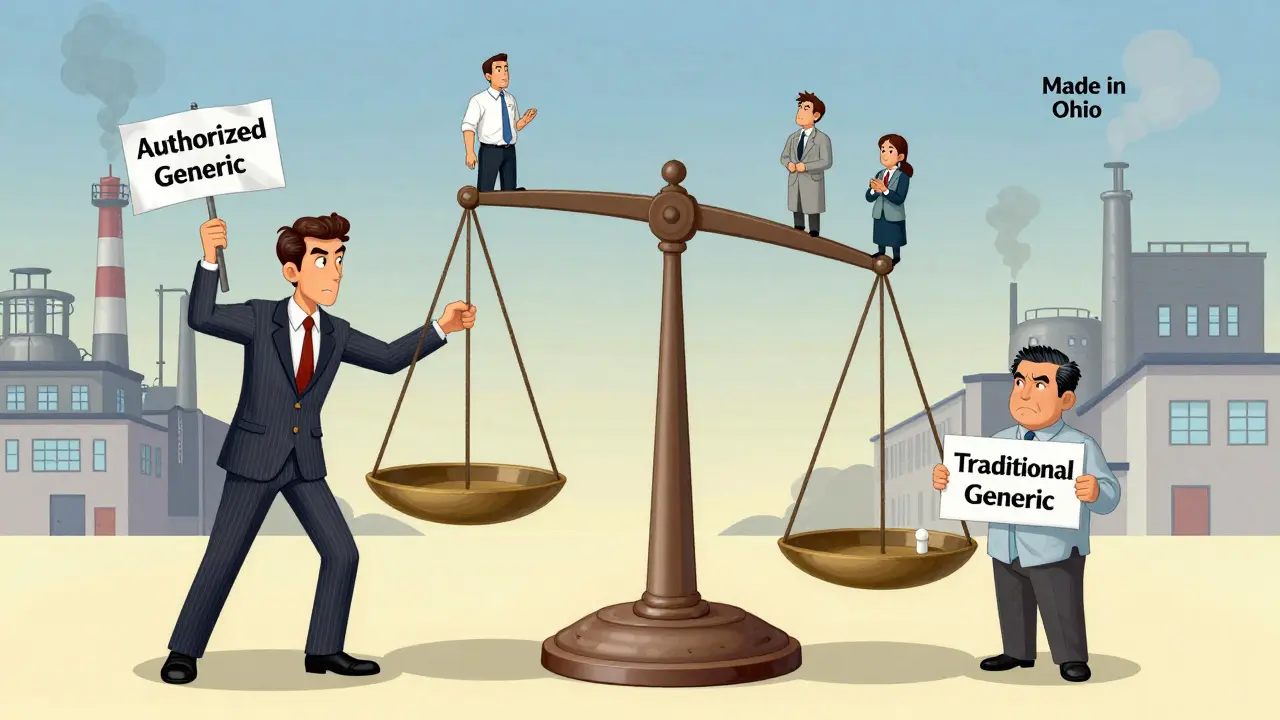
Patients often assume all generics are the same. But they’re not. A traditional generic is made by a separate company - often overseas - and priced to win. An authorized generic is made by the brand company, sometimes on the same line, sometimes in the same building. The quality? Identical. The price? Usually lower than the brand, but sometimes higher than the traditional generic.
Here’s the catch: authorized generics don’t always lower prices. They can suppress them. If a brand company launches its own generic too early, it can scare off other competitors. Why invest millions to build a factory if the brand is already selling the same drug for $10 a pill? That’s why some analysts argue authorized generics reduce competition, not increase it.
But there’s another side. When authorized generics enter after a traditional generic has already established itself, they create real price pressure. In those cases, the traditional generic gets squeezed - and patients win. The key isn’t whether they exist. It’s when and how they’re used.
The Regulatory Wildcard: FDA’s U.S. Manufacturing Push
The FDA’s October 2025 pilot program isn’t just about speed. It’s about security. The U.S. has spent decades outsourcing drug manufacturing. That left it vulnerable during supply chain shocks. Now, the agency is offering a fast track to companies that make everything - from active ingredients to final packaging - in the U.S.
For authorized generics, this changes the math. If you’re a brand manufacturer and you want to launch a generic version fast, you now have an incentive to build U.S. capacity. That could mean more authorized generics made in Ohio or North Carolina instead of India or China. It could also mean higher production costs - and slightly higher prices. But it also means fewer shortages and more reliable supply.
Industry analysts predict this policy will reshape the entire generic landscape. Traditional generic makers without U.S. facilities may struggle to compete. Authorized generics, already owned by the big pharma players, could benefit the most. That’s not necessarily bad - it just means the playing field is tilting.
What’s Next for Authorized Generics?
The future of authorized generics isn’t about more of them. It’s about smarter use. As more high-revenue drugs go off-patent - especially complex biologics - the pressure to control market entry will grow. Authorized generics will still be a tool for brand companies to protect revenue. But the days of using them to delay competition are fading.
Regulators are pushing for faster generic access. Studies from JAMA Health Forum in 2025 show that extending market exclusivity by just three years costs commercial insurers $2.5 billion and Medicare $2.4 billion. That’s on drugs like imatinib and celecoxib. Authorized generics that delay real competition contribute to that cost. So if the goal is lower prices and faster access, then the future of authorized generics must be tied to transparency - not control.
One thing’s clear: the market won’t stop using them. But the rules around them will. Expect more FDA scrutiny, more public reporting, and more pressure to launch authorized generics at the same time as traditional ones - not after. And as biosimilars take off (with a projected $25 billion opportunity in oncology by 2029), we may see authorized versions of those too. The line between brand and generic is blurring. And patients, payers, and policymakers are all watching closely.
Bottom Line
Authorized generics aren’t going away. They’re evolving. They’re no longer just a tactic to block competitors. They’re becoming part of a larger shift - toward domestic manufacturing, faster approvals, and more predictable pricing. For patients, that could mean better access. For the system, it could mean fewer surprises. But only if the rules change fast enough to match the pace of innovation.
Are authorized generics the same as regular generics?
Yes, in every way that matters to patients. Authorized generics contain the exact same active ingredient, dosage, and formulation as the brand-name drug. They’re made in the same facility, often on the same production line. The only difference is the label - no brand name, no marketing. They’re not copies. They’re the real thing, sold under a generic name.
Why would a brand company sell its own drug as a generic?
To keep market share. When a drug’s patent expires, the brand loses pricing power. By launching its own generic version, the company can still capture a portion of sales - often at a lower price than its branded version but higher than a competitor’s generic. It’s a way to soften the financial blow of losing exclusivity without fully stepping aside.
Do authorized generics lower drug prices?
Sometimes, but not always. If an authorized generic enters after a traditional generic is already established, it can drive prices down further. But if it enters too early - before competitors have a chance to launch - it can discourage new entrants and keep prices higher than they’d otherwise be. The timing matters more than the existence of the product.
Is the FDA doing anything to change how authorized generics work?
Yes. In October 2025, the FDA launched a pilot program that gives faster review to generic drugs made and tested entirely in the U.S. This encourages domestic production and could make authorized generics more expensive to produce - but also more reliable. It’s a signal that the agency wants to reduce reliance on foreign manufacturing, which affects both traditional and authorized generics.
Will authorized generics be used for biologics and biosimilars?
It’s already happening. As complex drugs like ustekinumab and vedolizumab lose patent protection, brand manufacturers are exploring authorized versions of biosimilars. These won’t be exact copies like small-molecule generics, but they’ll follow the same logic: the originator company produces a biosimilar version under a generic label. The $25 billion opportunity in oncology and immunology by 2029 could make this a major trend.
How do authorized generics affect patient access?
It depends. In markets with only one or two competitors, authorized generics can limit choice and keep prices high. But in crowded markets, they add competition and can drive prices down. The bigger factor is supply chain reliability. With the FDA pushing for U.S.-made products, authorized generics may become more stable and easier to get - which helps patients avoid shortages.
benchidelle rivera
December 18, 2025 AT 03:24Authorized generics are a corporate loophole dressed up as consumer benefit. The brand companies aren't lowering prices-they're controlling them. They wait for the first generic to enter, then drop their own version at a slightly lower price to crush the newcomer. It's not competition. It's predation. And the FDA's new pilot program won't fix that. It just makes the big players more entrenched.
Dev Sawner
December 18, 2025 AT 18:51It is an empirical observation that the introduction of authorized generics, particularly in the context of patent cliff dynamics, induces a non-linear suppression of market entry by third-party generic manufacturers. The strategic timing, as evidenced by the 70% statistic during the 180-day exclusivity window, constitutes a classic predatory pricing mechanism, which, under antitrust jurisprudence, may constitute a violation of Section 2 of the Sherman Act.
Meenakshi Jaiswal
December 19, 2025 AT 18:34For patients, the real win is consistency. If your pill comes from the same factory, same batch, same quality control, it means fewer surprises. I’ve seen people panic when their generic switched brands-side effects, even if minor, freak them out. Authorized generics don’t fix the price problem, but they fix the anxiety problem. That’s worth something.
holly Sinclair
December 20, 2025 AT 08:08What does it mean when the line between brand and generic dissolves? Are we not just replacing one form of monopoly with another? The brand company still owns the manufacturing, the supply chain, the regulatory access. The generic label is a costume. The power structure remains untouched. We’re not democratizing access-we’re rebranding control. And in a system where profit is the only metric that matters, does it even matter if the pill is identical? If the system still extracts the same value from patients, then the only thing that changed was the label on the bottle.
Monte Pareek
December 20, 2025 AT 21:18Look I’ve worked in pharma logistics and let me tell you something the suits don’t want you to know the real savings aren’t from generics they’re from supply chain reliability and U.S. manufacturing the FDA pilot is the only real move here because when a hospital runs out of insulin because it’s made in a factory that had a monsoon they don’t care if it’s branded or generic they just need it to work
Kelly Mulder
December 21, 2025 AT 11:27So let me get this straight-Big Pharma is now the official generic supplier? How quaint. The same corporations that priced insulin at $300 a vial are now ‘helping’ patients by selling the same drug for $280? Please. This isn’t innovation. It’s PR theater with a pharmacy label. And don’t even get me started on how they’ll use this to lobby against true generic competition next year
Tim Goodfellow
December 22, 2025 AT 13:20Imagine if Coca-Cola launched "Cola Soda" right after Pepsi went generic-same syrup, same bottle, just no logo. Would you feel cheated? Or just confused? That’s what’s happening here. The brand isn’t gone-it’s just wearing a disguise. And honestly? I’m tired of being told to cheer for corporate sleight-of-hand as "progress".
Takeysha Turnquest
December 24, 2025 AT 03:39They say the future is transparent but what we’re really seeing is a new kind of opacity dressed in FDA approval stamps and U.S. manufacturing slogans. We’re not getting cheaper drugs-we’re getting more polished lies. And the worst part? We’re supposed to be grateful for the illusion of choice
Emily P
December 24, 2025 AT 05:49Does anyone track how often authorized generics are dispensed vs. traditional ones? I’ve been on the same med for 5 years and I never knew which version I was getting until I checked the bottle. Maybe the real issue isn’t the generics-it’s that patients have no idea what they’re being given.
Jedidiah Massey
December 25, 2025 AT 07:20Authorized generics = strategic asset allocation in the post-patent arbitrage ecosystem. Leveraging existing cGMP infrastructure to maintain margin integrity while preempting ANDA-driven price erosion. The FDA’s U.S. manufacturing push is just a regulatory tailwind accelerating the vertical integration of brand-to-generic transition. It’s not a bug-it’s a feature of modern pharma capital optimization. 📈
Alex Curran
December 26, 2025 AT 20:36My uncle’s on a med that went generic and the pill changed color every six months. He got so stressed he stopped taking it. If the brand made the generic version it’d be the same pill every time. No one talks about how much mental stress this causes. It’s not just about cost it’s about peace of mind
Lynsey Tyson
December 28, 2025 AT 01:38Maybe we’re all just trying to fix the wrong problem. Instead of fighting over who makes the generic, what if we just made drugs cheaper to begin with? Like, really cheaper. Not just rebranding the same thing under a different name.