AI Eye Screening: How Artificial Intelligence Is Changing Eye Health Checks
When it comes to catching eye diseases early, AI eye screening, a fast, non-invasive method that uses machine learning to analyze retinal images for signs of disease. Also known as automated retinal screening, it’s now used in clinics, pharmacies, and even mobile units to catch problems before patients lose vision. Unlike traditional exams that require a specialist, AI eye screening can run in minutes with just a camera and a computer. It doesn’t replace doctors—it gives them a powerful tool to spot issues faster, especially in places where eye specialists are hard to find.
This technology is most proven in detecting diabetic retinopathy, a leading cause of blindness in adults with diabetes. Studies show AI can match or even beat human experts in identifying early leaks, swelling, and abnormal blood vessels in retinal photos. It’s also being used to flag signs of glaucoma, a silent disease that damages the optic nerve, and age-related macular degeneration, the main reason vision fades in older adults. These aren’t theoretical uses—hospitals in rural India, telehealth programs in the U.S., and community health centers in Africa are already using AI to screen thousands of people who’d otherwise never see an eye doctor.
The real win? Speed and scale. A single AI system can review hundreds of images in an hour. That means a diabetic patient walking into a pharmacy for a blood sugar check can also get an eye scan before they leave—no appointment, no wait. And for people with limited access to care, this isn’t just convenient—it’s life-saving. The tech works best when paired with clear follow-up paths: if the AI flags something, the patient gets referred to a specialist. If it’s clear, they’re told when to come back. No guesswork.
You’ll find posts here that dig into how AI eye screening connects to real-world health issues—like managing diabetes complications, avoiding amputations from undiagnosed nerve damage, or keeping medications safe while traveling. These aren’t random links. They’re all tied to the same goal: catching health problems early, before they spiral out of control. Whether you’re a patient, a caregiver, or just someone trying to understand how tech is changing medicine, this collection shows you how AI eye screening fits into the bigger picture of prevention, safety, and smarter care.
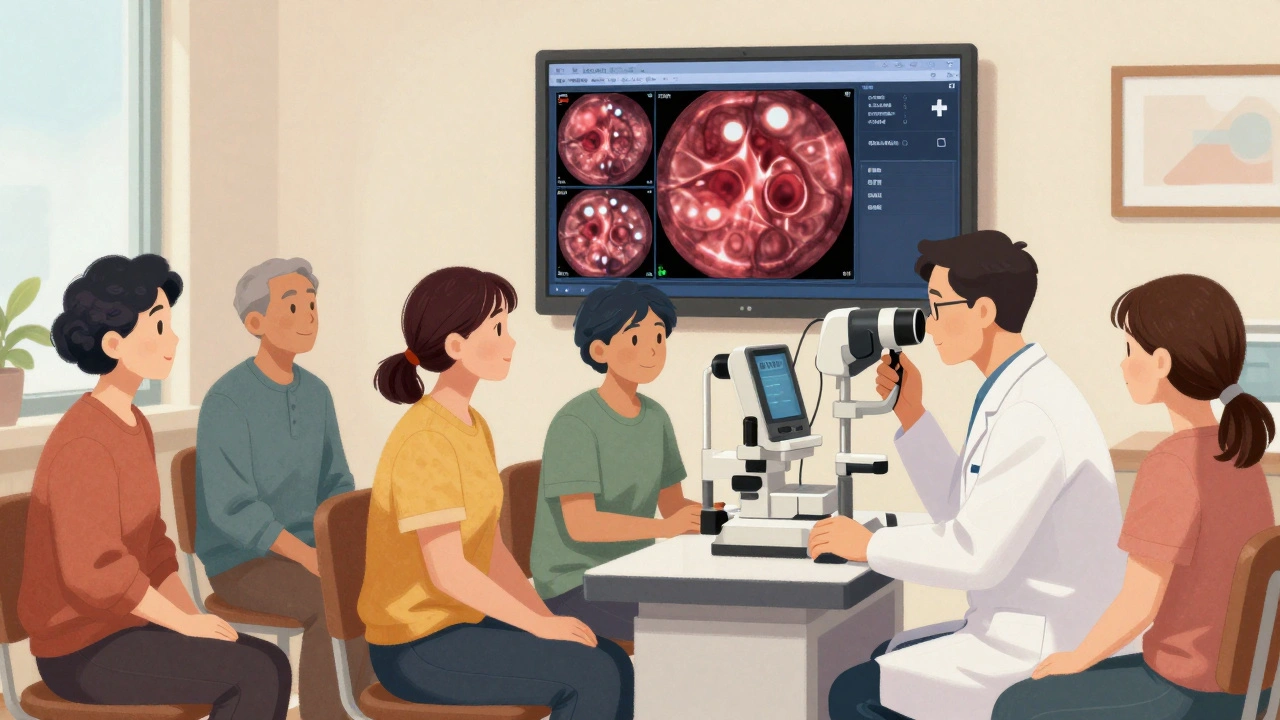
Diabetic Eye Screening: How Often You Need It and How Teleophthalmology Is Changing the Game
Diabetic eye screening saves vision-but most people skip it. Learn how often you need it, how teleophthalmology is making it easier, and why AI is changing the game for diabetes-related eye disease.