Diabetes Foot Care: Essential Tips to Prevent Ulcers and Amputations
When you have diabetes, a chronic condition where blood sugar levels stay too high. Also known as hyperglycemia, it doesn’t just affect your energy or thirst—it quietly damages nerves and blood vessels, especially in your feet. This damage turns simple things like a blister or a cut into serious threats. Every year, over 100,000 people in the U.S. lose a foot or leg to diabetic foot ulcers, open sores that don’t heal due to poor circulation and nerve damage. Most of these amputations are preventable. The key isn’t fancy treatments—it’s daily diabetes foot care, a set of simple, consistent habits that protect your feet from damage.
High blood sugar slowly kills the nerves in your feet, a condition called diabetic neuropathy, nerve damage that makes you lose feeling. You might not feel a pebble in your shoe, a blister from new shoes, or a cut from trimming your nails too short. At the same time, peripheral artery disease, narrowed blood vessels that reduce blood flow to your legs and feet means even small wounds heal slower—or not at all. Combine those two problems, and infection spreads fast. What starts as redness can turn into gangrene in days. That’s why checking your feet every single day isn’t optional—it’s life-saving. Look for cracks, swelling, color changes, or anything warm to the touch. Don’t wait for pain. If you can’t feel it, you can’t trust it.
Controlling your blood sugar is the foundation. No foot cream, special sock, or expensive shoe replaces this. But daily foot care gives your body the best shot to stay healthy. Wash your feet with warm (not hot) water, dry them gently—especially between the toes—and never go barefoot, even inside. Use moisturizer on dry skin, but not between toes. Cut nails straight across. See a podiatrist at least once a year, even if nothing hurts. And if you smoke, quit. Smoking tightens blood vessels even more. These aren’t tips from a brochure—they’re the real-world habits that keep people with diabetes walking, working, and living without amputation.
Below, you’ll find real advice from posts that cover everything from how steroids can spike your blood sugar and hurt your healing to how to keep insulin safe while traveling, and why medication safety matters more than ever when your body is already under stress. These aren’t theory pieces—they’re tools you can use today.
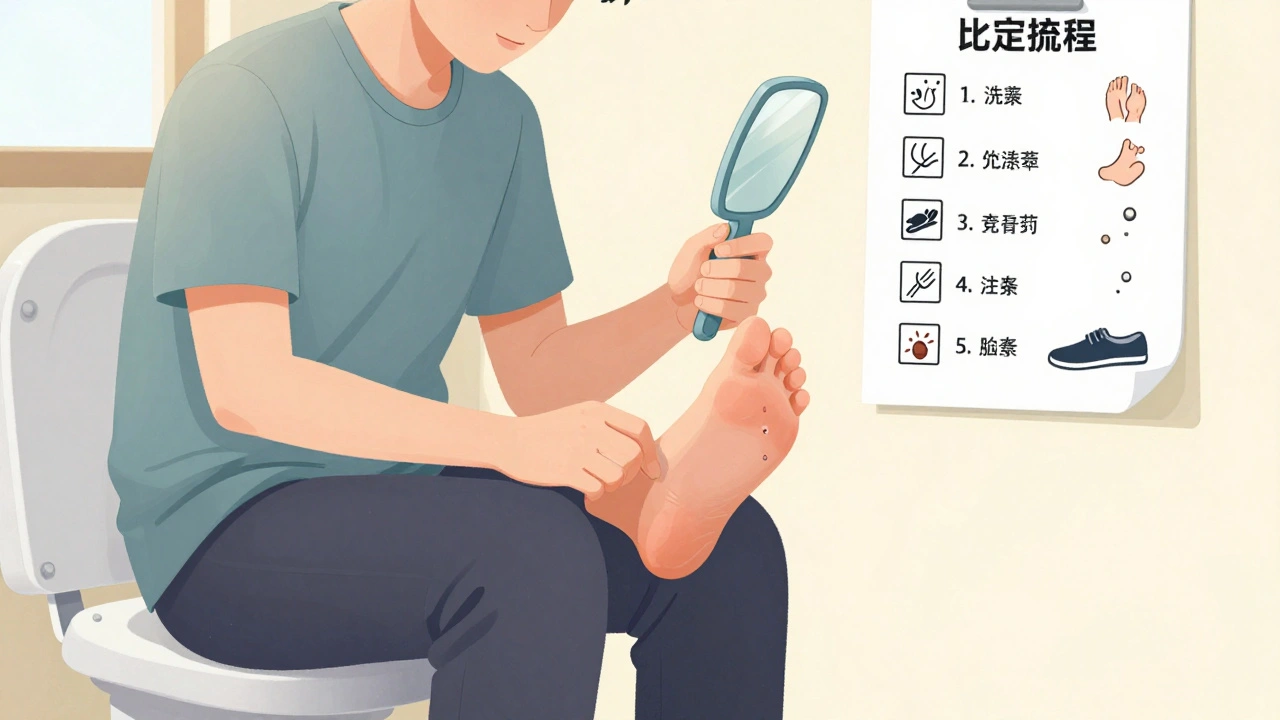
Diabetes Foot Care: Ulcer Prevention and Daily Inspection Checklist
Learn how to prevent diabetic foot ulcers with a proven daily inspection checklist. Understand risk levels, proper foot care, footwear rules, and when to seek help to avoid amputation.